Artwork
Mme Eugène Carrière
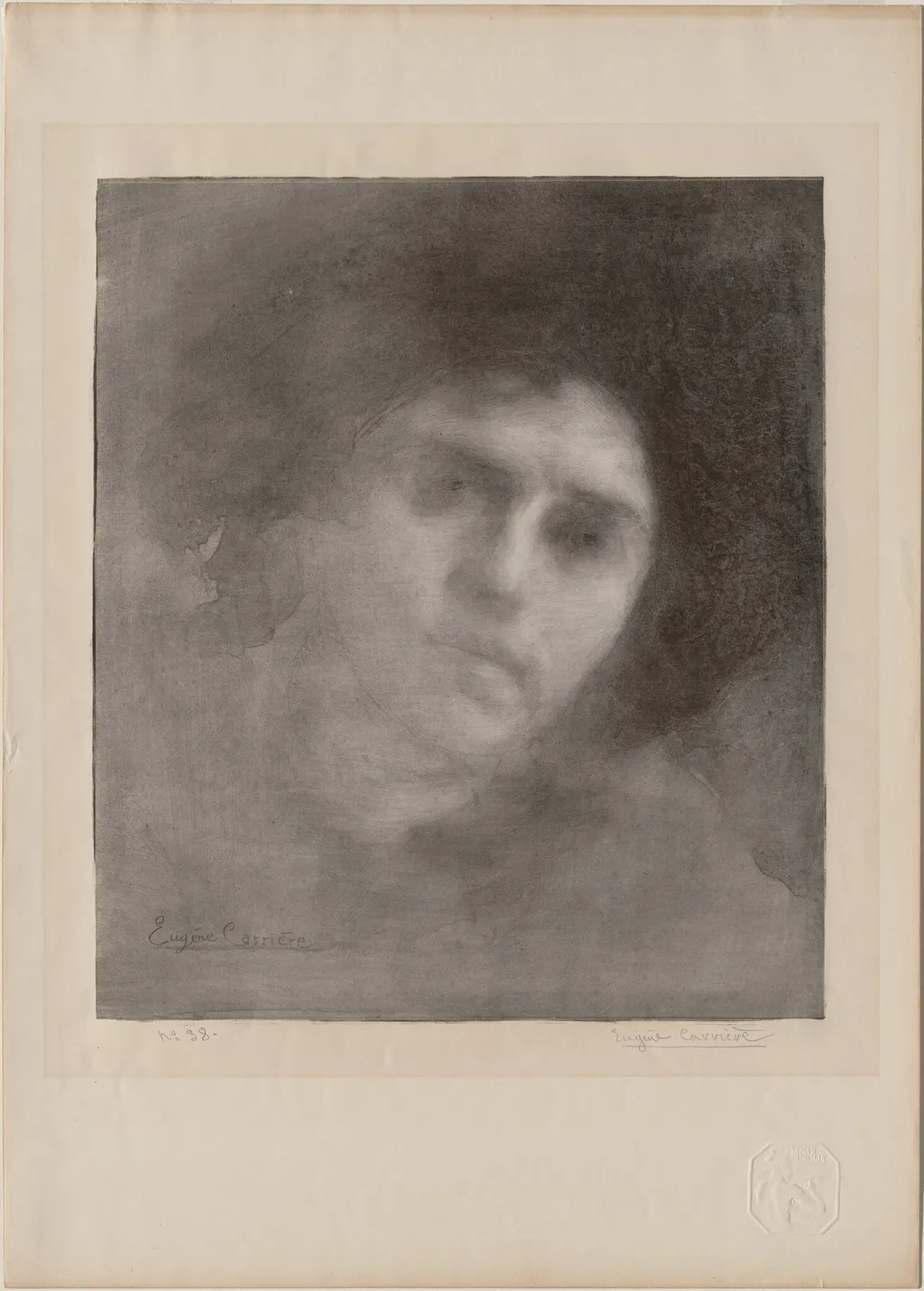
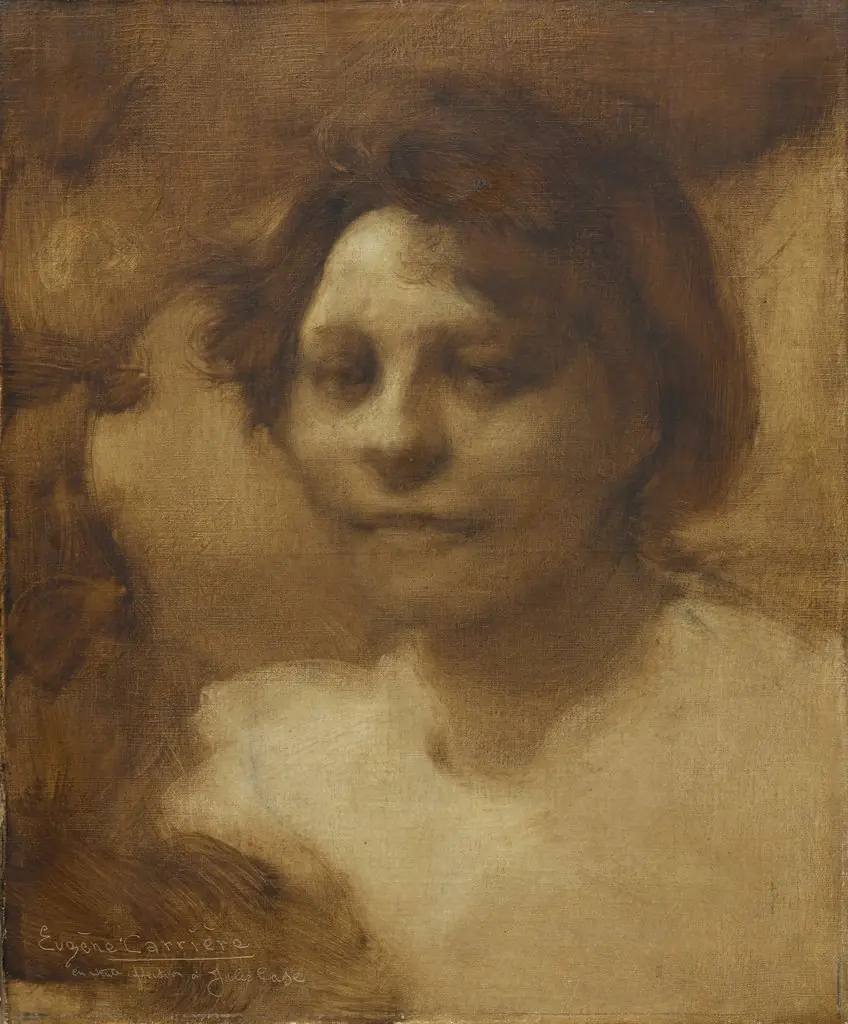
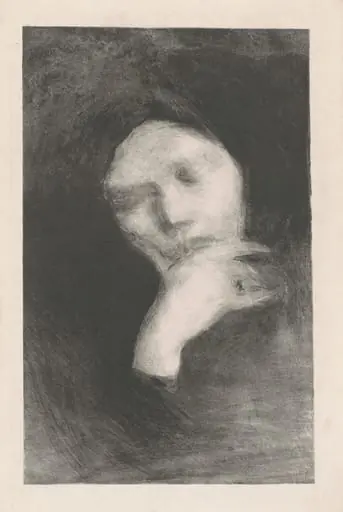
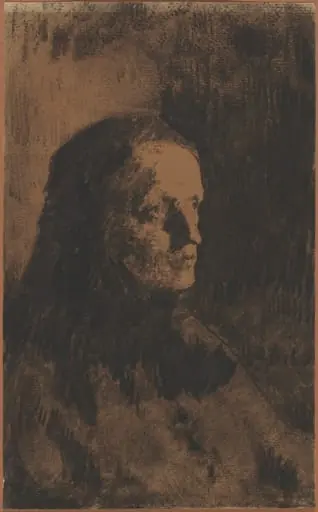
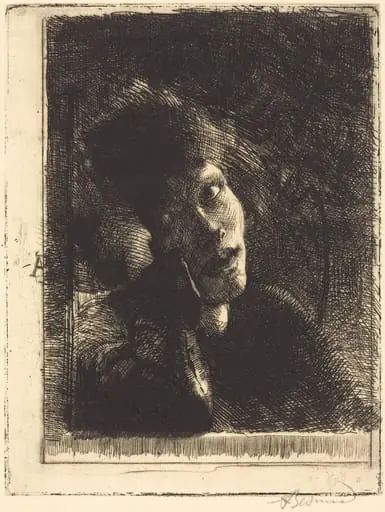
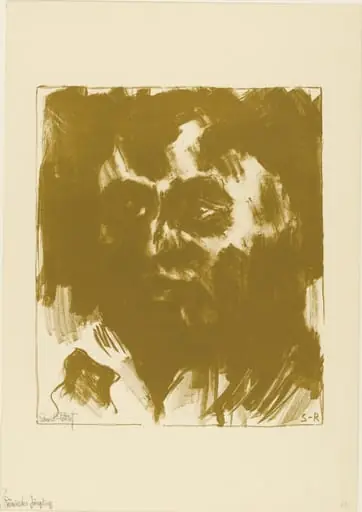
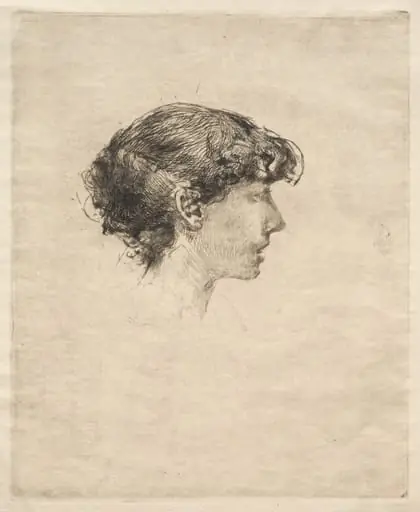
Mme Eugène Carrière is an ink print by the Impressionist artist Eugène Carrière. It dates from 1893 and is held in the collection of the National Gallery of Art.
About this work
Overview
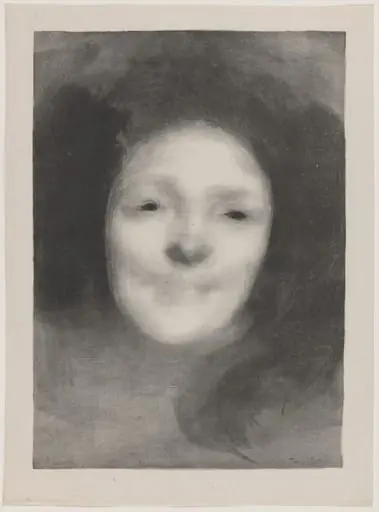
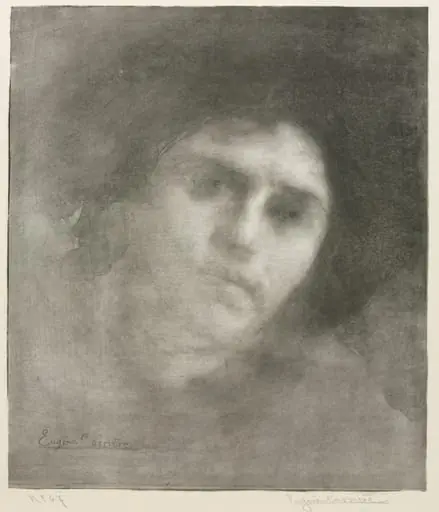
Created in 1893, this lithograph by Eugène Carrière depicts his wife, Mme Carrière, in a restrained black-and-white composition.
Created in 1893, this lithograph by Eugène Carrière depicts his wife, Mme Carrière, in a restrained black-and-white composition. Executed on wove paper, the work exemplifies the artist’s preference for tonal subtlety over bold contrast. The image is rendered with delicate, hand-drawn lines, and the irregular edges suggest a direct, intimate approach to printmaking, aligning with Carrière’s broader aesthetic of quiet introspection.
Subject & Meaning
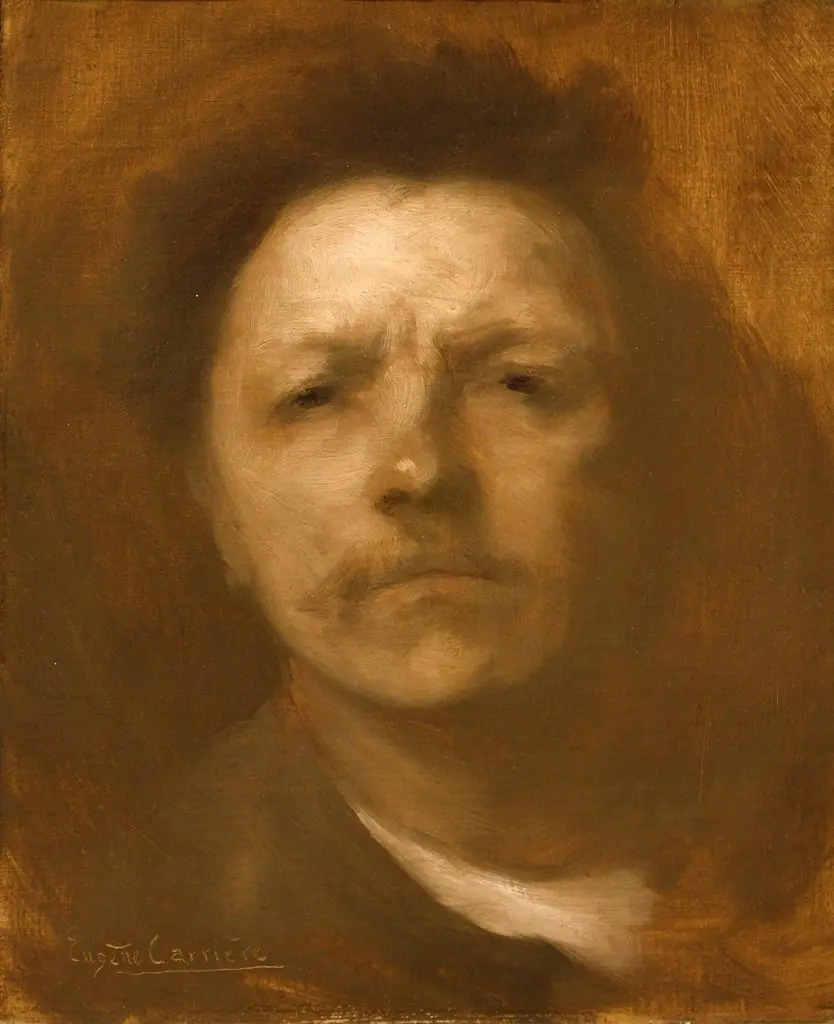
The portrait captures Mme Carrière in profile, her face softly illuminated against a uniform dark background. Her expression is composed, neither smiling nor frowning, inviting contemplation rather than narrative. Carrière often portrayed loved ones in this manner, transforming personal subjects into universal meditations on presence and stillness. The absence of context or detail emphasizes inner life over external identity.
Technique & Style
Carrière employed lithography to achieve a range of soft grays through nuanced shading, avoiding stark blacks. The wove paper’s slight texture enhances the tactile quality of the lines, while the hand-drawn appearance suggests spontaneity. His technique minimized detail, relying on gradations of tone to model form—echoing the hazy, atmospheric quality of his paintings and reinforcing his Symbolist leanings toward ambiguity and mood.
History & Provenance
The print was made during a period when Carrière was deeply engaged with Parisian literary and artistic circles, including figures like Mallarmé and Rodin. Though not widely exhibited at the time, it remained within the artist’s personal collection, later entering institutional holdings. Its survival reflects its significance as a private record, rather than a public statement, of Carrière’s domestic life and artistic priorities.
Context
In late 19th-century France, Symbolist artists rejected realism in favor of emotional and spiritual resonance. Carrière’s work, with its muted palette and blurred contours, stood apart from the vibrant Impressionist movement. His focus on inner states aligned with contemporary literary trends, and his prints circulated among intellectuals who valued subtlety over spectacle, contributing to a quieter, more introspective current in modern art.
Legacy
Carrière’s tonal experiments influenced early 20th-century artists, notably Picasso during his Blue Period, who absorbed the emotional weight of monochrome portraiture. Though less celebrated than his contemporaries, Carrière’s prints like this one helped redefine the expressive potential of lithography, demonstrating how restraint and nuance could convey psychological depth without overt drama.
Artist & collection

Artist
Eugène Anatole Carrière was a French Symbolist artist of the fin-de-siècle period.