Artwork
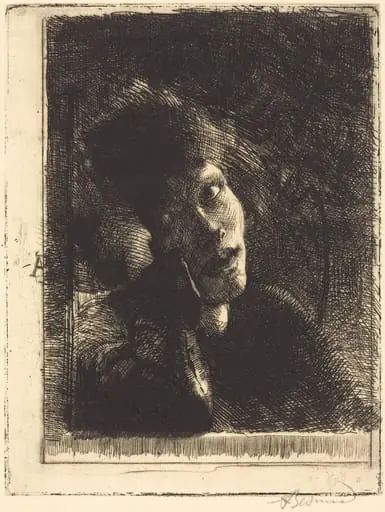
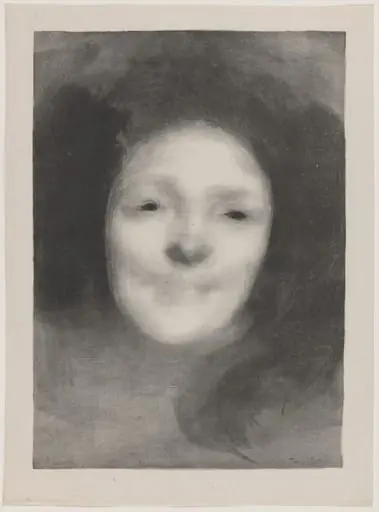
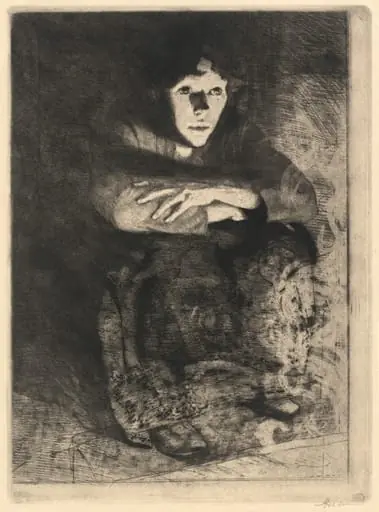
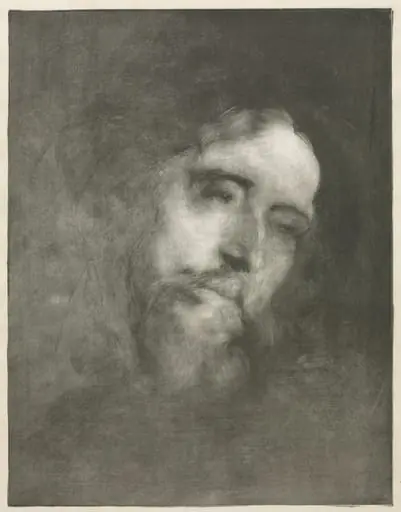
Madame Eugène Carrière (large plate)
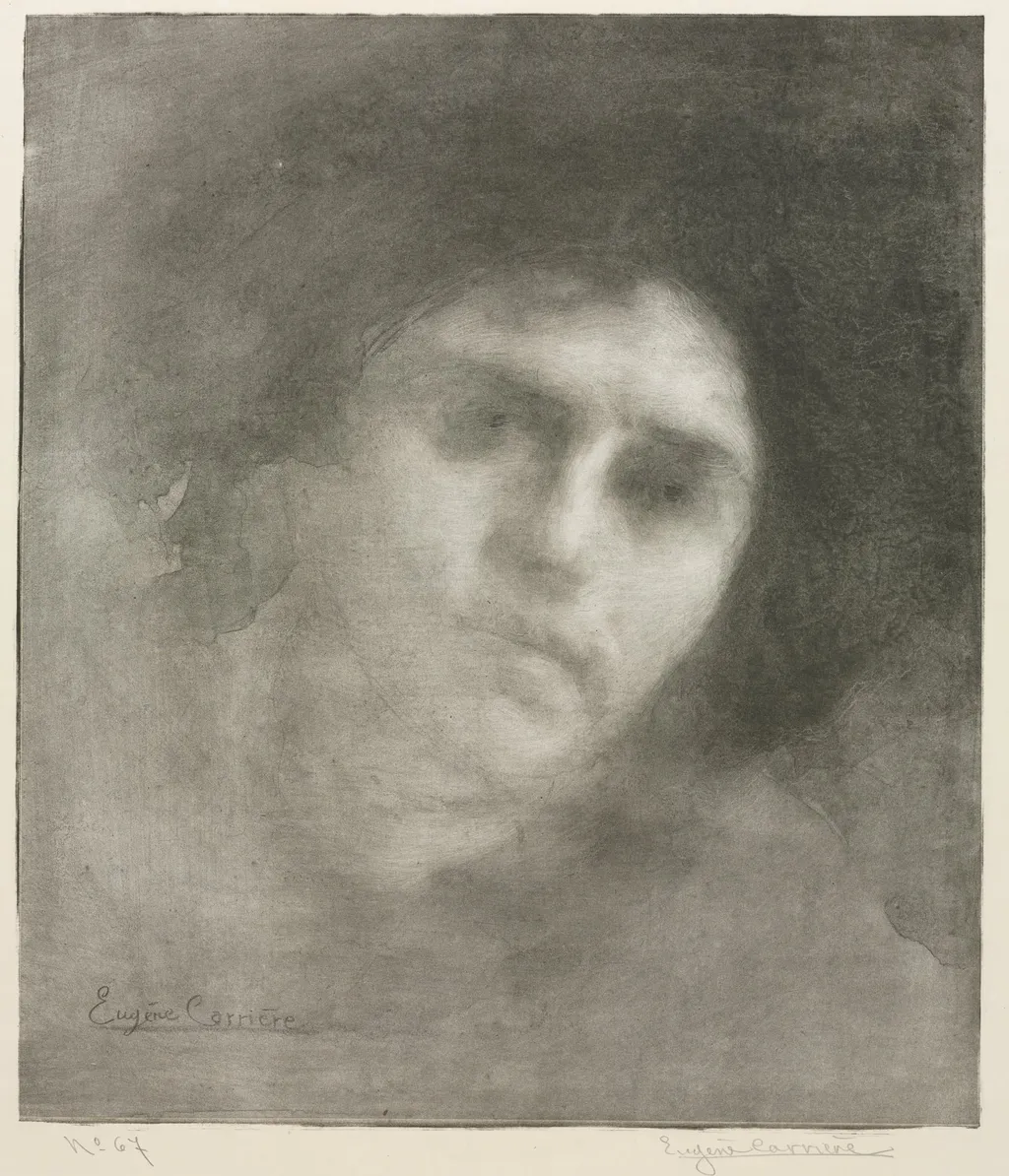
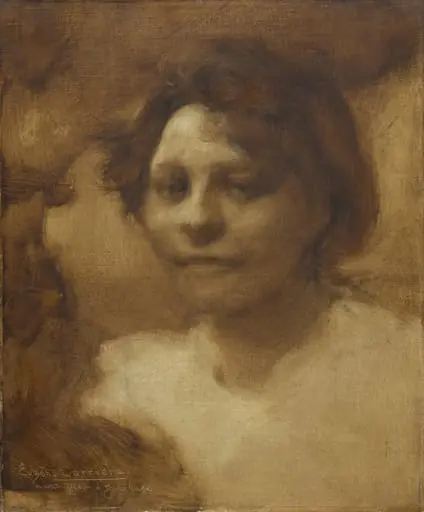
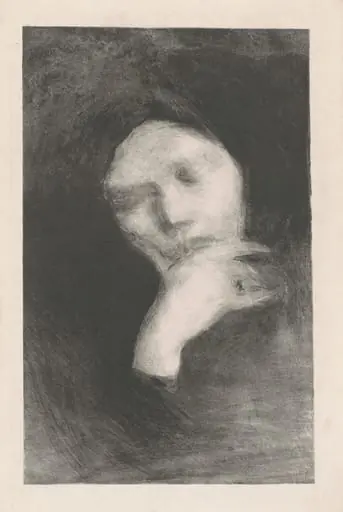
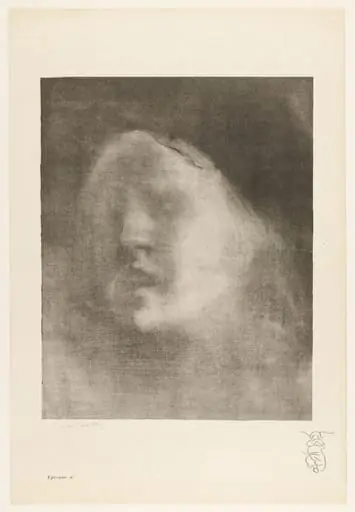
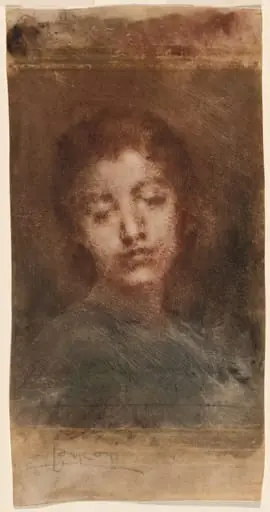
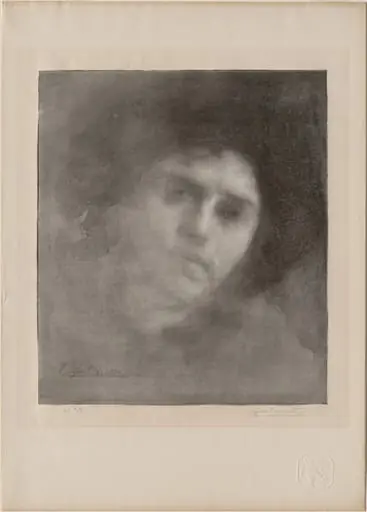
Madame Eugène Carrière (large plate) is a print by the Impressionist artist Eugène Carrière. It dates from 1893 and is held in the collection of the Cleveland Museum of Art.
About this work
Overview
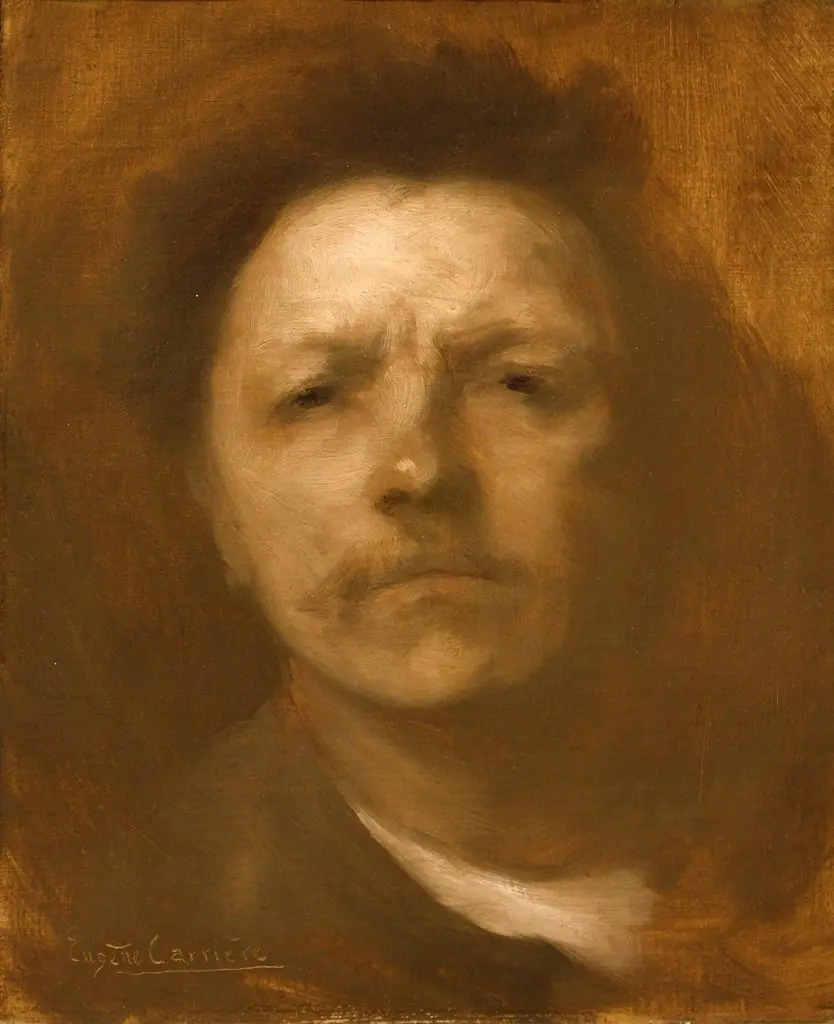
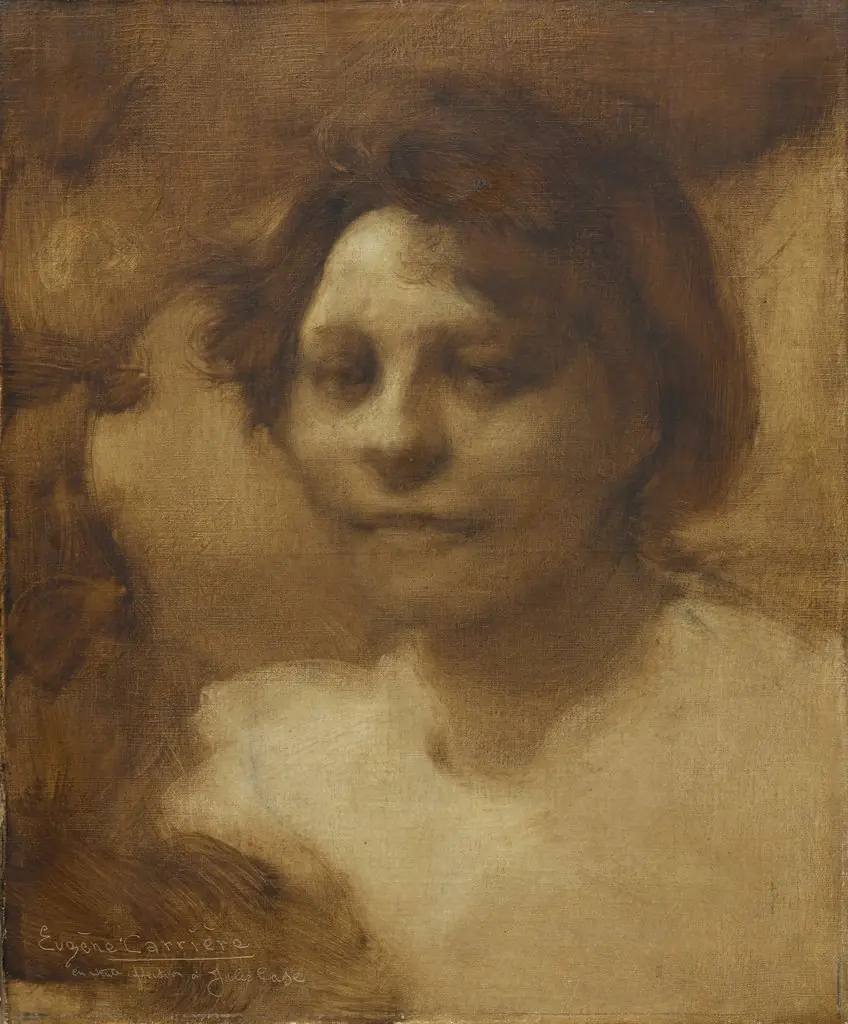
Created in 1893, this large-format print by Eugène Carrière depicts his wife, Madame Carrière, in a tightly framed portrait.
Created in 1893, this large-format print by Eugène Carrière depicts his wife, Madame Carrière, in a tightly framed portrait. Rendered in charcoal or similar medium, the work emphasizes tonal gradation over linear definition. The Cleveland Museum of Art holds this piece as part of its graphic arts collection, reflecting Carrière’s interest in intimate, atmospheric portraiture during the late 19th century.
Subject & Meaning
The subject is the artist’s wife, portrayed without ornament or context, her presence reduced to the quiet intensity of her gaze and the soft contours of her face. The absence of detail and the enveloping darkness suggest introspection rather than narrative. Carrière’s focus on the inner life of his subject aligns with Symbolist tendencies, where emotional resonance supersedes physical realism.
Technique & Style
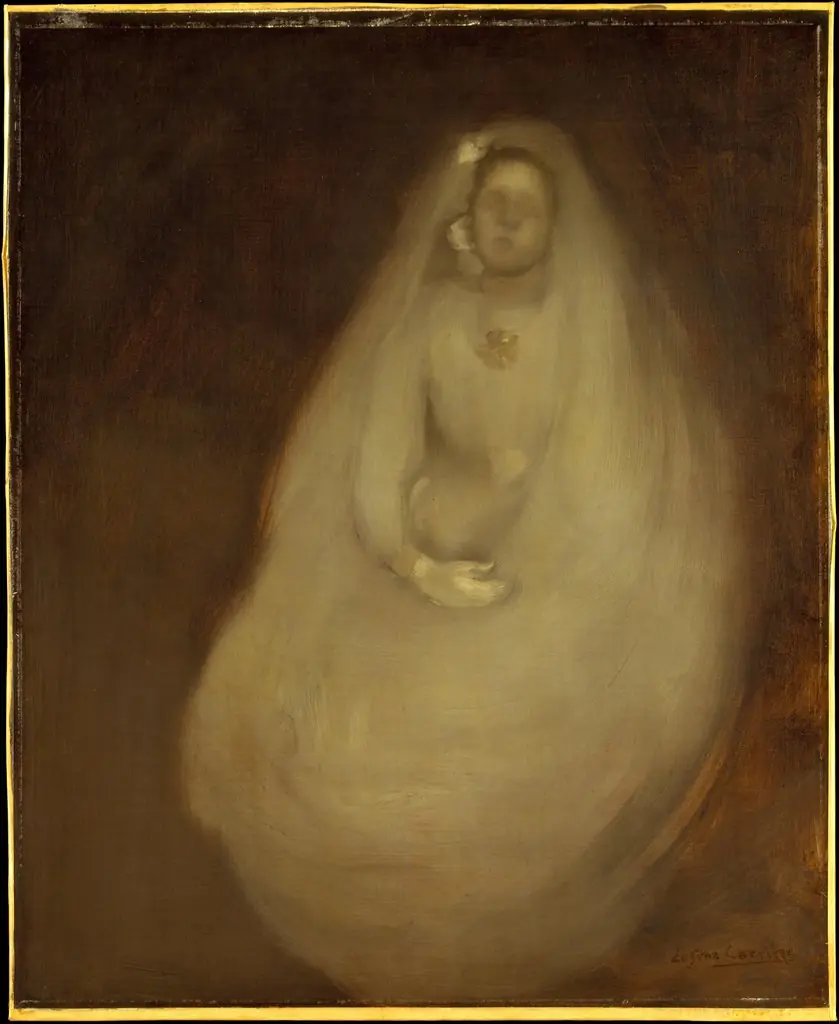
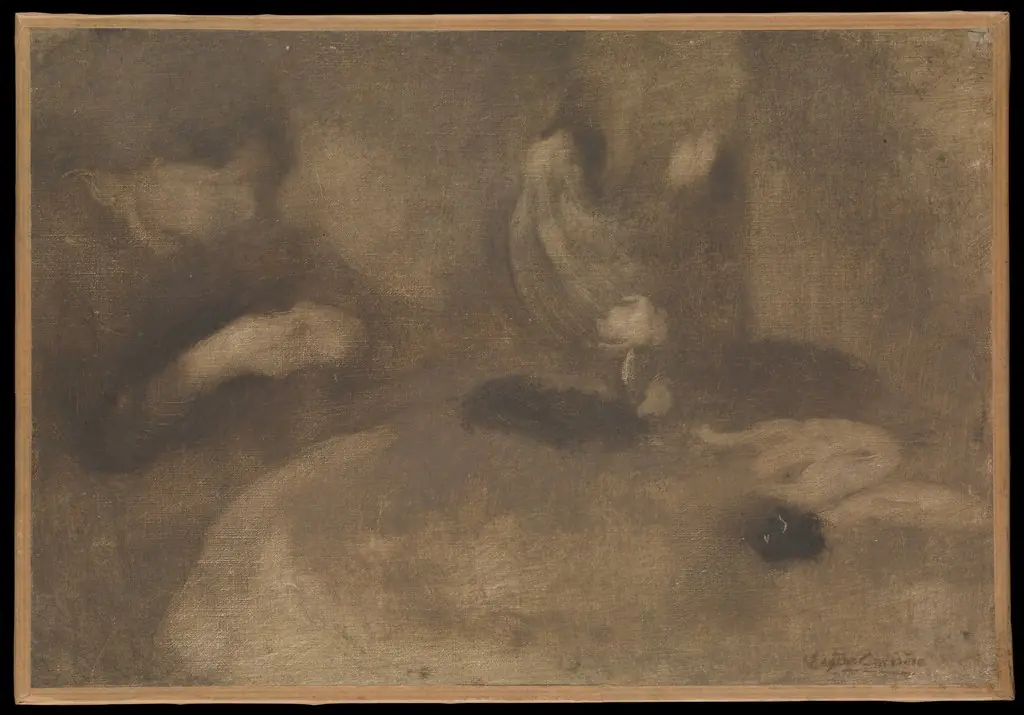
Carrière employed smudged, blended lines to dissolve edges and create a sense of form emerging from shadow. The background recedes into near-absence, while the face is modeled through subtle shifts in gray, achieving a chiaroscuro effect without strong contrasts. This method minimizes detail, prioritizing mood and the psychological weight of the sitter’s expression.
History & Provenance
The print was made during a period when Carrière was refining his signature style, often depicting family members in dim, enclosed spaces. It entered the Cleveland Museum of Art’s collection through established acquisition channels in the 20th century, likely as part of a broader interest in French graphic art from the fin de siècle.
Context
Carrière worked alongside Symbolist writers and artists who rejected naturalism in favor of evocative, ambiguous imagery. His portraits, including this one, responded to contemporary shifts in perception, where inner states were considered as valid subjects as external appearances. The work reflects a broader cultural turn toward psychological depth in visual art.
Legacy
Though not widely reproduced, Carrière’s approach influenced later artists seeking to convey emotion through tonal subtlety rather than detail. His use of atmospheric softness prefigured modernist experiments in abstraction and psychological portraiture, establishing a quiet but enduring precedent in 20th-century printmaking.
Artist & collection

Artist
Eugène Anatole Carrière was a French Symbolist artist of the fin-de-siècle period.