Artwork
Étude de femme (Study of a Woman)
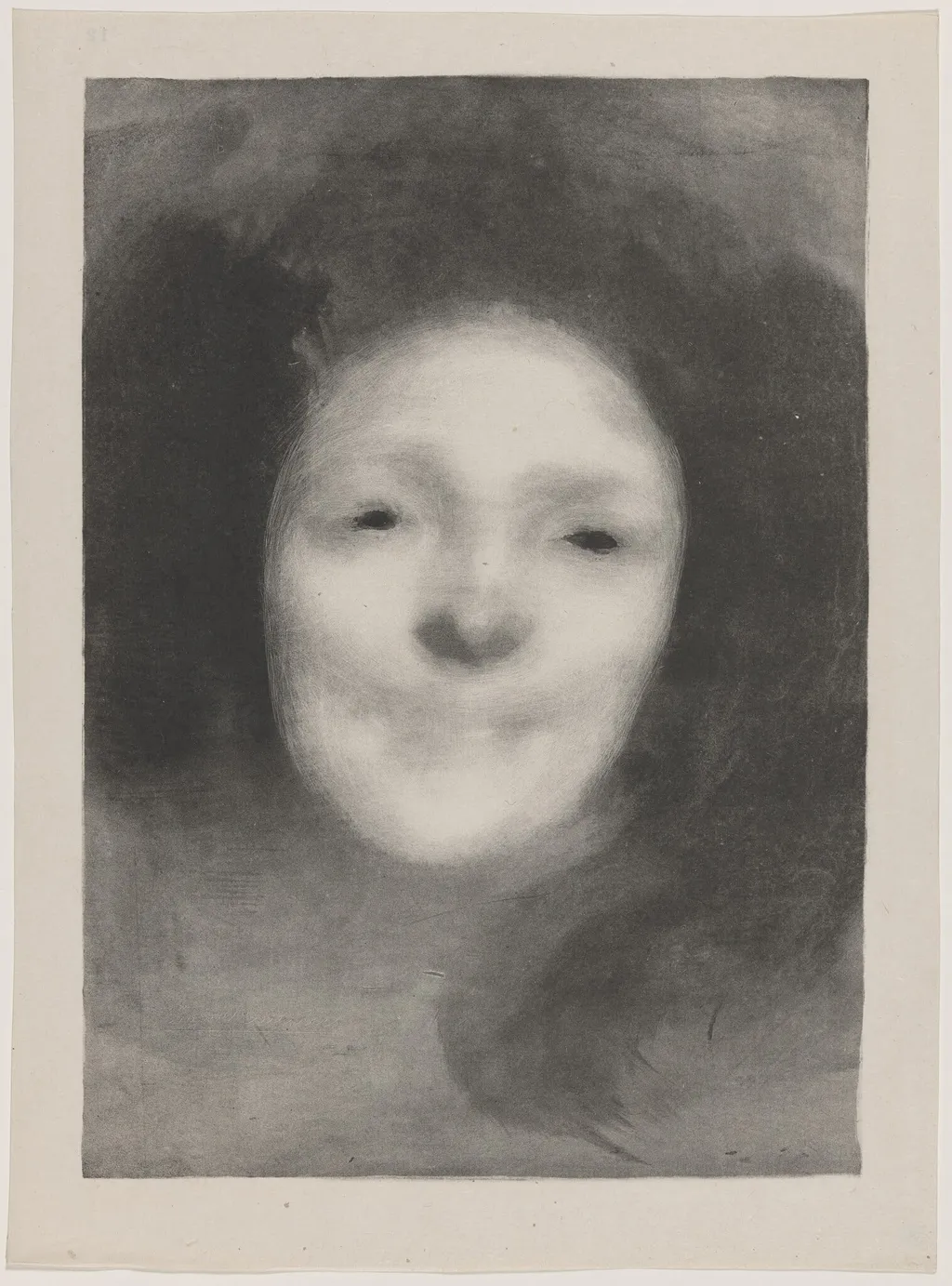
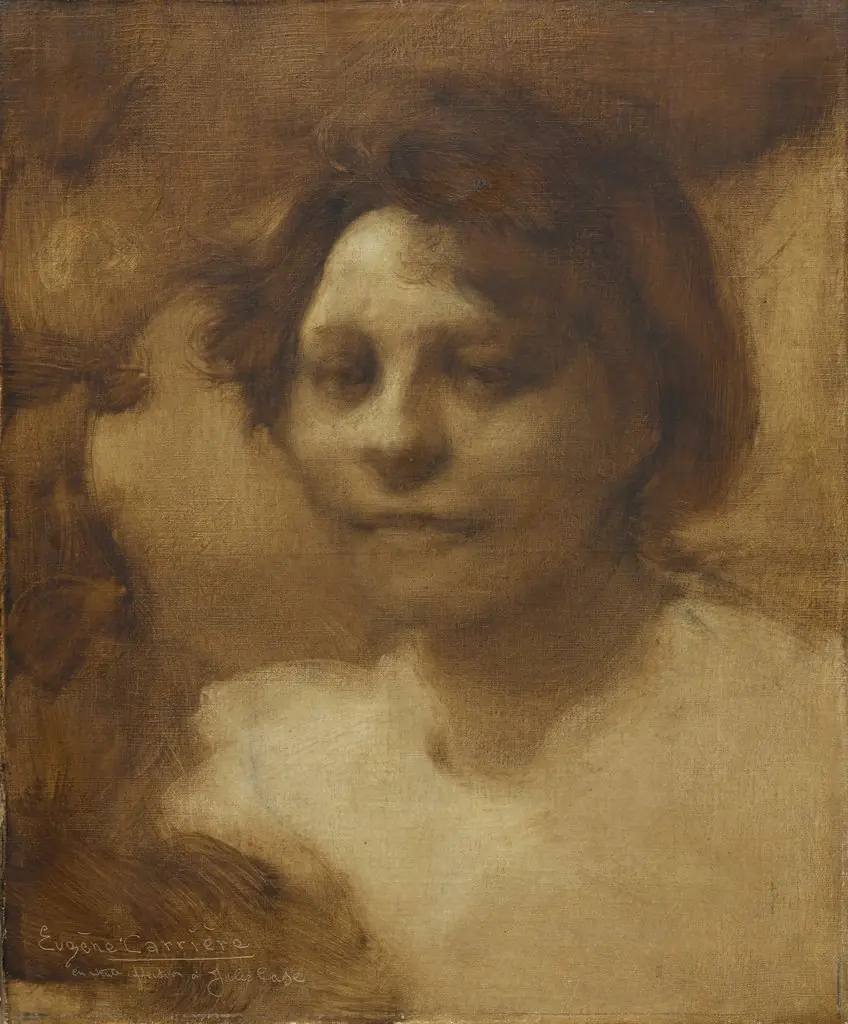
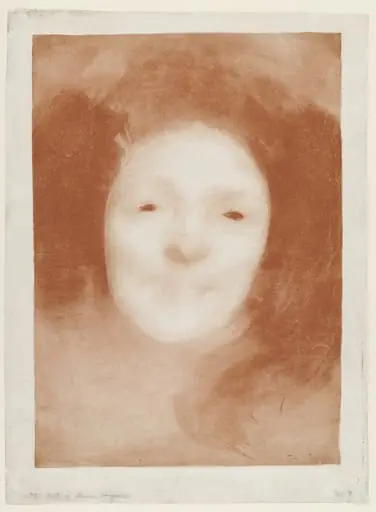
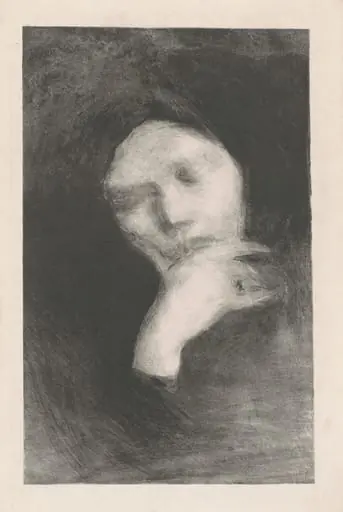
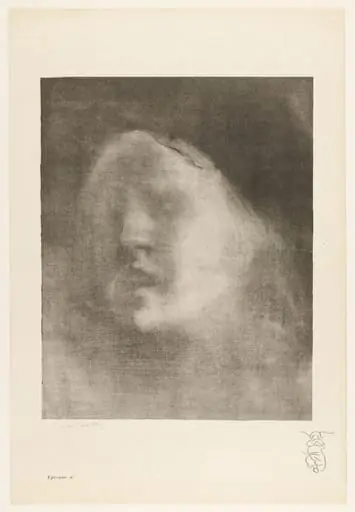
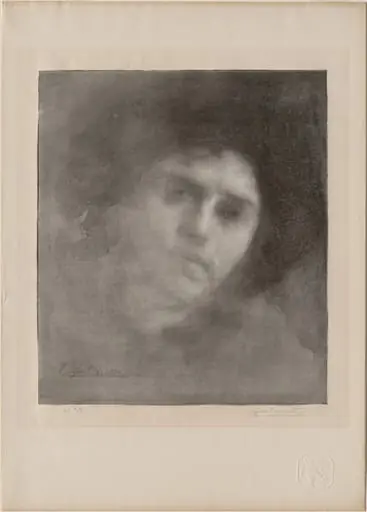
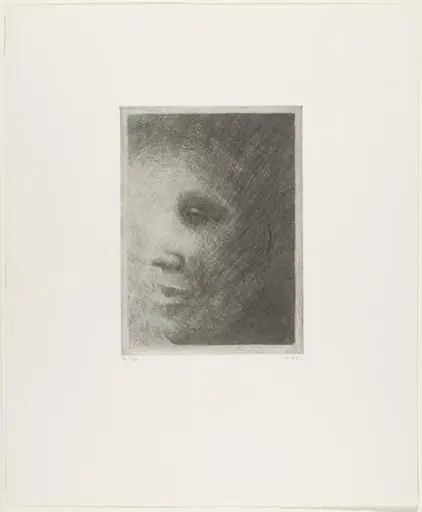
Étude de femme (Study of a Woman) is an ink print by the Impressionist artist Eugène Carrière. It dates from 1894 and is held in the collection of the National Gallery of Art.
About this work
Overview
Étude de femme (Study of a Woman) is a 1894 lithograph by Eugène Carrière, a French Symbolist artist. The work is a portrait executed in black on china paper.
Subject & Meaning
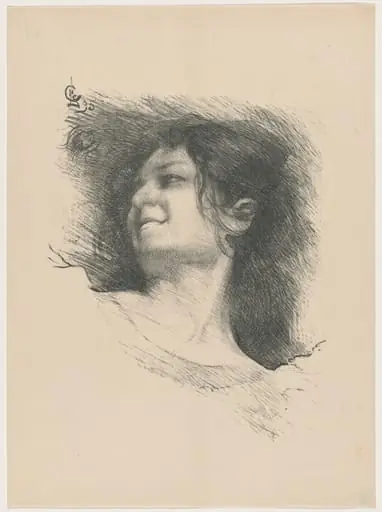
The lithograph presents a close-up view of a woman's face, characterized by a calm yet serious expression. The simplicity of the background focuses attention on the subject's features, rendered in soft black lines and shading.
Technique & Style
Carrière employed a smooth, unadorned style to capture the subject's features, prioritizing the study of light and form. The lithograph showcases his characteristic diffused forms and subdued tonalities, achieved through the use of black ink on china paper.
Context
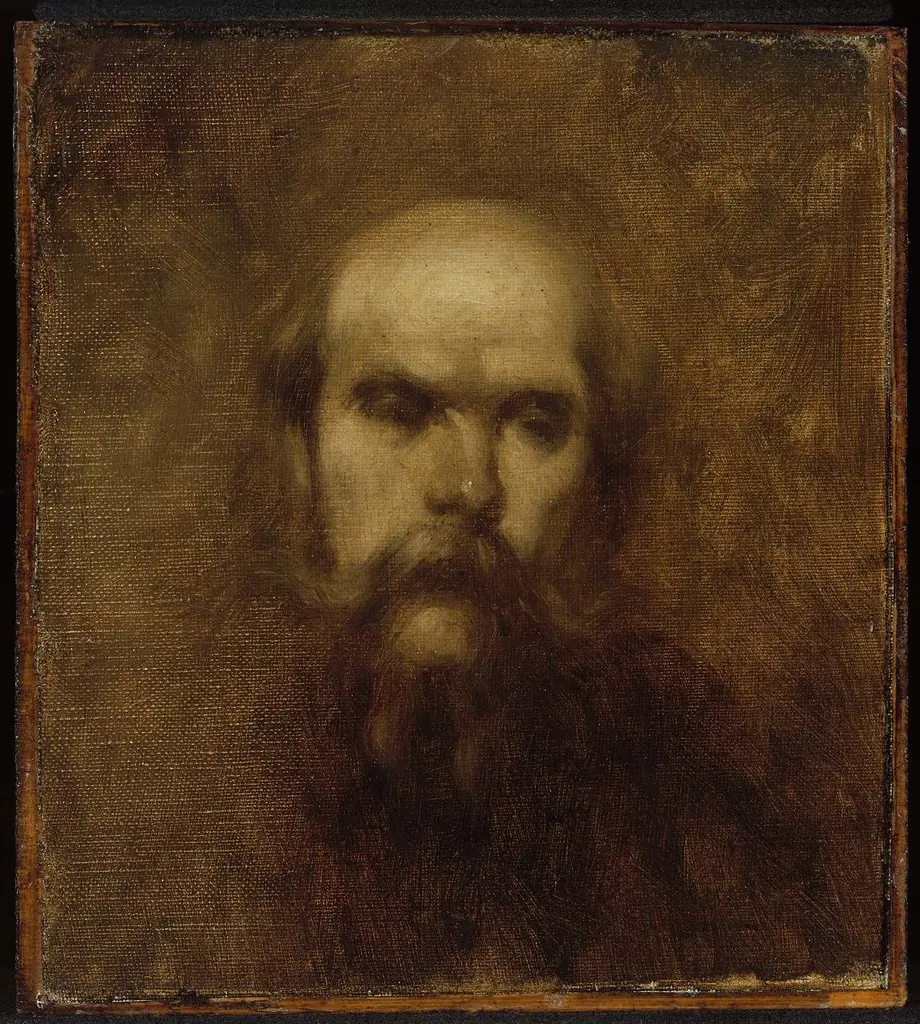
Carrière's work was associated with the Symbolist movement, which emphasized mood and suggestion. His connections to writers like Paul Verlaine and Stéphane Mallarmé, as well as artists such as Auguste Rodin, situate Étude de femme within the broader artistic landscape of late 19th-century France.
Artist & collection

Artist
Eugène Anatole Carrière was a French Symbolist artist of the fin-de-siècle period.