Artwork
Pierre Puvis de Chavannes
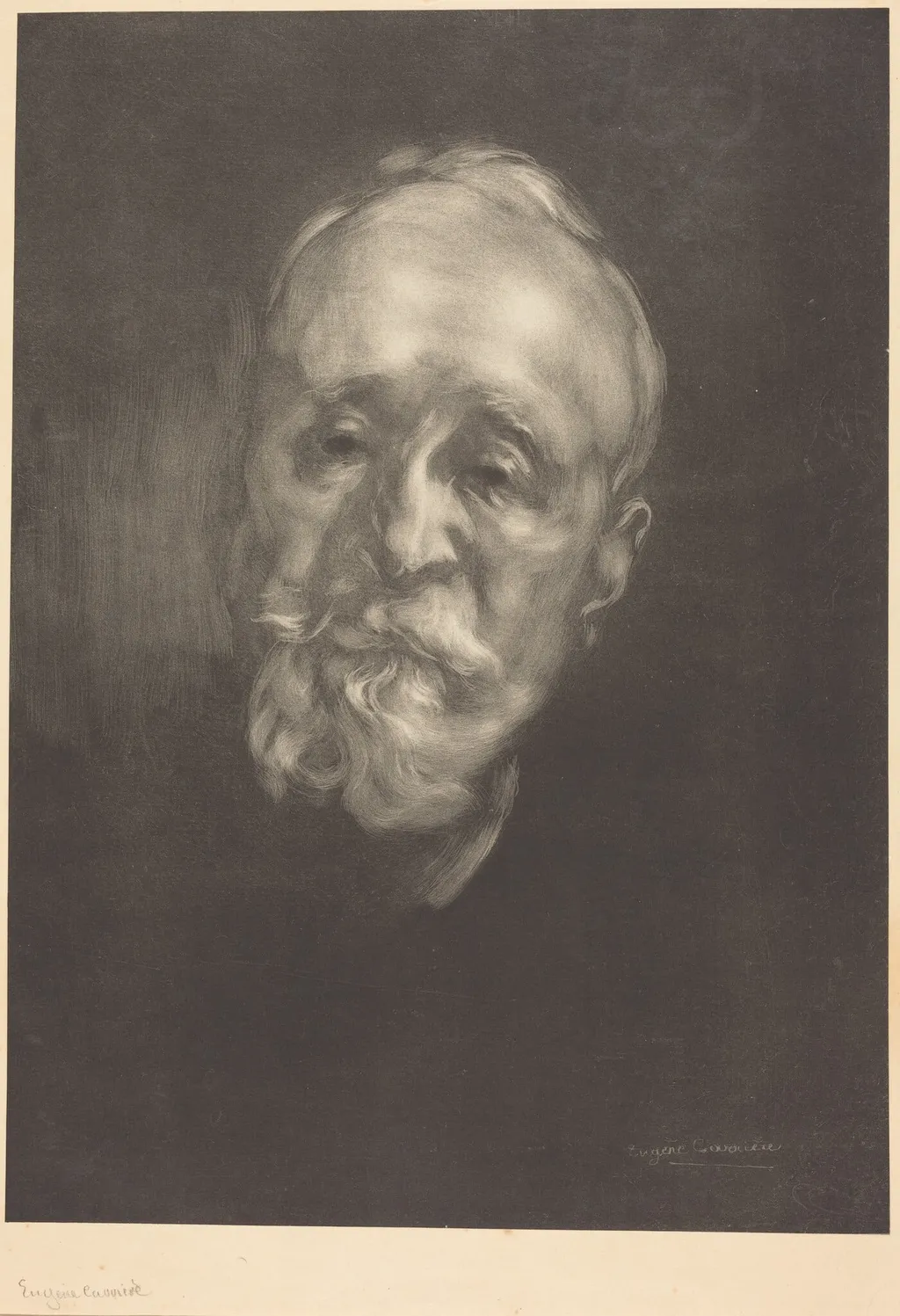
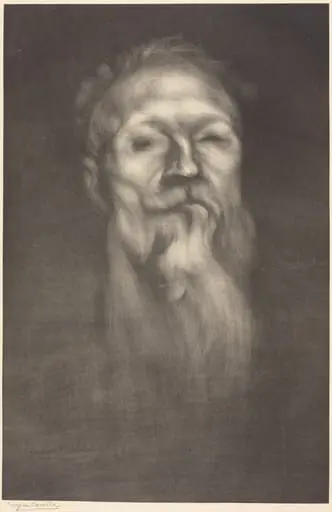
Pierre Puvis de Chavannes is an ink print by the Impressionist artist Eugène Carrière. It dates from 1897 and is held in the collection of the National Gallery of Art.
About this work
The artist used a printing method called lithography, which lets you create fine details with ink on stone.
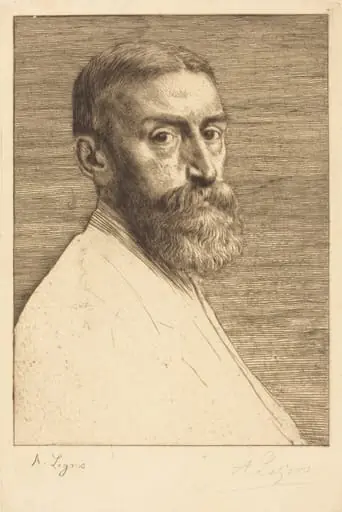
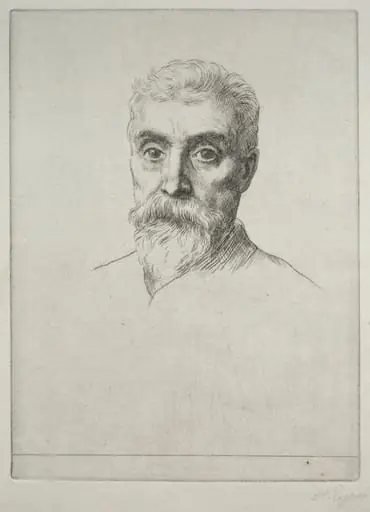
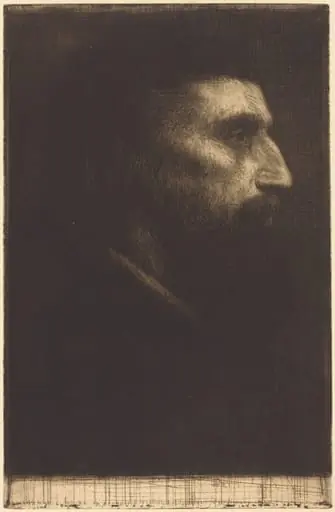
This is a close-up portrait of an older man with a bald head and a long, wavy white beard. His face is lit softly from above, showing wrinkles and a calm expression. The background is plain and dark, so all the focus stays on his face.
The artist used a printing method called lithography, which lets you create fine details with ink on stone. This piece was made in 1897, and the artist signed it in the corner.
Next, look up lithography to see how it works.
Overview
Eugène Carrière’s 1897 lithograph presents a close‑up portrait of the older painter Pierre Puvis de Chavannes. Rendered in a restrained, near‑monochrome range, the image focuses on the subject’s bald head, white beard and serene expression, set against a dark, unadorned background that isolates the figure.
Subject & Meaning
The work depicts Puiss de Chavannes, a leading Symbolist painter, emphasizing his contemplative demeanor. By rendering him in soft, diffused light, Carrière highlights the intellectual gravitas associated with the artist, reflecting the period’s fascination with inner life and poetic introspection.
Technique & Style
Executed in lithography, the print exploits the medium’s capacity for subtle tonal variation. Carrière’s handling of ink on stone yields delicate gradations that convey the texture of skin and beard while maintaining the muted palette typical of his Symbolist‑leaning approach.
History & Provenance
Created in 1897, the lithograph bears Carrière’s signature in the lower corner, confirming its authorship. Carrière, active in the fin‑de‑siècle French art scene, was closely connected to literary figures such as Paul Verlaine and Stéphane Mallarmé, situating the work within a network of artistic and intellectual exchange.
Context
The portrait emerges from a French cultural moment where Symbolist painters and poets sought to evoke mood over realism. Carrière’s choice of a subdued tonal scheme and intimate portrayal aligns with the broader aesthetic of the era, which favored suggestion and emotional resonance.
Own this work as a print
Artist & collection

Artist
Eugène Anatole Carrière was a French Symbolist artist of the fin-de-siècle period.

![Self-Portrait [recto], by Paul Cezanne](https://artifactworldgallery.com/img/paul-cezanne--self-portrait-recto--d76a05e14030ebd2-w320.webp)