Artwork
Anastasia
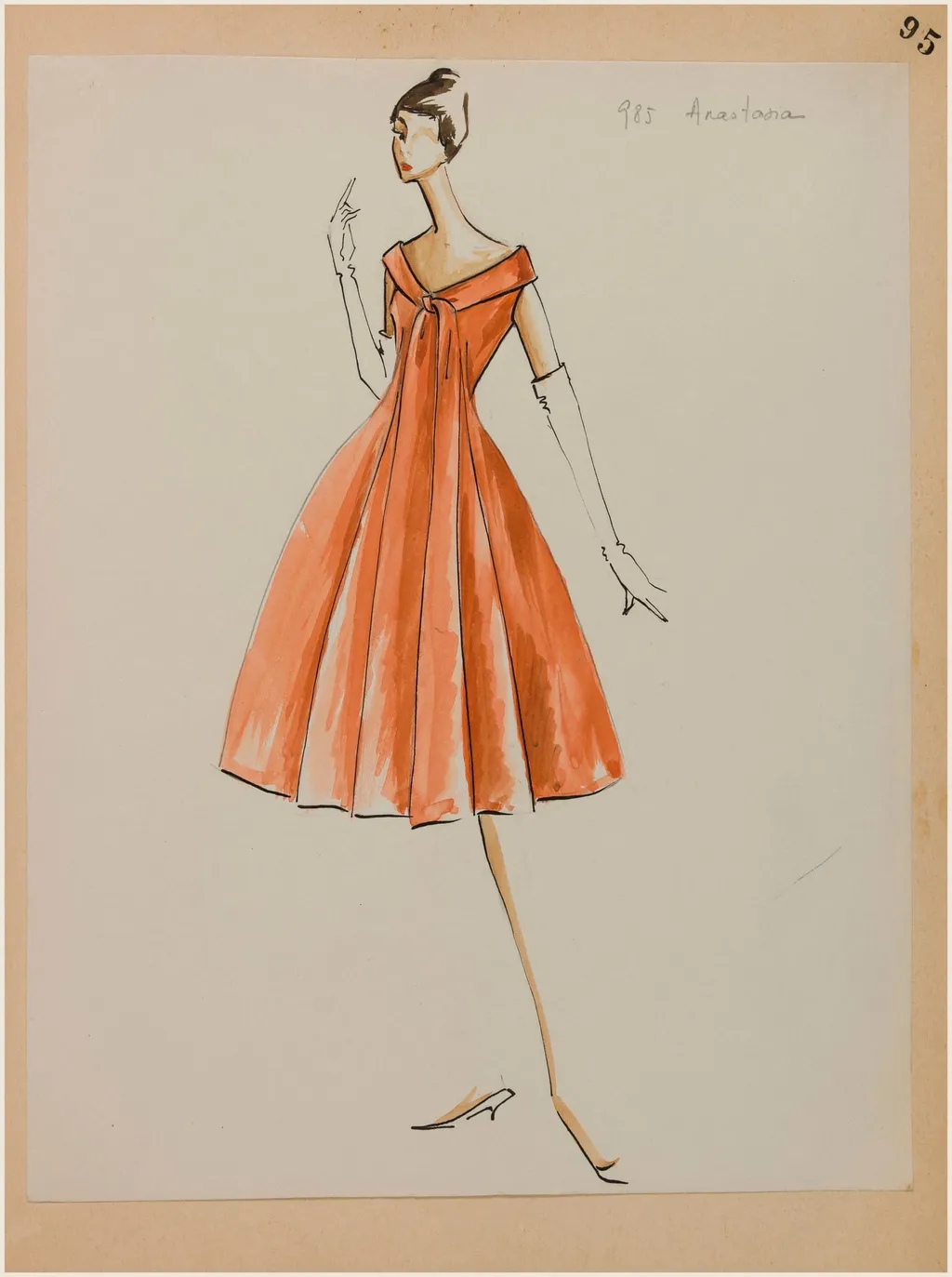
Anastasia is a drawing by Carven. It dates from 1958 and is held in the collection of the Palais Galliera - Musée de la Mode de la Ville de Paris.
About this work
Overview
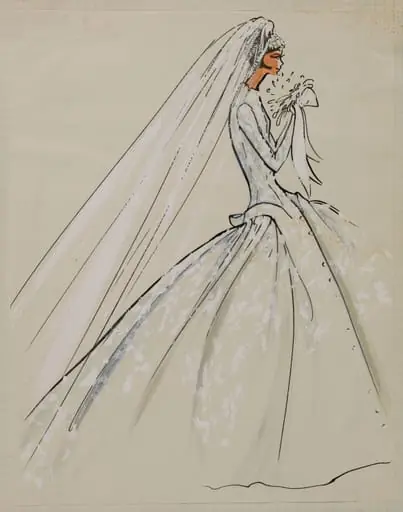
Created around 1958, Anastasia is a pencil and ink sketch attributed to the fashion designer Carven. It resides in the collection of the Museum of Ethnography. The work presents a single figure in motion, rendered with economical yet assured lines. Its modest scale and unadorned inscription suggest it was intended as a design study rather than a finished artwork.
Subject & Meaning
The absence of facial detail and the focus on silhouette suggest the emphasis was on form and movement, not individual identity.
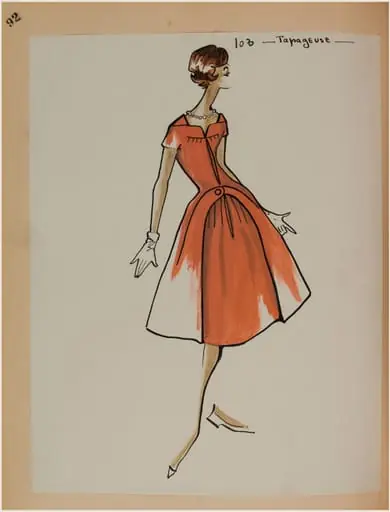
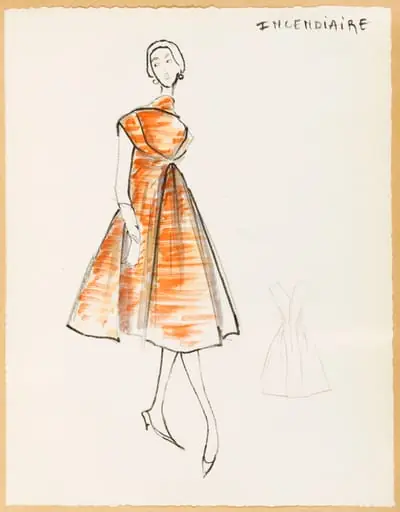
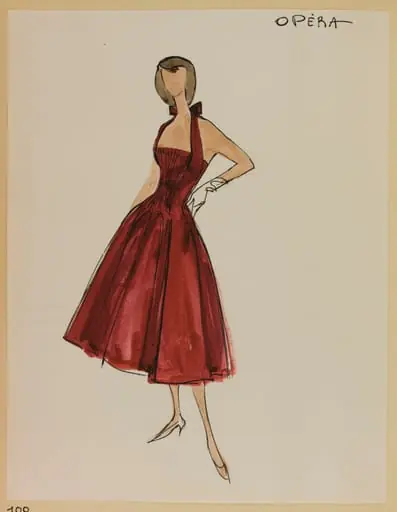
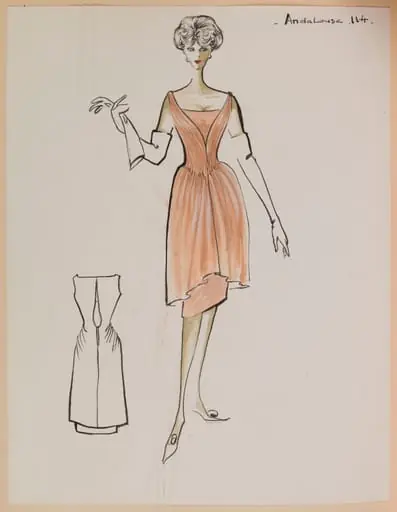
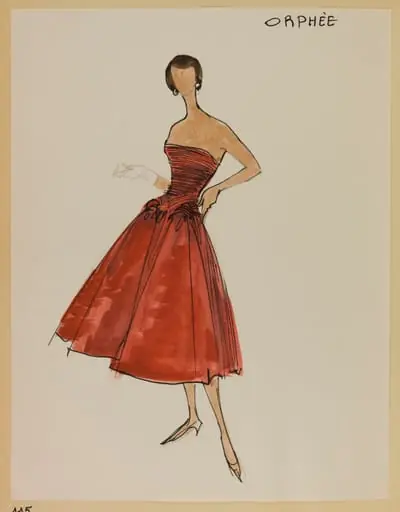
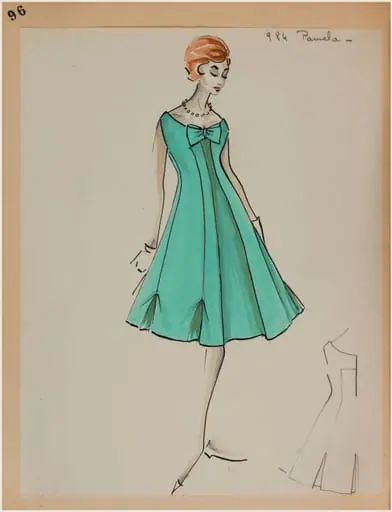
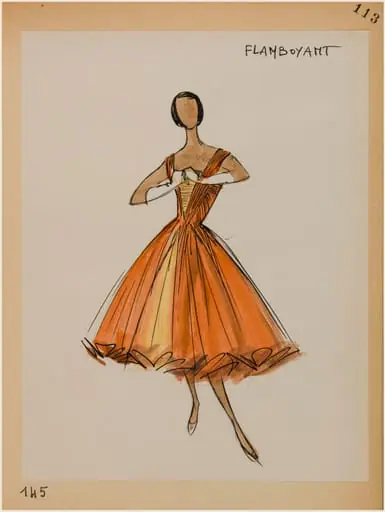
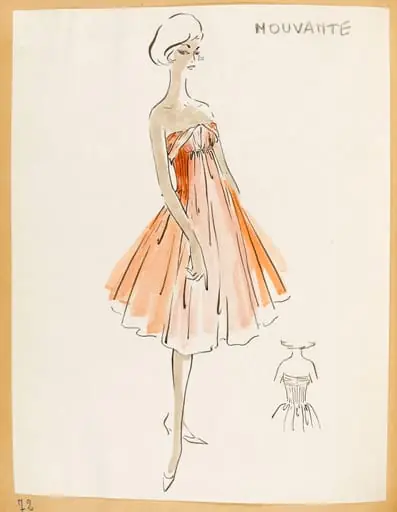
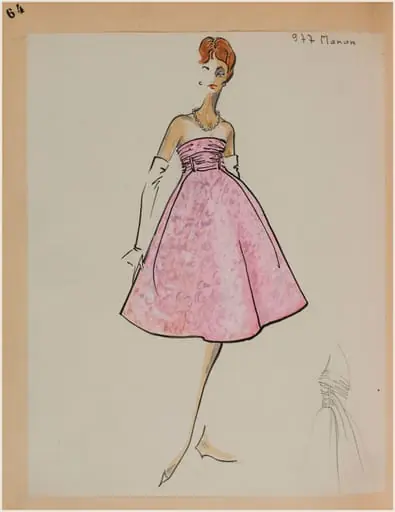
The figure depicts a woman in a tailored red gown with a high collar and nipped waist, the skirt flaring into gentle folds. Black gloves and pointed shoes complete the ensemble. The name 'Anastasia' inscribed in the corner implies this was a proposed design, possibly for a specific client or collection. The absence of facial detail and the focus on silhouette suggest the emphasis was on form and movement, not individual identity.
Technique & Style
The drawing employs loose, rapid brushwork for the dress, capturing fabric flow with minimal strokes. Hands and facial features are suggested with faint, sketchy lines, indicating the artist prioritized the garment’s structure over anatomical precision. The ink lines are controlled but not rigid, conveying spontaneity. The handwriting of the title is plain and legible, reflecting a functional rather than decorative intent.
History & Provenance
The sketch entered the Museum of Ethnography’s holdings in the late 20th century, likely as part of a broader acquisition of mid-century fashion materials. Its origin as a working design document is supported by its unpolished execution and lack of embellishment. No record of public exhibition prior to its museum acquisition has been documented.
Context
In the late 1950s, Parisian fashion houses often produced such sketches to communicate designs to ateliers. Carven, known for refined yet wearable styles, frequently used this method. The drawing aligns with the era’s emphasis on feminine silhouettes and subtle elegance, contrasting with the more dramatic forms emerging in haute couture at the time.
Legacy
Anastasia remains a quiet example of fashion’s behind-the-scenes process. It reflects how designers translated ideas into tangible forms through minimal means. While not widely known outside specialist circles, it contributes to understanding the practical artistry of mid-century French fashion design.
Artist & collection
Artist
These delicate ink-on-paper drawings capture the quiet poetry of everyday things: pinecones, reeds, apples.
Museum
Palais Galliera - Musée de la Mode de la Ville de Paris
Continue through works from the same source collection.