Artwork
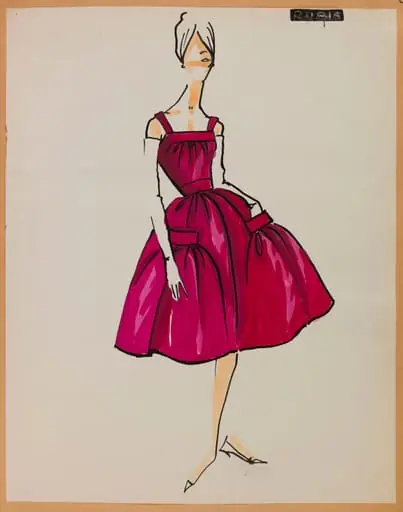
Robe à bretelles fuchsia avec deux grandes poches sur la jupe
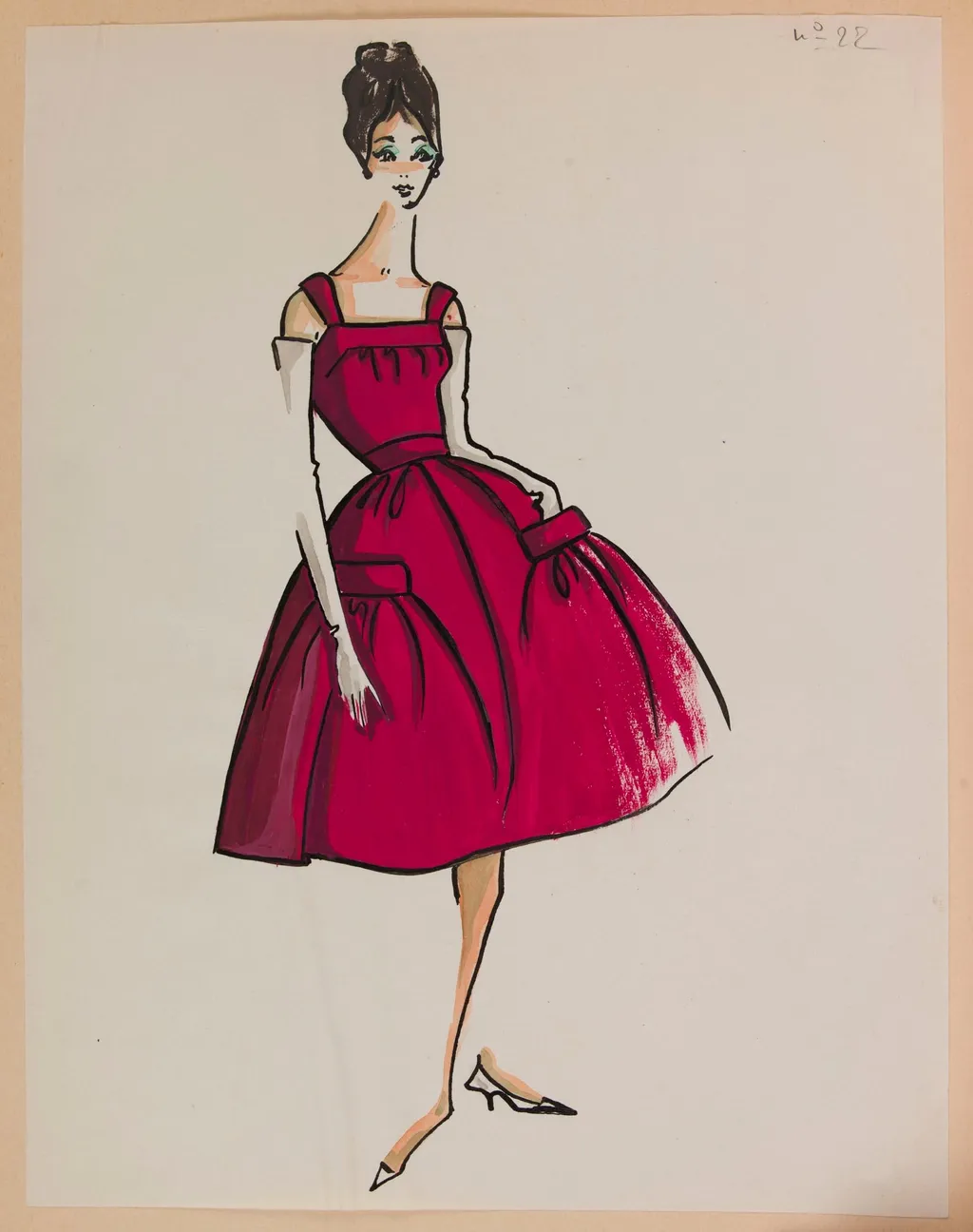
Robe à bretelles fuchsia avec deux grandes poches sur la jupe is a drawing by Carven. It dates from 1959 and is held in the collection of the Palais Galliera - Musée de la Mode de la Ville de Paris.
About this work
Overview
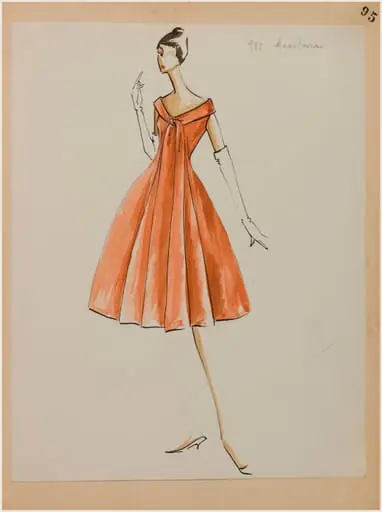
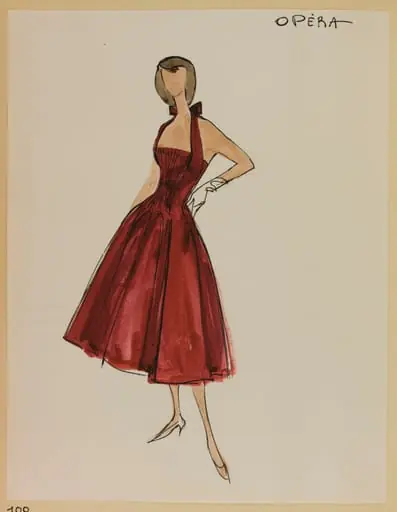
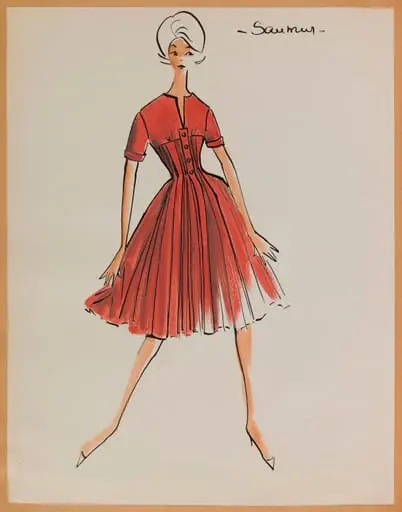
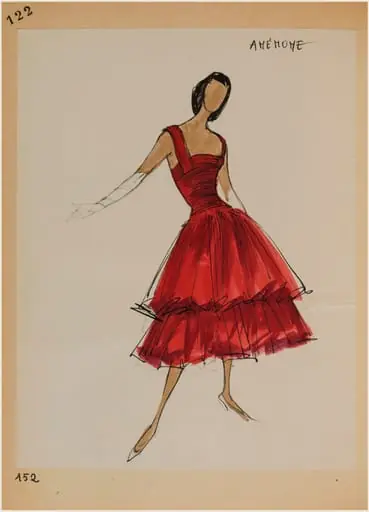
Rendered in ink or pencil, the drawing captures a fuchsia dress with thin straps, a tailored bodice, and a full skirt featuring two large side pockets.
This fashion sketch, dated circa 1959, depicts a dress design by the French label Carven. Rendered in ink or pencil, the drawing captures a fuchsia dress with thin straps, a tailored bodice, and a full skirt featuring two large side pockets. The figure, shown in profile, holds a small white clutch and wears plain black heels. The background is unadorned, directing focus to the garment’s form and color.
Subject & Meaning
The design emphasizes practicality within feminine silhouettes, combining a structured upper body with a voluminous skirt and functional pockets—unusual in women’s wear of the period. The bright pink hue suggests a playful, modern sensibility, while the loose, rapid linework conveys spontaneity, possibly reflecting the sketch’s role as a working design rather than a finished presentation.
Technique & Style
Executed with swift, confident strokes, the drawing prioritizes gesture over detail. Contours are fluid, shading minimal, and color applied boldly to highlight the dress’s hue. The absence of facial features or environmental context focuses attention on the garment’s cut and movement, aligning with fashion illustration traditions that treat clothing as the primary subject.
History & Provenance
The sketch is part of the collection at the Museum of Ethnography, suggesting its significance as a cultural artifact rather than merely a commercial design. Its preservation indicates recognition of Carven’s influence in postwar French fashion, particularly in redefining women’s wear with functional elegance during a period of social change.
Context
In late 1950s France, fashion was shifting toward more relaxed, wearable designs. Carven, known for blending sophistication with everyday utility, responded to women’s growing desire for mobility and comfort. This sketch reflects that trend, positioning pockets not as novelty but as integral to the garment’s identity, challenging conventional notions of feminine dress.
Legacy
The sketch endures as a record of mid-century design thinking, illustrating how haute couture houses translated practical needs into aesthetic form. Its preservation in an ethnographic context underscores its value as a cultural document, revealing how clothing choices reflected broader societal shifts in gender, function, and identity during the postwar era.
Artist & collection
Artist
These delicate ink-on-paper drawings capture the quiet poetry of everyday things: pinecones, reeds, apples.
Museum
Palais Galliera - Musée de la Mode de la Ville de Paris
Continue through works from the same source collection.