Artwork
Flamboyant
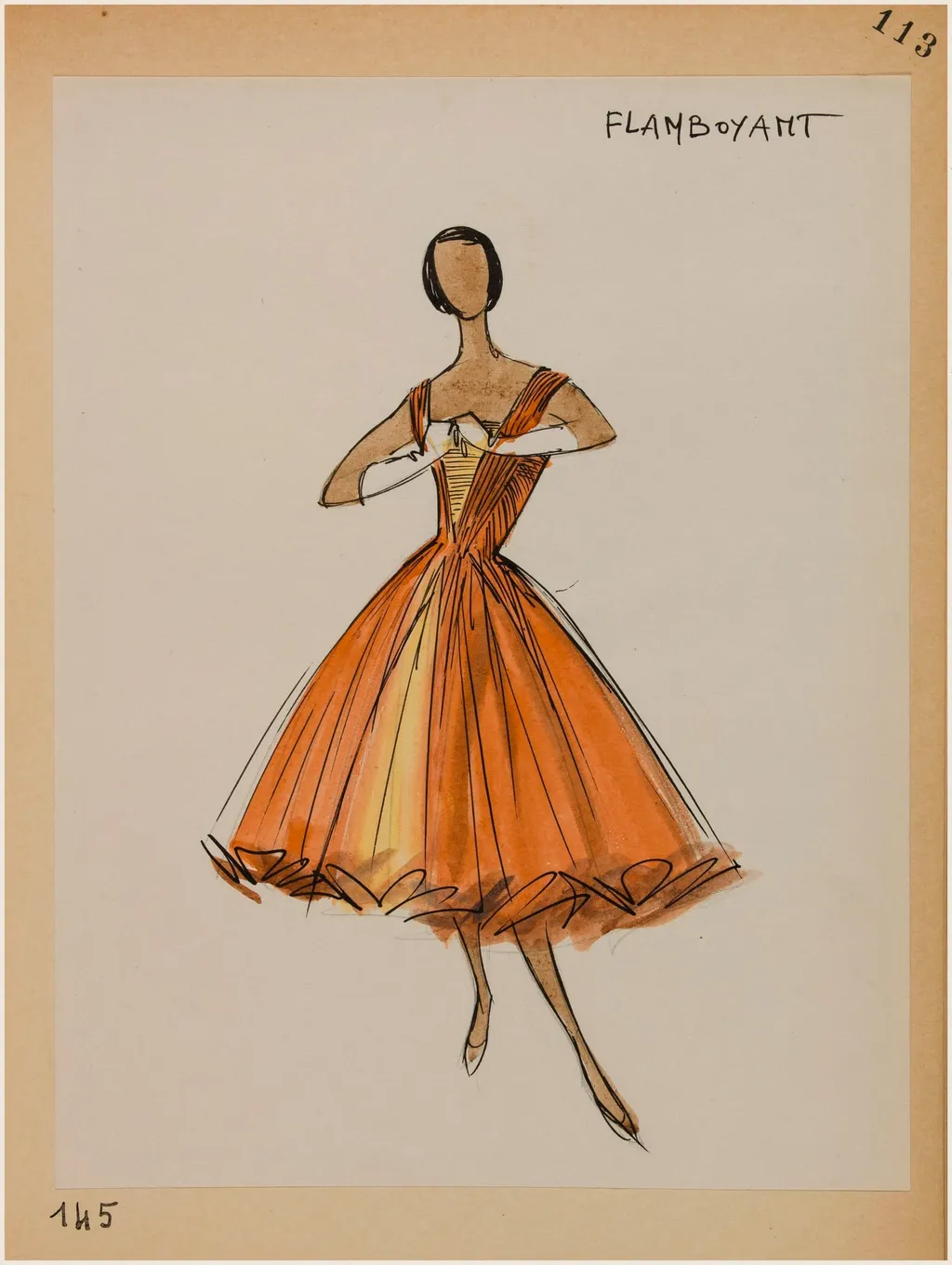
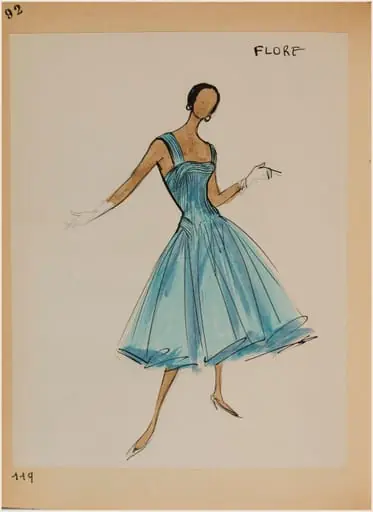
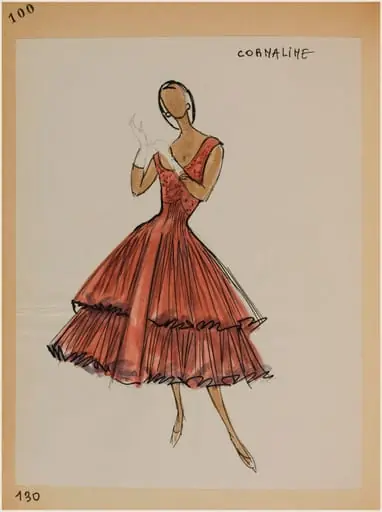
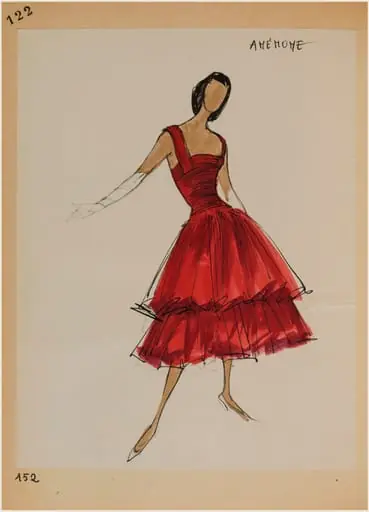
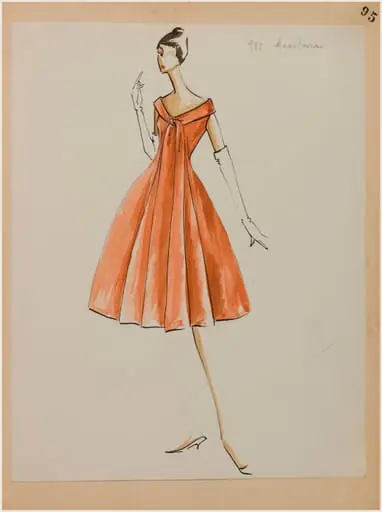
Flamboyant is a drawing by Marie-Louise Carven. It dates from 1956 and is held in the collection of the Palais Galliera - Musée de la Mode de la Ville de Paris.
About this work
Overview
Marie-Louise Carven, born Carmen de Tommaso, founded her fashion house in Paris in 1945, focusing on accessible, well-tailored clothing for smaller frames.
Marie-Louise Carven, born Carmen de Tommaso, founded her fashion house in Paris in 1945, focusing on accessible, well-tailored clothing for smaller frames. Her 1956 design sketch titled Flamboyant reflects her commitment to playful, wearable elegance. Executed in loose watercolor and ink, the drawing captures a dress with a fitted bodice and a flared, pleated skirt, embodying the energy of postwar French fashion. The sketch resides in the Museum of Ethnography’s collection.
Subject & Meaning
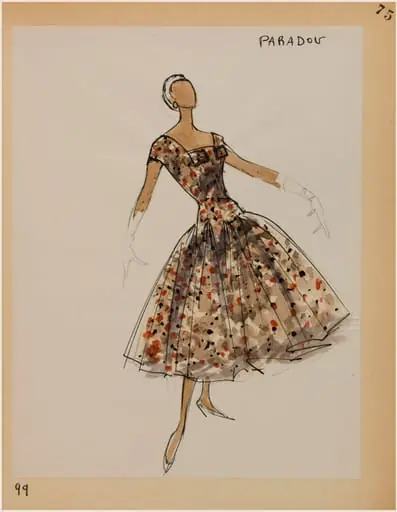
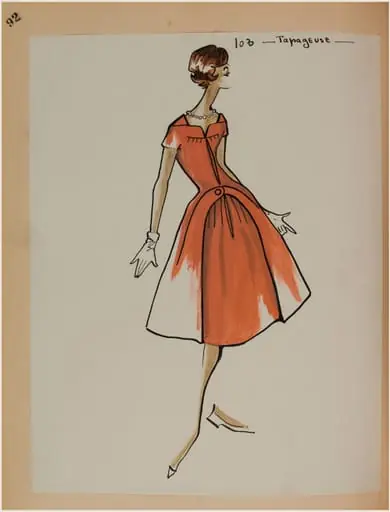
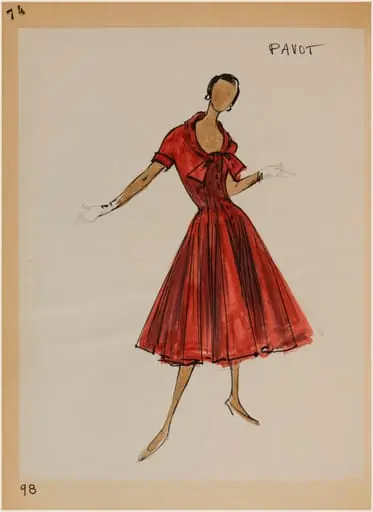
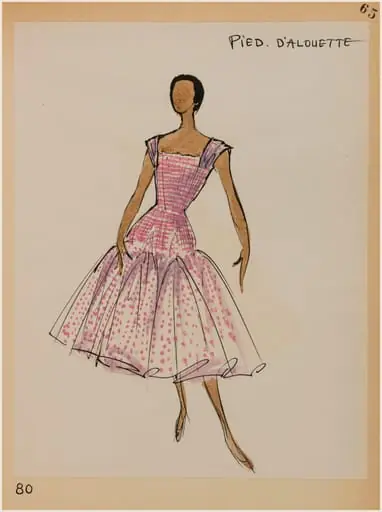
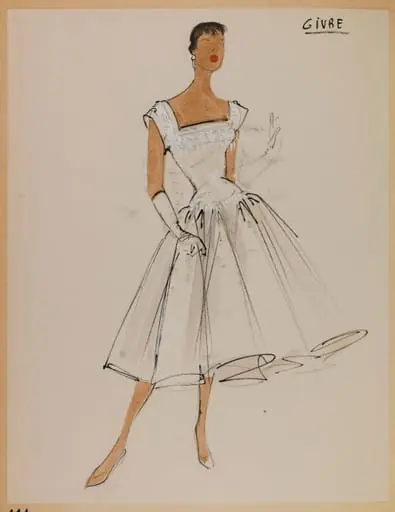
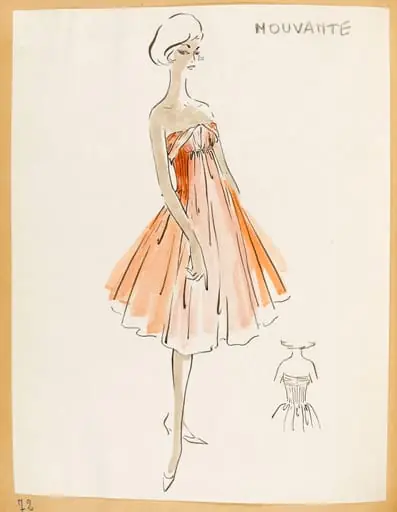
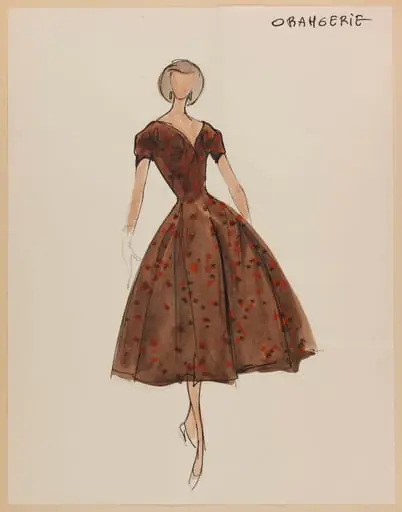
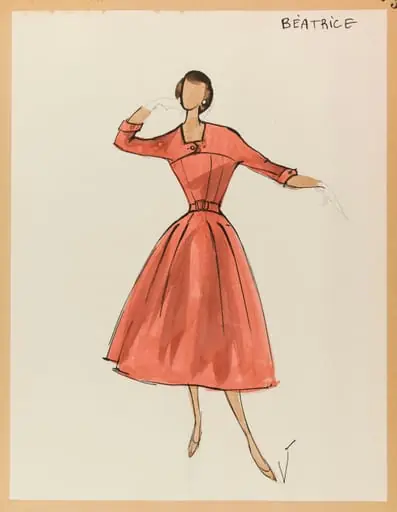
The sketch depicts a dress designed for movement and vitality, with a deep V-neck, slender straps, and a skirt divided into sharp, radiating pleats. The title Flamboyant signals a deliberate embrace of boldness and theatricality, countering the austerity of wartime dress. Carven’s choice of dynamic form and warm, earthy tones suggests a celebration of feminine energy, rooted in everyday life rather than haute couture spectacle.
Technique & Style
Executed with rapid brushwork and translucent watercolor washes, the sketch conveys motion through loose, expressive lines. The fabric’s texture is implied rather than detailed, relying on color gradients and gestural strokes to suggest flow and volume. The absence of rigid outlines and the spontaneity of the medium reflect Carven’s preference for intuitive design, prioritizing feeling over precision in the creative process.
History & Provenance
Created in 1956, Flamboyant emerged during Carven’s peak influence in Parisian prêt-à-porter. The sketch was retained within her personal archive and later acquired by the Museum of Ethnography, where it serves as a document of mid-century design practice. Its preservation underscores its value not as a finished garment but as a record of conceptual development in accessible fashion.
Context
In the 1950s, Parisian fashion was divided between haute couture and emerging ready-to-wear markets. Carven positioned herself in the latter, designing for working women who sought style without extravagance. Flamboyant reflects this ethos: its dramatic silhouette is rendered in lightweight materials and simplified construction, aligning with the practical demands of modern life while retaining visual flair.
Legacy
The sketch exemplifies Carven’s role in democratizing fashion through thoughtful design. Her integration of movement, color, and proportion into affordable garments influenced later generations of designers focused on wearable art. Flamboyant remains a testament to how informal, rapid design methods could yield enduring ideas, bridging the gap between sketch and street.
Artist & collection
Artist
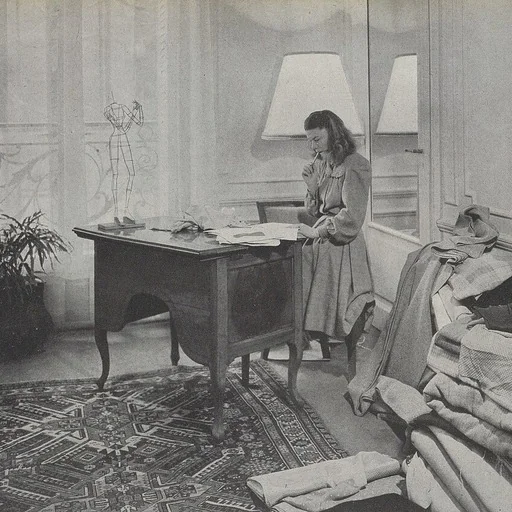
Marie-Louise Carven (31 August 1909 – 8 June 2015), born Carmen de Tommaso, was a French fashion designer who founded the house of Carven in 1945.
Museum
Palais Galliera - Musée de la Mode de la Ville de Paris
Continue through works from the same source collection.
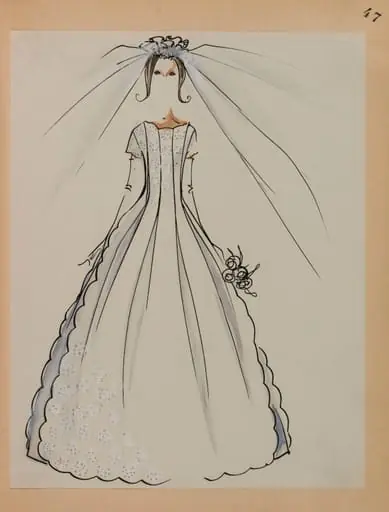 Robe de mariée festonnée et son voile
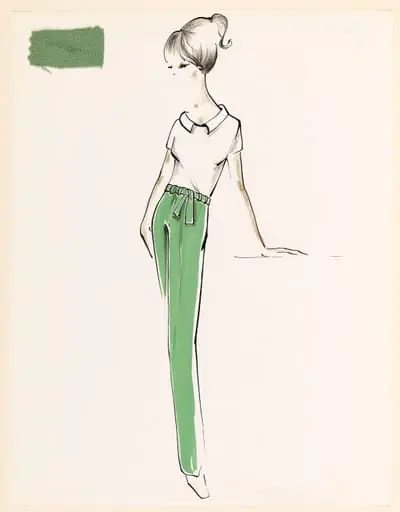 Haut blanc à manches courtes et pantalon vert à ceinture nouée
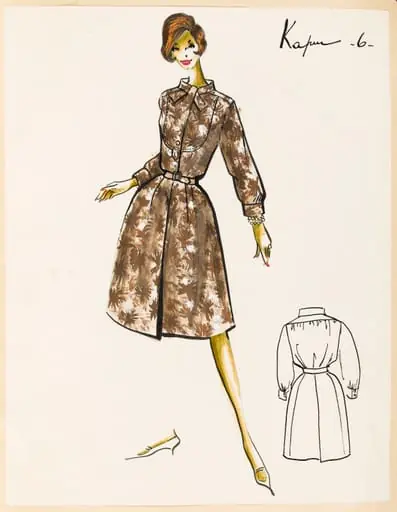 Kapur
Kapur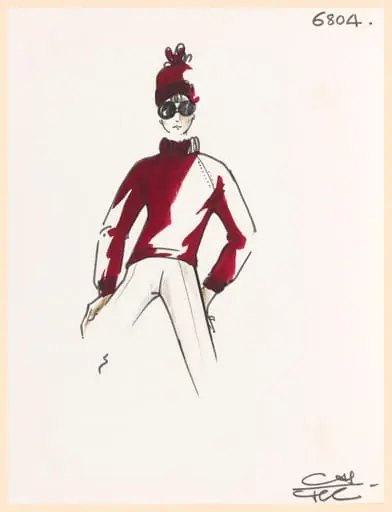 Pull-over à manches longues pourpre, bonnet assorti, pantalon et lunettes de soleil
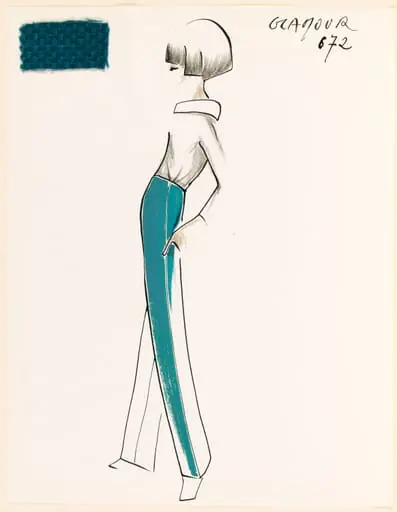 GLAMOUR
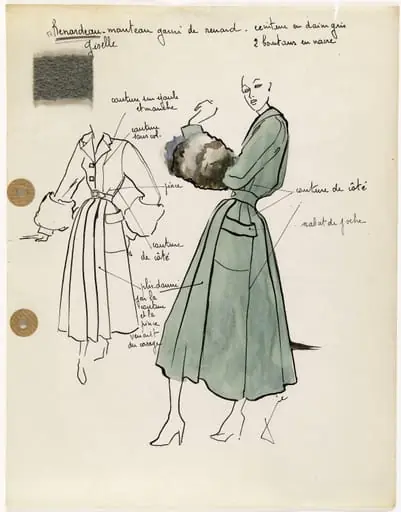 'Renardeau'
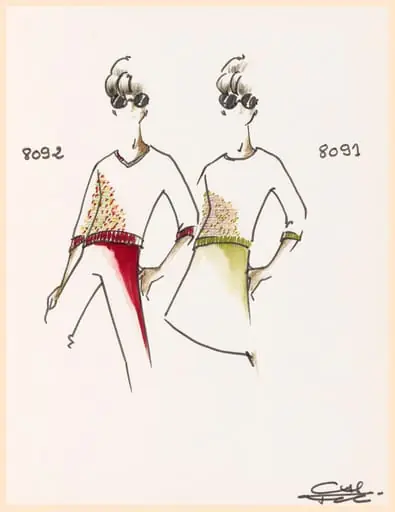 Pull-over à manches trois quarts et à encolure V à motifs multicolores, pantalon cerise et lunettes de soleil
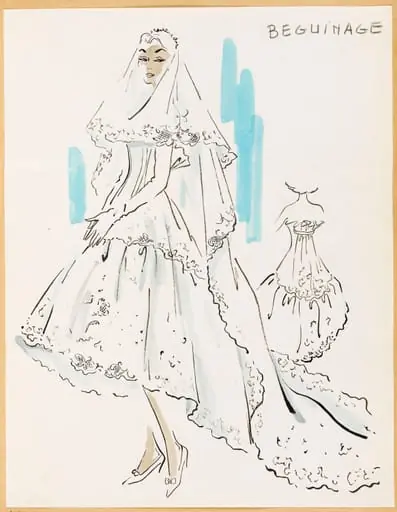 Béguinage