Artwork
Caïman - Tamise - Crocodile
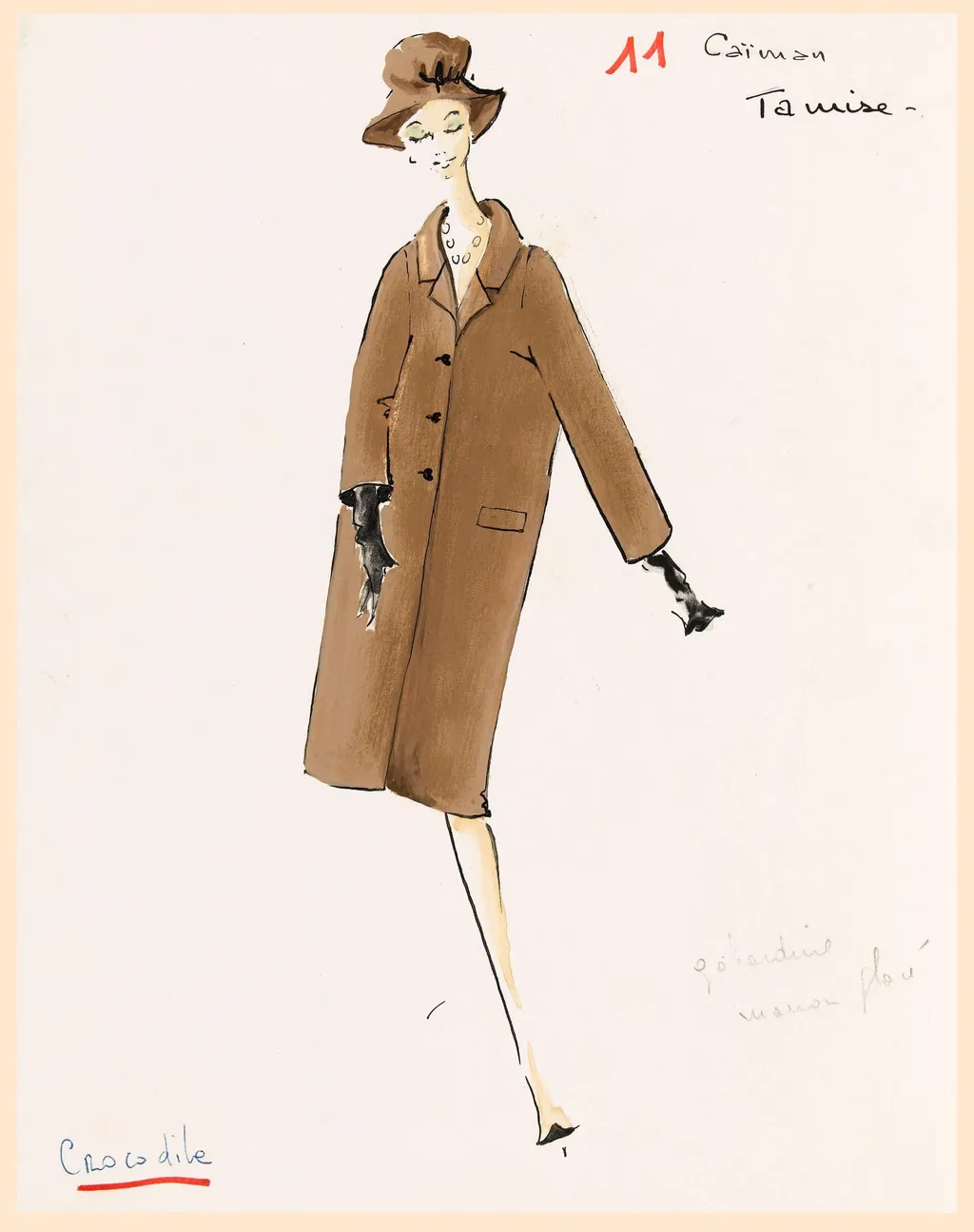
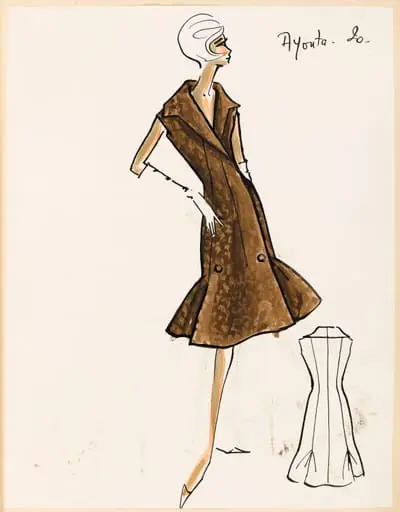
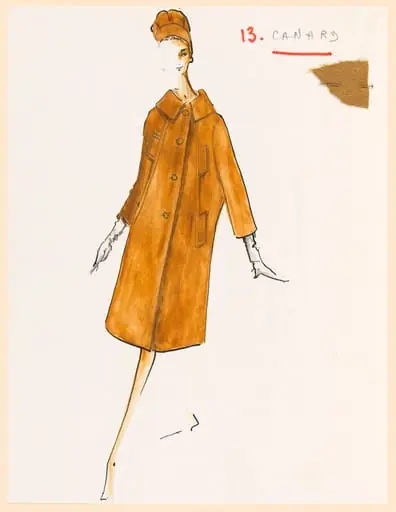
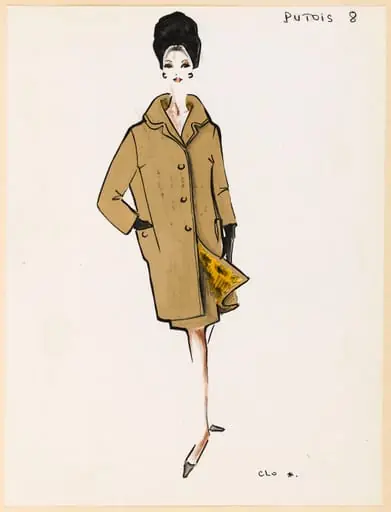
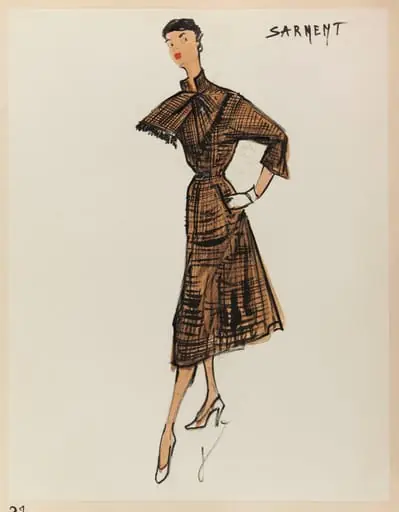
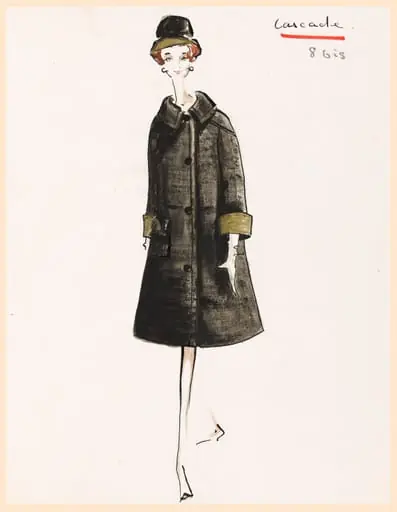
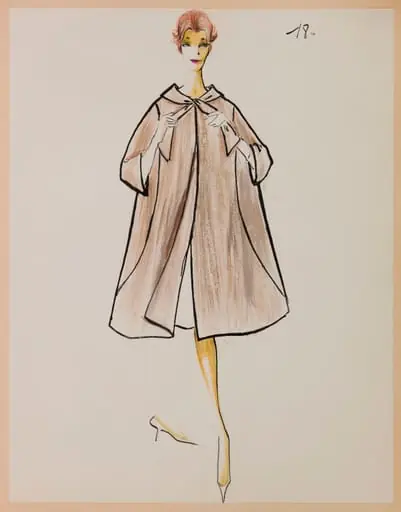
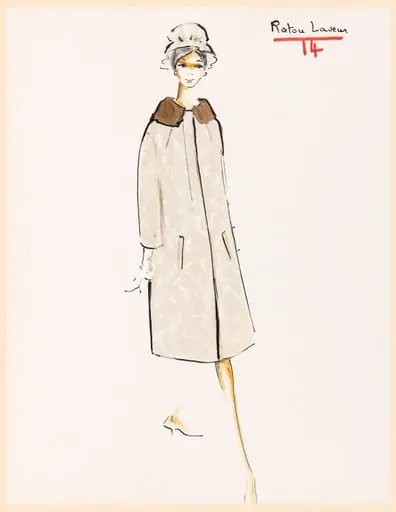
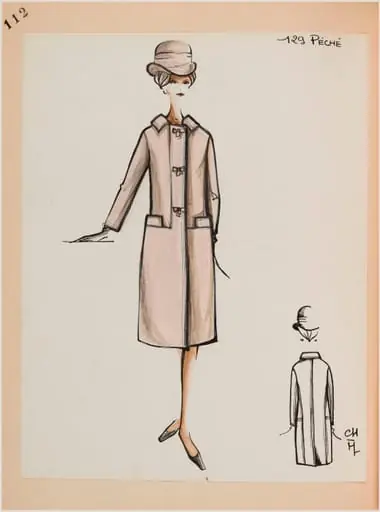
Caïman - Tamise - Crocodile is a drawing by Carven. It dates from 1967 and is held in the collection of the Palais Galliera - Musée de la Mode de la Ville de Paris.
About this work
Overview
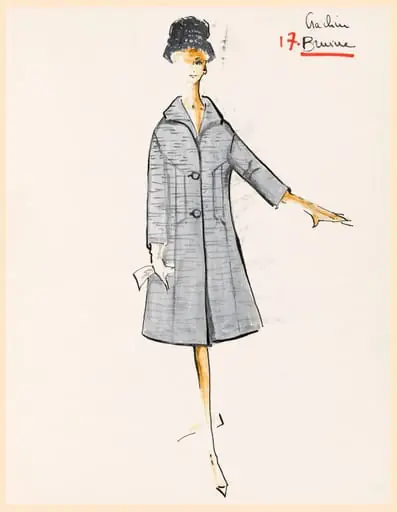
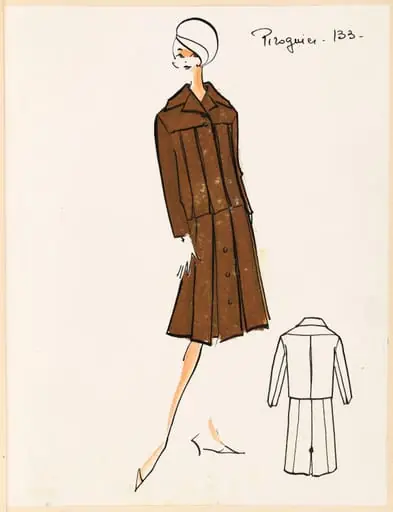
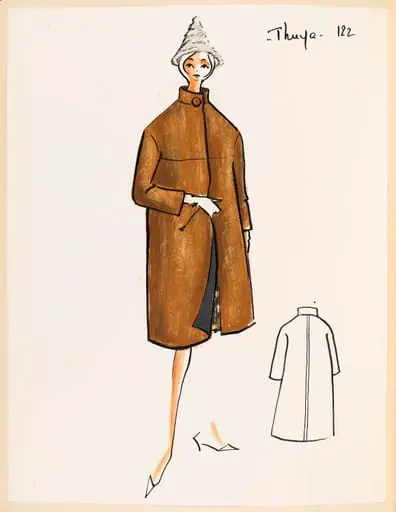
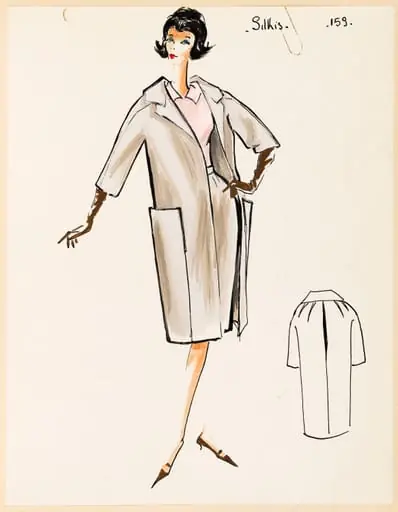
Created around 1967 by Carven, this ink drawing depicts a woman dressed in a long, belted coat with prominent pockets. The work is held in the collection of the Museum of Ethnography. Though labeled as an image, its sketch-like quality suggests a study rather than a finished illustration. The artist inscribed 'Crocodile' beside the garment, directing attention to its material.
Subject & Meaning
The figure is rendered without facial features, emphasizing the clothing over identity. The coat, described as crocodile, functions as the central subject, suggesting an interest in materiality and status symbols within mid-century fashion. The inscription ties the garment to exoticism, possibly reflecting contemporary associations between luxury goods and non-European sources.
Technique & Style
The drawing employs loose, rapid linework, resembling fashion sketches from the period. Shading is minimal, with contours defined by confident, fluid strokes. The texture of the coat is implied rather than detailed, relying on the viewer’s familiarity with leather-like surfaces. The overall effect is spontaneous, capturing a moment of observation rather than a polished portrait.
History & Provenance
The work entered the Museum of Ethnography’s collection as part of a broader effort to document everyday dress and material culture. Its origin as a personal study by Carven is undocumented, but its inclusion suggests institutional interest in how fashion materials were perceived and represented in mid-century Europe.
Context
In the 1960s, exotic animal skins such as crocodile were worn as markers of affluence, often in women’s outerwear. The drawing’s focus on texture and material aligns with a growing design discourse around luxury fabrics. Carven’s sketch may reflect either personal fascination or a professional engagement with textile trends of the time.
Legacy
The drawing remains a quiet artifact of how fashion materials were visually coded in the 20th century. It offers insight into the intersection of ethnographic collecting and fashion documentation, revealing how everyday garments could be framed as cultural objects through the lens of material origin and craftsmanship.
Artist & collection
Artist
These delicate ink-on-paper drawings capture the quiet poetry of everyday things: pinecones, reeds, apples.
Museum
Palais Galliera - Musée de la Mode de la Ville de Paris
Continue through works from the same source collection.