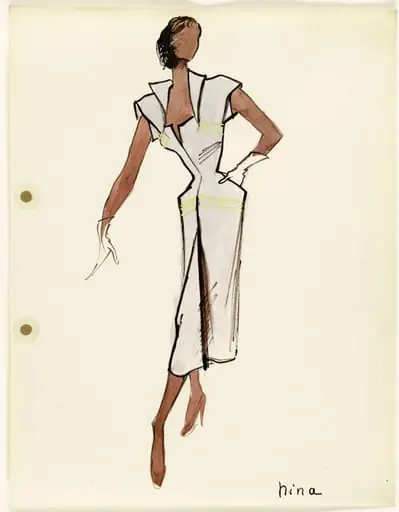
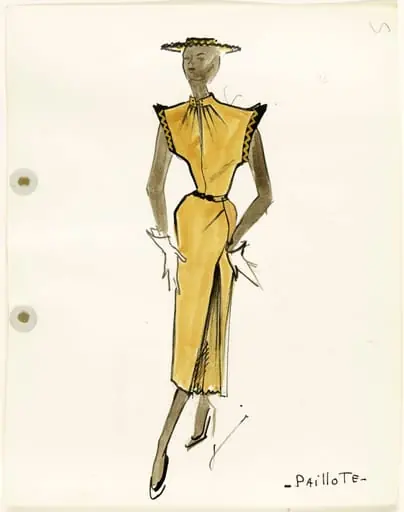
Artwork
'Marjorie'
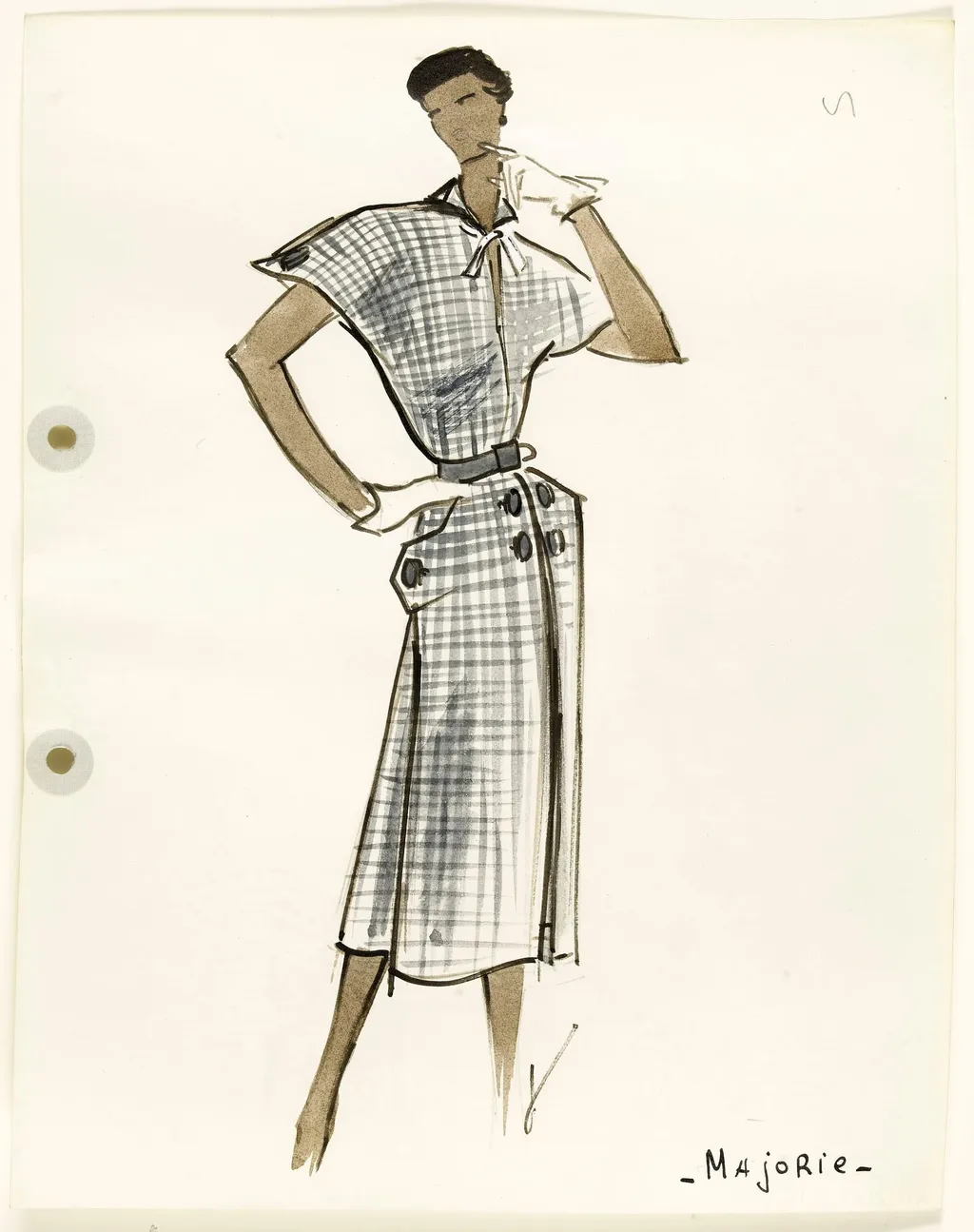
'Marjorie' is a drawing by Marie-Louise Carven. It dates from 1951 and is held in the collection of the Palais Galliera - Musée de la Mode de la Ville de Paris.
About this work
Overview
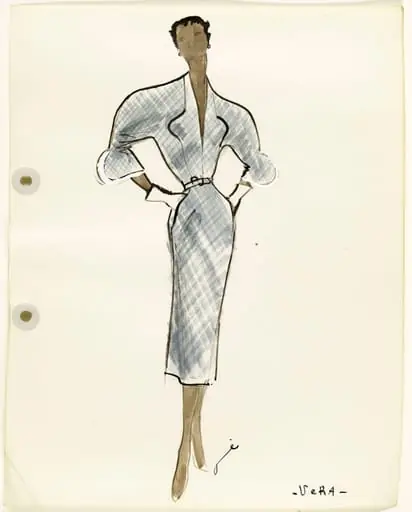
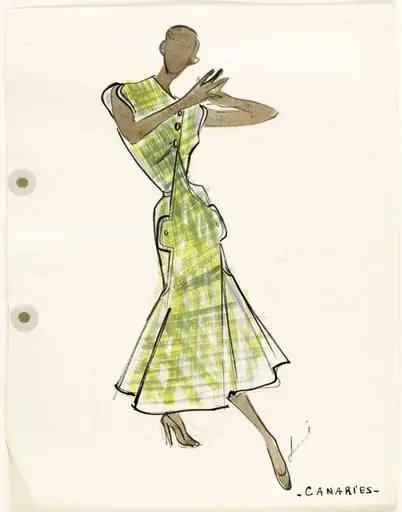
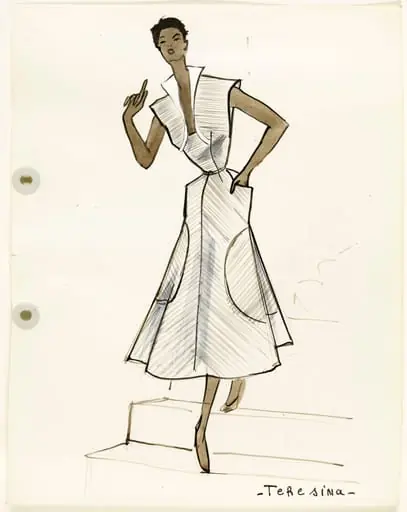
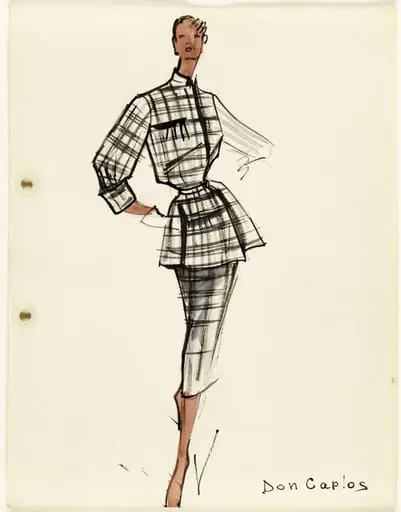
Executed with swift, light lines and minimal shading, the drawing reflects Carven’s practice of documenting garment designs during development.
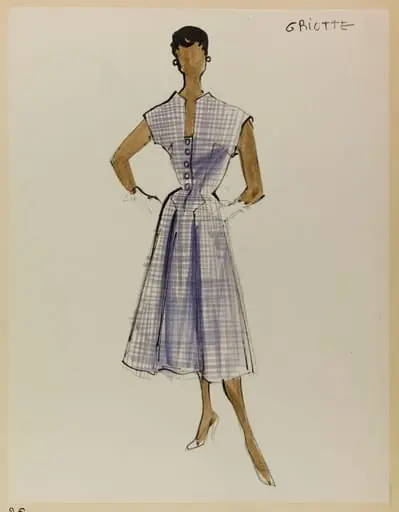
Created in 1951, 'Marjorie' is a pencil sketch by French designer Marie-Louise Carven, capturing a model in a casual, checkered dress. Executed with swift, light lines and minimal shading, the drawing reflects Carven’s practice of documenting garment designs during development. Though not a polished illustration, it serves as a functional record of her creative process. The piece resides in the Museum of Ethnography’s collection, underscoring its value as a material artifact of mid-century fashion design.
Subject & Meaning
The figure, identified as Marjorie, stands in a relaxed, natural pose—one hand on her hip, the other near her face—suggesting ease and everyday movement. The loose, belted dress with short sleeves reflects Carven’s focus on wearable, petite-friendly silhouettes. The sketch’s intimacy implies a personal connection between designer and model, possibly the wearer of the garment. The name scrawled in the corner may reference either the model or the dress, blurring the line between person and product.
Technique & Style
Carven employed quick, fluid pencil strokes to suggest form and fabric movement, avoiding heavy detail. Light shading indicates folds and volume without rendering texture fully, prioritizing clarity over finish. The simplicity of line and absence of background emphasize the garment’s structure and fit. This approach aligns with fashion sketching as a working tool—intended to communicate design intent swiftly, not to serve as a finished artwork.
History & Provenance
Marie-Louise Carven founded her eponymous fashion house in 1945 and was among the first Parisian couturiers to develop a ready-to-wear line. 'Marjorie' dates from 1951, a period when her brand was expanding beyond haute couture. The sketch entered the Museum of Ethnography’s collection as part of a broader effort to preserve fashion as cultural documentation. Its preservation reflects institutional recognition of design as a social artifact, not merely commercial output.
Context
In postwar France, fashion was shifting toward accessibility and practicality. Carven’s designs catered to women seeking elegance without formality, particularly those with smaller frames. 'Marjorie' embodies this ethos—its relaxed posture and unstructured dress contrast with the rigid silhouettes of earlier decades. As a sketch, it reveals the behind-the-scenes labor of designers adapting to new consumer needs in a rapidly changing industry.
Legacy
The sketch stands as a quiet testament to Carven’s role in democratizing fashion. Its preservation in a museum of ethnography signals a broader academic interest in fashion as a cultural practice. While not widely exhibited, 'Marjorie' contributes to understanding how designers translated ideas into wearable forms. It remains a representative example of mid-century design documentation, valued for its honesty and functional clarity.
Artist & collection
Artist
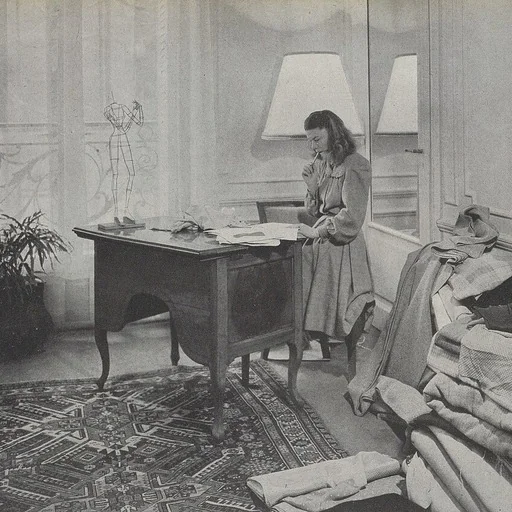
Marie-Louise Carven (31 August 1909 – 8 June 2015), born Carmen de Tommaso, was a French fashion designer who founded the house of Carven in 1945.
Museum
Palais Galliera - Musée de la Mode de la Ville de Paris
Continue through works from the same source collection.
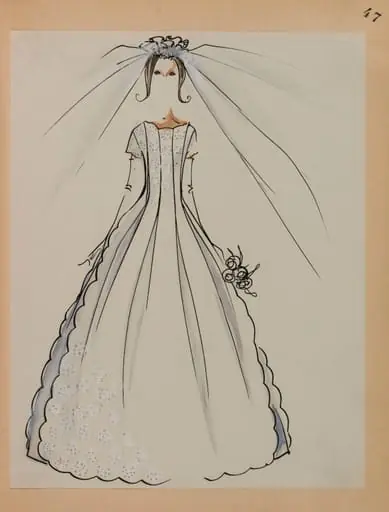 Robe de mariée festonnée et son voile
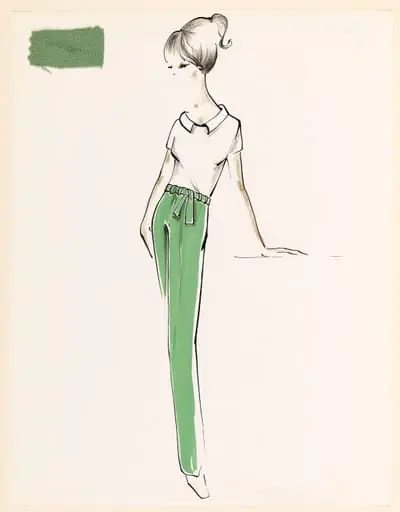 Haut blanc à manches courtes et pantalon vert à ceinture nouée
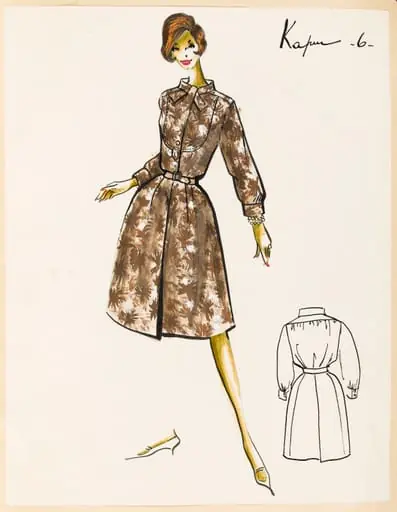 Kapur
Kapur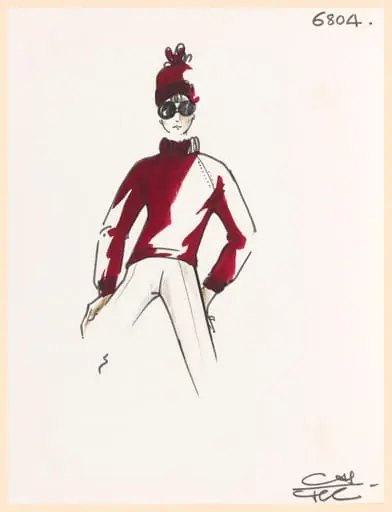 Pull-over à manches longues pourpre, bonnet assorti, pantalon et lunettes de soleil
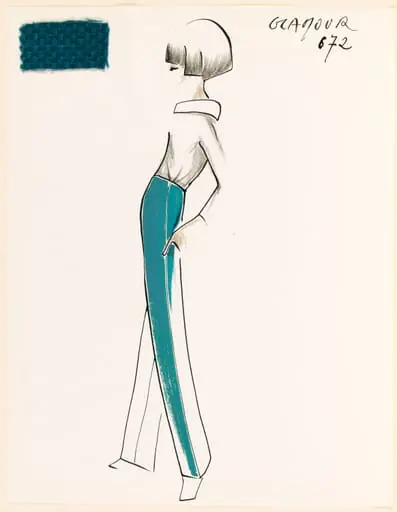 GLAMOUR
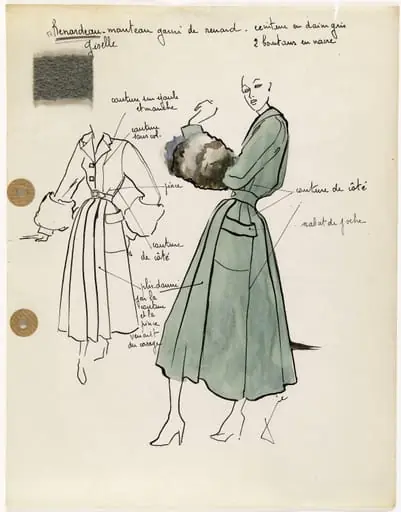 'Renardeau'
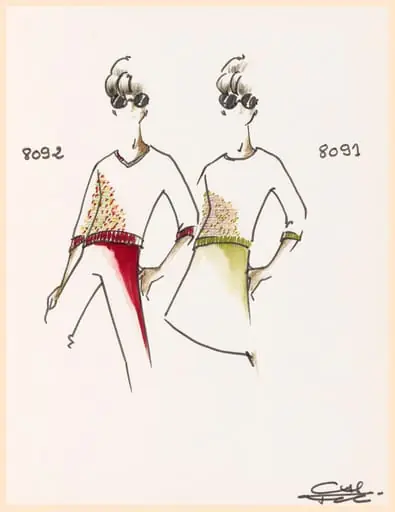 Pull-over à manches trois quarts et à encolure V à motifs multicolores, pantalon cerise et lunettes de soleil
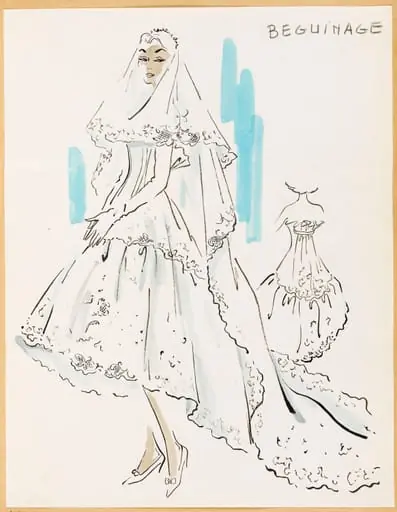 Béguinage