Artwork
'Charles X'
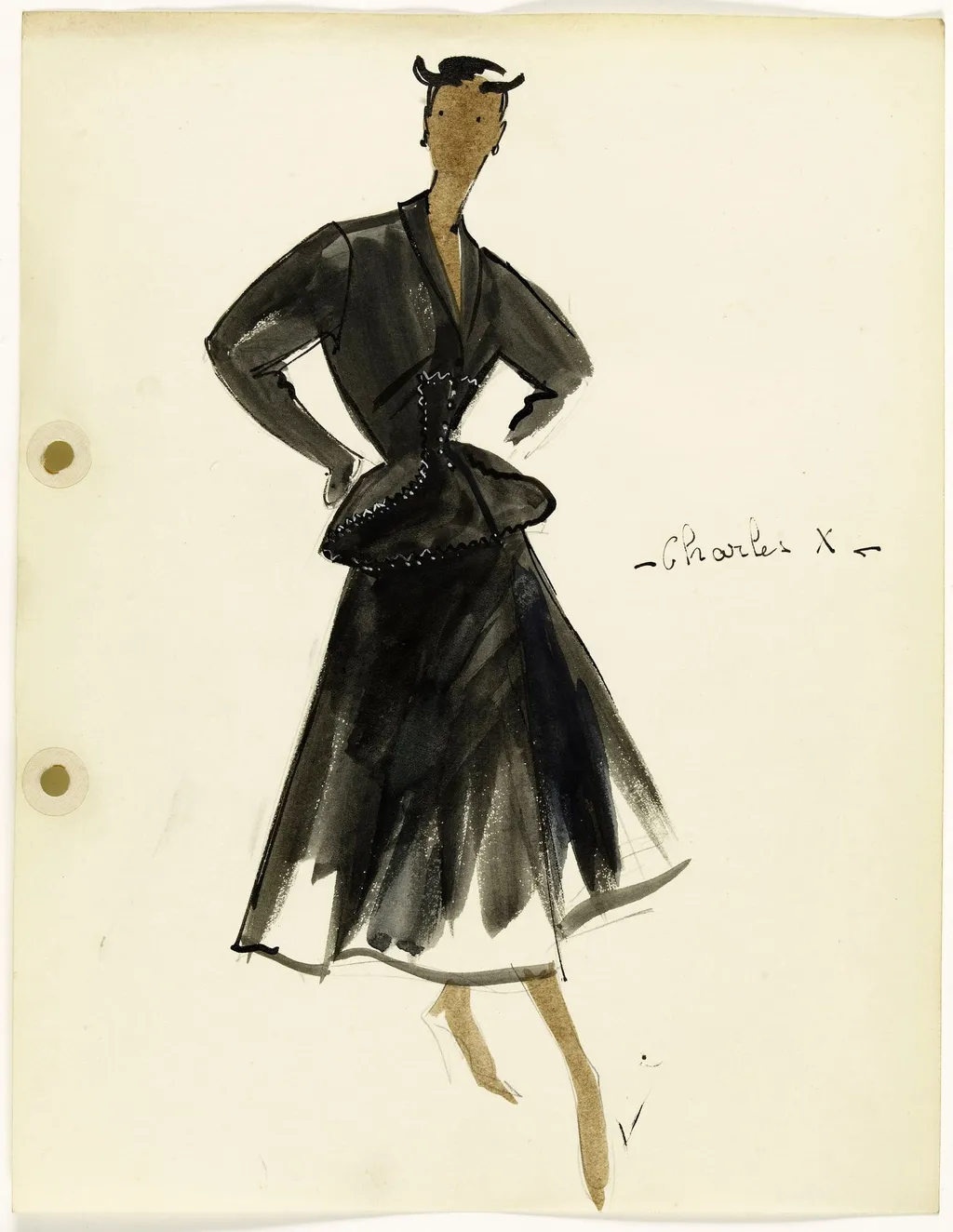
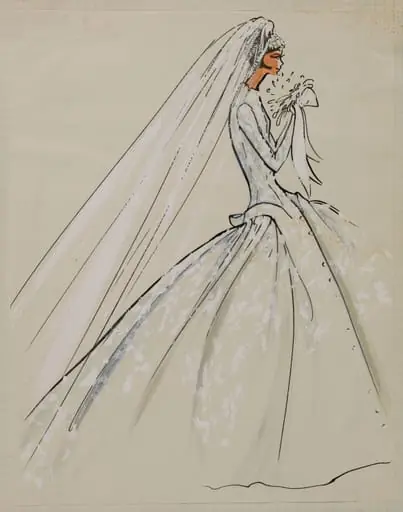
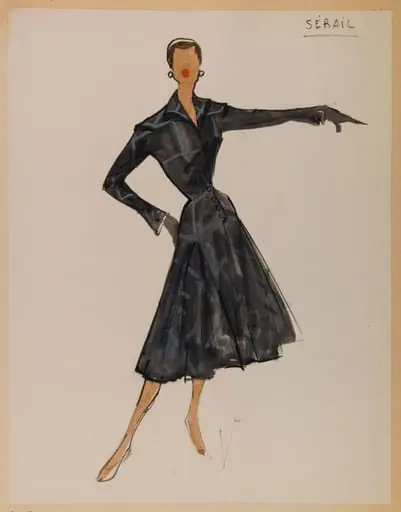
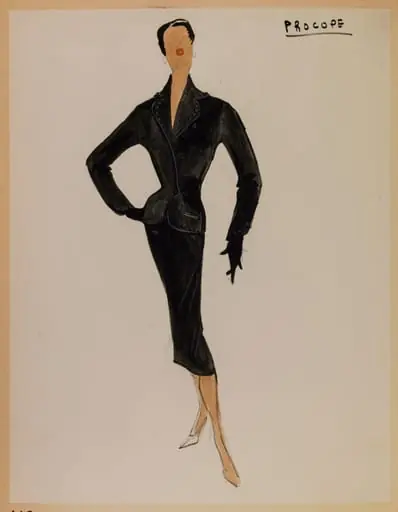
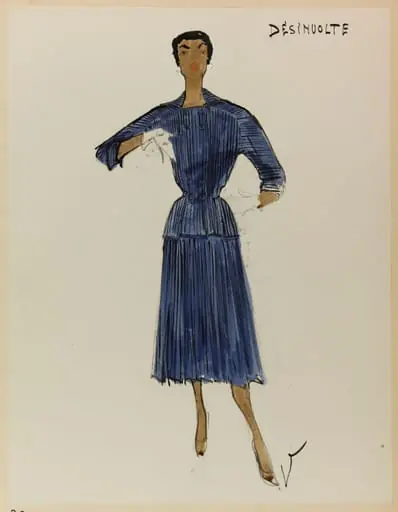
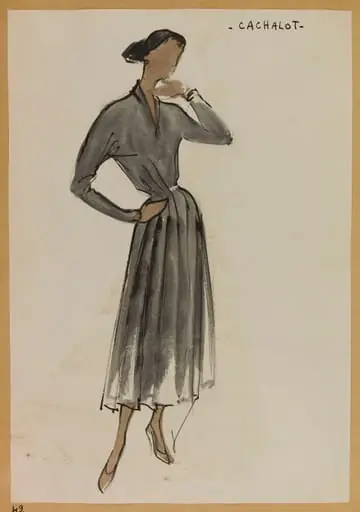
'Charles X' is a drawing by Carven. It dates from 1951 and is held in the collection of the Palais Galliera - Musée de la Mode de la Ville de Paris.
About this work
Overview
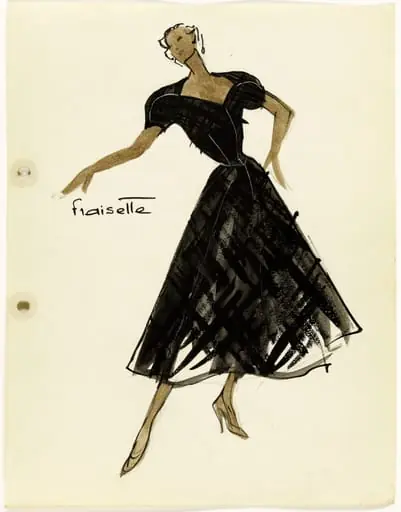
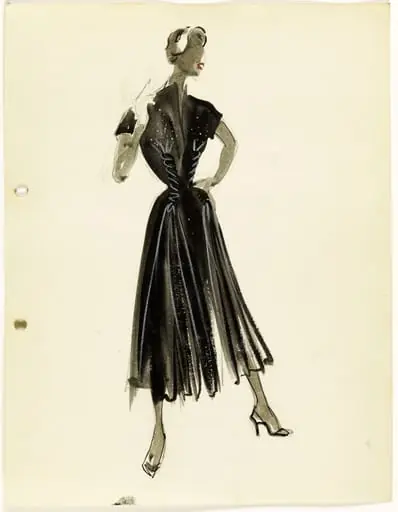
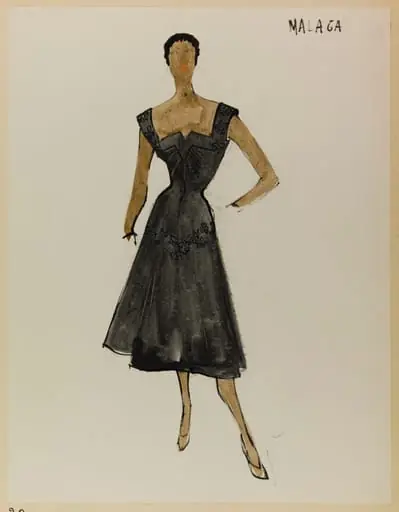
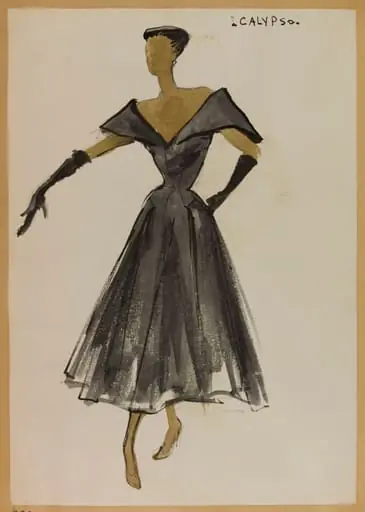
Rendered in monochrome with minimal shading, the work presents a figure in a stylized gown, executed with swift, fluid brushwork.
This drawing, dated around 1951, is attributed to the artist Carven. It resides in the collection of the Museum of Ethnography. Rendered in monochrome with minimal shading, the work presents a figure in a stylized gown, executed with swift, fluid brushwork. The loose handling suggests it was made as a preparatory study rather than a finished piece. The signature 'Charles X' appears in the corner, but its reference remains ambiguous.
Subject & Meaning
The figure is a woman dressed in an elaborate gown featuring a high collar, full sleeves, and a flared skirt. Her posture—one hand resting on her hip—conveys a composed, almost theatrical stance. The attire evokes early 20th-century fashion, possibly inspired by 1930s silhouettes. The title 'Charles X' does not clearly identify the subject, leaving open whether it refers to the figure, the designer, or a symbolic designation.
Technique & Style
The drawing employs rapid, expressive brushstrokes in ink or graphite, creating a sense of immediacy. Shading is subtle, applied with light, sparse strokes to suggest volume without detail. The absence of color and the unfinished quality emphasize the sketch’s function as a study. The lines are confident yet unpolished, reflecting a focus on form and movement over refinement.
History & Provenance
The work entered the Museum of Ethnography’s collection after its creation in the early 1950s. Its origins are tied to Carven’s fashion-related sketches, though no documentation confirms its original purpose or commission. The signature 'Charles X' has not been definitively linked to any known individual, and the drawing’s context within Carven’s broader output remains partially undocumented.
Context
The garment depicted aligns with women’s fashion trends of the 1930s, characterized by structured shoulders, voluminous sleeves, and elongated silhouettes. Though drawn two decades later, the design suggests a retrospective interest in earlier styles. Such sketches were common in fashion houses for documenting design ideas, often used internally rather than for public display.
Legacy
This sketch contributes to the understanding of mid-century fashion documentation practices. While not widely exhibited, it reflects how designers engaged with historical silhouettes and used quick studies to explore form. Its presence in an ethnographic museum underscores its value as a cultural artifact of design process, rather than a finished fashion piece.
Artist & collection
Artist
These delicate ink-on-paper drawings capture the quiet poetry of everyday things: pinecones, reeds, apples.
Museum
Palais Galliera - Musée de la Mode de la Ville de Paris
Continue through works from the same source collection.