Artwork
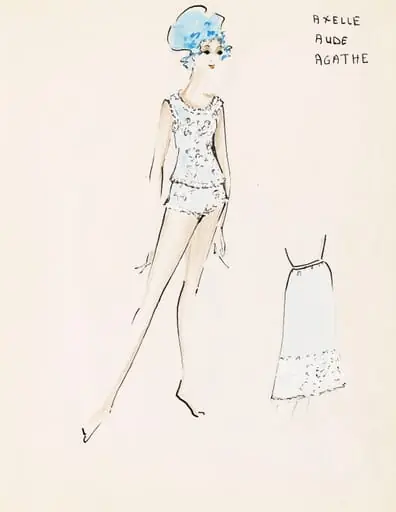
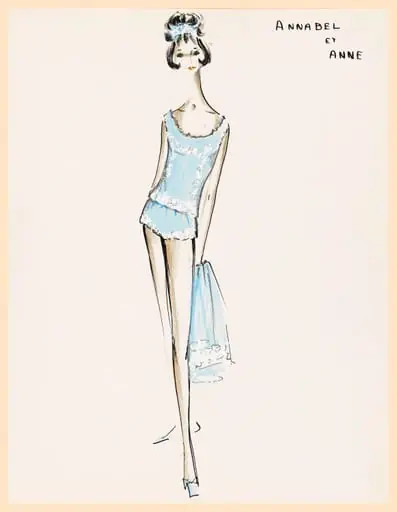
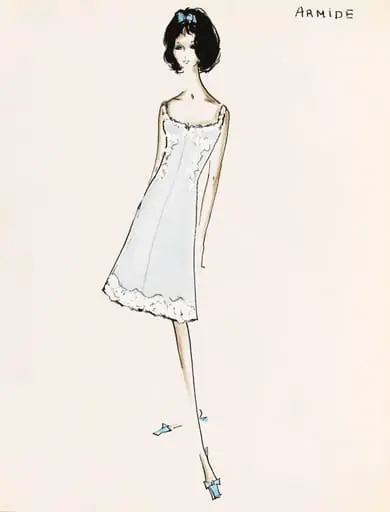
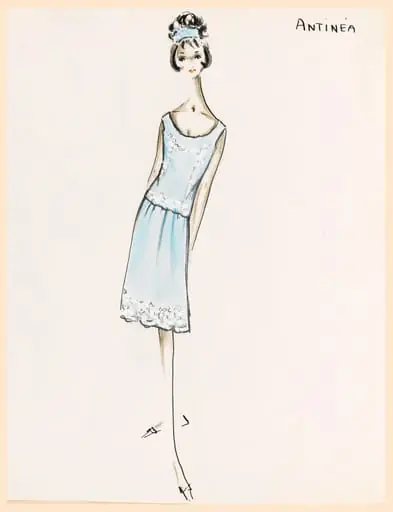
Chemise de nuit bleu pâle rehaussée à l'encolure et en bas
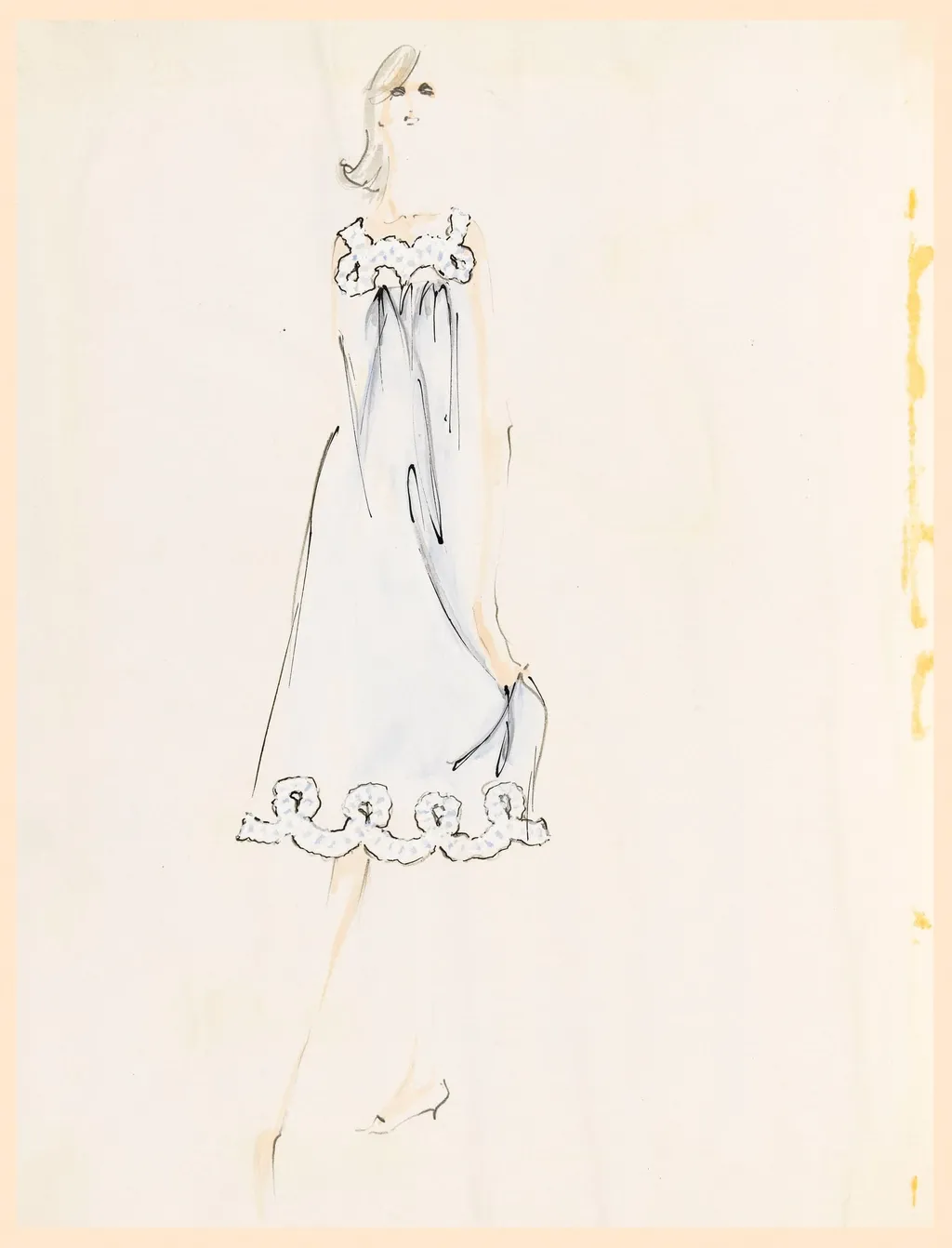
Chemise de nuit bleu pâle rehaussée à l'encolure et en bas is a drawing by Carven. It dates from 1961 and is held in the collection of the Palais Galliera - Musée de la Mode de la Ville de Paris.
About this work
Overview
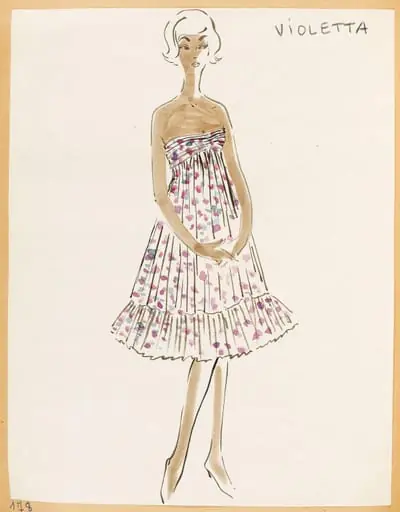
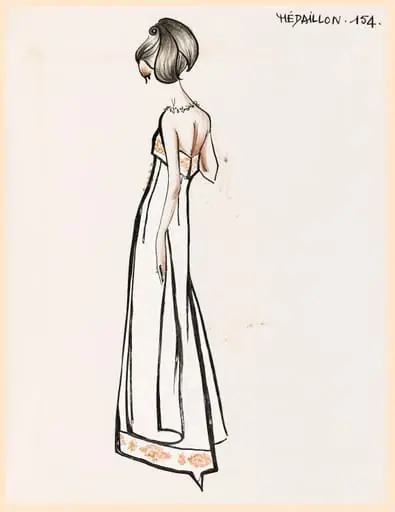
This fashion drawing, dated around 1961, depicts a woman in a pale blue nightgown designed by the French label Carven.
This fashion drawing, dated around 1961, depicts a woman in a pale blue nightgown designed by the French label Carven. Executed in ink or pencil with minimal shading, the illustration emphasizes clean contours and a restrained palette. The plain off-white background isolates the garment, directing focus to its silhouette and detailing. The piece functions as a design study rather than a narrative scene, typical of mid-century fashion documentation.
Subject & Meaning
The figure wears a nightgown with ruffled collar and hem, paired with high heels—an unusual combination suggesting a blend of domestic comfort and performative elegance. The attire reflects postwar ideals of feminine grace, where even private wear was styled with intention. The absence of facial features or contextual details universalizes the subject, positioning the garment as the central element of visual interest.
Technique & Style
Rendered with precise, unembellished lines, the drawing employs a limited color scheme, with pale blue as the sole chromatic accent. Minimal shading and flat planes create a graphic clarity suited to commercial illustration. The style prioritizes structural accuracy over texture or depth, aligning with the functional aims of fashion design portfolios from the period, where clarity of form was paramount.
History & Provenance
The work is attributed to Carven, a Parisian fashion house active from the 1930s through the 1970s, known for its refined, feminine designs. It entered the collection of the Museum of Ethnography, likely as part of a broader acquisition of mid-century fashion artifacts. Its preservation there underscores its value as a cultural document of domestic attire and design practice in postwar France.
Context
In the early 1960s, fashion illustration remained a vital medium for communicating design before photographic catalogs became dominant. Carven’s work, often associated with understated luxury, targeted an audience valuing elegance in everyday wear. This drawing reflects a moment when nightwear was treated as an extension of personal style, not merely functional clothing, aligning with broader shifts in women’s fashion toward individual expression.
Legacy
As a preserved example of mid-century fashion illustration, the piece contributes to the historical record of how garments were conceptualized and presented. Its inclusion in an ethnographic museum highlights the cultural significance of intimate apparel as a reflection of social norms and aesthetic values. While not widely known outside specialist circles, it remains a quiet testament to the craftsmanship of design documentation from the era.
Artist & collection
Artist
These delicate ink-on-paper drawings capture the quiet poetry of everyday things: pinecones, reeds, apples.
Museum
Palais Galliera - Musée de la Mode de la Ville de Paris
Continue through works from the same source collection.