Artwork
Emilie
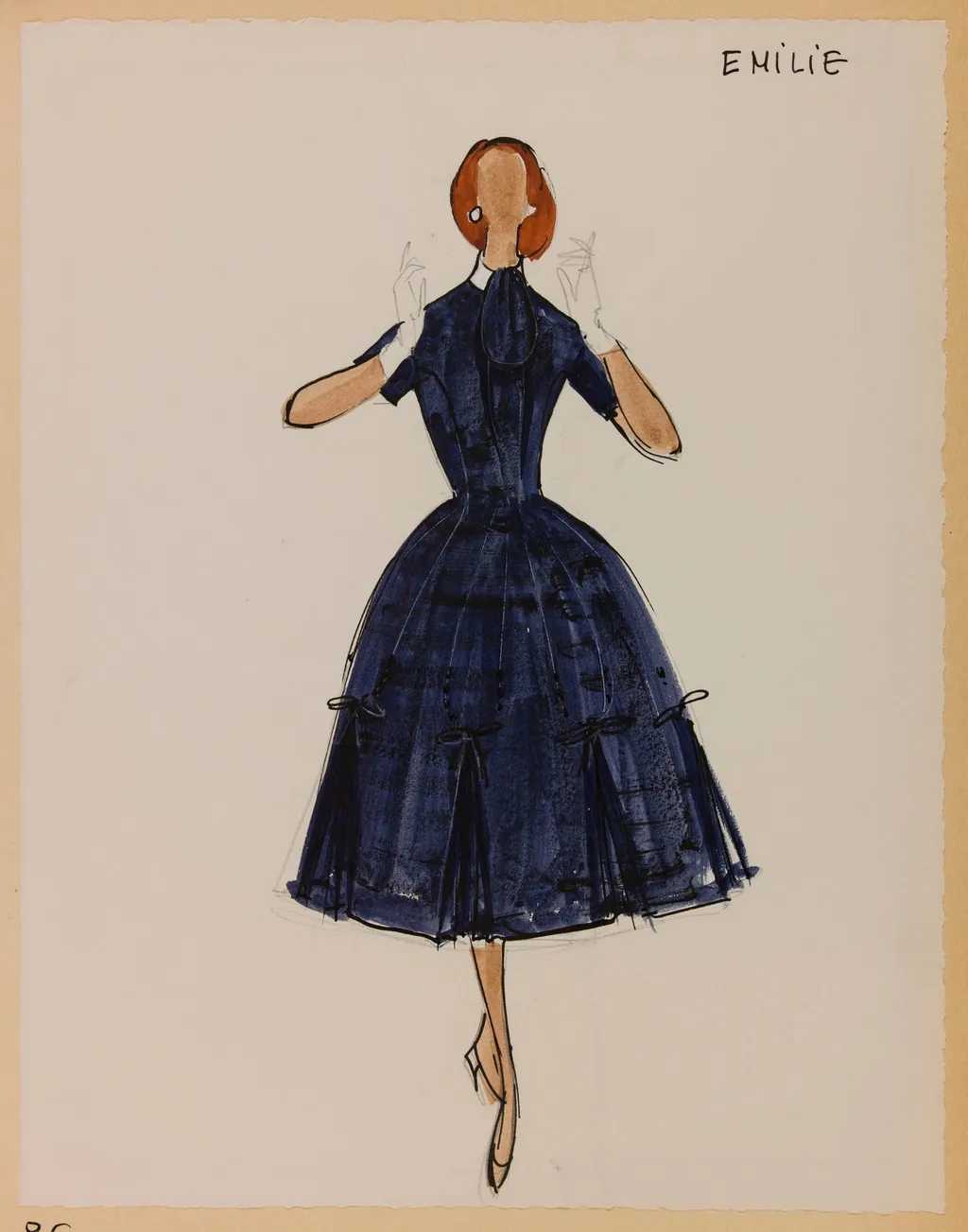
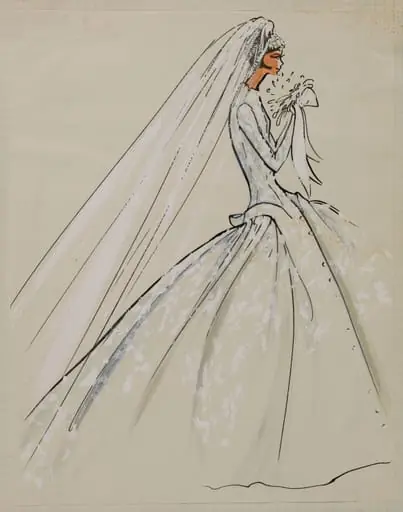
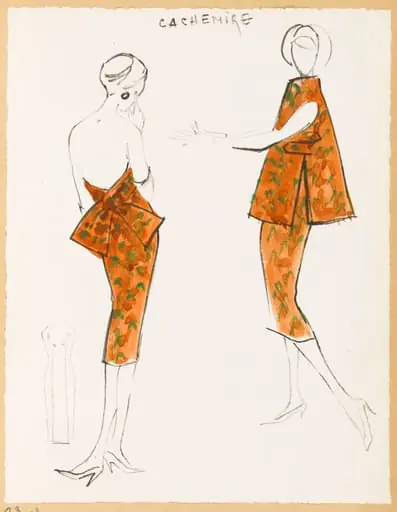
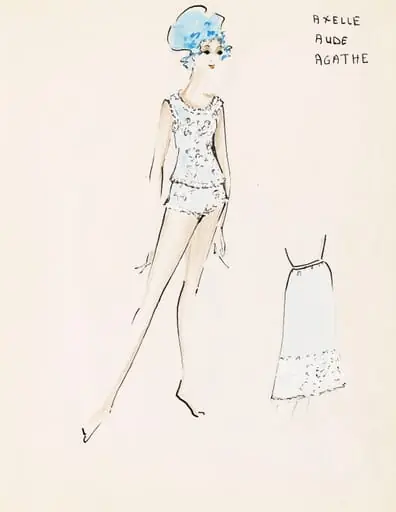
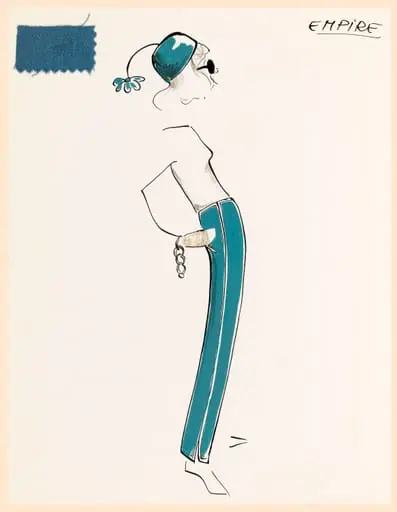
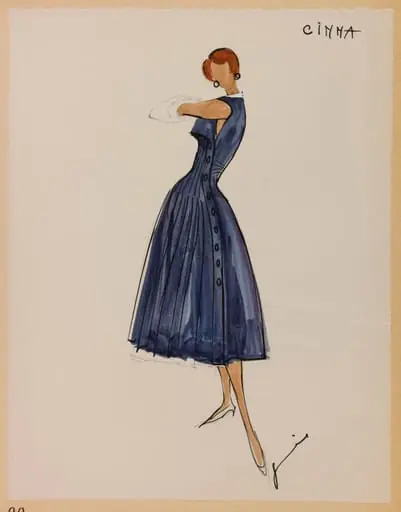
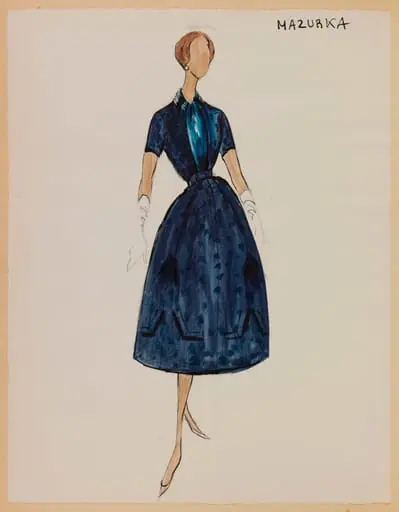
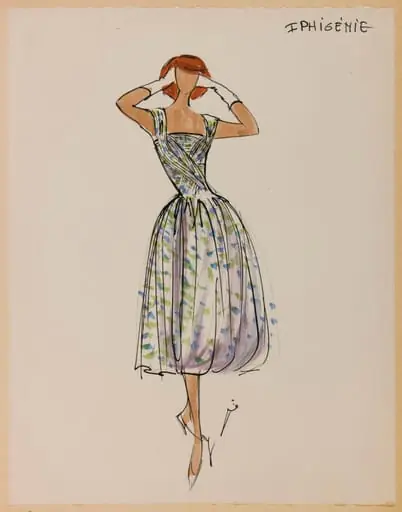
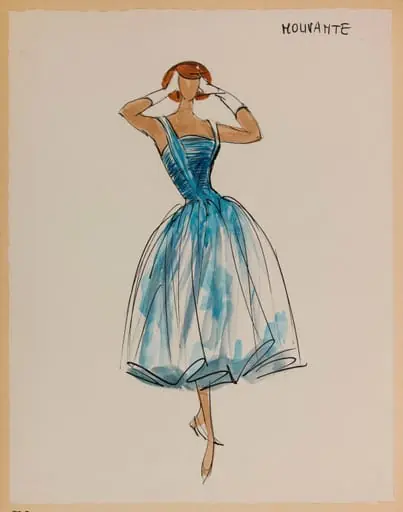
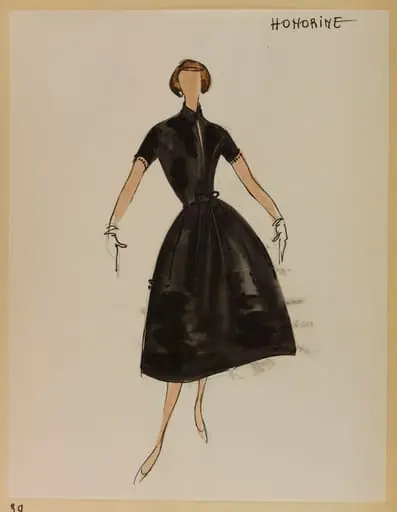
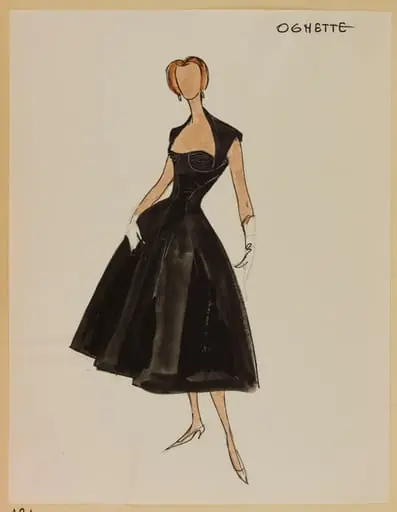
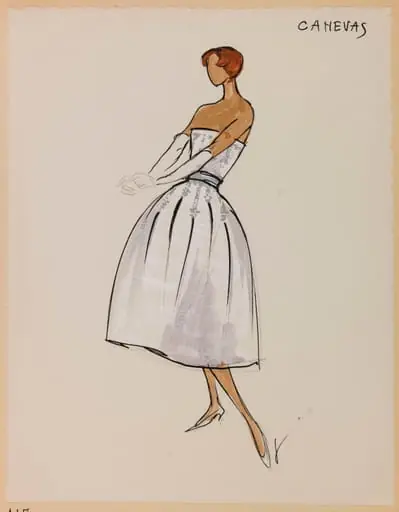
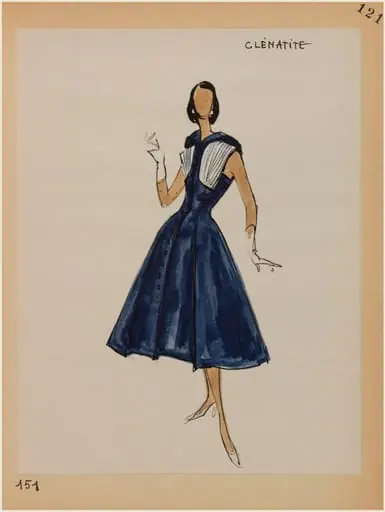
Emilie is a drawing by Carven. It dates from 1956 and is held in the collection of the Palais Galliera - Musée de la Mode de la Ville de Paris.
About this work
Overview
The figure’s attire and posture hint at a theatrical or ceremonial context, though no definitive purpose is recorded.
Emilie is a pencil sketch attributed to the designer Carven, dated approximately 1956. It resides in the collection of the Museum of Ethnography. The work captures a female figure in motion, rendered with swift, unrefined strokes. Its informal quality suggests a study or preparatory drawing rather than a finished illustration. The figure’s attire and posture hint at a theatrical or ceremonial context, though no definitive purpose is recorded.
Subject & Meaning
The figure, labeled 'Emilie' in the corner, stands with arms extended, clad in a high-waisted, flared dress of dark blue. The name’s reference remains ambiguous—it may denote the model, the garment, or a fictional persona. The pose evokes ritual or dance, but no cultural or narrative context accompanies the work. The lack of facial detail or background elements invites speculation without confirmation, leaving its intended meaning open.
Technique & Style
Executed in loose, confident pencil lines, the drawing avoids shading and fine detail. The brushwork is rapid, emphasizing silhouette over texture. The bold contours and minimal internal marks reflect a spontaneous approach, typical of fashion sketches meant to capture movement or form quickly. The absence of cross-hatching or tonal gradation distinguishes it from more rendered studies of the period.
History & Provenance
The sketch entered the Museum of Ethnography’s collection without accompanying documentation about its origin or commission. Carven’s involvement is established through attribution, but no correspondence, sketches, or production records link it to a specific project. Its date of c. 1956 is an estimate based on stylistic comparison with known works. The name 'Emilie' appears handwritten, likely by the artist, but its significance remains unverified.
Context
Created during a period when fashion designers often sketched garments for inspiration or client presentations, Emilie reflects a practice common in mid-century Parisian ateliers. While the dress resembles early 20th-century silhouettes, its execution aligns with postwar design methods. The sketch’s ethnographic placement suggests an interest in costume as cultural artifact, though no direct link to non-Western dress traditions is documented.
Legacy
Emilie survives as a fragment of a larger creative process, valued for its immediacy rather than its finish. It offers insight into Carven’s working methods and the fluid boundary between fashion design and performance. Though not widely exhibited, it contributes to scholarly discussions on the role of informal drawings in fashion history, particularly in how garments are imagined before they are constructed.
Artist & collection
Artist
These delicate ink-on-paper drawings capture the quiet poetry of everyday things: pinecones, reeds, apples.
Museum
Palais Galliera - Musée de la Mode de la Ville de Paris
Continue through works from the same source collection.