Artwork
Mine d'or
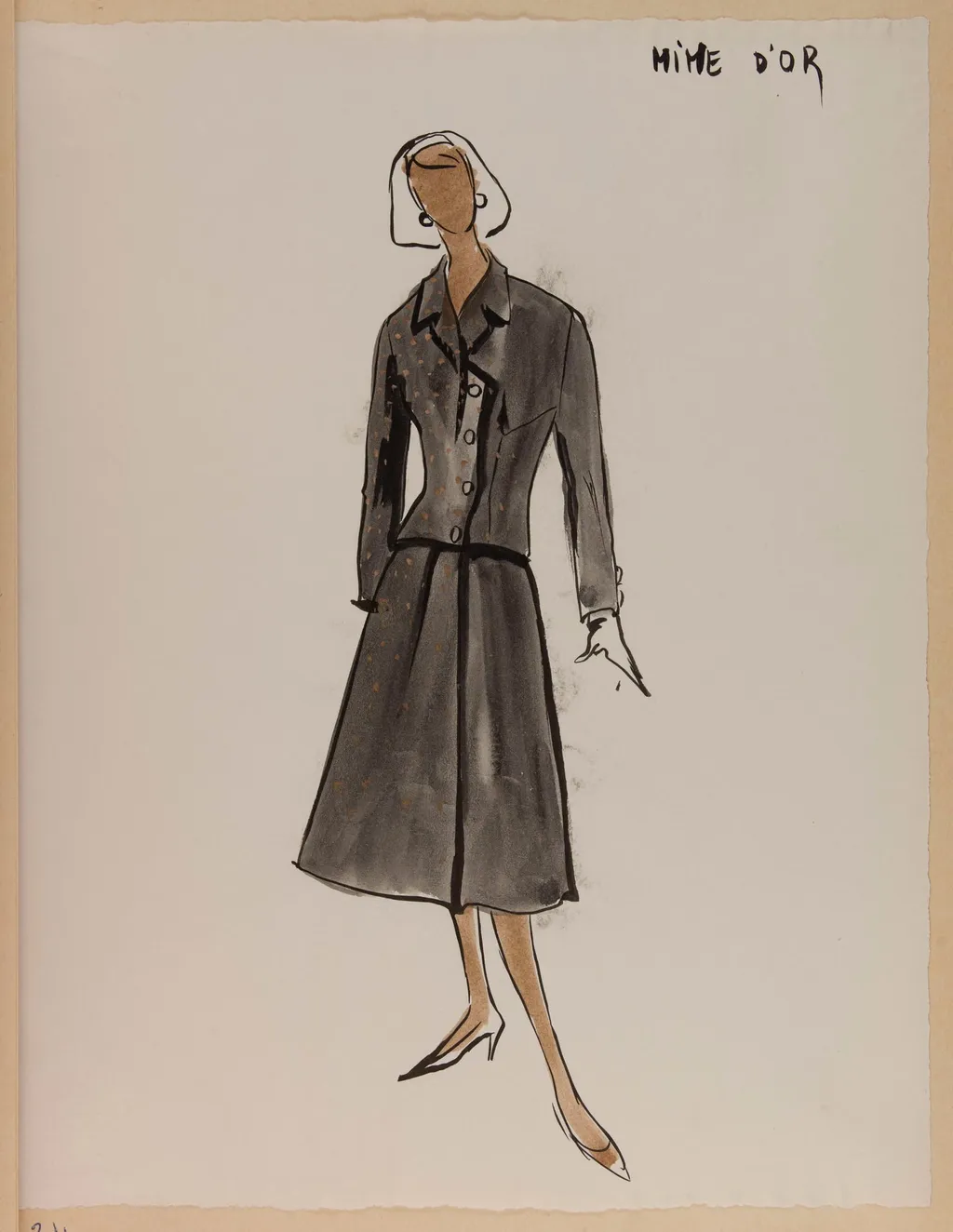
Mine d'or is a drawing by Carven. It dates from 1956 and is held in the collection of the Palais Galliera - Musée de la Mode de la Ville de Paris.
About this work
Overview
The composition focuses on the subject’s posture and attire, suggesting a deliberate emphasis on form and social presentation rather than narrative context.
Mine d'or is a painted portrait created around 1956 by the artist Carven. It is part of the collection at the Museum of Ethnography. The work presents a single figure in a restrained, stylized manner, with minimal background detail and a quiet color palette. The composition focuses on the subject’s posture and attire, suggesting a deliberate emphasis on form and social presentation rather than narrative context.
Subject & Meaning
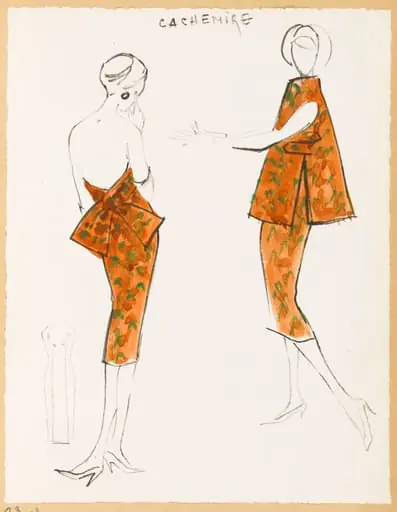
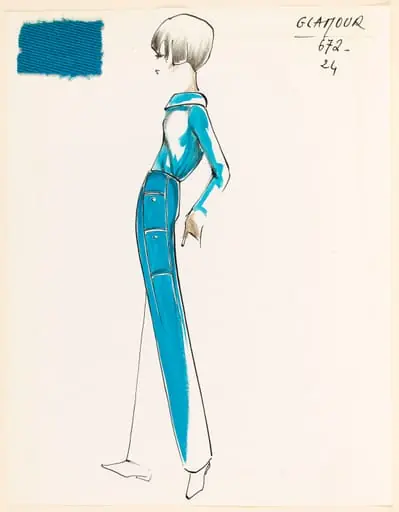
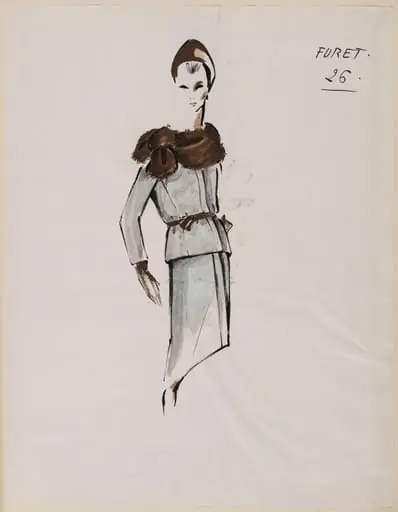
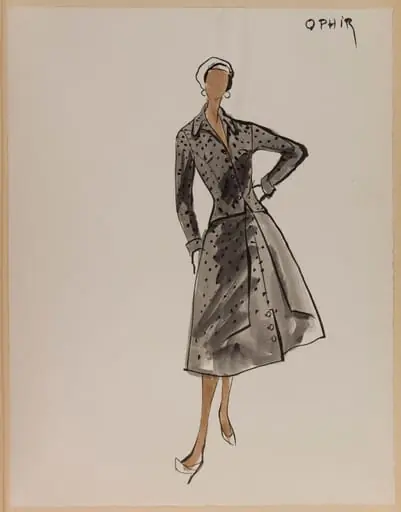
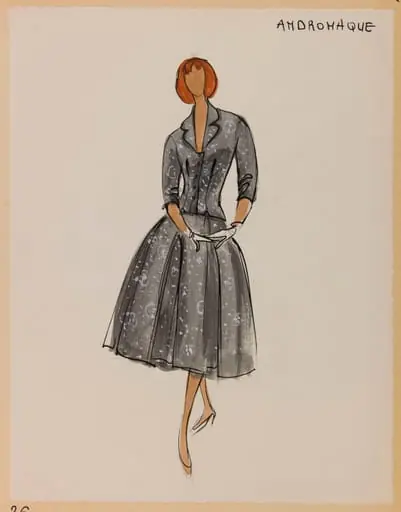
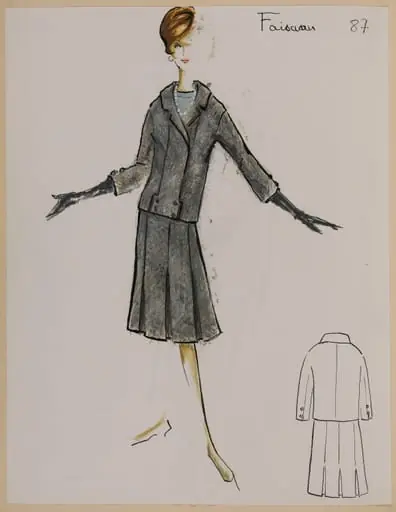
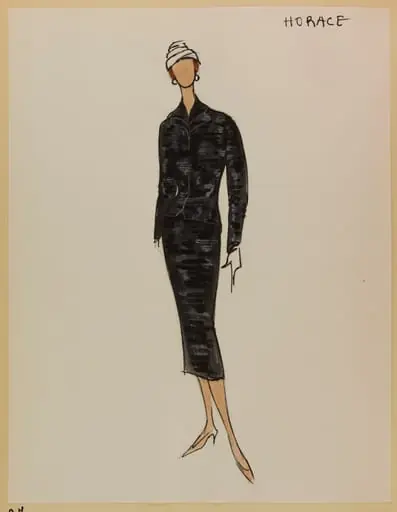
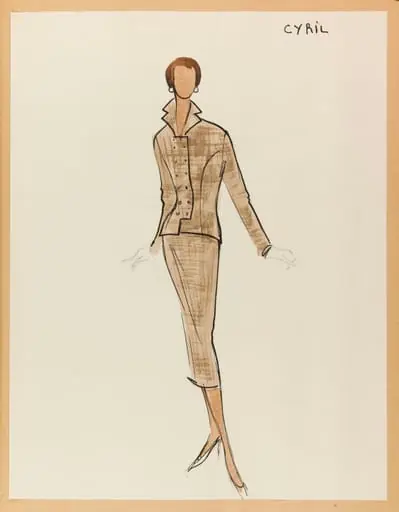
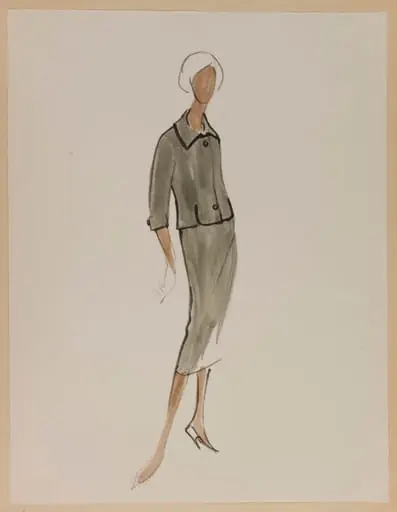
The subject is a woman dressed in a gray suit with a matching jacket, adorned with small orange dots, white gloves, and heels. Her bobbed hairstyle and formal attire imply a deliberate presentation of modern femininity, possibly tied to urban or ceremonial life in mid-century Europe. The absence of facial detail or environmental cues invites interpretation centered on costume and demeanor rather than individual identity.
Technique & Style
Carven employs simplified outlines and flat areas of muted color to construct the figure. The orange dots on the garment introduce subtle contrast without disrupting the overall tonal harmony. The background is a uniform light beige, eliminating spatial depth and directing attention to the figure’s silhouette. The style leans toward graphic economy, prioritizing clarity and rhythm over realism.
History & Provenance
The painting entered the Museum of Ethnography’s collection after its creation in 1956, though specific details of its acquisition or exhibition history are not widely documented. Its placement in an ethnographic institution suggests the work may have been collected as an artifact reflecting contemporary social customs, rather than as a fine art object in the traditional sense.
Context
Created in the mid-1950s, Mine d'or reflects postwar European aesthetics where modernist simplification intersected with everyday dress codes. The woman’s attire aligns with trends in women’s fashion that emphasized tailored silhouettes and restrained ornamentation. Its inclusion in an ethnographic museum may indicate an interest in visual culture as a record of social norms during a period of rapid change.
Legacy
Mine d'or remains a quiet example of mid-century figurative painting that bridges art and anthropology. It has not been widely reproduced or critically analyzed, but its presence in the Museum of Ethnography underscores its role as a cultural document. The work continues to invite reflection on how personal appearance encodes social identity in a rapidly modernizing world.
Artist & collection
Artist
These delicate ink-on-paper drawings capture the quiet poetry of everyday things: pinecones, reeds, apples.
Museum
Palais Galliera - Musée de la Mode de la Ville de Paris
Continue through works from the same source collection.