Artwork
Parador
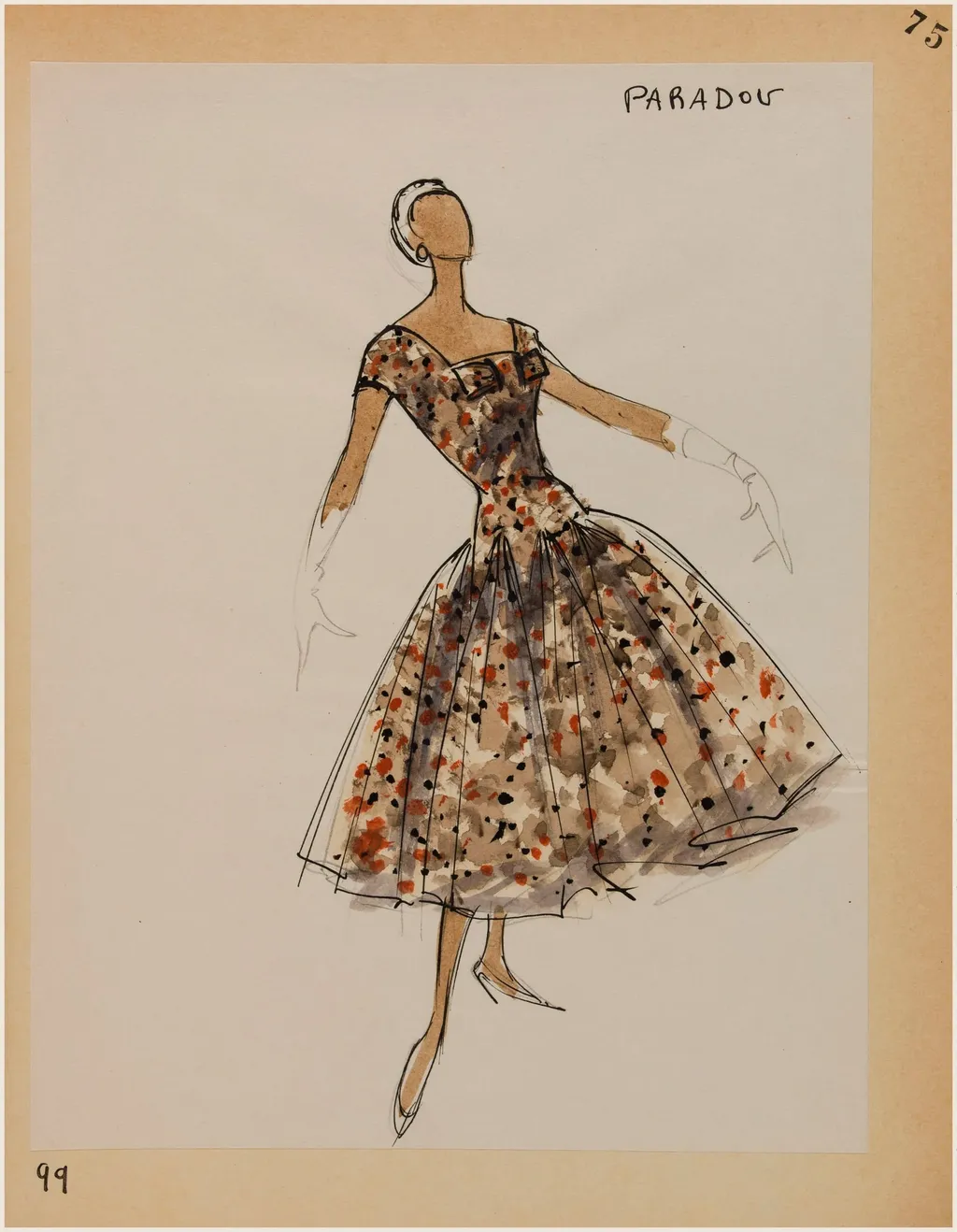
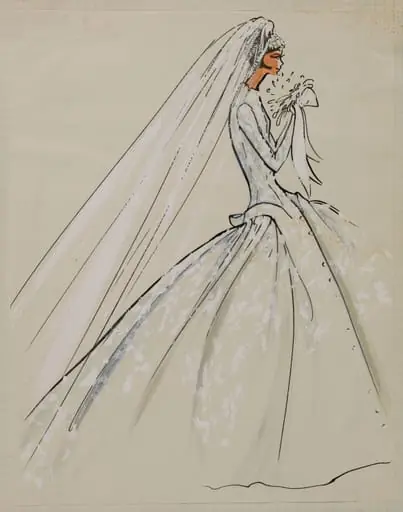
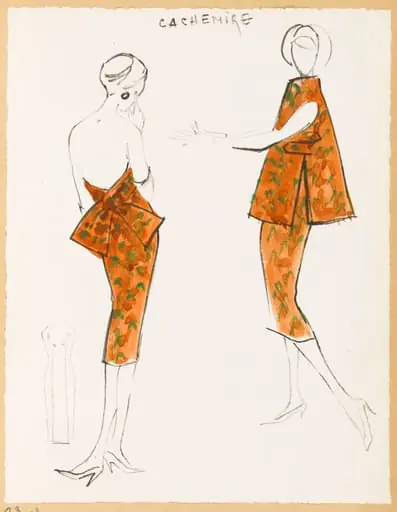
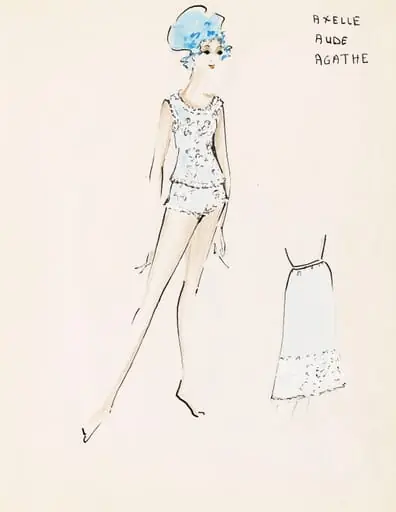
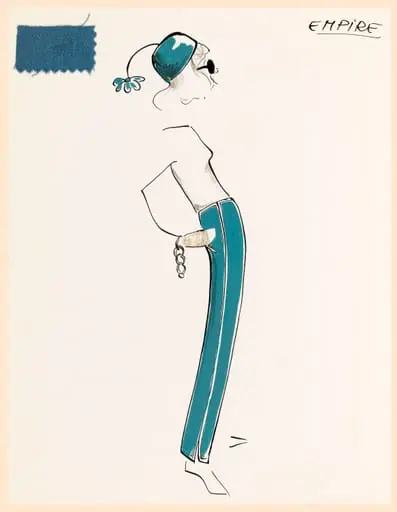
Parador is a drawing by Carven. It dates from 1956 and is held in the collection of the Palais Galliera - Musée de la Mode de la Ville de Paris.
About this work
Overview
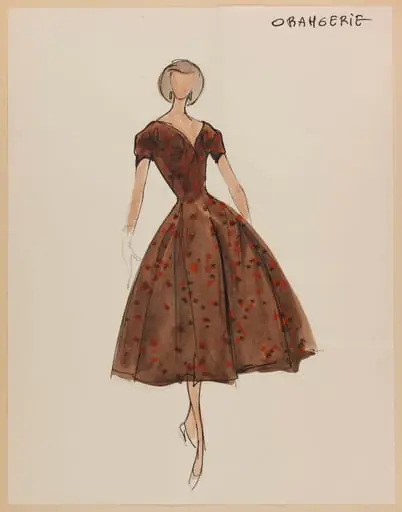
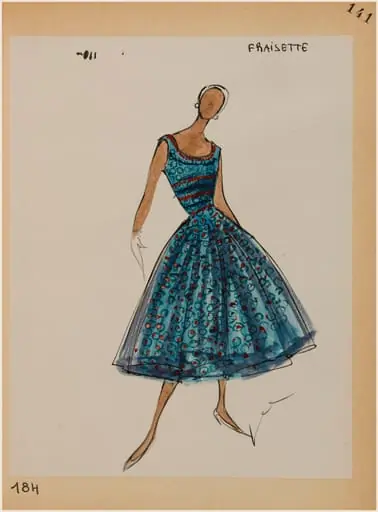
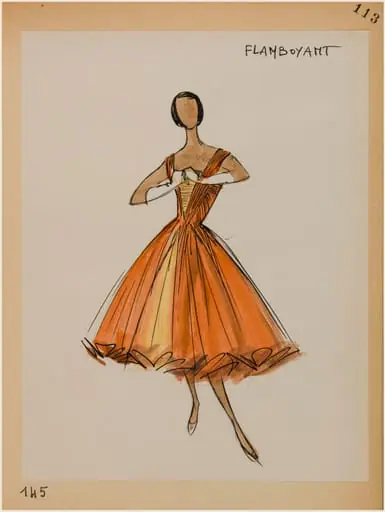
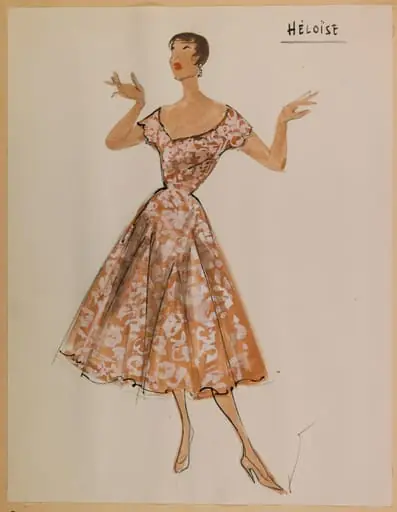
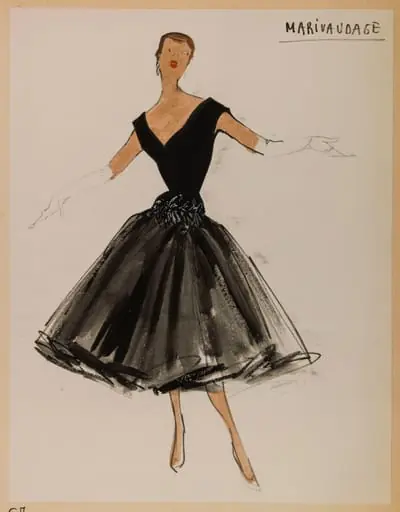
Created in 1956 by Carven, this ink sketch titled Parador is part of the Museum of Ethnography’s collection. Executed with swift, expressive lines, it captures a figure in motion, suggesting a moment of informal grace rather than formal portraiture. The work’s immediacy reflects its nature as a design study, likely made during the creative process of developing a garment.
Subject & Meaning
The figure is a woman wearing a dress with a tailored bodice and a voluminous, flared skirt. Her posture is casual—one arm extended, head turned—as if caught mid-movement. The title, scrawled at the top, may indicate the dress’s name or the occasion for which it was intended. The absence of context invites interpretation, positioning the garment as both functional object and visual idea.
Technique & Style
Carven employed loose, overlapping ink lines to suggest form and texture. The dress is rendered with splashes of brown, black, and orange, evoking abstract floral patterns rather than literal fabric. Cross-hatching adds subtle depth, while the sketch’s spontaneity emphasizes gesture over precision. The technique reveals the artist’s focus on movement and silhouette rather than detailed realism.
History & Provenance
The drawing entered the Museum of Ethnography’s holdings after Carven’s active design years. Its preservation suggests recognition of its value as a document of mid-century fashion design practice. Though no record of its original commission survives, its presence in an ethnographic context implies interest in fashion as cultural artifact rather than high art.
Context
In the mid-1950s, fashion designers often produced rapid sketches to explore silhouettes and decorative motifs before finalizing garments. Carven’s work reflects this studio practice, where speed and intuition guided early design stages. The abstract color accents align with postwar trends favoring expressive, painterly approaches to textile design.
Legacy
Parador endures as a testament to the fluidity of fashion design as a visual discipline. Its inclusion in an ethnographic museum underscores how garments, even in preliminary form, contribute to understanding cultural aesthetics. The sketch’s raw energy continues to inform discussions on the intersection of drawing, clothing, and personal expression in mid-century design.
Artist & collection
Artist
These delicate ink-on-paper drawings capture the quiet poetry of everyday things: pinecones, reeds, apples.
Museum
Palais Galliera - Musée de la Mode de la Ville de Paris
Continue through works from the same source collection.