Artwork
Petite caille
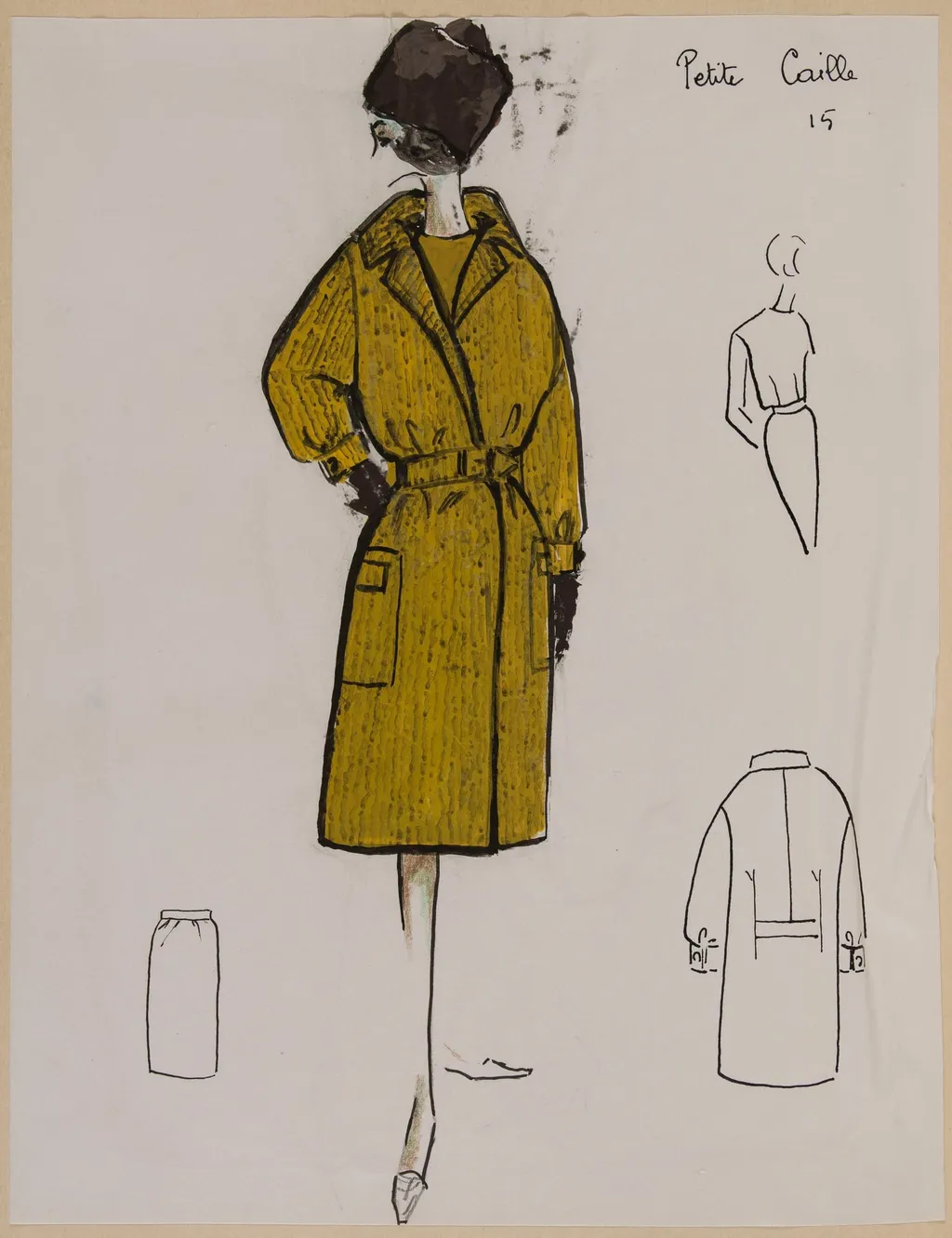
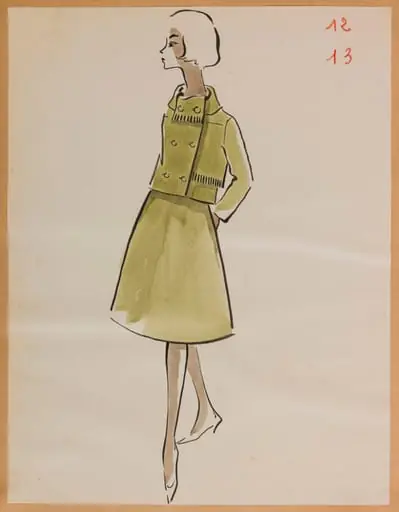
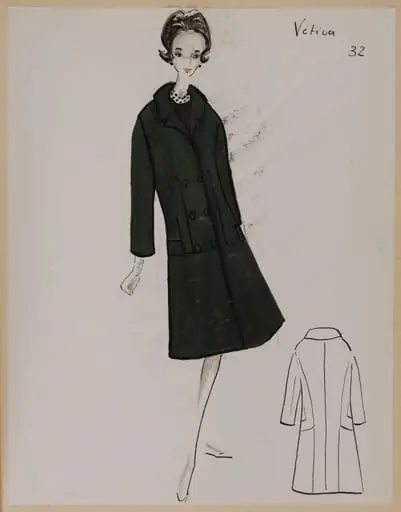
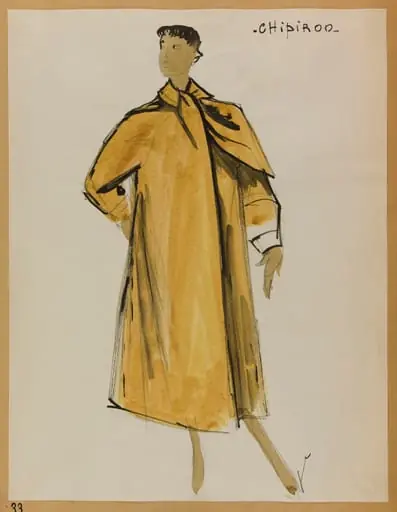
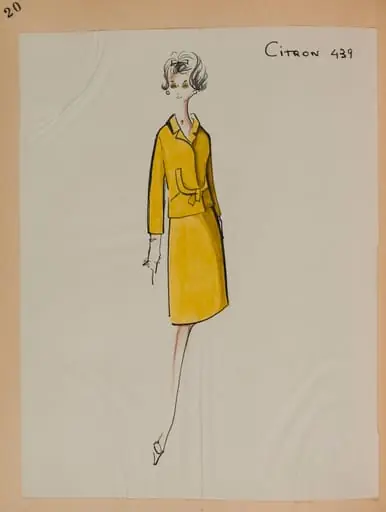
Petite caille is a drawing by Carven. It dates from 1960 and is held in the collection of the Palais Galliera - Musée de la Mode de la Ville de Paris.
About this work
Overview
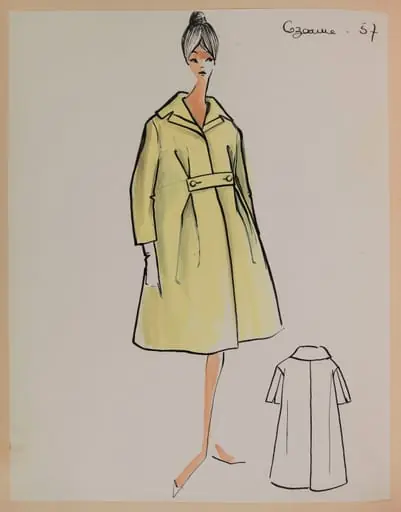
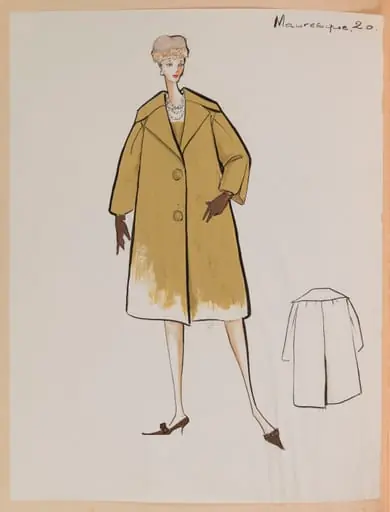
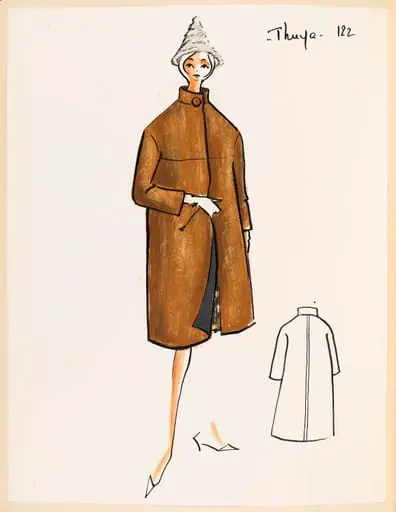
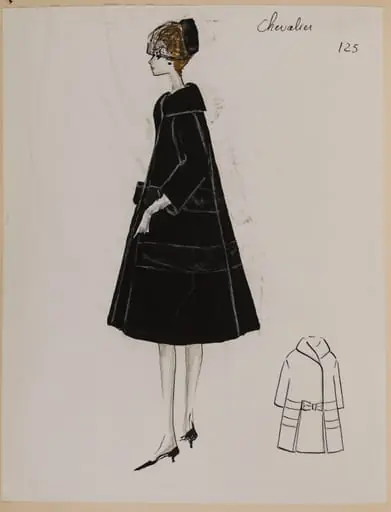
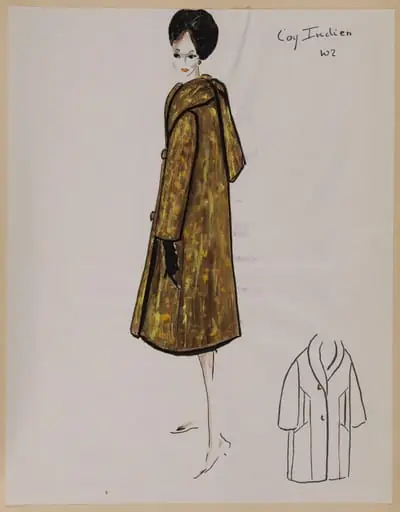
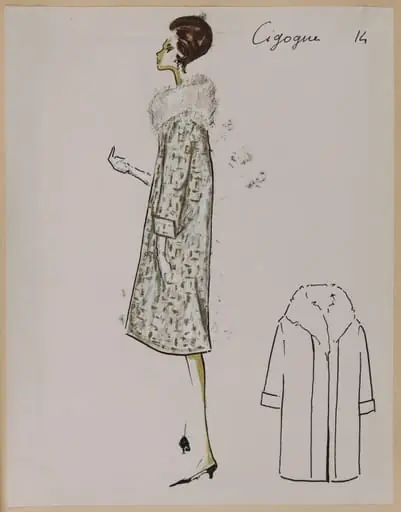
The piece combines fashion illustration with subtle narrative elements, presenting a solitary female figure alongside schematic renderings of clothing.
Petite caille is a graphic work attributed to the French fashion designer Carven, dated around 1960. It is part of the collection at the Museum of Ethnography. The piece combines fashion illustration with subtle narrative elements, presenting a solitary female figure alongside schematic renderings of clothing. Its restrained palette and uncluttered composition reflect a design sensibility rooted in mid-century elegance and functional aesthetics.
Subject & Meaning
The central figure, a woman in a yellow coat and dark hat, stands in a quiet, grounded posture, hands tucked into her pockets. Her stillness contrasts with the floating sketches of a skirt and long coat beside her, suggesting an internal dialogue between wearability and design. The title, meaning 'little quail' in French, may allude to delicacy or modesty, reinforcing the understated tone of the image without overt symbolism.
Technique & Style
Rendered in clean, precise lines with minimal shading, the work employs a graphic economy typical of fashion sketches from the period. The beige background isolates the figure and garments, directing focus to form and silhouette. The clothing outlines are simplified yet distinct, indicating an understanding of tailoring. Text is integrated as a formal element, placed unobtrusively in the upper right corner.
History & Provenance
The work was produced during Carven’s active years as a couturier, likely as part of a personal or studio archive rather than a commercial publication. It entered the Museum of Ethnography’s collection through documented acquisition, possibly as an example of mid-century French fashion design practice. Its preservation suggests recognition of its value as a cultural artifact beyond mere illustration.
Context
In the 1960s, fashion designers often created hand-drawn sketches to explore ideas before production. Carven, known for refined, wearable designs, used such drawings to communicate structure and proportion. This piece aligns with broader trends in postwar European fashion, where simplicity and clarity replaced ornate decoration, reflecting societal shifts toward practicality and understated sophistication.
Legacy
Petite caille endures as a quiet testament to the intellectual rigor behind fashion design. It contributes to scholarly understanding of how designers visualized clothing outside of advertising or runway contexts. While not widely reproduced, its presence in a museum of ethnography underscores its role as a cultural document, bridging art, craft, and daily life.
Artist & collection
Artist
These delicate ink-on-paper drawings capture the quiet poetry of everyday things: pinecones, reeds, apples.
Museum
Palais Galliera - Musée de la Mode de la Ville de Paris
Continue through works from the same source collection.