Artwork
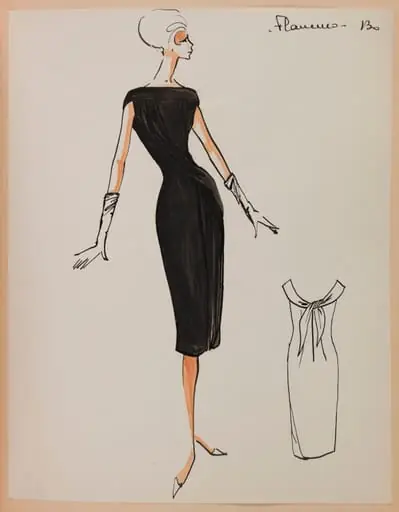
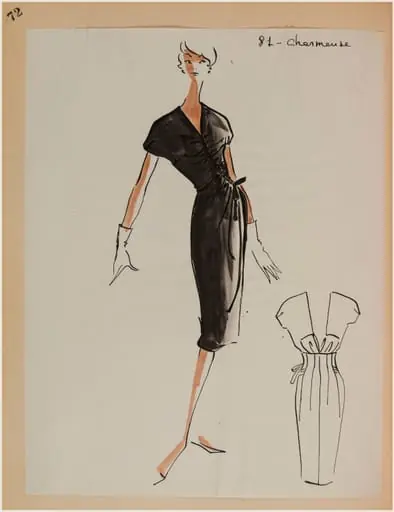
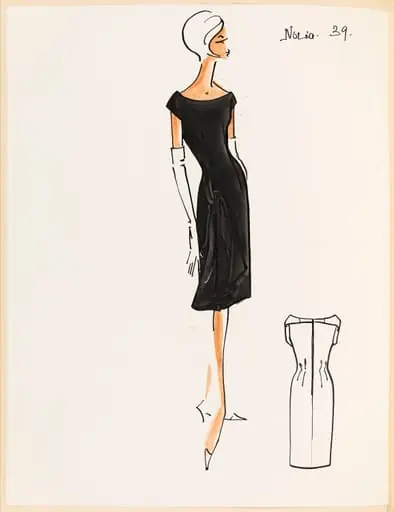
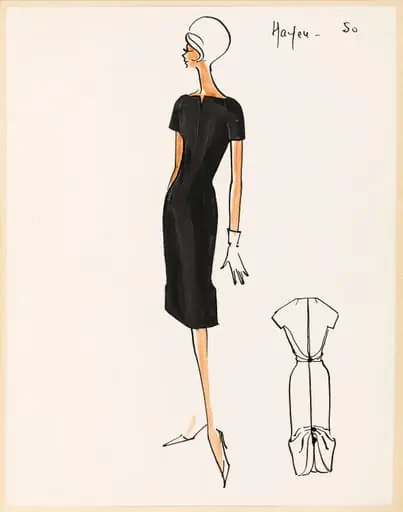
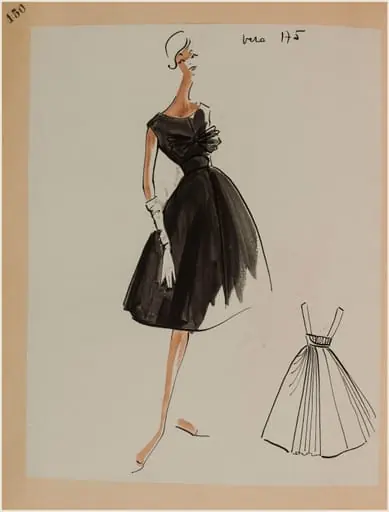
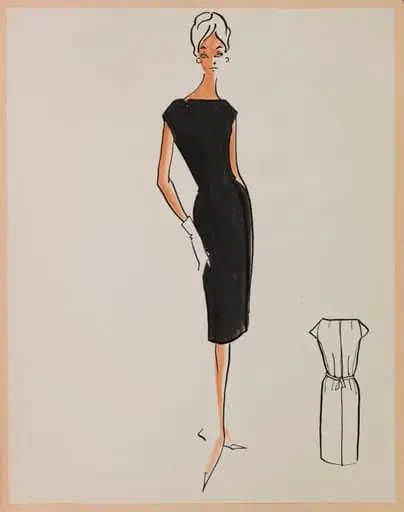
Robe noireà encolure bateau et plissée sur une hanche
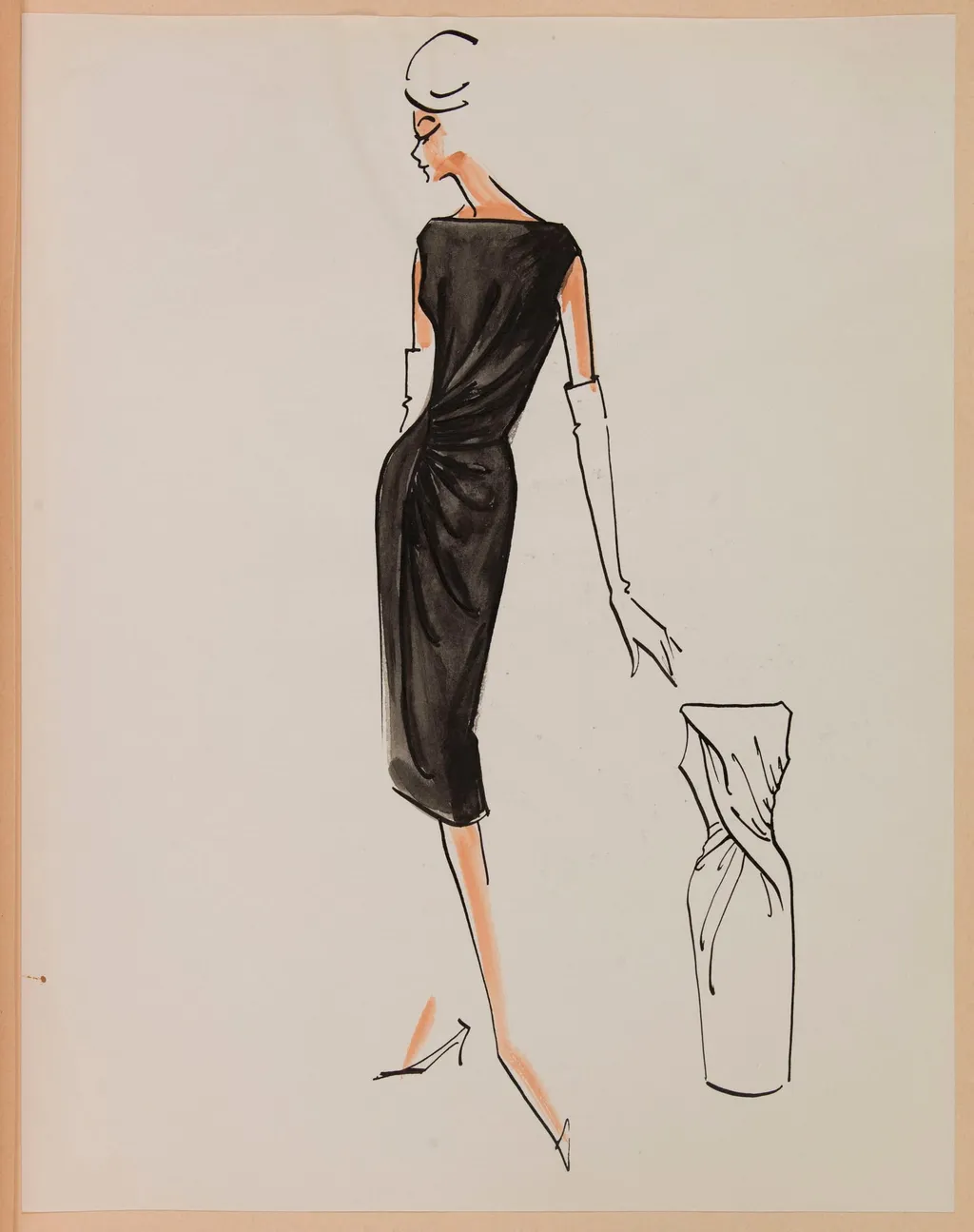
Robe noireà encolure bateau et plissée sur une hanche is a drawing by Carven. It dates from 1959 and is held in the collection of the Palais Galliera - Musée de la Mode de la Ville de Paris.
About this work
Overview
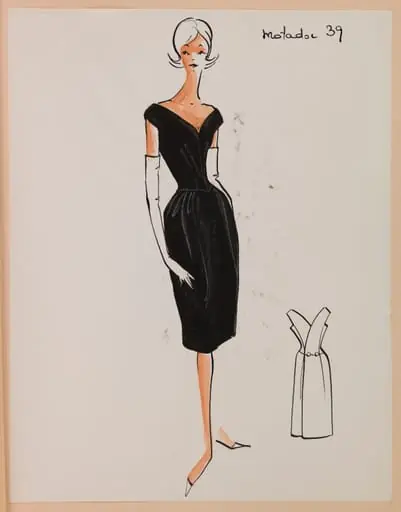
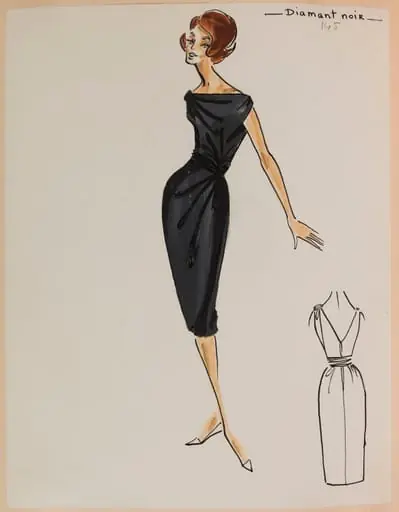
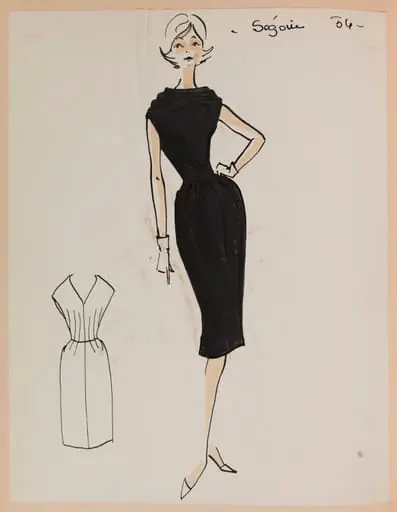
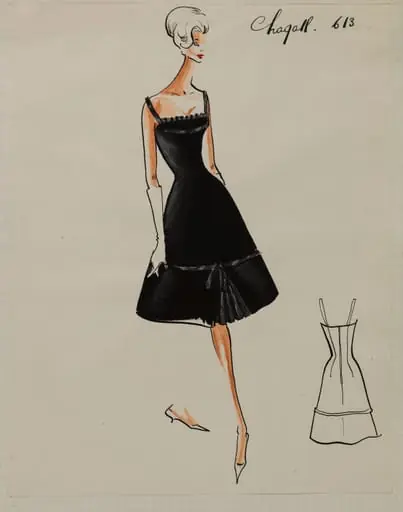
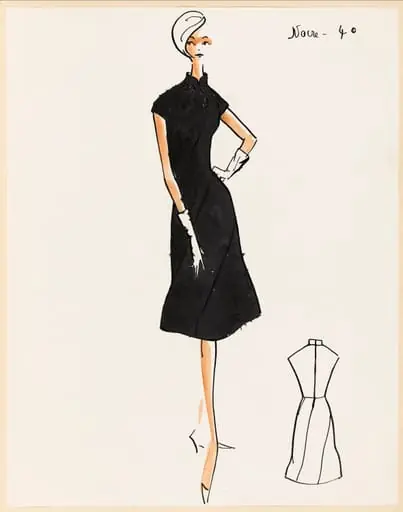
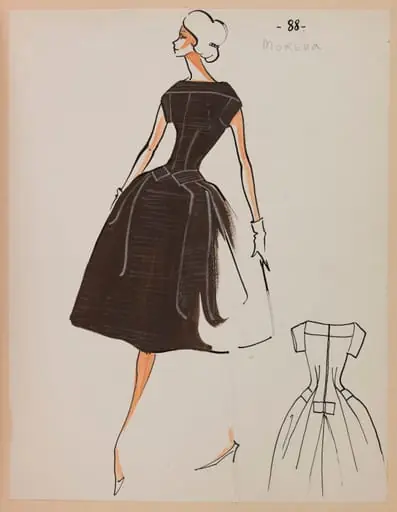
This image, attributed to the French fashion house Carven and dated circa 1959, depicts a woman in a tailored black dress. It is cataloged by the Museum of Ethnography as a visual record of mid-century fashion design, not as fine art. The composition isolates the garment as the central subject, minimizing facial and environmental detail to emphasize silhouette and construction.
Subject & Meaning
The attire reflects postwar ideals of refined femininity, where elegance was conveyed through precise tailoring rather than ornamentation.
The figure wears a boat-necked black dress with a single hip pleat, paired with white gloves and high heels. The pose—facing left, body subtly turned—suggests a staged presentation typical of fashion documentation. The attire reflects postwar ideals of refined femininity, where elegance was conveyed through precise tailoring rather than ornamentation. The gloves and heels imply formality, anchoring the dress within a context of urban, daytime sophistication.
Technique & Style
Rendered in a flat, graphic manner, the image uses clean contours and minimal shading to highlight the dress’s structure. The absence of detailed facial features or background elements directs attention to the garment’s form. The style aligns with commercial fashion illustration of the period, prioritizing clarity and reproducibility over expressive brushwork or emotional depth.
History & Provenance
The work originates from Carven’s design archives, likely produced as a promotional or editorial image for the brand’s 1959 collection. It entered the Museum of Ethnography’s holdings as part of a broader effort to document everyday material culture. Its preservation reflects institutional interest in fashion as a social artifact rather than an artistic object.
Context
In late 1950s Paris, fashion houses like Carven emphasized structured silhouettes and subtle detailing to distinguish their designs. This image aligns with trends favoring minimalist elegance over theatricality. Such illustrations were commonly used in magazines and catalogs, serving as both advertising and archival records for clients and tailors.
Legacy
The image contributes to the historical record of mid-century French fashion design, illustrating how garments were visually communicated before digital media. It remains a reference point for scholars studying the transition from haute couture to ready-to-wear, and how clothing was framed as an object of design rather than personal expression.
Artist & collection
Artist
These delicate ink-on-paper drawings capture the quiet poetry of everyday things: pinecones, reeds, apples.
Museum
Palais Galliera - Musée de la Mode de la Ville de Paris
Continue through works from the same source collection.