Artwork
Sable d'or
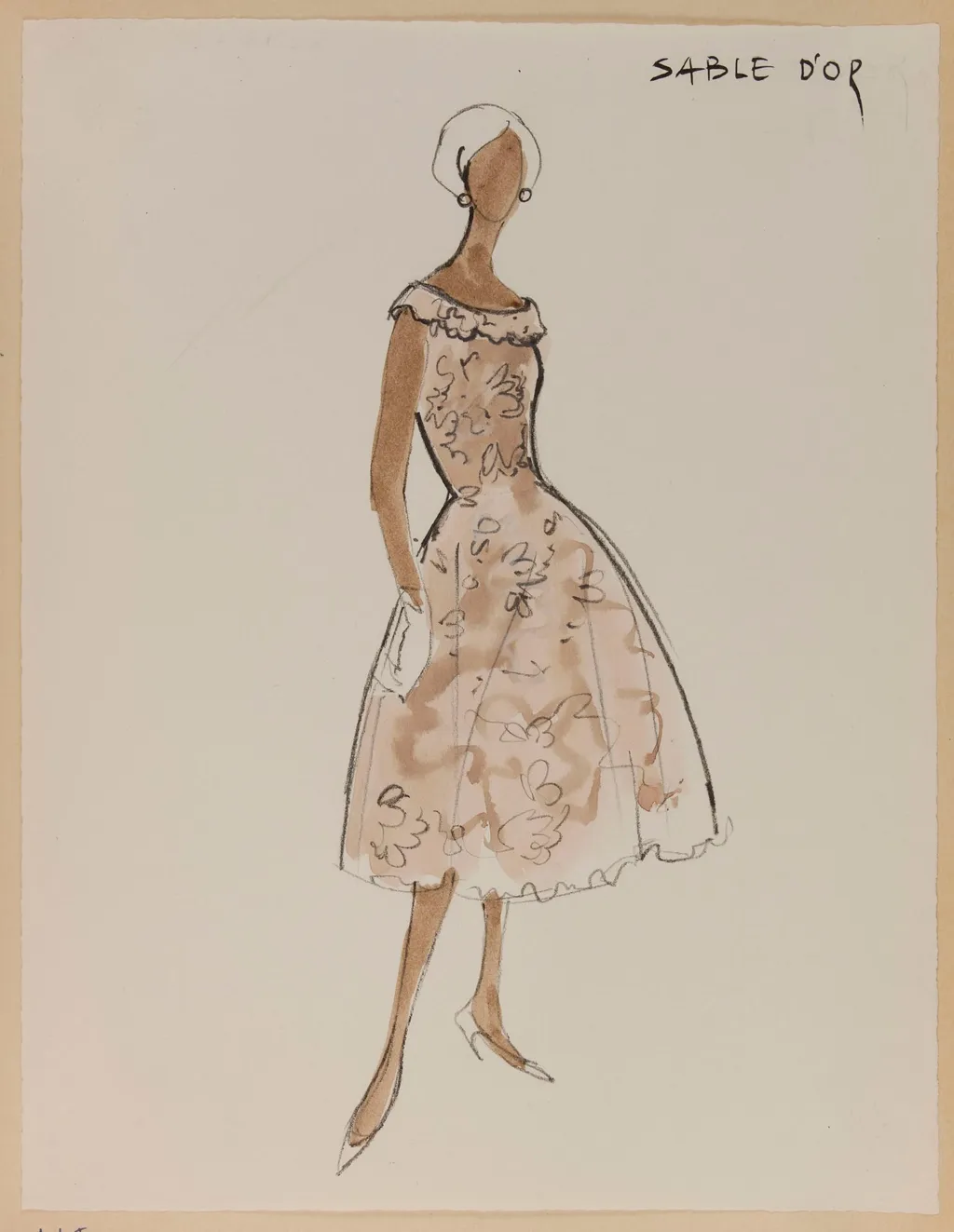
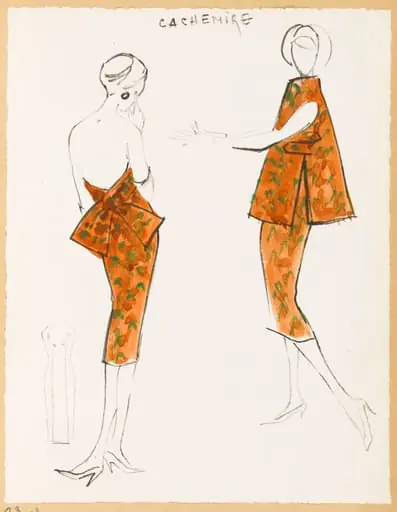
Sable d'or is a drawing by Carven. It dates from 1956 and is held in the collection of the Palais Galliera - Musée de la Mode de la Ville de Paris.
About this work
Overview
The work captures a figure in motion, rendered with fluid, spontaneous lines that suggest a rapid design study rather than a finished illustration.
Sable d'or is a pencil sketch on paper, dated around 1956, attributed to the French designer Carven. It resides in the collection of the Museum of Ethnography. The work captures a figure in motion, rendered with fluid, spontaneous lines that suggest a rapid design study rather than a finished illustration. Its modest scale and intimate detail point to its function as a personal or professional design note.
Subject & Meaning
The figure is a woman dressed in a knee-length garment with a ruffled collar, her hair neatly gathered and adorned with small earrings. The title, meaning 'golden sand,' alludes to the warm, earthy tones of the dress’s floral pattern, evoking natural hues rather than metallic gold. The absence of facial features and the focus on textile and silhouette suggest an emphasis on garment design over individual identity.
Technique & Style
Carven employed light, gestural pencil strokes to suggest fabric texture and movement, with washes of watercolor creating a soft, blurred floral motif. The lines are unrefined and immediate, indicating a working sketch rather than a polished presentation. The technique prioritizes spontaneity and tactile suggestion over precision, aligning with fashion design practices of the period that valued rapid ideation.
History & Provenance
The sketch entered the Museum of Ethnography’s collection in the late 20th century, likely through donation or acquisition from Carven’s personal archive. Its preservation reflects institutional interest in documenting everyday fashion design processes rather than haute couture. No public exhibition history is documented prior to its inclusion in the museum’s holdings.
Context
Created in the mid-1950s, Sable d'or reflects a postwar European fashion climate where practical elegance and accessible design gained prominence. Carven, known for wearable, feminine silhouettes, often drew inspiration from nature and domestic life. This sketch aligns with her broader practice of translating quiet, lived-in beauty into clothing, distinct from the theatricality of contemporaries like Dior.
Legacy
Sable d'or endures as a quiet testament to the unseen labor behind fashion design. It illustrates how designers like Carven used sketching not for spectacle but for exploration—capturing texture, proportion, and mood in fleeting moments. Its presence in an ethnographic museum underscores its value as a cultural artifact of everyday creative practice.
Artist & collection
Artist
These delicate ink-on-paper drawings capture the quiet poetry of everyday things: pinecones, reeds, apples.
Museum
Palais Galliera - Musée de la Mode de la Ville de Paris
Continue through works from the same source collection.