Artwork
Safran
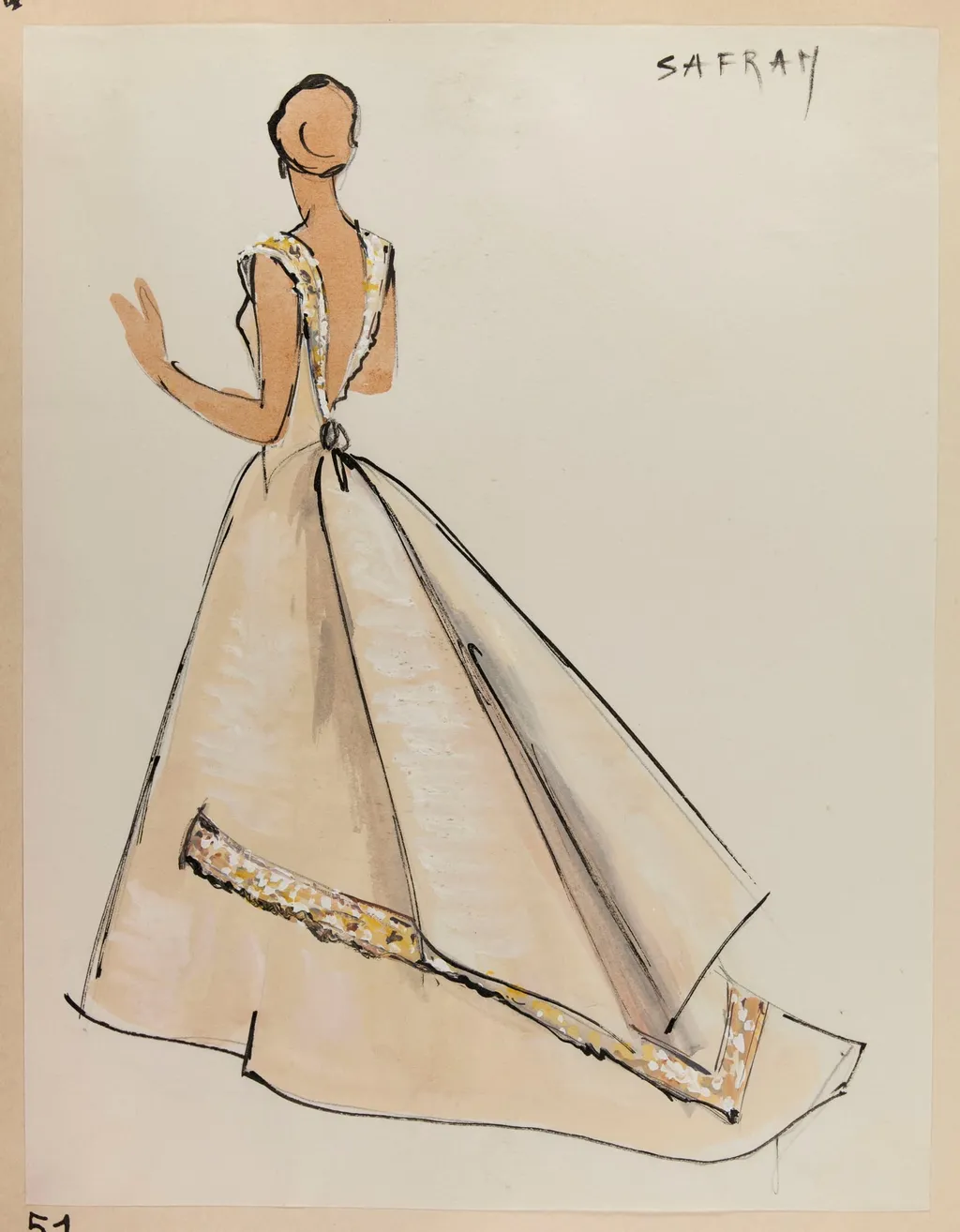
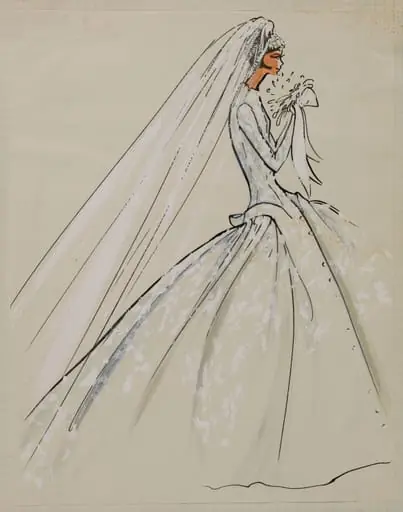
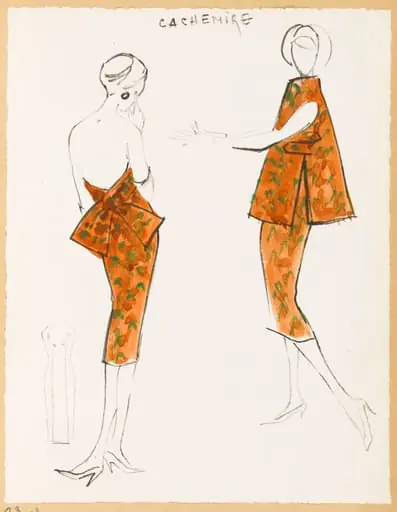
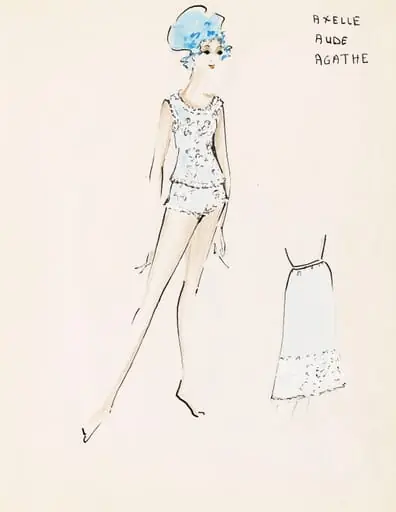
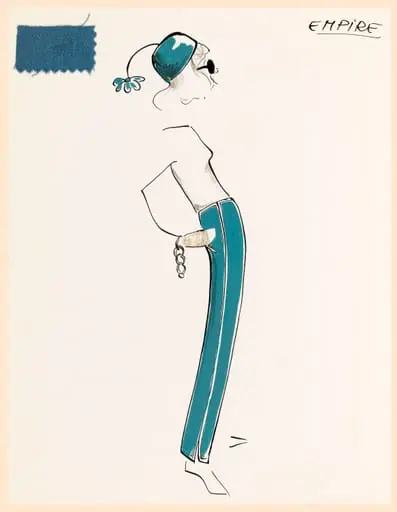
Safran is a drawing by Carven. It dates from 1952 and is held in the collection of the Palais Galliera - Musée de la Mode de la Ville de Paris.
About this work
Overview
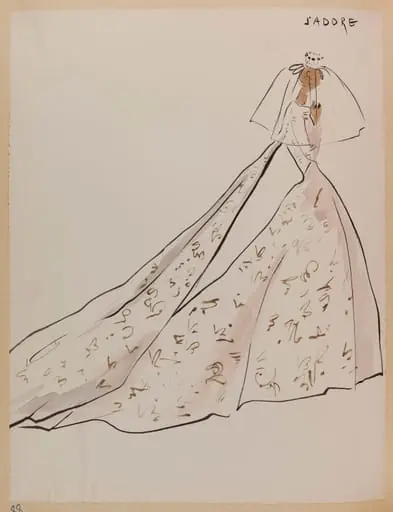
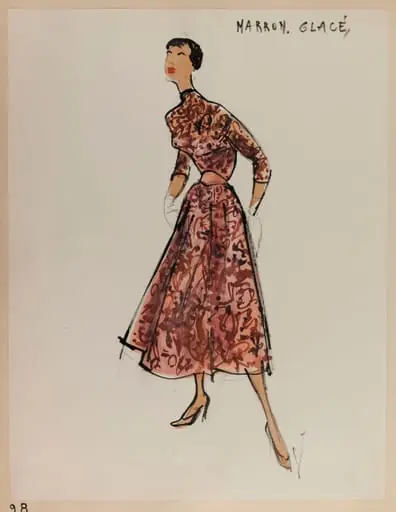
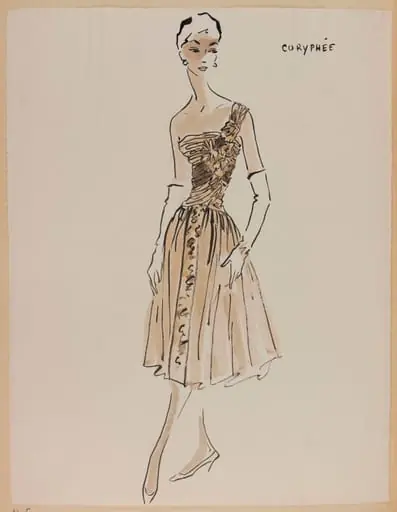
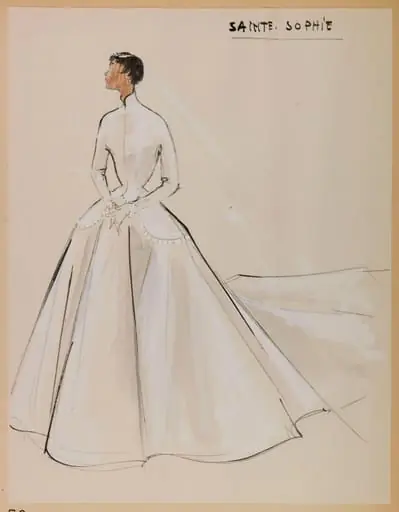
Created around 1952 by the French fashion designer Carven, this ink sketch depicts a woman viewed from behind. Executed with swift, fluid lines, it was likely made as a design study rather than a finished artwork. The piece is part of the collection at the Museum of Ethnography, where it is preserved as an example of mid-century fashion illustration.
Subject & Meaning
The figure is a woman in a long dress, her back turned, one arm gently raised. The posture suggests motion, as if mid-stride or turning. There is no facial detail, emphasizing the silhouette and garment over individual identity. The focus is on the interplay of fabric and form, reflecting the designer’s interest in how clothing moves with the body.
Technique & Style
The drawing uses minimal, rapid strokes to suggest volume and flow rather than precise contours. The dress features a simple bodice with a waist bow and decorative trim near the hem, rendered with light, suggestive lines. The absence of shading or fine detail indicates a working sketch, prioritizing gesture and silhouette over realism, typical of fashion design drafts of the period.
History & Provenance
The sketch entered the Museum of Ethnography’s collection as part of a broader archive of fashion-related materials. Its origin traces to Carven’s studio in the early 1950s, a time when the designer was refining her signature blend of elegance and ease. It was likely preserved for its representation of postwar French fashion practices rather than as a standalone artwork.
Context
In the early 1950s, Parisian fashion houses relied heavily on quick sketches to communicate designs to tailors and clients. Carven, known for her understated yet refined aesthetic, used such drawings to explore movement and proportion. This sketch aligns with a broader trend of designers documenting garments in motion, moving beyond static poses to capture the lived experience of clothing.
Legacy
Though not widely exhibited, the sketch contributes to the understanding of Carven’s design process and the role of informal drawings in fashion development. It reflects a period when fashion illustration served as both a practical tool and a quiet art form, preserving the ephemeral nature of garment design before production.
Artist & collection
Artist
These delicate ink-on-paper drawings capture the quiet poetry of everyday things: pinecones, reeds, apples.
Museum
Palais Galliera - Musée de la Mode de la Ville de Paris
Continue through works from the same source collection.