Artwork
Shéhérazade
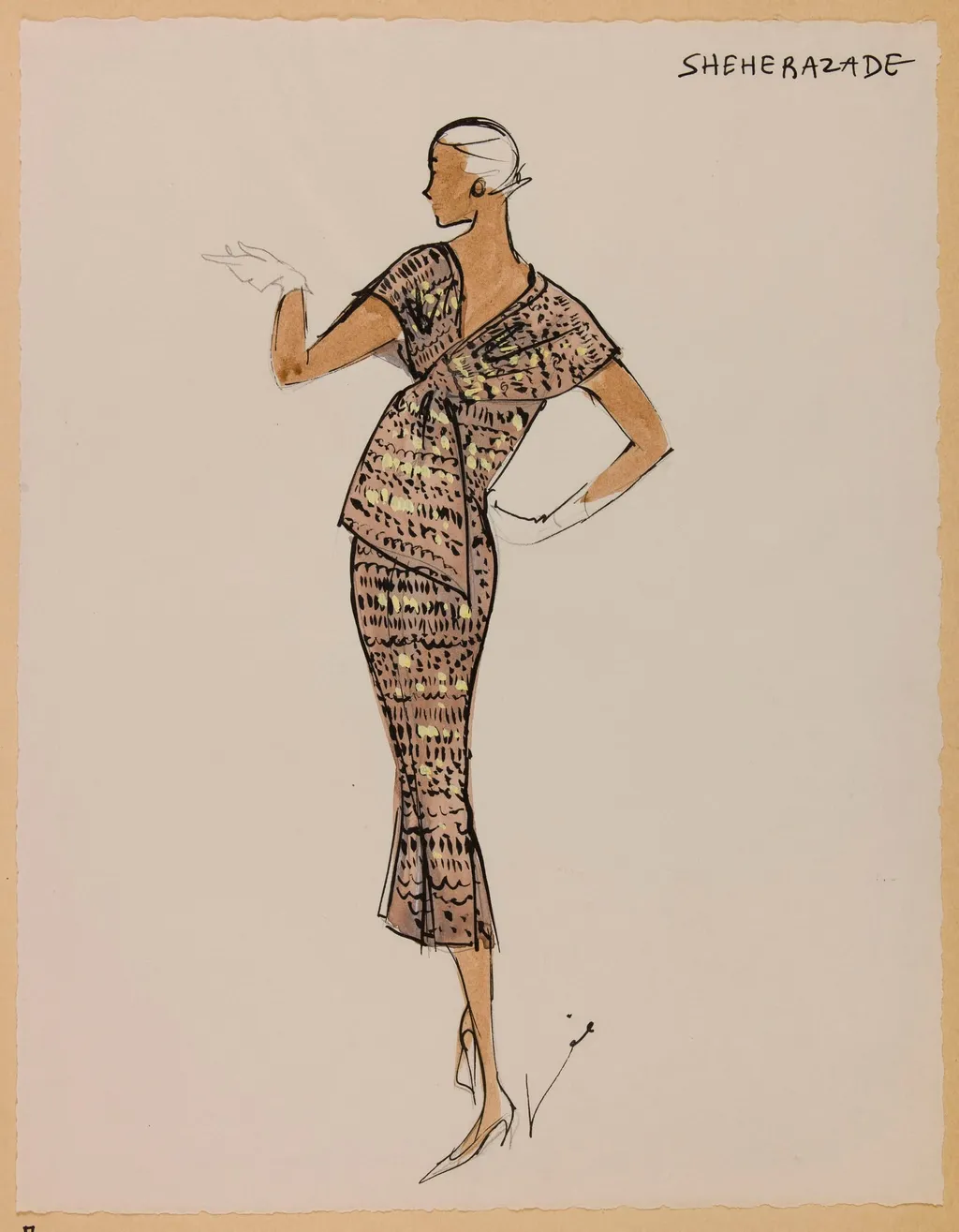
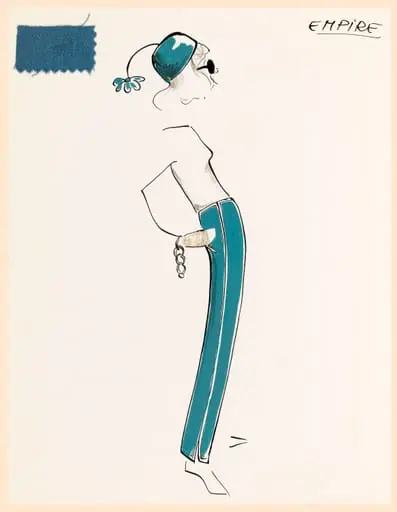
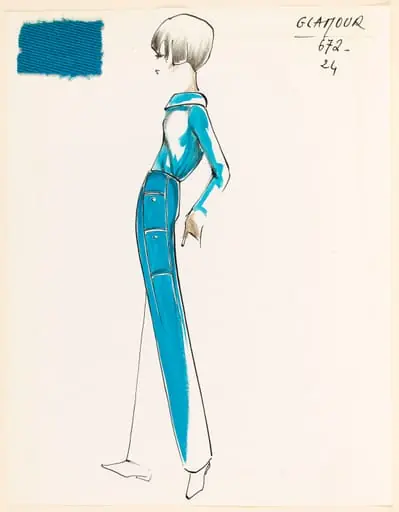
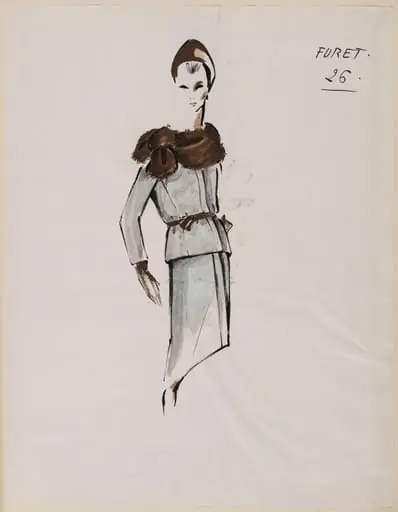
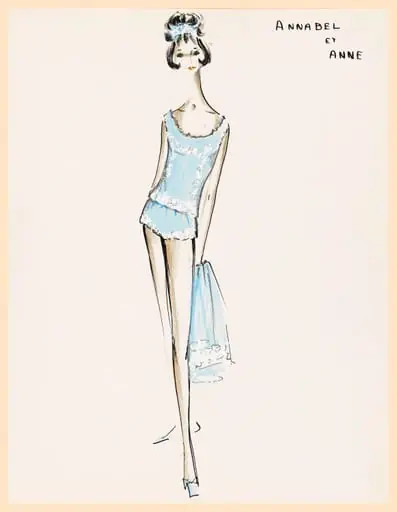
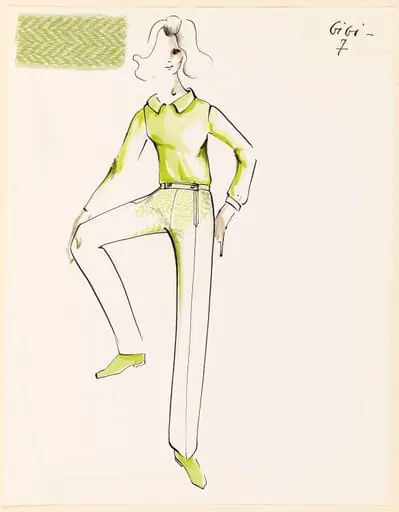
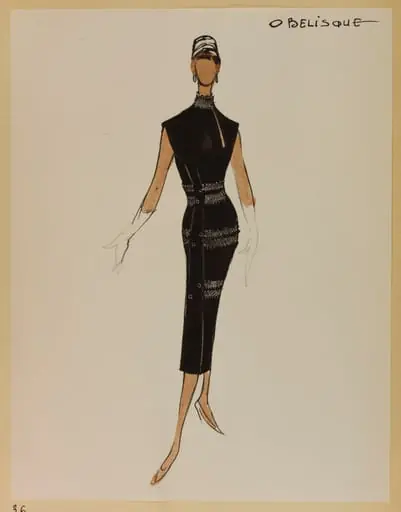
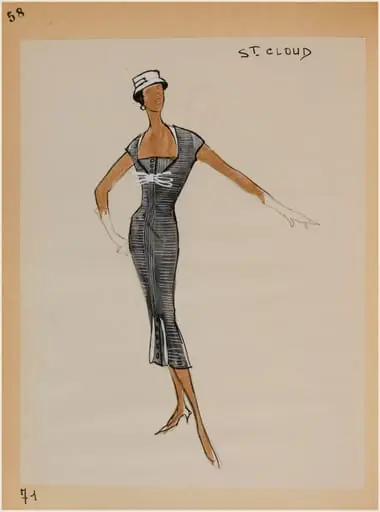
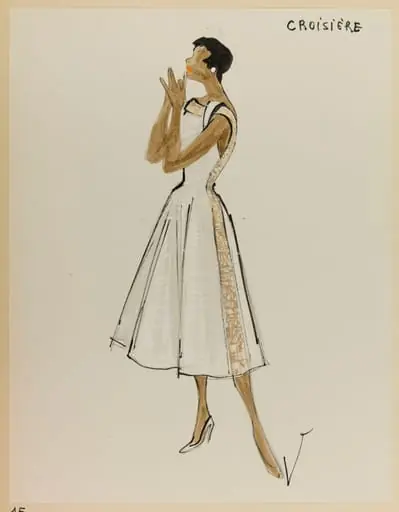
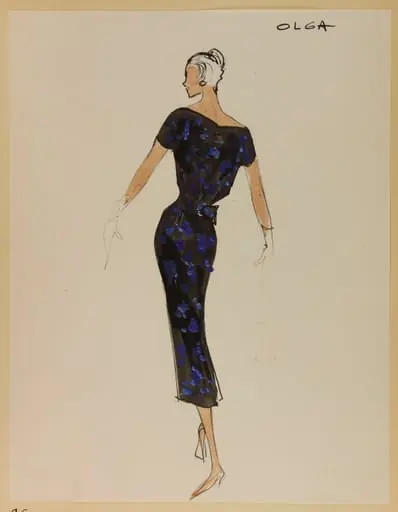
Shéhérazade is a drawing by Carven. It dates from 1956 and is held in the collection of the Palais Galliera - Musée de la Mode de la Ville de Paris.
About this work
Overview
Created around 1956 by the French fashion house Carven, this ink sketch is part of a series of design studies held at the Museum of Ethnography.
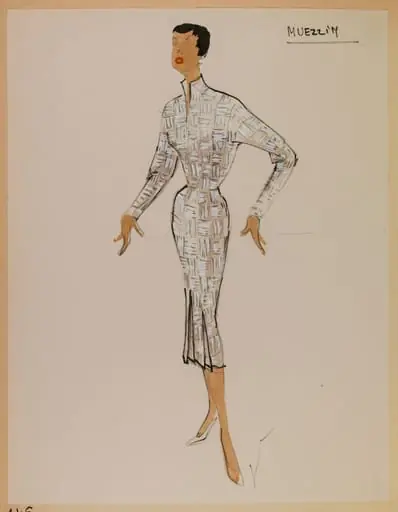
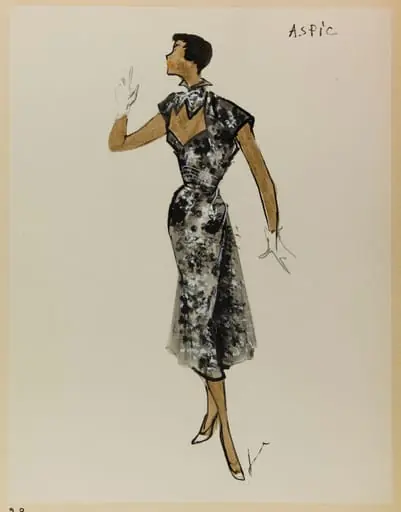
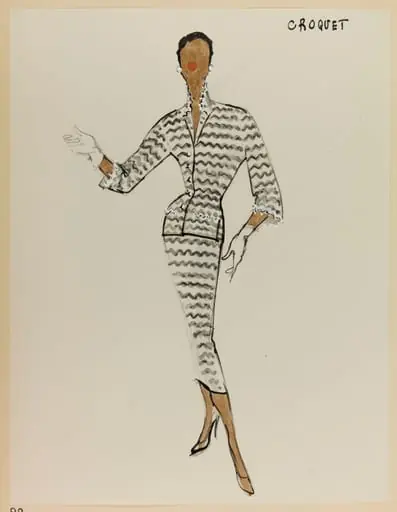
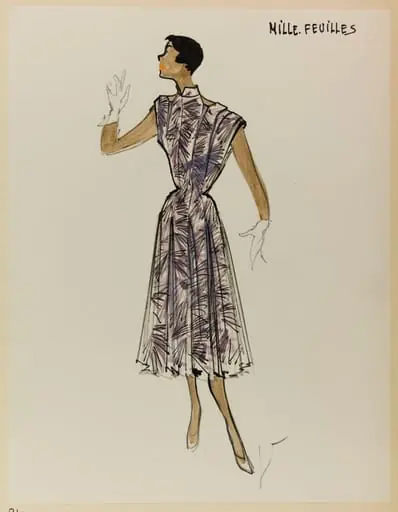
Created around 1956 by the French fashion house Carven, this ink sketch is part of a series of design studies held at the Museum of Ethnography. It depicts a female figure in profile, rendered with rapid, fluid lines that suggest movement and spontaneity. The work lacks fine detail, emphasizing gesture over finish, and bears the title 'Shéhérazade' in the corner, indicating its role as a conceptual fashion study rather than a portrait.
Subject & Meaning
The figure is named after the storyteller from One Thousand and One Nights, evoking an exoticized ideal of Eastern elegance. The pose—sideways stance, one foot forward—suggests grace and poise, common in fashion illustrations of the era. The reference to Shéhérazade reflects mid-century Western fashion’s fascination with Orientalist motifs, using cultural imagery to lend narrative depth to garment designs without direct ethnographic accuracy.
Technique & Style
Executed in loose ink lines, the sketch prioritizes rhythm over precision. The dress features repetitive, abstract patterns that resemble textile motifs, possibly drawn from North African or Middle Eastern sources. The figure’s limbs are minimally defined, and the fabric is suggested rather than rendered, allowing the viewer’s eye to complete the form. This approach aligns with fashion drawing traditions that favored expressive speed over technical finish.
History & Provenance
The sketch entered the Museum of Ethnography’s collection as part of a broader archive of mid-century fashion designs. Its inclusion among ethnographic materials reflects institutional interest in how global aesthetics influenced Western fashion. While the exact provenance before museum acquisition is undocumented, its presence there suggests it was recognized as a cultural artifact linking design practice with cross-cultural inspiration.
Context
In the 1950s, Parisian fashion houses frequently drew from non-Western textiles and mythologies to create novelty in their collections. Carven, known for its refined yet playful designs, used such references to evoke romance and exoticism. This sketch fits within a broader trend where designers translated imagined cultural elements into wearable forms, often detached from their original contexts but rich in symbolic appeal.
Legacy
The sketch remains a quiet example of how fashion archives preserve not just garments but the cultural imaginings behind them. While not widely exhibited, it contributes to scholarly understanding of postwar design practices and the persistent influence of Orientalism in European fashion. Its unfinished quality invites reflection on the ephemeral nature of design ideation.
Artist & collection
Artist
These delicate ink-on-paper drawings capture the quiet poetry of everyday things: pinecones, reeds, apples.
Museum
Palais Galliera - Musée de la Mode de la Ville de Paris
Continue through works from the same source collection.