Artwork
Tabac blond
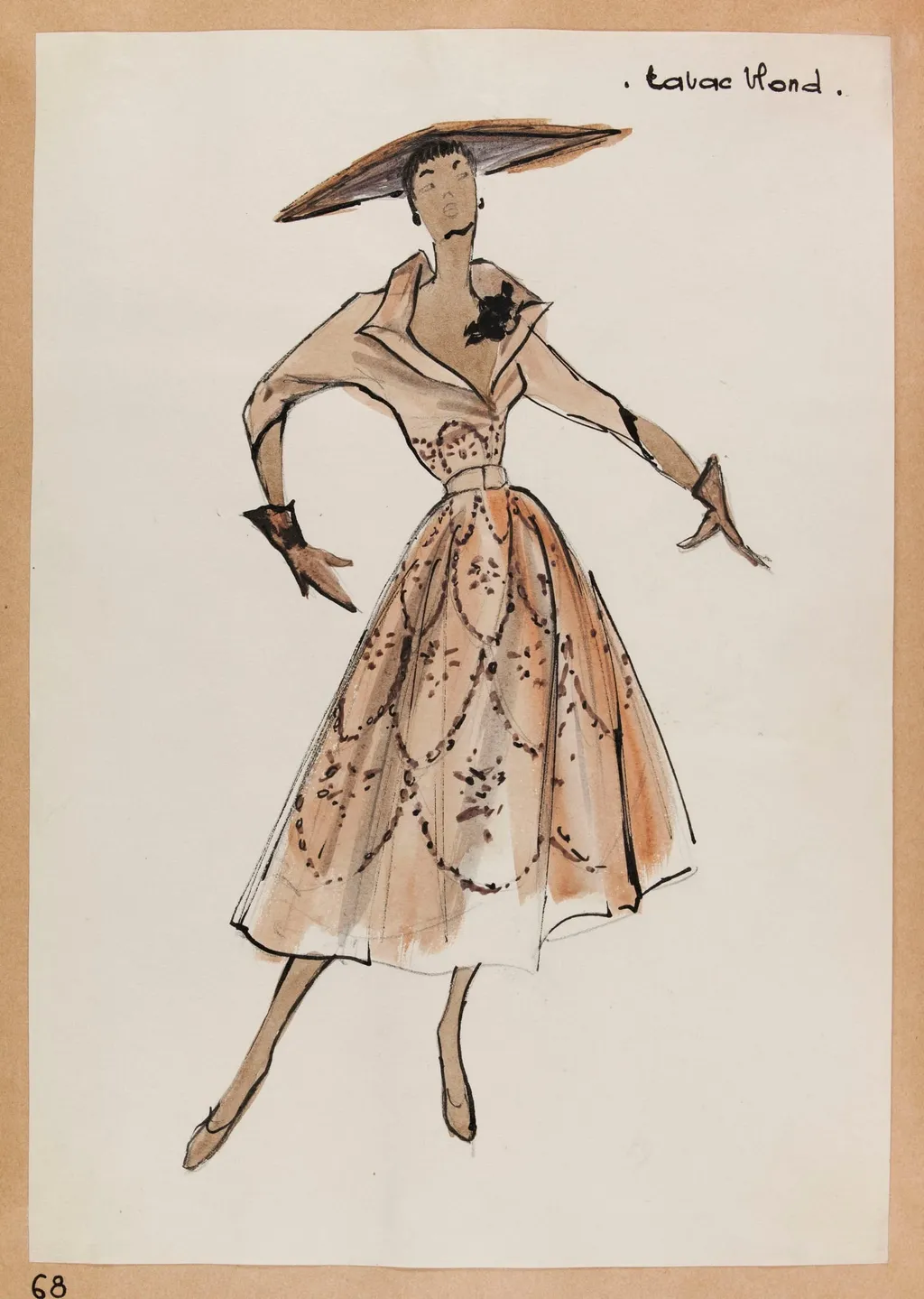
Tabac blond is a drawing by Carven. It dates from 1951 and is held in the collection of the Palais Galliera - Musée de la Mode de la Ville de Paris.
About this work
Overview
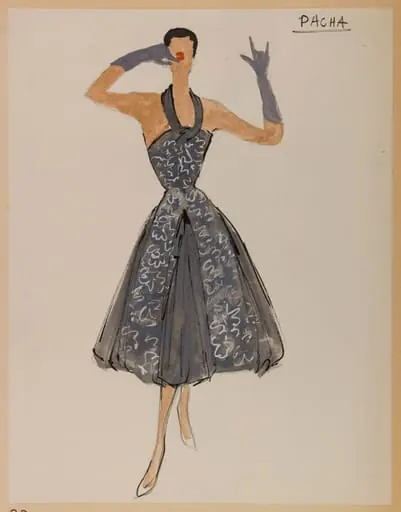
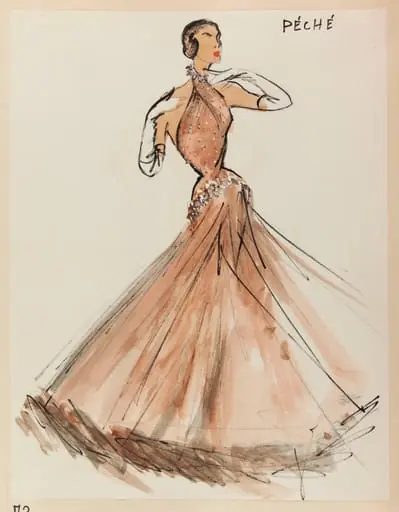
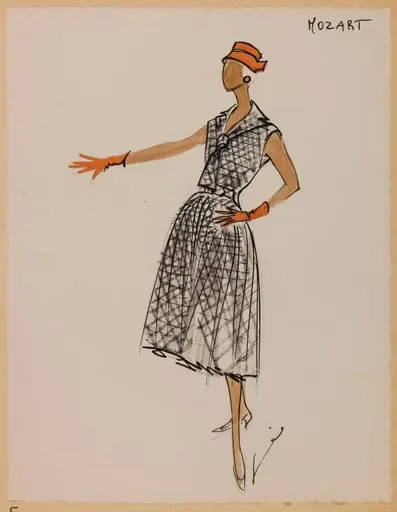
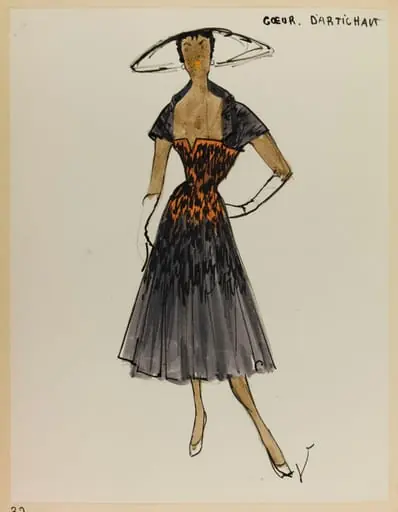
The work captures a figure in dynamic motion, rendered with swift, fluid lines typical of fashion illustration.
Created around 1951, Tabac blond is a pencil sketch by French designer Carven. It resides in the collection of the Museum of Ethnography. The work captures a figure in dynamic motion, rendered with swift, fluid lines typical of fashion illustration. Its informal quality suggests it was made as a preparatory study rather than a finished piece, reflecting the designer’s process in translating movement into textile form.
Subject & Meaning
The figure depicts a woman in a flowing ensemble, arms extended as if in gesture or dance. The skirt’s pattern of small black dots evokes tobacco leaves, aligning with the title’s reference to blond tobacco. The attire, though stylized, suggests a blend of theatricality and everyday elegance. The imagery may allude to the sensory associations of tobacco—lightness, scent, and movement—rather than literal representation.
Technique & Style
Executed in pencil with minimal shading, the drawing emphasizes line over detail. The loose, gestural strokes convey immediacy, characteristic of fashion sketches designed to capture posture and flow. The fitted bodice and voluminous skirt are suggested rather than meticulously rendered, allowing the viewer’s eye to complete the form. The dots on the skirt are applied with rhythmic precision, hinting at textile patterning without full definition.
History & Provenance
The work entered the Museum of Ethnography’s collection as part of a broader acquisition of mid-20th-century fashion materials. Its origin as a personal sketch by Carven is documented in the museum’s archives, though its exact path from studio to institution remains unclear. It was likely preserved for its illustrative value in representing postwar French design sensibilities.
Context
In the early 1950s, French fashion houses emphasized silhouette and movement, often drawing inspiration from nature and performance. Carven, known for her wearable yet imaginative designs, frequently integrated organic motifs into textiles. Tabac blond reflects this trend, merging botanical references with the kinetic energy of dress in motion, aligning with broader cultural interests in fluidity and lightness after wartime austerity.
Legacy
The sketch remains a quiet example of how fashion design documentation preserves ephemeral ideas. While not widely exhibited, it contributes to scholarly understanding of Carven’s design methodology and the role of sketching in couture development. Its presence in an ethnographic museum underscores the cultural significance of fashion as material expression, beyond mere utility or trend.
Artist & collection
Artist
These delicate ink-on-paper drawings capture the quiet poetry of everyday things: pinecones, reeds, apples.
Museum
Palais Galliera - Musée de la Mode de la Ville de Paris
Continue through works from the same source collection.