Artwork
Portret Józefa Piłsudskiego
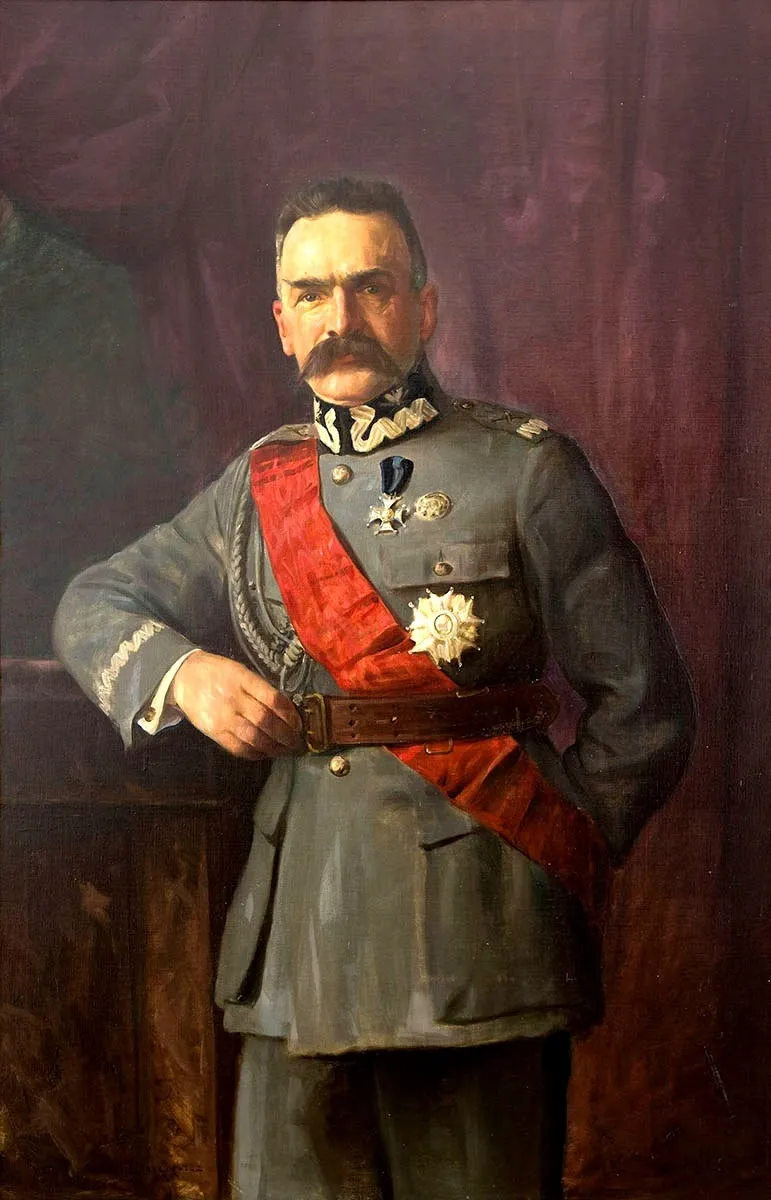
Portret Józefa Piłsudskiego is an oil painting by Casimir Markievicz. It dates from 1924 and is held in the collection of the National Museum in Kraków.
About this work
Overview
Painted in 1924 by Casimir Markievicz, this oil portrait captures Józef Piłsudski, a central figure in Poland’s post-independence leadership.
Painted in 1924 by Casimir Markievicz, this oil portrait captures Józef Piłsudski, a central figure in Poland’s post-independence leadership. Executed in a restrained, formal style, the work belongs to the National Museum in Kraków’s collection. Markievicz, a Polish nobleman with ties to both theatrical and visual arts, approached the subject with a sense of solemnity befitting the nation’s military and political icon.
Subject & Meaning
The portrait presents Piłsudski in full military attire, emphasizing his role as a commander and statesman. The red sash, medals, and disciplined posture convey rank and service, while the absence of overt symbolism avoids romanticization. His serious expression and direct gaze suggest resolve and gravitas, reflecting his status as a unifying figure in early 20th-century Poland during a period of fragile national reconstruction.
Technique & Style
Markievicz employed traditional oil painting methods to render texture and form with precision. The dark background isolates the figure, directing attention to the uniform’s details and the sitter’s bearing. Brushwork is controlled, avoiding flourish; shadows define the contours of the jacket and belt with quiet realism. The composition’s simplicity reinforces the portrait’s intent: to document authority rather than dramatize it.
History & Provenance
Created two years after Piłsudski’s rise to the position of Chief of State, the painting was likely commissioned to affirm his public image during a critical phase of Poland’s sovereignty. It entered the National Museum in Kraków’s holdings in the 20th century, where it remains part of its modern Polish art collection. No record suggests it was publicly exhibited prior to its institutional acquisition.
Context
Markievicz, though better known for his theatrical work, engaged in portraiture during the interwar years as Poland sought to define its national identity through visual culture. Piłsudski’s image was frequently reproduced in official contexts, and this portrait aligns with a broader trend of using art to legitimize political leadership in the newly independent state.
Legacy
The portrait endures as a factual representation of Piłsudski’s public persona, valued for its historical accuracy rather than artistic innovation. It contributes to the visual archive of Poland’s interwar era, offering insight into how leadership was visually codified during a time of nation-building. Markievicz’s role as both artist and cultural figure adds nuance to its significance within Polish artistic history.
Artist & collection
Artist
Casimir Dunin-Markievicz (Polish: Kazimierz Józef Dunin-Markiewicz ; 15 March 1874 – 2 December 1932), known as Count Markievicz, was a Polish playwright, theatre director, and painter, and the husband of the Irish revolutionary Constance…

 Bildnis: Großherzog Friedrich II. von Baden
 Portrait of Eduard I. Totleben
 Emperor Franz Joseph of Austria-Hungary
 Portrait of I.A.Orlov, Lieutenant-General of the Cossack Troops
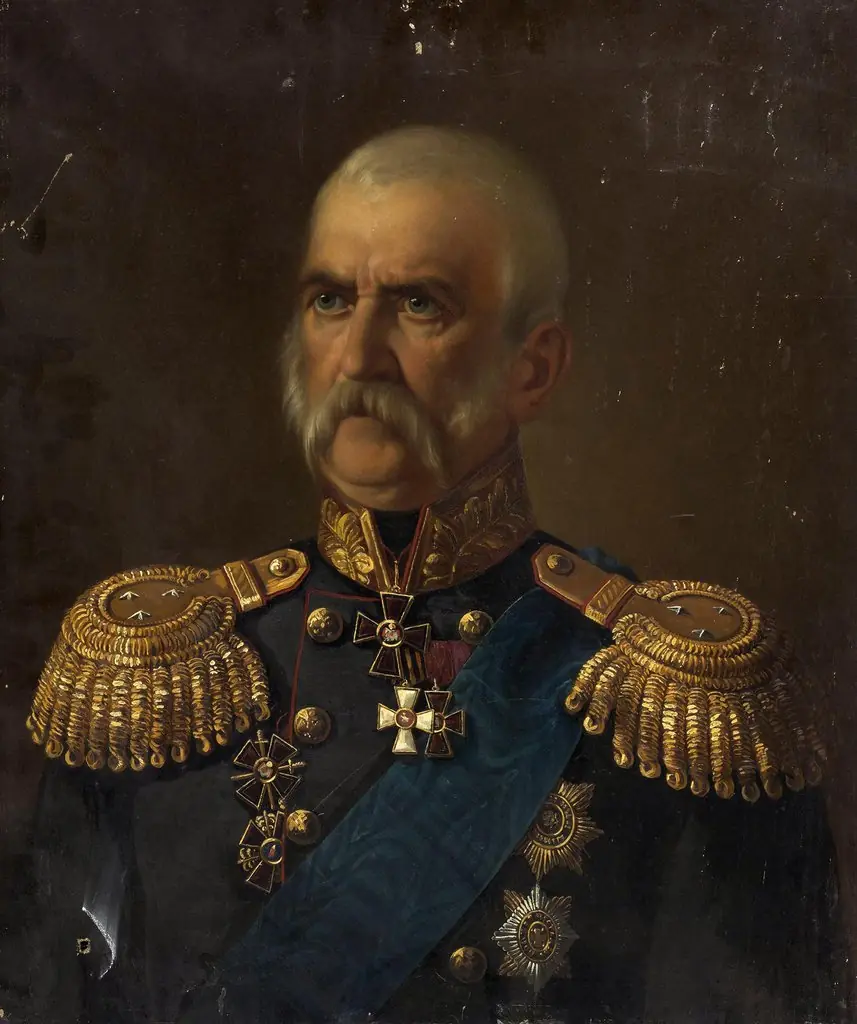 Portrait D.B. Bronevskogo
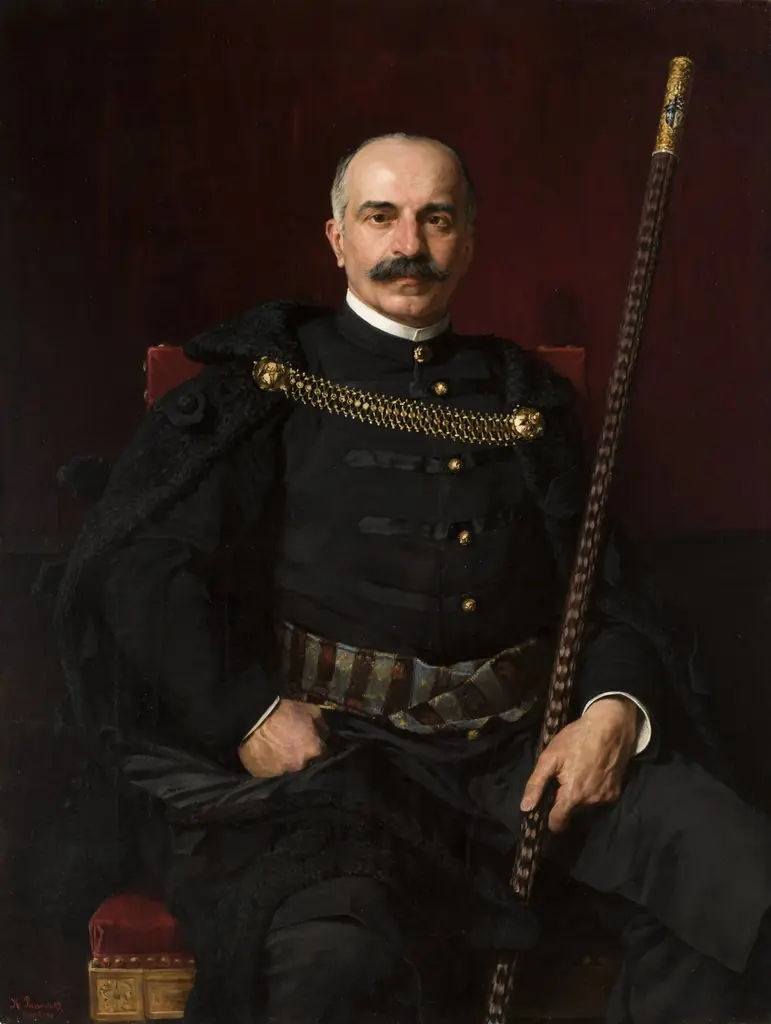 Portrait of Eustachy Sanguszko
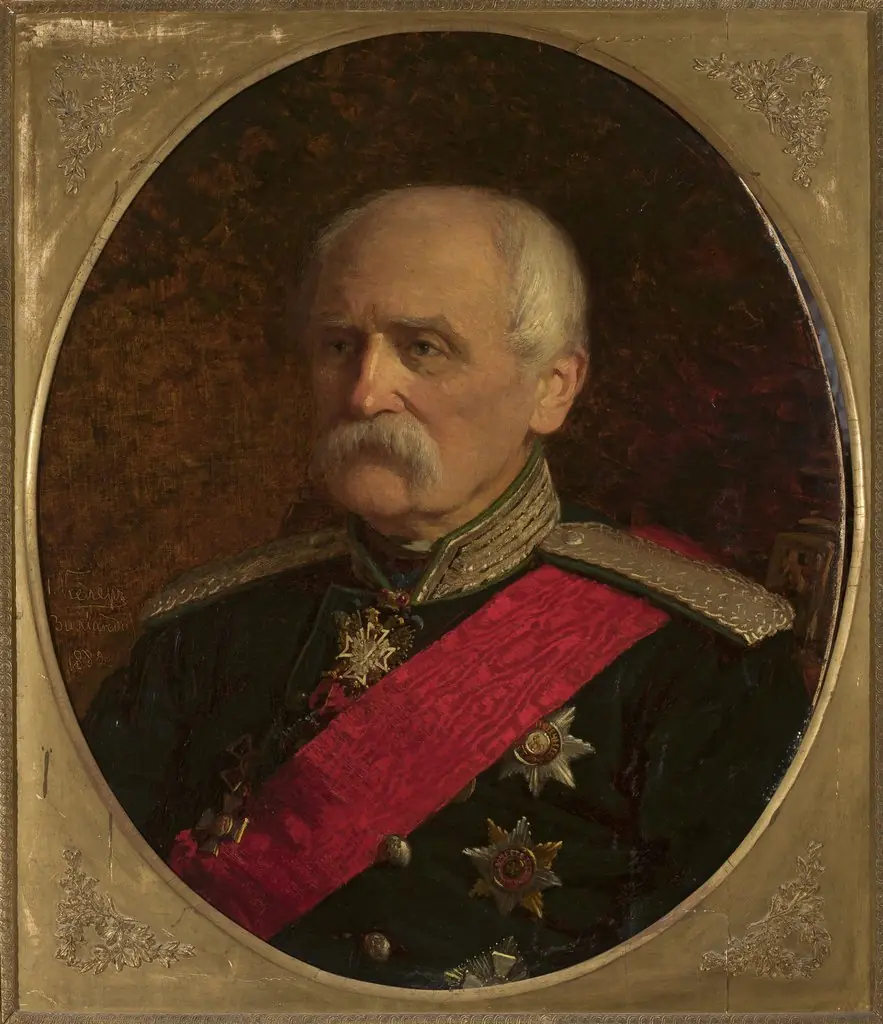 Portrait of major general Stanisław Kierbedź, engineer
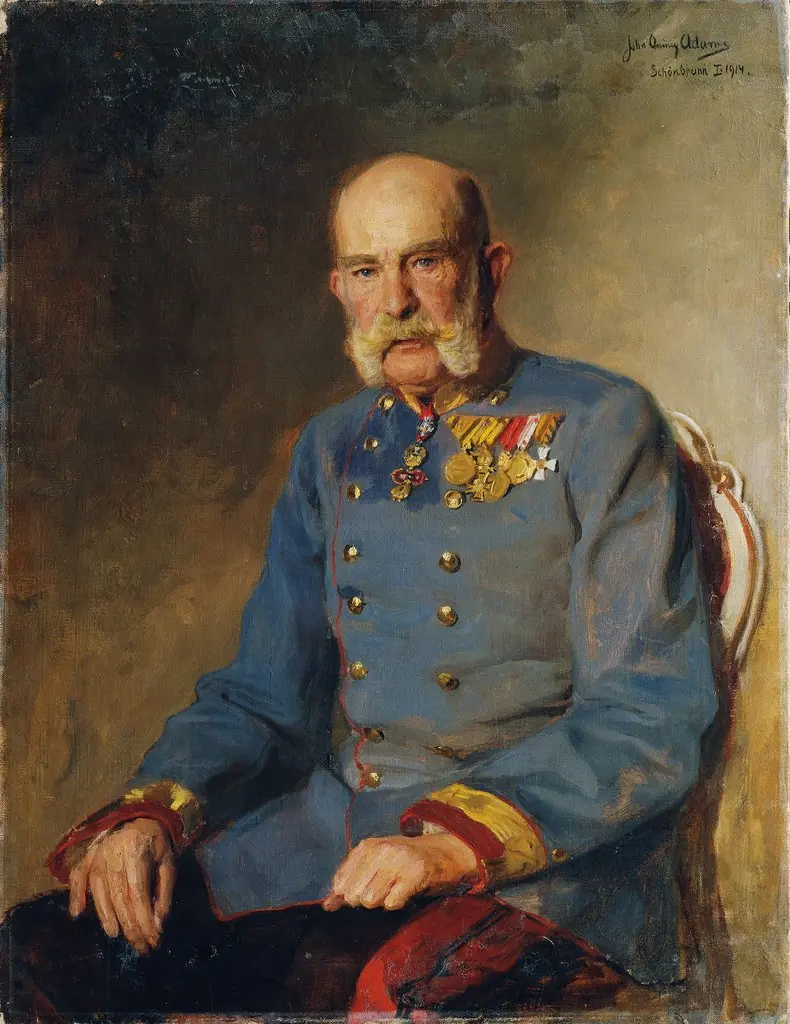 Emperor Franz Joseph I in the service uniform of an Austrian field marshal
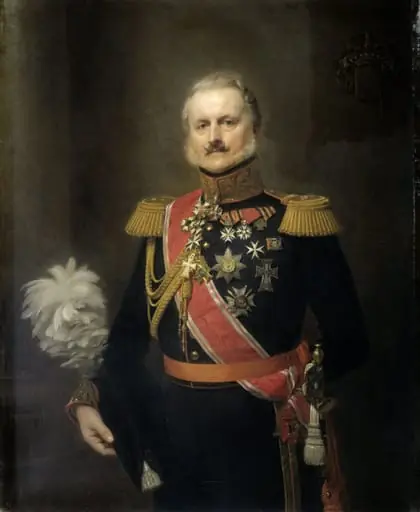 Antonie Frederick Jan Floris Jacob Baron van Omphal (1788-1863), Lieutenant General
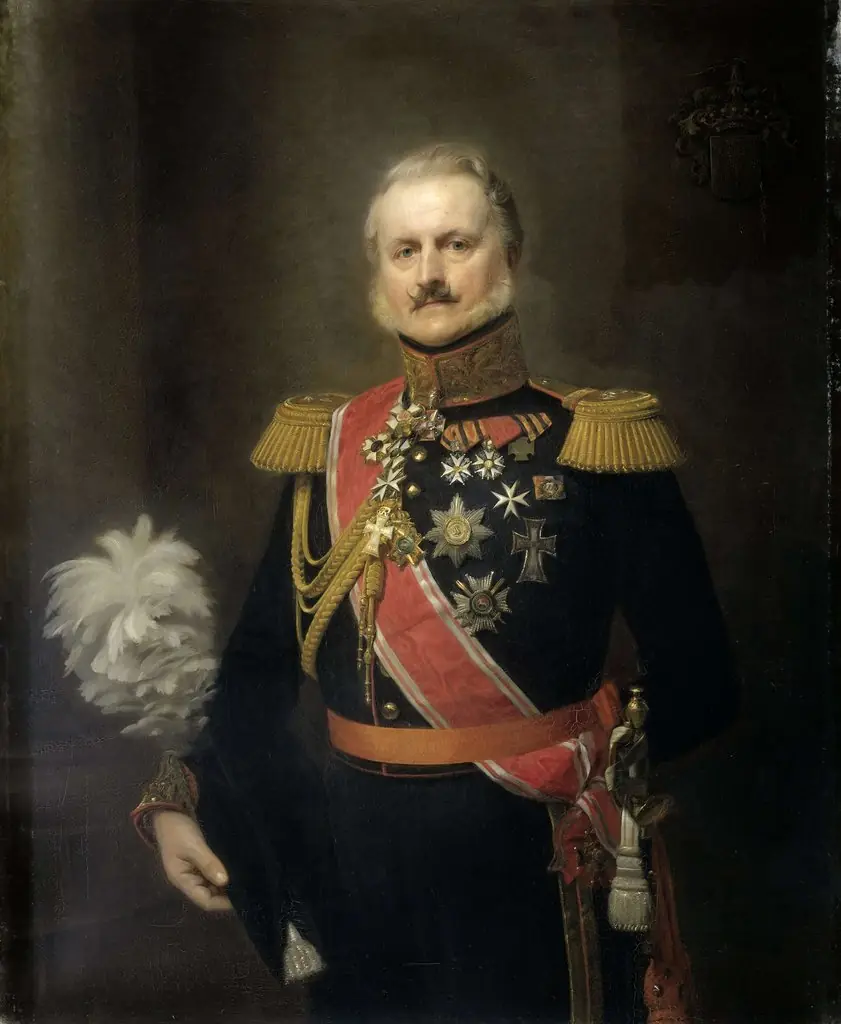 Portrait of Antonie Frederick Jan Floris Jacob Baron van Omphal (1788-1863), luitenant-generaal
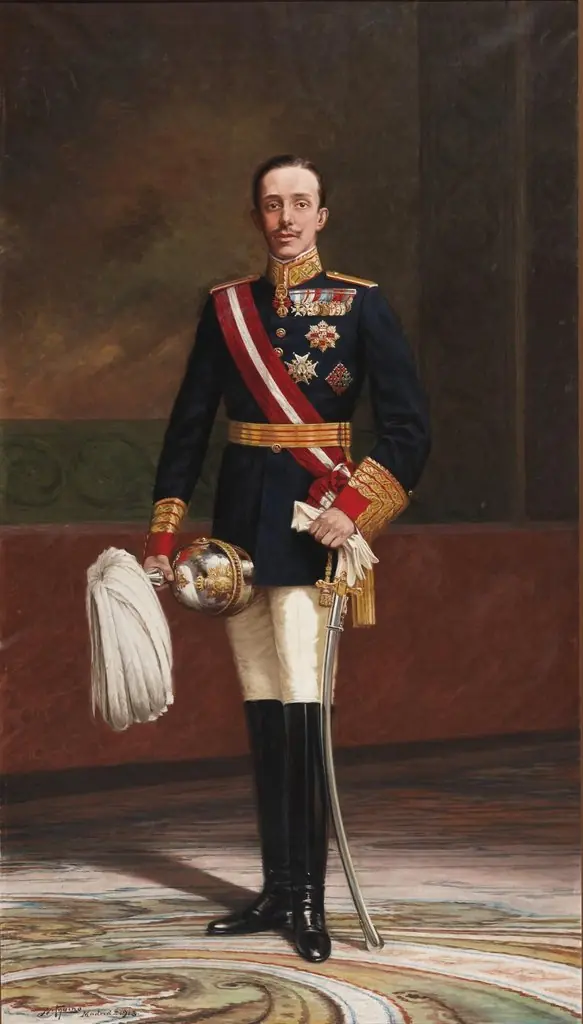 Alfonso XIII con uniforme de capitán general
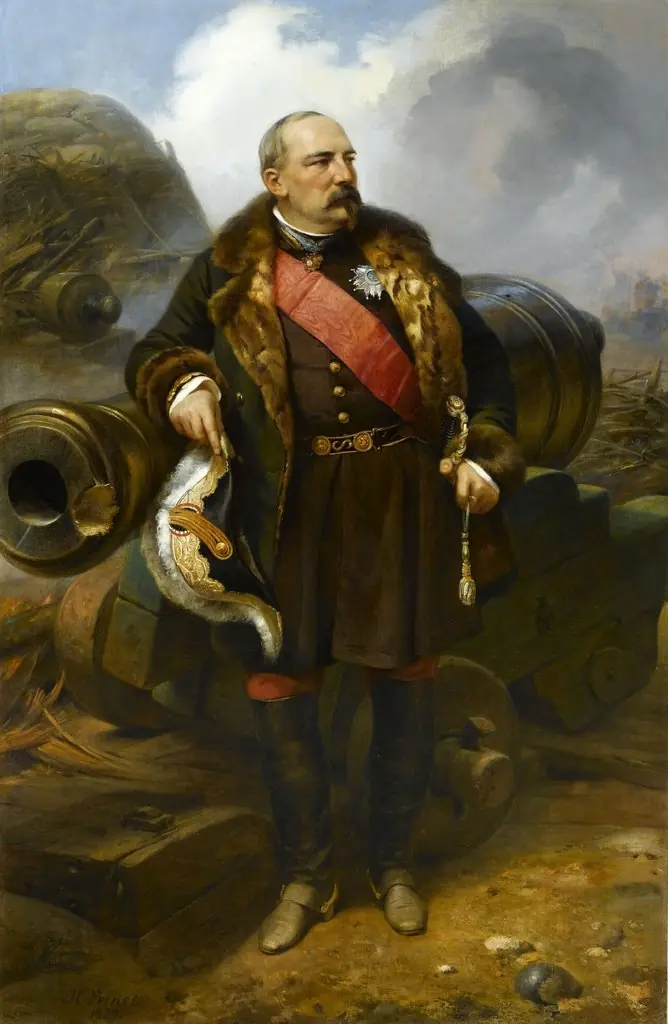 Pierre-Joseph-François Bosquet, Marshal of France (1810-1861)