Artwork
Head of an Elderly Woman with Upturned Eyes
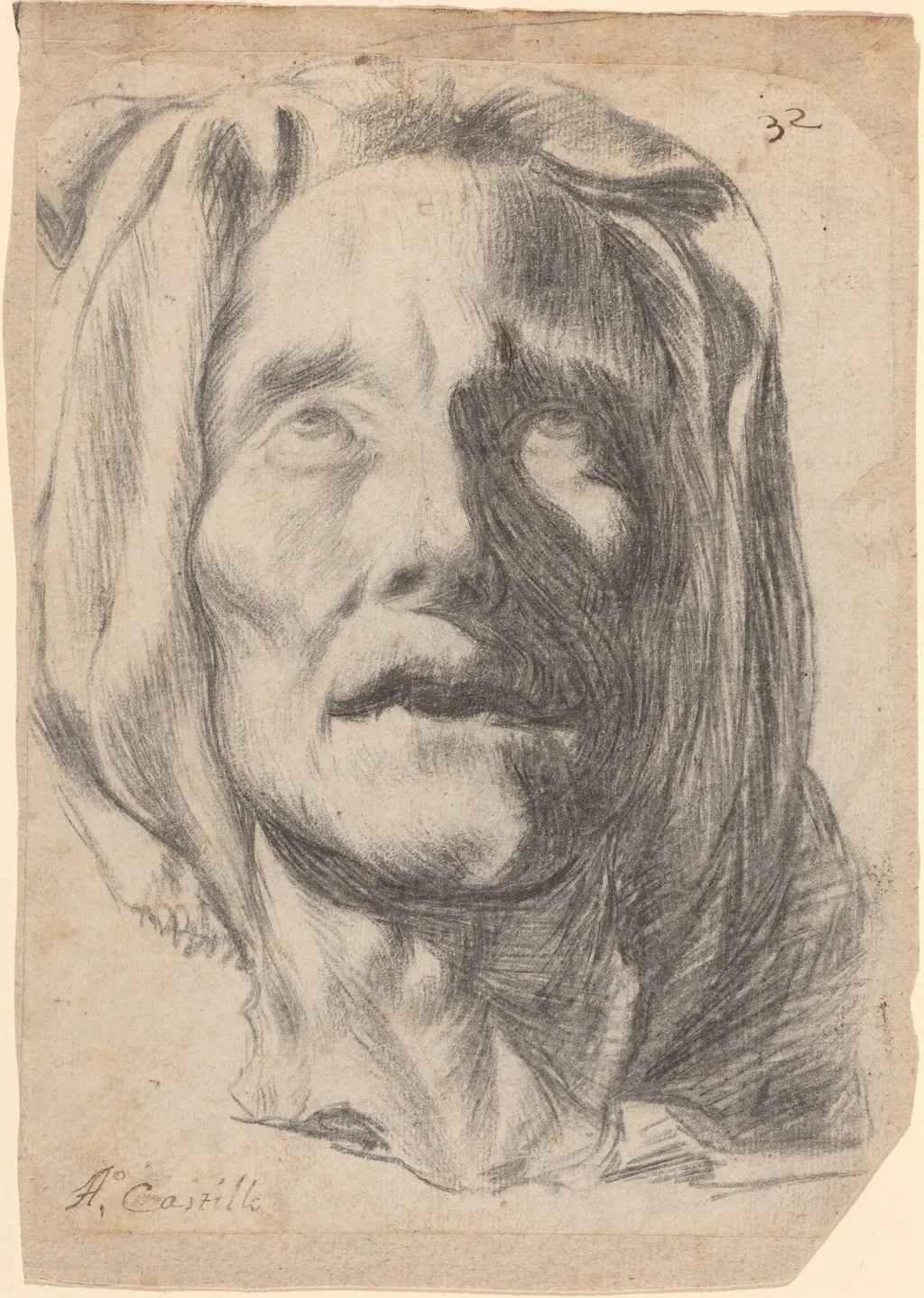
Head of an Elderly Woman with Upturned Eyes is a chalk drawing by the Baroque artist Antonio del Castillo. It dates from 1640 and is held in the collection of the National Gallery of Art.
About this work
Overview
Antonio del Castillo’s drawing, titled Head of an Elderly Woman with Upturned Eyes, dates from 1640 and is executed in black chalk on laid paper. The work presents a tightly cropped portrait of an older woman, rendered in a single medium that emphasizes line and tone rather than colour. The paper’s warm, yellowed surface contributes to the overall atmosphere of the study.
Subject & Meaning
The composition focuses on the woman’s face, her hair rendered in loose, wavy strokes and her eyes half‑closed, gazing upward. The expression, marked by subtle wrinkles and a slightly lifted mouth, suggests a moment of introspection or quiet resignation, inviting viewers to contemplate the passage of time and the inner life of the sitter.
Technique & Style
Del Castillo employs rapid, sketchy marks that convey texture and form with economy. The black chalk is applied in varied pressure, creating deep shadows around the eyes and forehead while leaving lighter areas for the hair and collar. The irregular, expressive lines give the drawing a sense of immediacy, characteristic of Baroque drawing practices that prized dynamism and emotional resonance.
Context
Created in the early seventeenth century, the drawing reflects the Baroque interest in capturing fleeting gestures and psychological depth. Artists of the period often used preparatory studies like this to explore facial expression and the play of light and shadow before committing a figure to a larger composition or painting.
History & Provenance
The work is attributed to Antonio del Castillo, a Spanish painter and draftsman active in the mid‑1600s. While specific ownership records are limited, the drawing is documented as part of the artist’s oeuvre and is dated to the year 1640, situating it within his productive phase in Seville.
Artist & collection


 Head of a Woman
 Head of a Man Looking Up
 Study of the head of an old man
 Head of a Man, Slightly Turned
 Sick Woman with a Large White Headdress (Saskia)
 Standing Man
 Study of Woman Praying
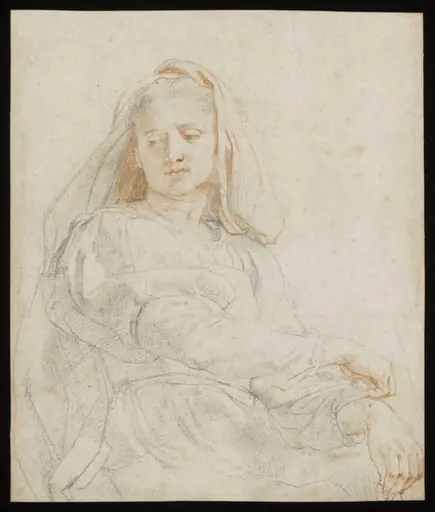 Study of a seated woman (The Virgin)
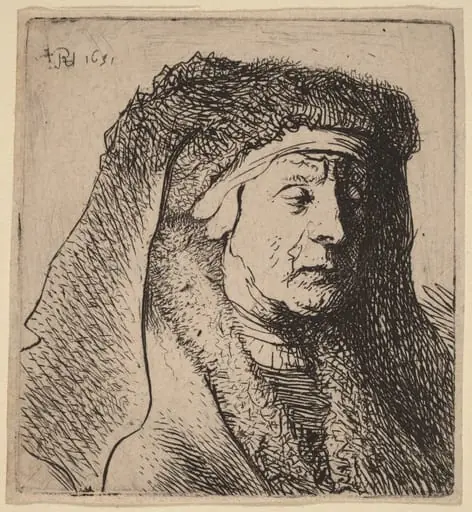 Bust of an Old Woman in a Furred Cloak and Heavy Headdress
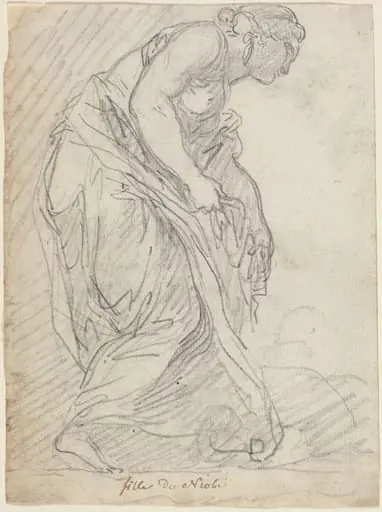 One of Niobe's Daughters
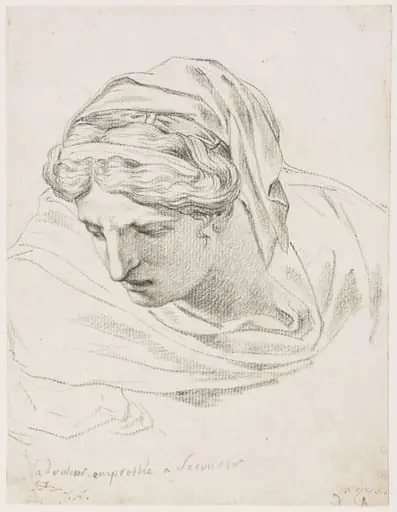 Study of a female head
 Studies of a Classical Figure