Artwork
La muerte de San Francisco
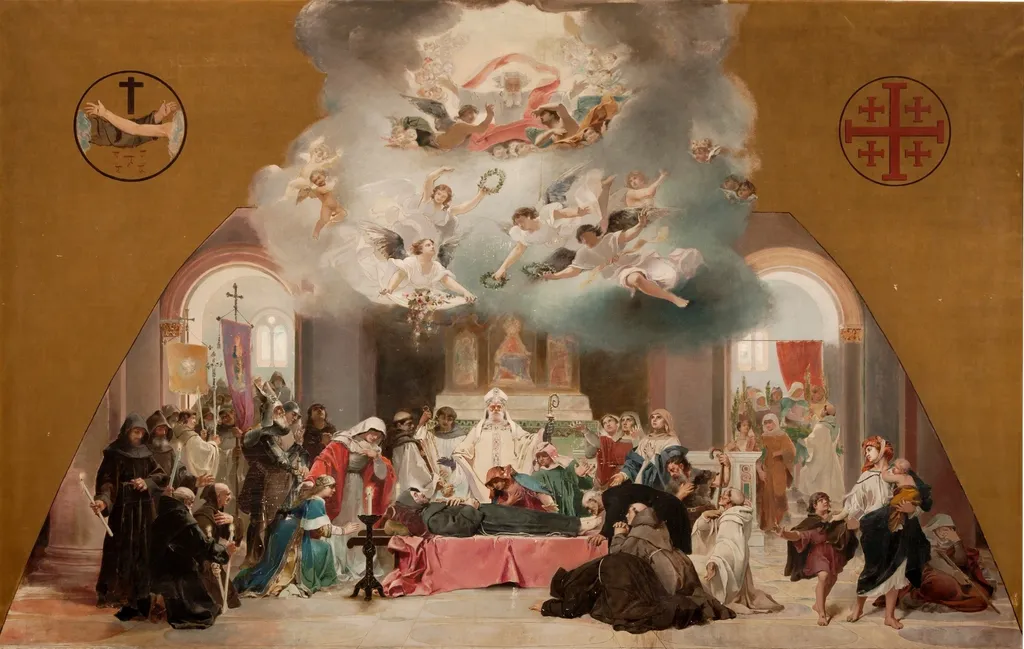
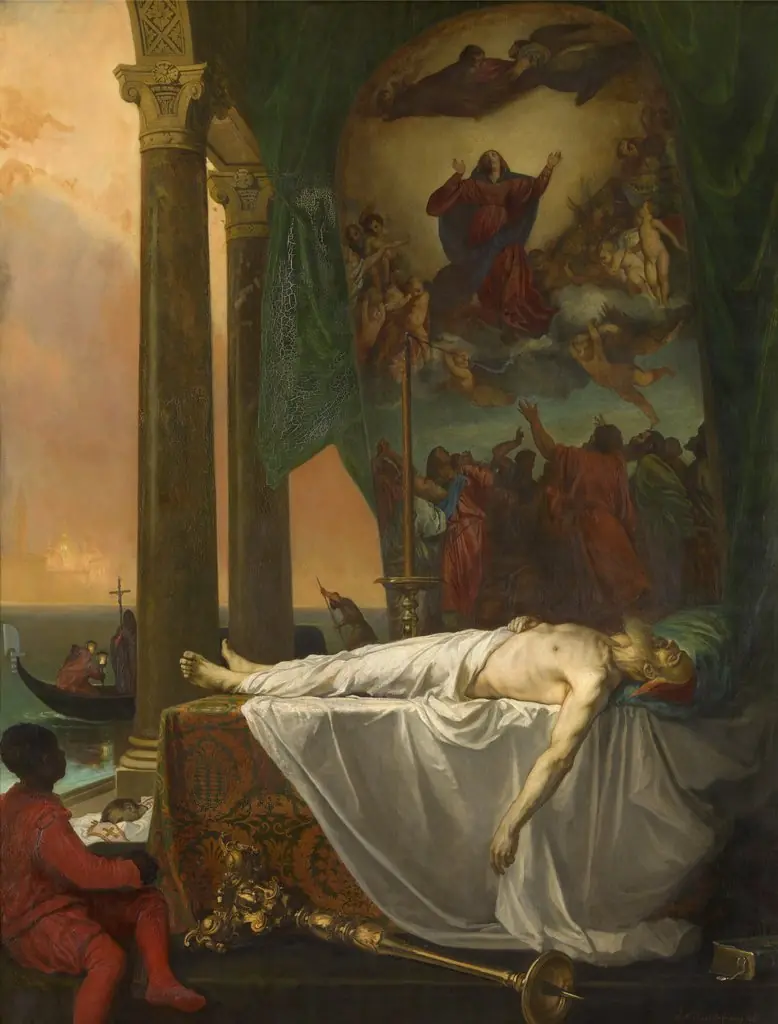
La muerte de San Francisco is an oil painting by the Post-Impressionist artist Casto Plasencia. It dates from 1893 and is held in the collection of the Museo del Prado.
About this work
Overview
The composition fills a spacious interior with a multitude of figures, arranged in a solemn, ritualistic gathering.
Painted in 1893 by Casto Plasencia, this oil on canvas work portrays the death of Saint Francis of Assisi. It is part of the permanent collection at the Museo del Prado in Madrid. The composition fills a spacious interior with a multitude of figures, arranged in a solemn, ritualistic gathering. Warm golden tones and soft lighting unify the scene, emphasizing its spiritual gravity without overt theatricality.
Subject & Meaning
The painting captures the moment of Saint Francis’s passing, surrounded by his followers in a monastic chamber. Figures kneel, stand, and lean in quiet reverence, their gestures reflecting grief and devotion. Above, a celestial host of angels and cherubs drifts near the ceiling, suggesting divine presence at the saint’s death. The scene merges earthly mourning with heavenly affirmation, aligning with Franciscan themes of humility and transcendence.
Technique & Style
Plasencia employs oil paint to build layered textures and subtle gradations of light. Chiaroscuro defines forms and directs focus toward the central figure in white, whose stillness contrasts with the movement of the surrounding crowd. The palette blends earthy hues with delicate pastels, avoiding stark contrasts. Architectural elements—arched doorways, vaulted ceilings—frame the composition with classical restraint, grounding the mystical in tangible space.
History & Provenance
Commissioned in the late 19th century, the painting entered the Museo del Prado’s collection shortly after its completion. It reflects the period’s interest in religious subjects rendered with academic precision. Though not widely exhibited outside Spain, it remained within institutional care, preserving its original condition. Its acquisition by the Prado signals official recognition of Plasencia’s contribution to Spanish religious painting of the era.
Context
Created during a time when Spanish art was reengaging with historical and devotional themes after decades of political upheaval, the work aligns with a broader revival of ecclesiastical imagery. Plasencia, trained in academic traditions, drew from Renaissance and Baroque precedents but avoided overt sentimentality. The painting reflects a national effort to reaffirm cultural and spiritual identity through visual narrative.
Legacy
While not widely reproduced or studied internationally, the painting remains a significant example of late 19th-century Spanish religious art. It demonstrates how academic techniques were adapted to convey spiritual narratives with dignity and restraint. Within the Prado’s collection, it contributes to the museum’s representation of Spain’s evolving religious iconography beyond the Renaissance and Baroque periods.
Artist & collection

 Titian Lying in State at the Palazzo Barbarigo
 Aleksander Sobieski on his deathbed in Rome in 1714
 Últimos momento de Fray Charles Climaque
 Muerte del príncipe de Viana
 Church of Cervara (Papal States)
 La adoración de la Sagrada Forma
 Feast of Our Lady of Herbs
 Death of Barbara Radziwiłł
 Las postrimerías de Fernando III el Santo
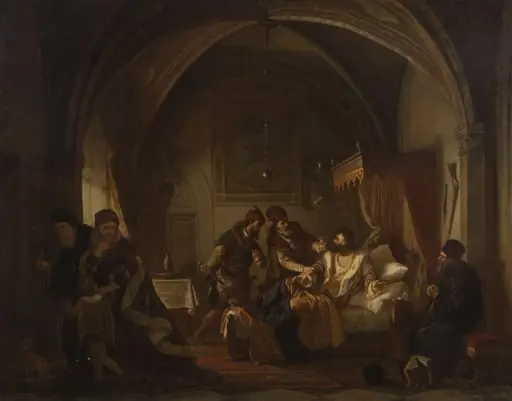 Moartea lui Alexandru Lăpușneanu
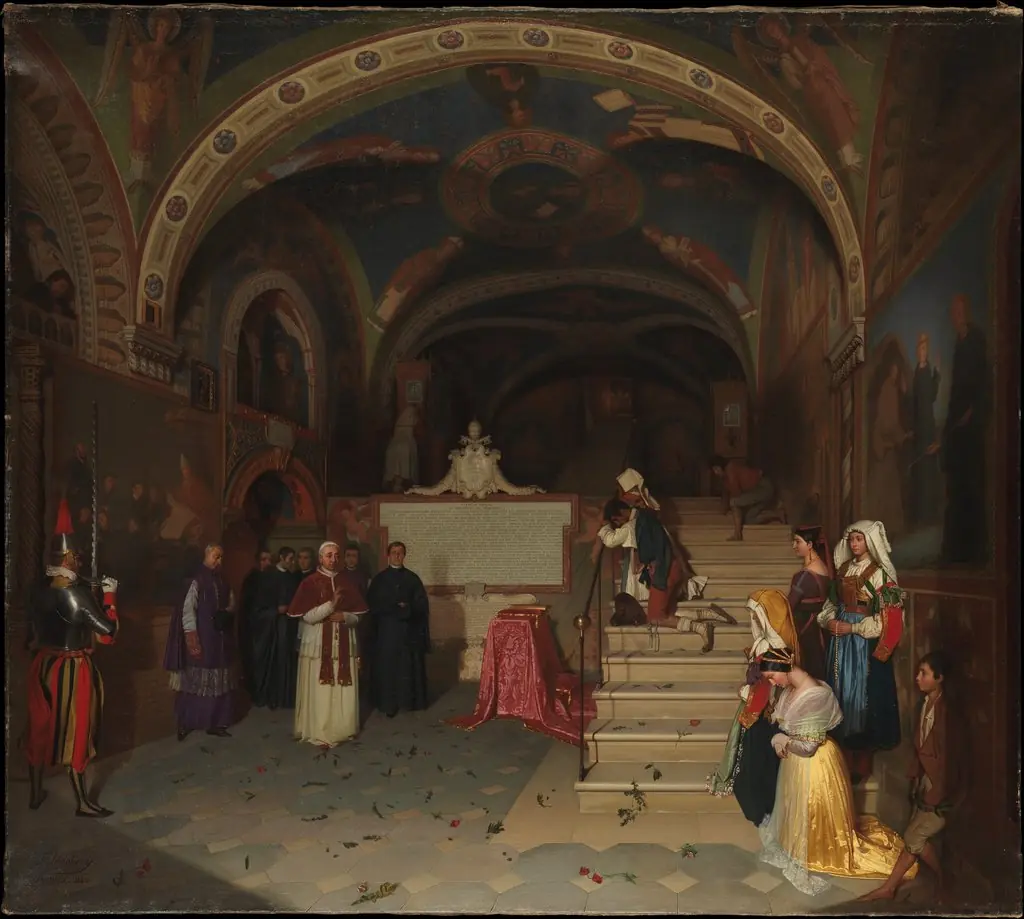 Pope Gregory XVI Visiting the Church of San Benedetto at Subiaco
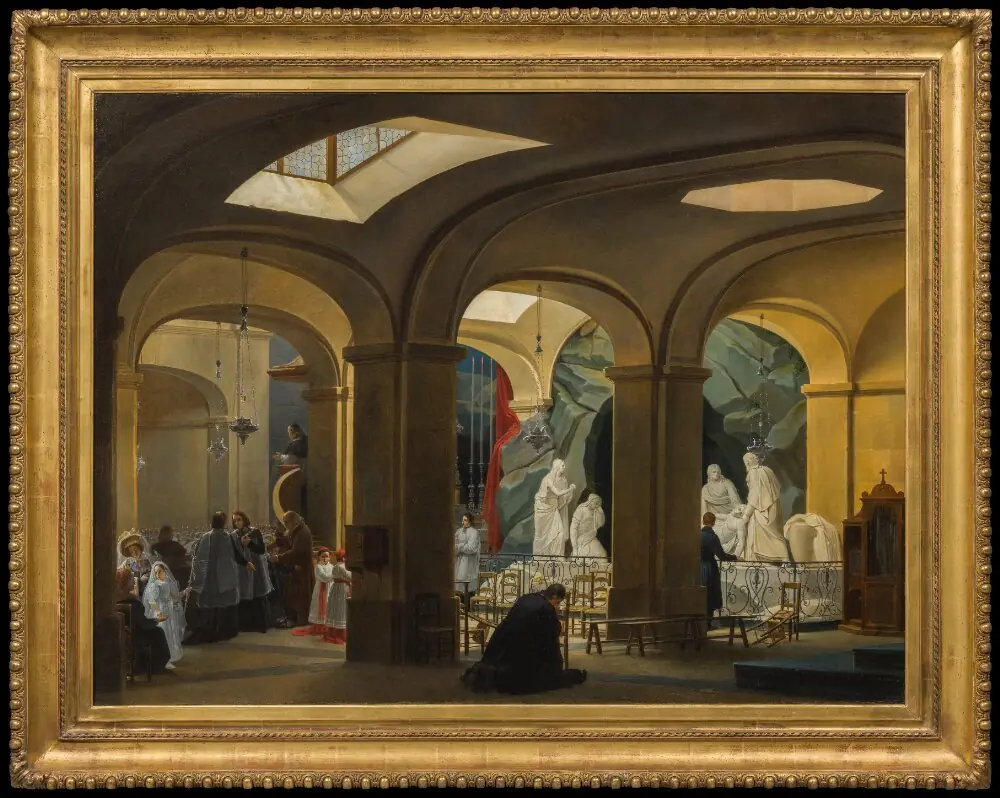 The First Communion in the Interior of the Crypt of the Church of St Roch, Paris