Artwork
Peisaj Câmpulung
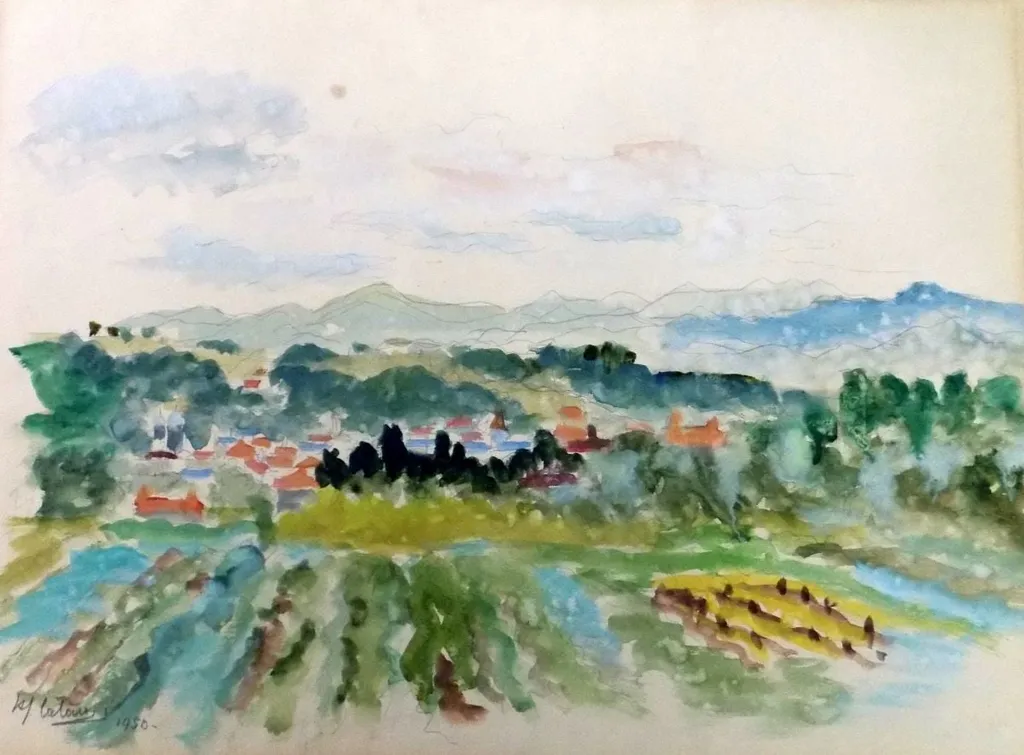
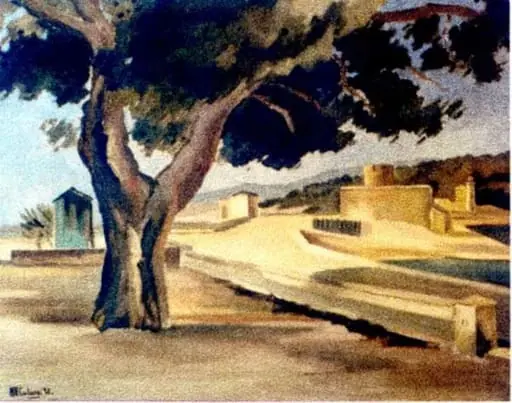
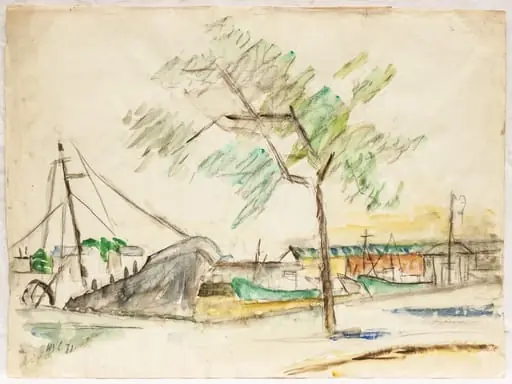
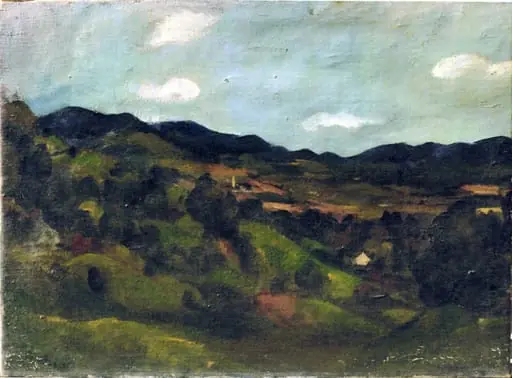
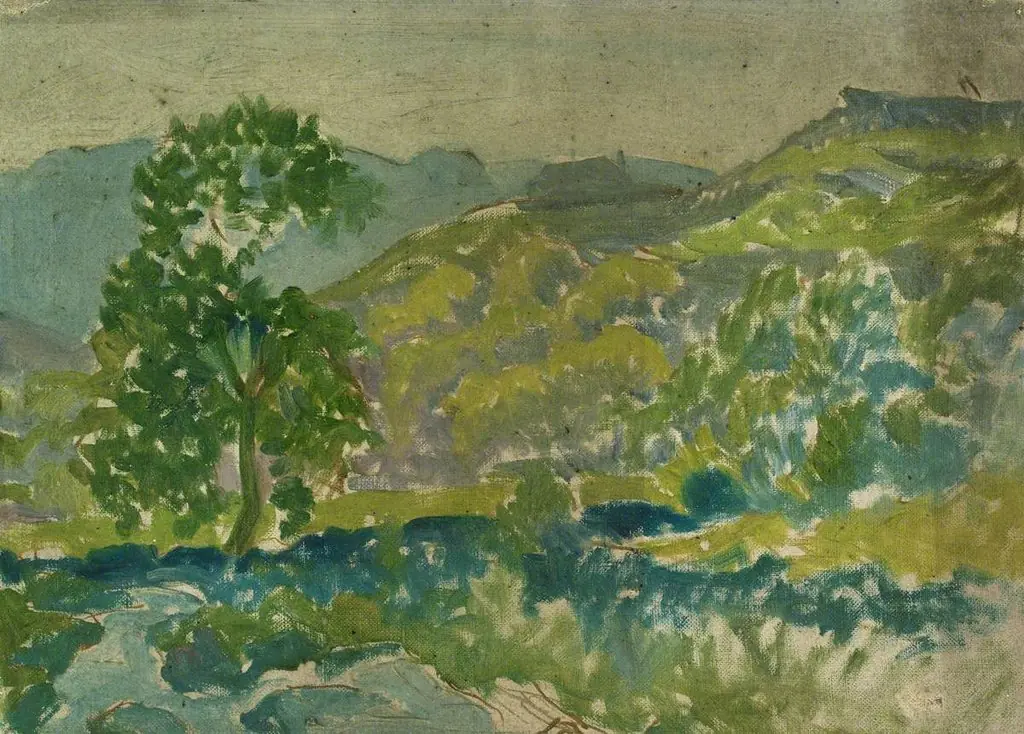
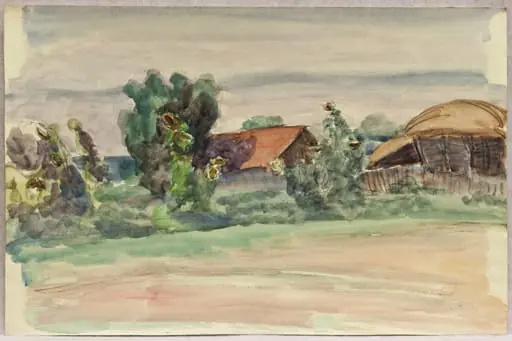
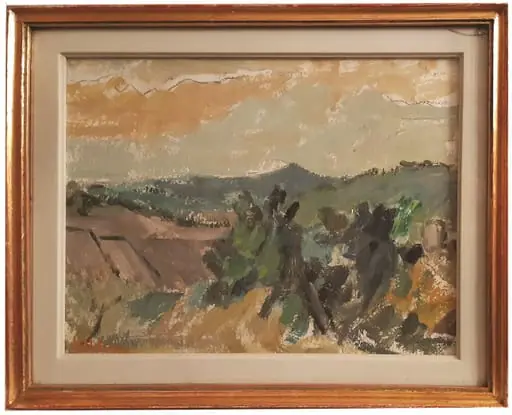
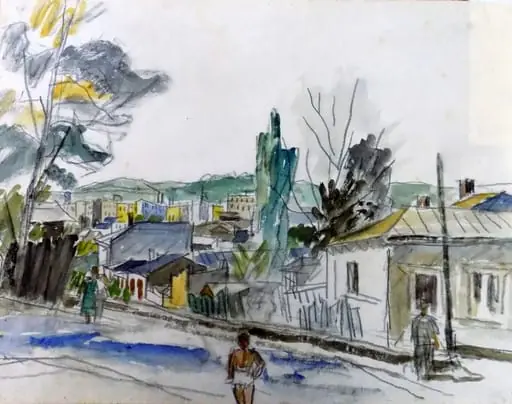
Peisaj Câmpulung is a print by Henri H. Catargi. It dates from 1950 and is held in the collection of the Bucharest Municipality Museum.
About this work
Overview
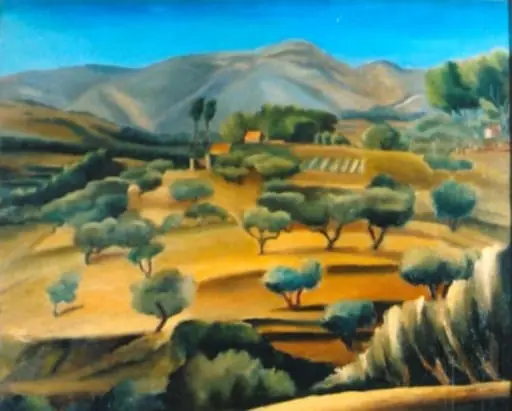
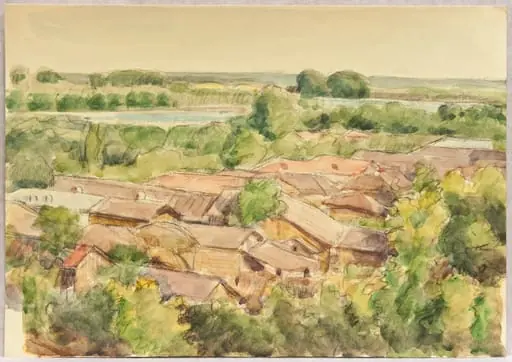
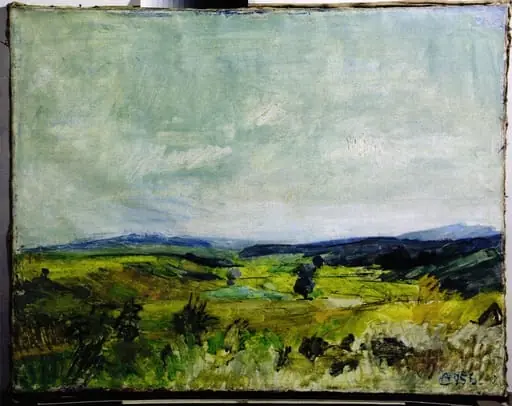
Henri Catargi’s 1950 canvas titled *Peisaj Câmpulung* presents a tranquil Romanian countryside. The composition balances foreground foliage with a distant settlement, its church spire punctuating the skyline. Rendered in oil on canvas, the work resides in the Museum of Ethnography’s permanent collection, offering a quiet glimpse of mid‑century landscape painting in Romania.
Subject & Meaning
The scene captures the rolling hills surrounding the town of Câmpulung, where trees and cultivated land merge into a soft horizon. The inclusion of the town’s architecture, especially the church steeple, suggests a harmonious relationship between nature and human habitation, reflecting a regional pride in the landscape’s enduring character.
Technique & Style
Catargi employs a restrained palette of earth tones and muted greens, applying chiaroscuro to model the terrain and give the hills a palpable volume. Light falls across the foreground, creating a gradient of shadow that guides the eye toward the distant settlement, while brushwork remains loose enough to convey atmospheric depth without overt detail.
History & Provenance
Born in Bucharest in 1894, Catargi spent much of his career linked to Brașov, contributing consistently to Romanian visual culture. *Peisaj Câmpulung* was completed in 1950 and later entered the Museum of Ethnography’s holdings, where it remains accessible for study and public display, illustrating the artist’s mature period.
Artist & collection

Artist
Henri Catargi (December 6, 1894, Bucharest, Romania – July 19, 1976, Bucharest) was a renowned Romanian painter from Braşov.