Artwork
Eeva-Stiina
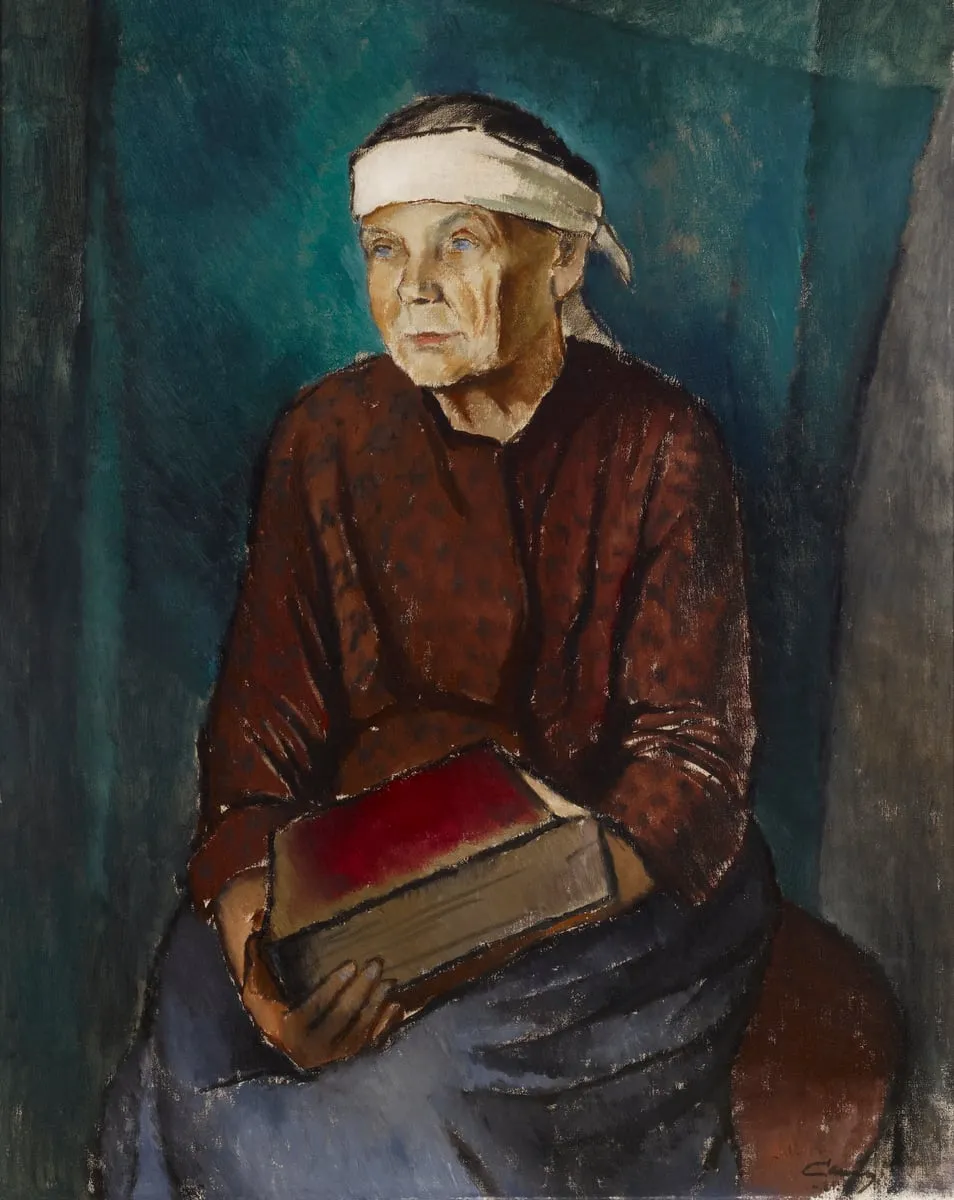
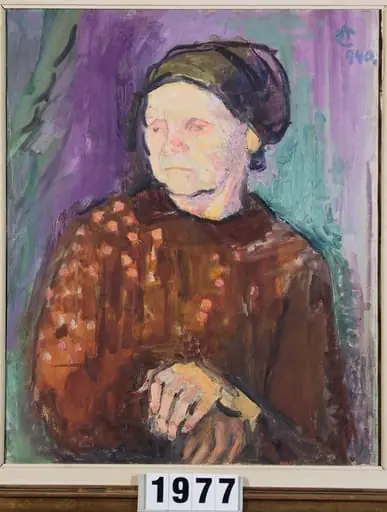
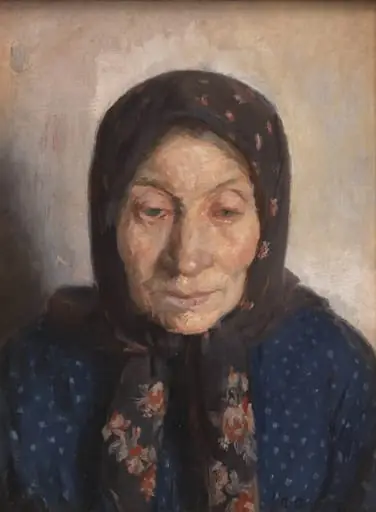
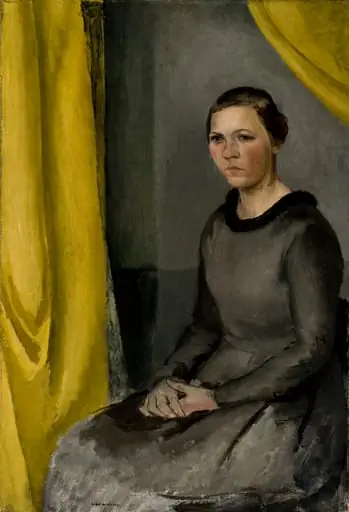
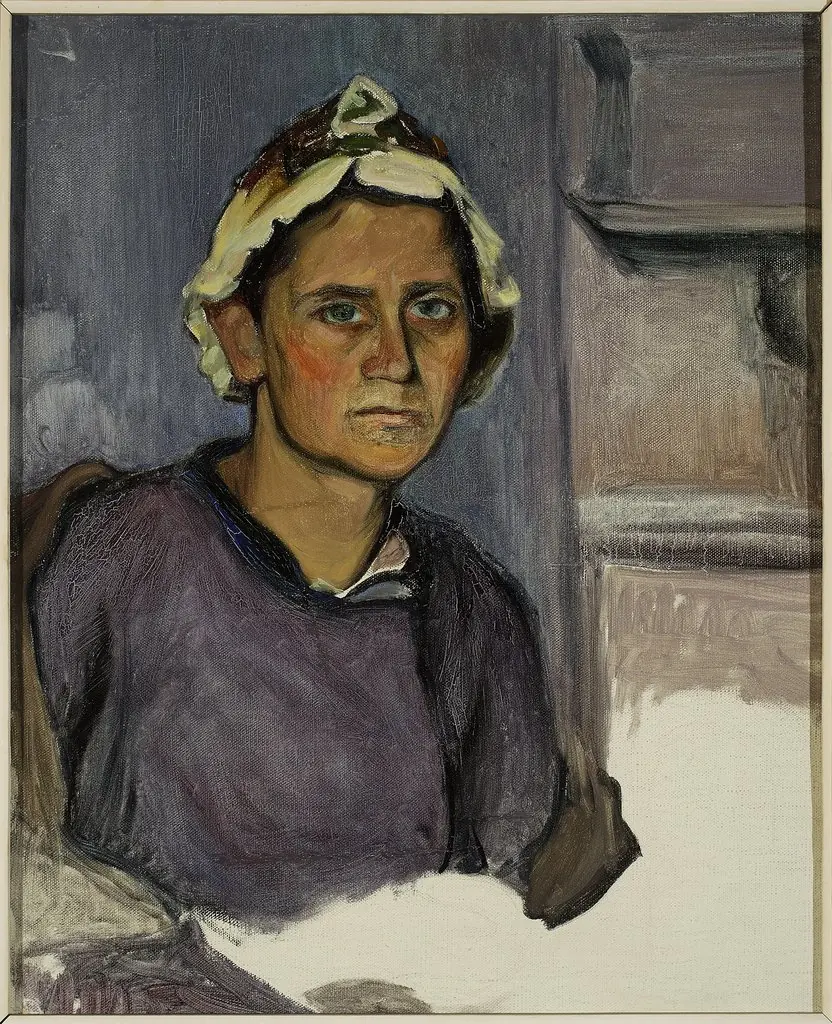
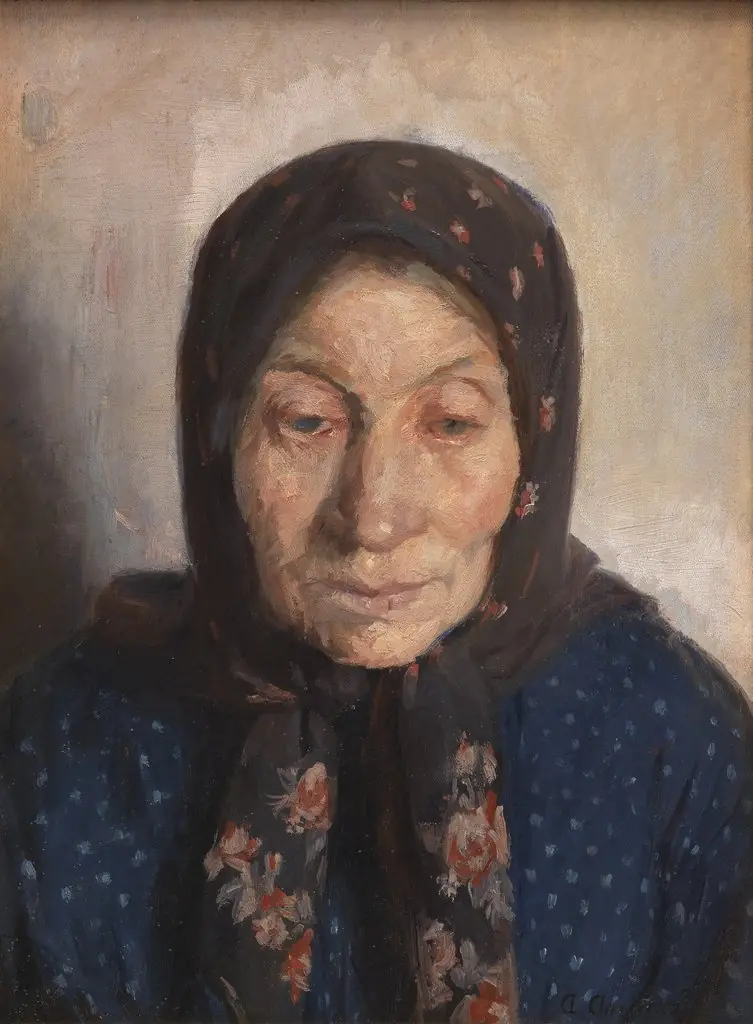
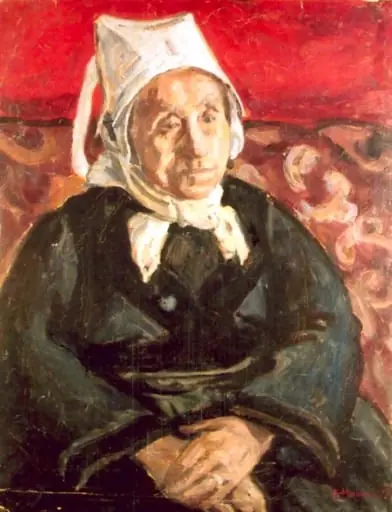
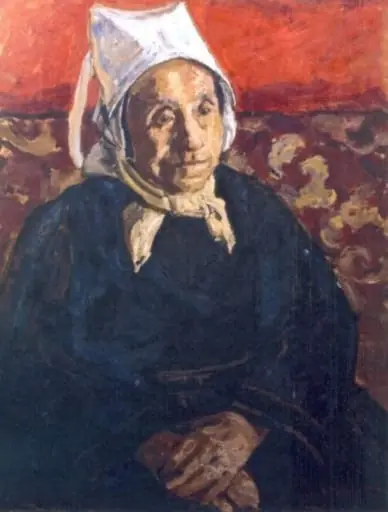
Eeva-Stiina is an unspecified painting by Alvar Cawén. It is held in the collection of the Finnish National Gallery. This portrait depicts an elderly woman seated, dressed in a dark brown gown with a white head covering secured beneath her chin.
About this work
Overview
This portrait depicts an elderly woman seated, dressed in a dark brown gown with a white head covering secured beneath her chin.
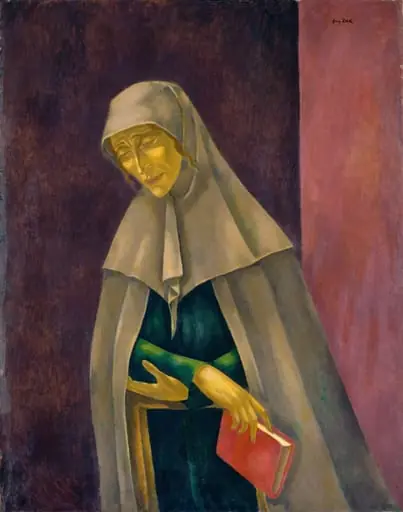
This portrait depicts an elderly woman seated, dressed in a dark brown gown with a white head covering secured beneath her chin. She holds a large, closed book with a red cover, its presence suggesting contemplation or spiritual practice. The background is a muted blue-green, neutral and unadorned, focusing attention entirely on the figure. Thick, visible brushwork defines her form, creating a tactile surface that emphasizes texture over smoothness.
Subject & Meaning
The woman’s stillness and the book she holds imply a quiet interior life, possibly tied to religious devotion or personal reflection. Her attire, modest and traditional, hints at rural or religious community norms. The closed book resists narrative clarity, inviting interpretation without explanation—perhaps symbolizing unspoken wisdom, faith, or the weight of lived experience rather than active reading.
Technique & Style
The painting employs impasto, applying paint thickly to build form and texture, especially on the face and fabric. This technique gives the surface a sculptural quality, enhancing the sense of age and material presence. Colors are not blended smoothly; instead, they sit side by side, creating visual vibration. The dark background isolates the figure, making the red of the book and the white of the head covering stand out with quiet intensity.
History & Provenance
The painting’s origin and early ownership are not documented in available records. It is attributed to Eeva-Stiina, an artist whose body of work remains limited in public archives. No exhibition history or collector lineage is established, and the work appears to have entered institutional or private collections without significant prior public exposure.
Context
Created during a period when Nordic artists increasingly turned to intimate, everyday subjects, this portrait aligns with regional trends favoring psychological depth over grand narrative. The emphasis on ordinary individuals, rendered with tactile realism, reflects a broader cultural interest in authenticity and quiet dignity, particularly among women in rural or religious settings during the mid-20th century.
Legacy
Though not widely exhibited or studied, the work contributes to a quieter strand of Nordic portraiture that values emotional restraint and material presence. Its use of impasto and focus on an unidealized elder woman offer a counterpoint to more celebrated depictions of youth or grandeur. The painting endures as a quiet testament to the dignity of ordinary lives, preserved through deliberate, textured brushwork.
Artist & collection