Artwork
Bătrână din Finistère
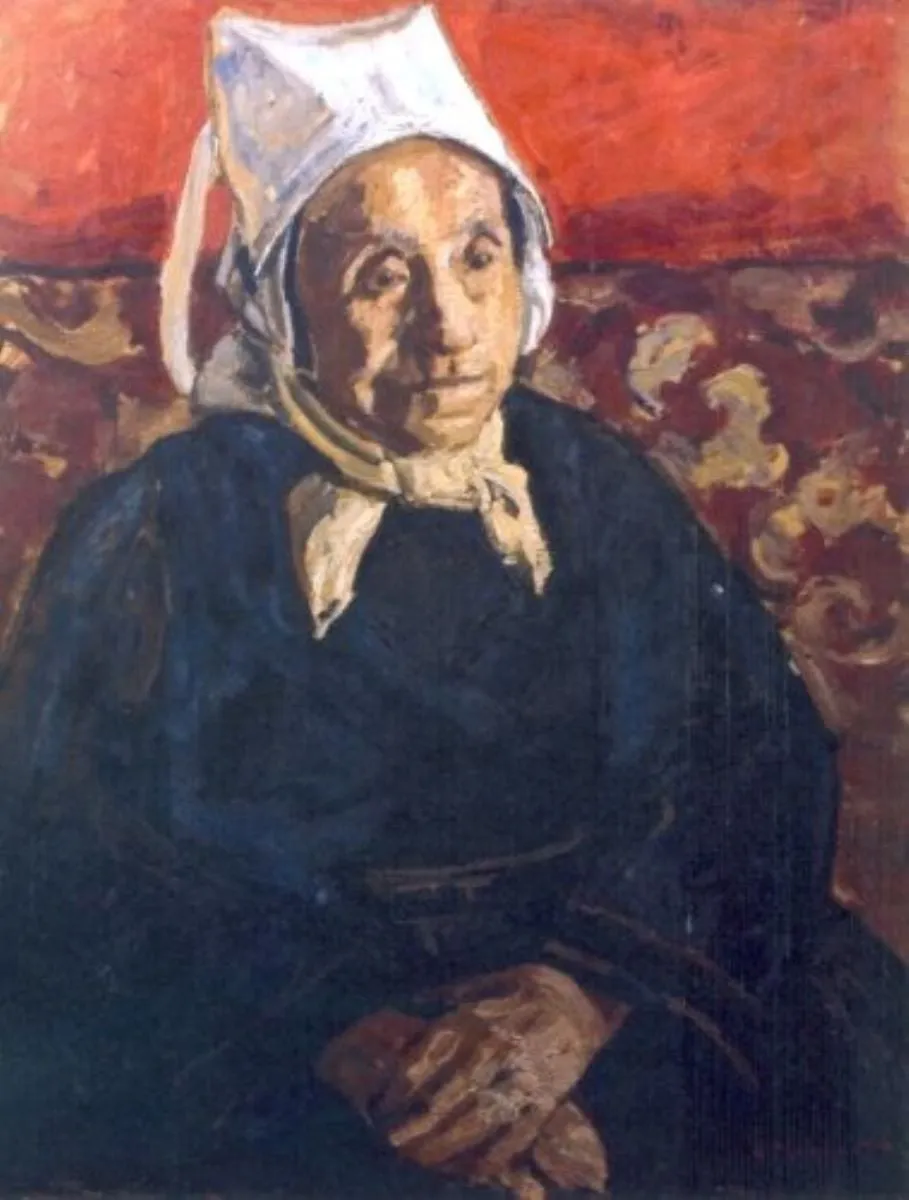
Bătrână din Finistère is an unspecified painting by Rodica Maniu. It dates from 1920 and is held in the collection of the National Museum of Art of Romania.
About this work
Overview
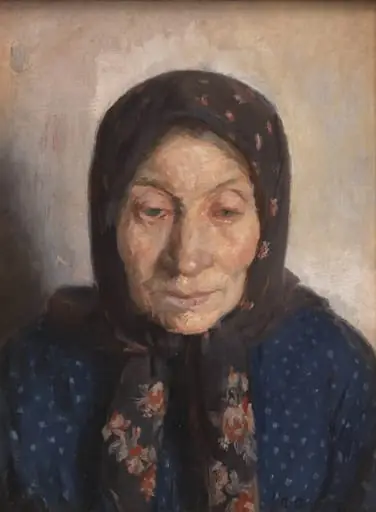
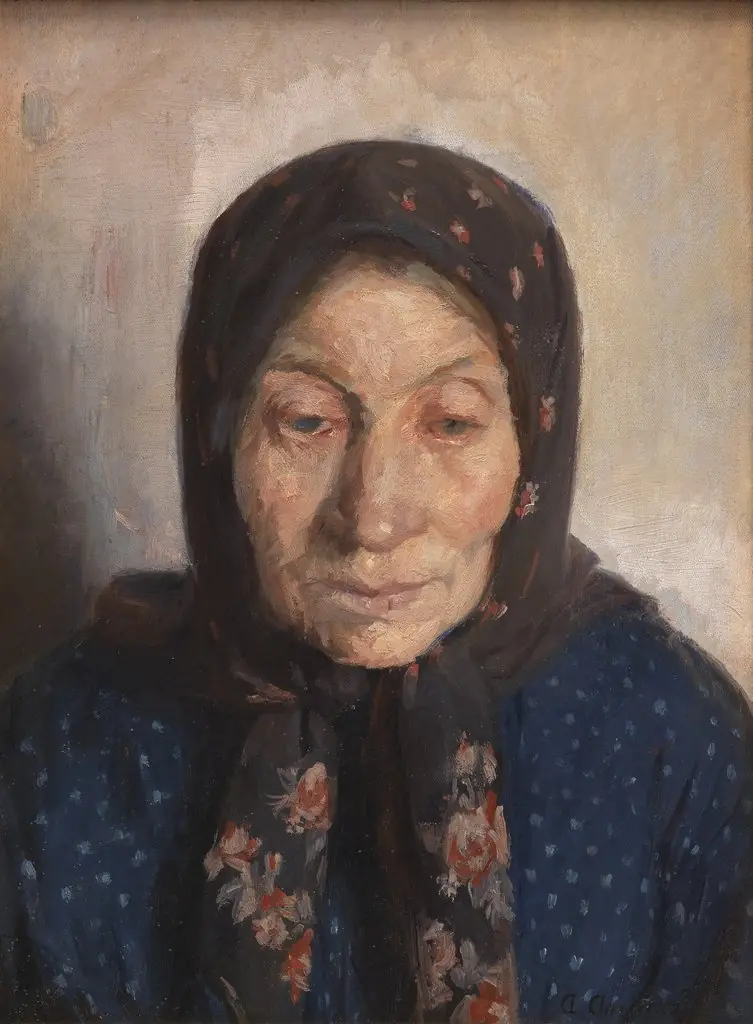
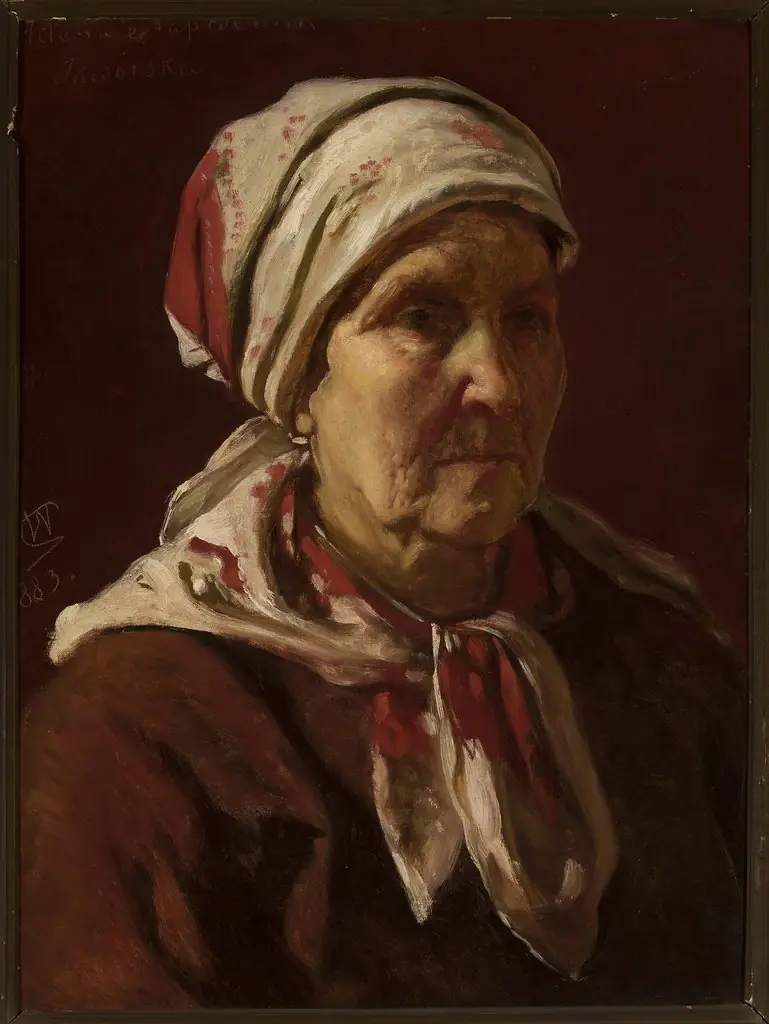
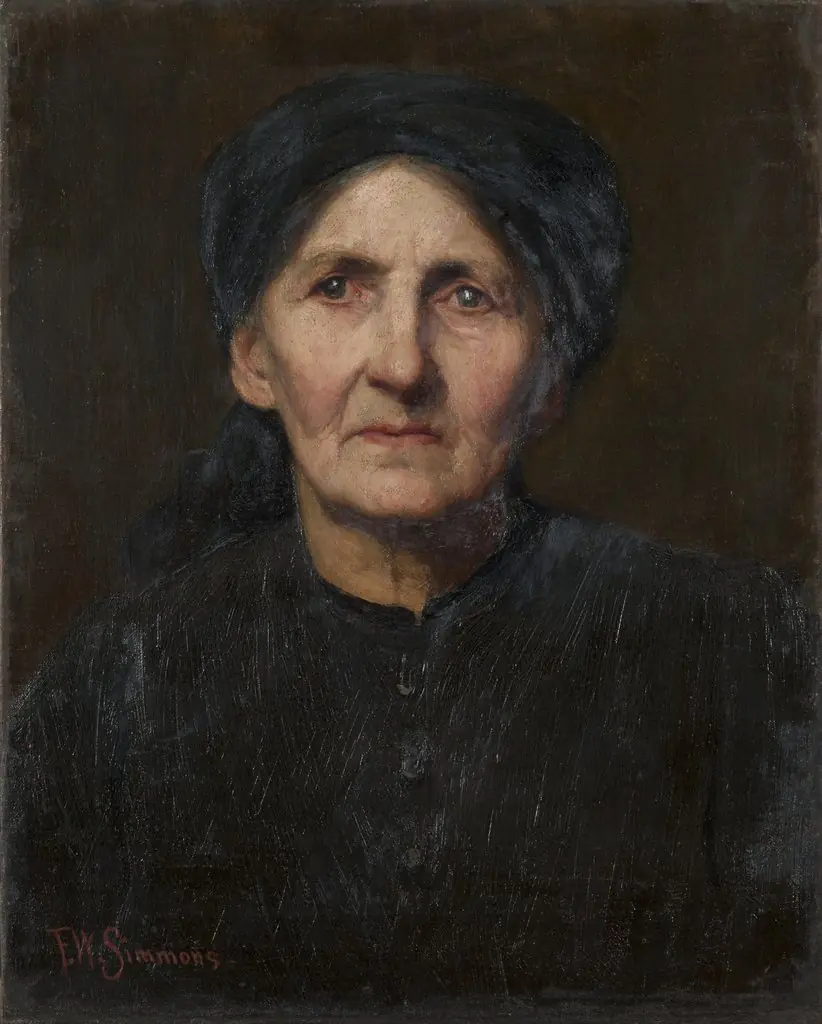
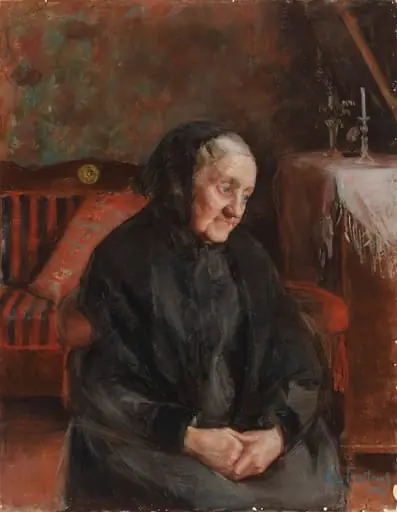
Bătrână din Finistère, painted in 1920 by Rodica Maniu-Mützner, is a portrait of an elderly woman from the Finistère region of Brittany.
Bătrână din Finistère, painted in 1920 by Rodica Maniu-Mützner, is a portrait of an elderly woman from the Finistère region of Brittany. The composition centers on her still, seated form, rendered with quiet dignity. The painting avoids dramatic gesture, instead emphasizing presence and silence. Its modest scale and restrained palette contribute to an atmosphere of introspection, drawing attention to the subject’s lived experience rather than external spectacle.
Subject & Meaning
The woman, dressed in a dark garment and white headscarf typical of rural Breton attire, sits with hands folded, her gaze directed inward. Her weathered face, marked by time, suggests a life shaped by labor and endurance. The painting does not narrate a specific event but evokes a sense of inner resilience. Her stillness becomes a vessel for unspoken history, inviting contemplation of generational continuity and the quiet dignity of aging in traditional communities.
Technique & Style
Maniu-Mützner employs soft, blended brushwork to model the woman’s features, avoiding sharp definition in favor of atmospheric texture. The background, composed of muted earth tones—ochre, burnt sienna, and faint crimson—blends subtly with the figure, unifying the space. Light falls gently across her face and hands, enhancing volume without theatricality. The technique prioritizes emotional resonance over detail, aligning with early 20th-century tendencies toward psychological realism.
History & Provenance
Created in 1920, the painting emerged during a period when Romanian artists were increasingly engaging with European regionalist themes. Maniu-Mützner, trained in Paris, drew inspiration from her travels in Brittany. The work remained in private hands for much of the 20th century, with limited public exposure. Its current location and exhibition history are not widely documented, contributing to its status as a lesser-known but personally significant work in the artist’s oeuvre.
Context
In the aftermath of World War I, many artists turned to intimate, human-centered subjects as a counter to societal upheaval. Maniu-Mützner’s focus on an elderly Breton woman reflects a broader interest in rural life and cultural preservation. Her choice of subject aligns with contemporaneous movements in France and Eastern Europe that valued authenticity over idealization, portraying ordinary individuals with empathy and without sentimentality.
Legacy
Though not widely exhibited, Bătrână din Finistère remains a quietly influential example of early 20th-century portraiture that prioritizes emotional depth over spectacle. It contributes to the understanding of Maniu-Mützner’s engagement with cross-cultural observation and her commitment to portraying marginalized figures with restraint and respect. The work continues to resonate in scholarly discussions of gender, age, and regional identity in interwar art.
Artist & collection