Artwork
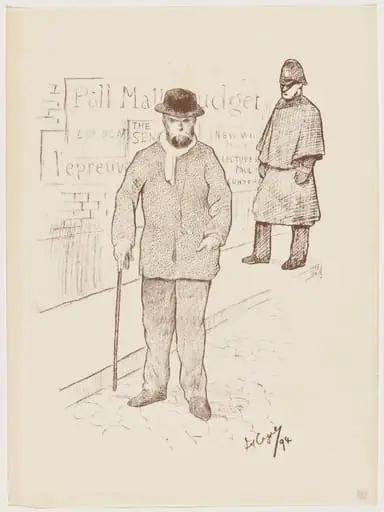
Paul Verlaine à Londres
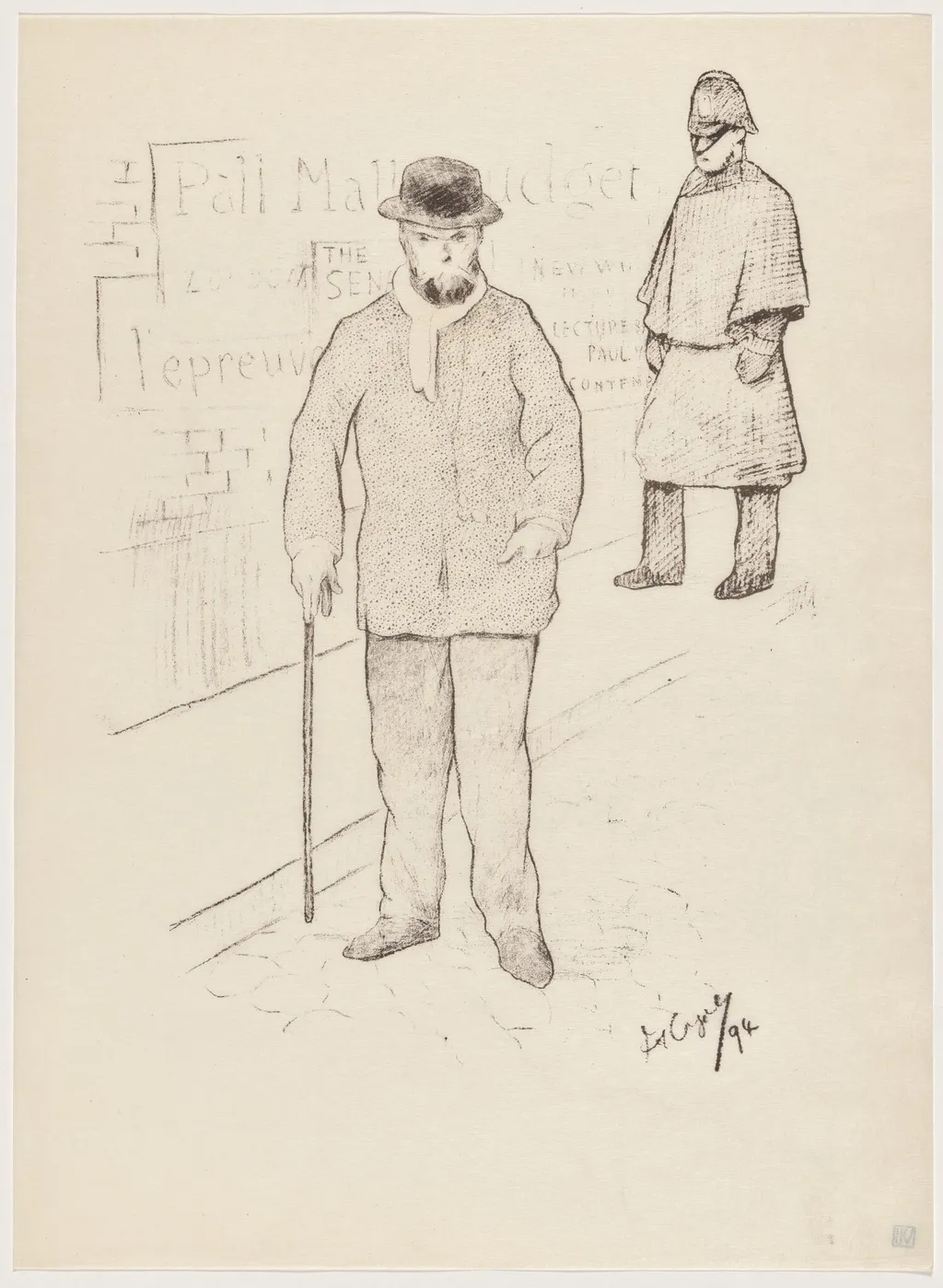
Paul Verlaine à Londres is an ink print by the Impressionist artist Frédéric-Auguste Cazals. It dates from 1895 and is held in the collection of the National Gallery of Art.
About this work
Overview
Paul Verlaine à Londres is a 1895 lithograph by Frédéric-Auguste Cazals, rendered in black ink on delicate Japanese paper. It depicts a quiet urban moment: two figures standing on a London sidewalk, their postures and attire suggesting a transient encounter. The work belongs to the tradition of observational printmaking, capturing fleeting human presence rather than formal portraiture.
Subject & Meaning
The scene features two men, one leaning on a cane, the other standing slightly behind with a hand in his pocket. Their clothing—long coats, caps, and heavy jackets—hints at the damp, overcast climate of late 19th-century London. Though not explicitly narrative, the image evokes solitude and quiet companionship, possibly reflecting Verlaine’s own transient life in the city during his exile.
Technique & Style
Cazals employed rapid, fluid lines typical of lithographic sketching, allowing the paper’s texture to show through in places. The absence of shading or detail in the background emphasizes the figures’ silhouettes and gestures. The medium’s spontaneity lends the image a sense of immediacy, as if drawn on the spot, reinforcing its documentary quality over idealized composition.
History & Provenance
Created in 1895, the print likely originated from Cazals’s observations during his time in London, possibly linked to his interest in literary figures like Verlaine, who lived in the city after his exile from France. The work was produced in limited numbers on thin Japan paper, a choice common among artists seeking tonal subtlety and portability in their prints.
Context
In the 1890s, lithography was widely used by artists to produce intimate, affordable works outside academic traditions. Cazals’s depiction aligns with a broader European interest in capturing everyday urban life, particularly among writers and bohemians. Verlaine’s presence, even if implied, ties the image to literary circles that valued authenticity over grandeur.
Legacy
The print remains a modest but evocative record of Cazals’s engagement with literary culture and urban observation. It reflects a moment when artists used printmaking not for mass reproduction, but as a personal medium to document transient encounters. Its preservation underscores the value placed on such quiet, unembellished glimpses of late 19th-century life.
Artist & collection

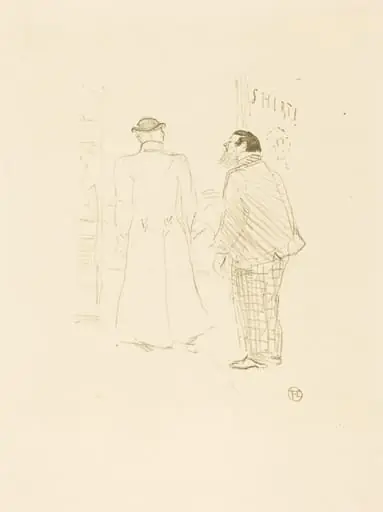 The First Vendor of Jourdan and Brown (Le premier vendeur de Jourdan et Brown)
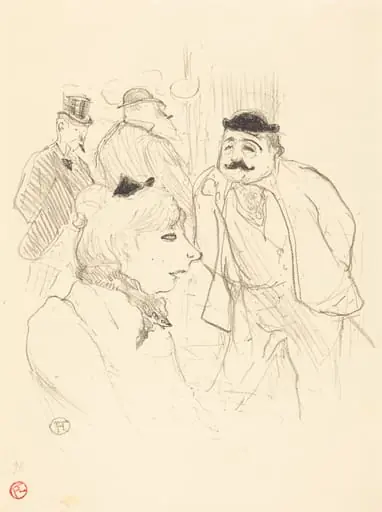 La Tige (Moulin-Rouge)
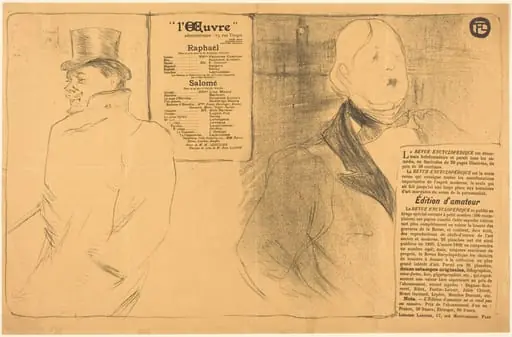 Raphaël; Salomé
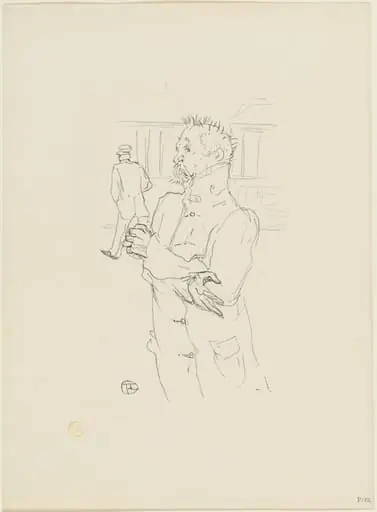 Le Fou
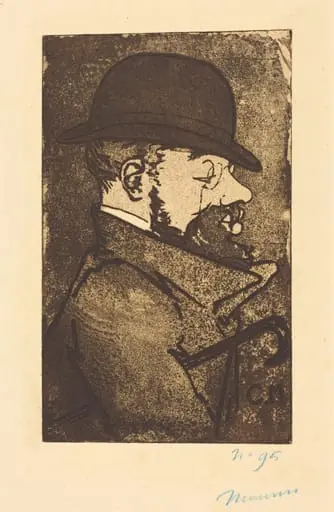 Henri de Toulouse-Lautrec
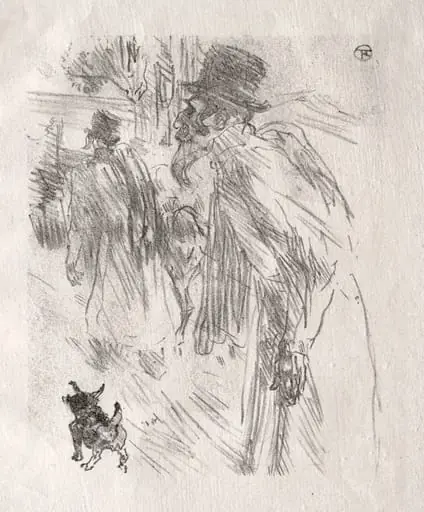 Au pied du Sinaï: Les Juifs Polonais, Carlsbad
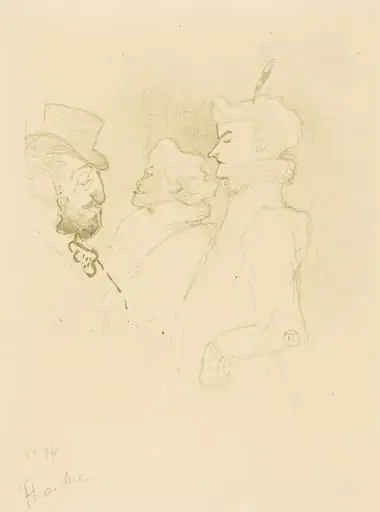 Why Not?...Once Is Not a Habit (Pourquoi pas?...Une fois n'est pas coutume)
 The Letter to Madame Henry (La lettre à Madame Henry)
 Programme de théâtre (recto); Etudes (verso)
 Brandes and Le Bargy in "Cabotins" (Brandès et Les Bargy dans "Cabotins")
 Doppelbildnis mit Skelett (Double Portrait with Skeleton)
 Paul Verlaine à Londres