Artwork
Temptation of Eve
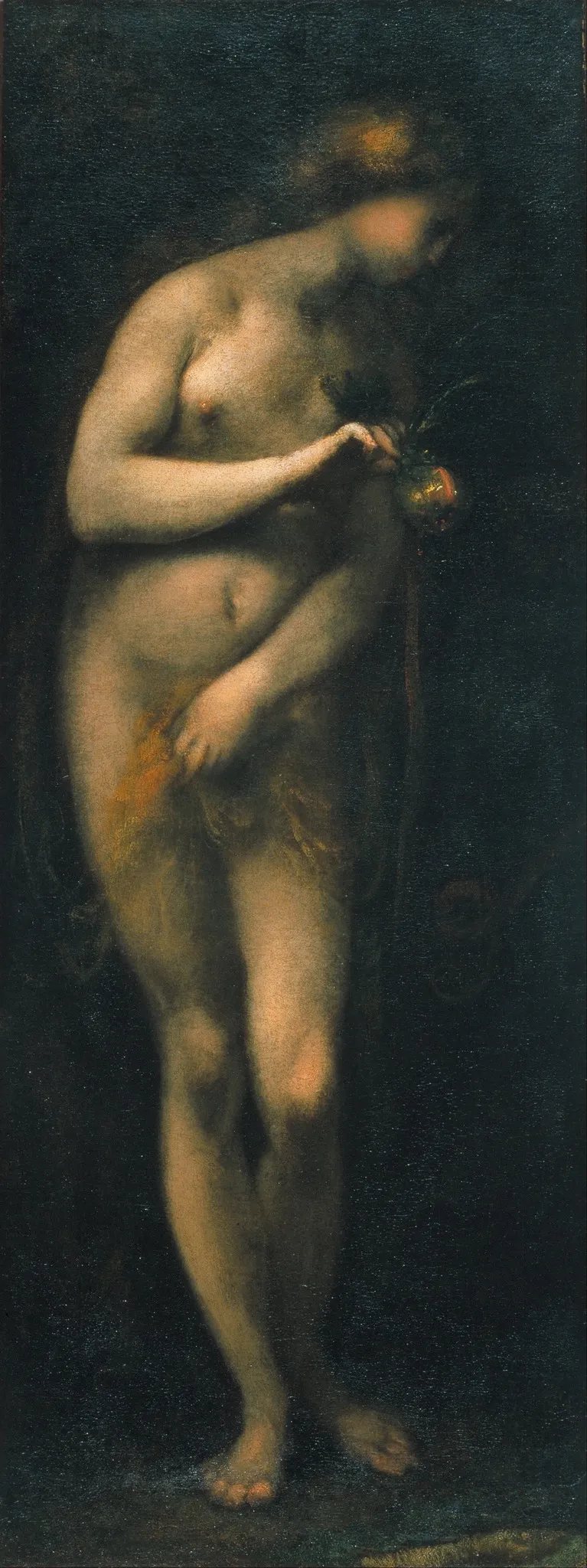
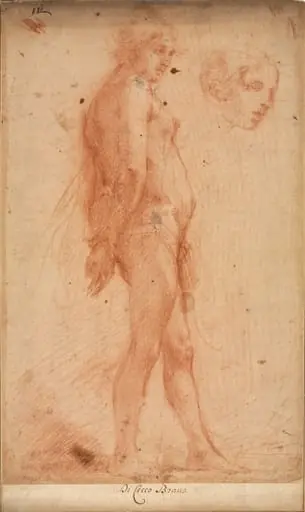
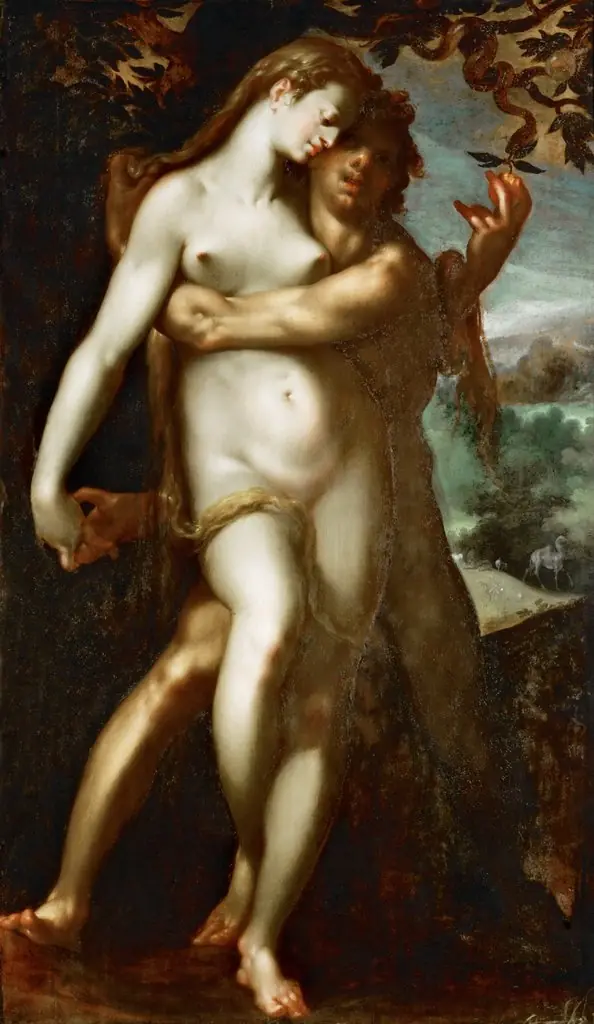
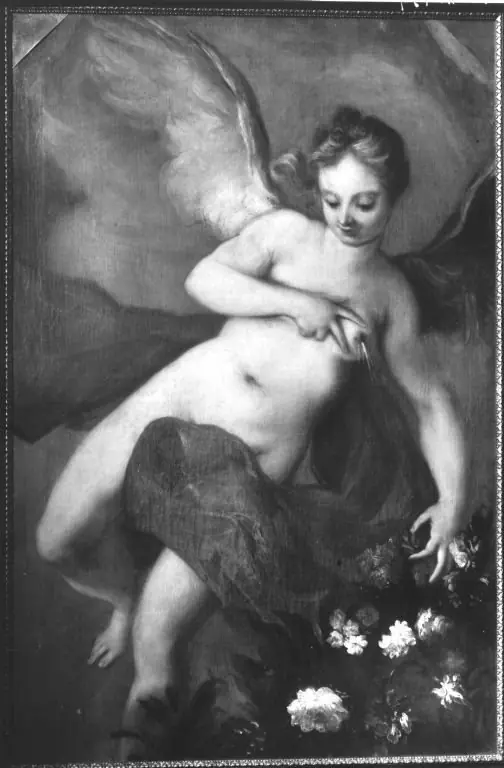
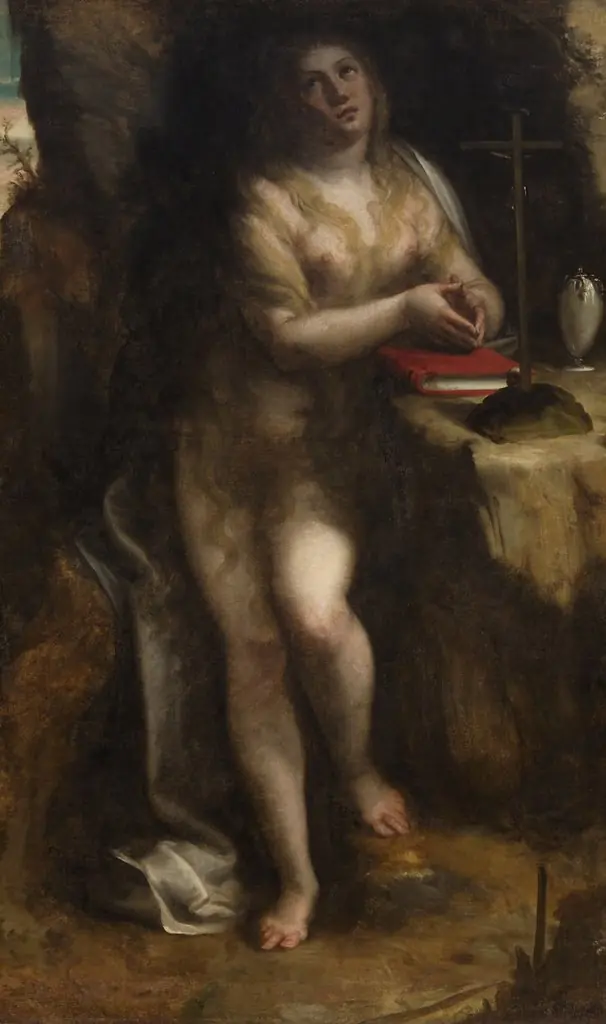
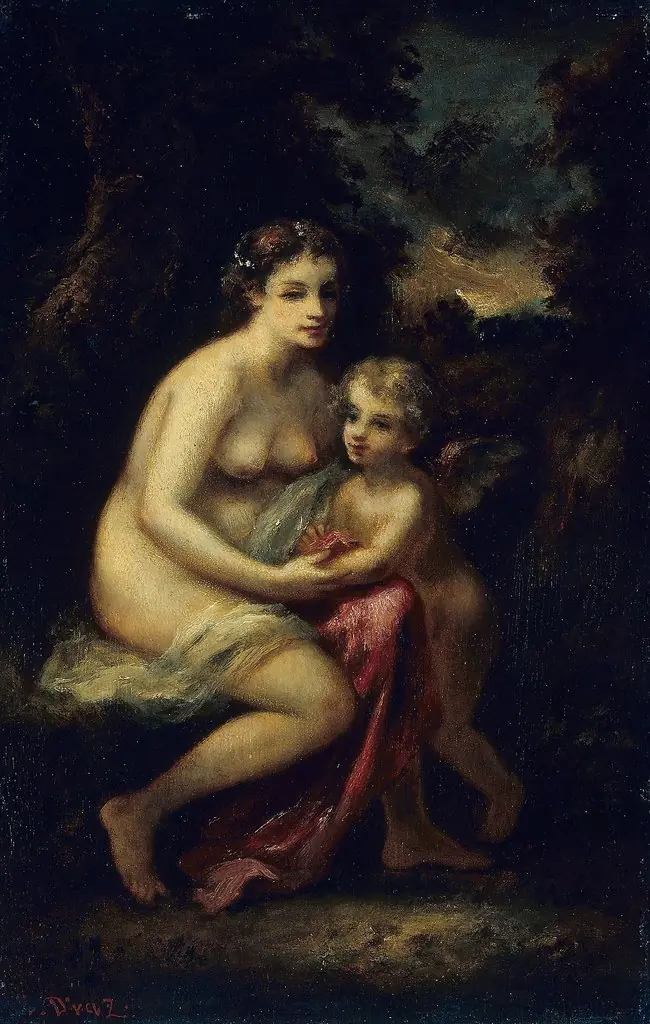
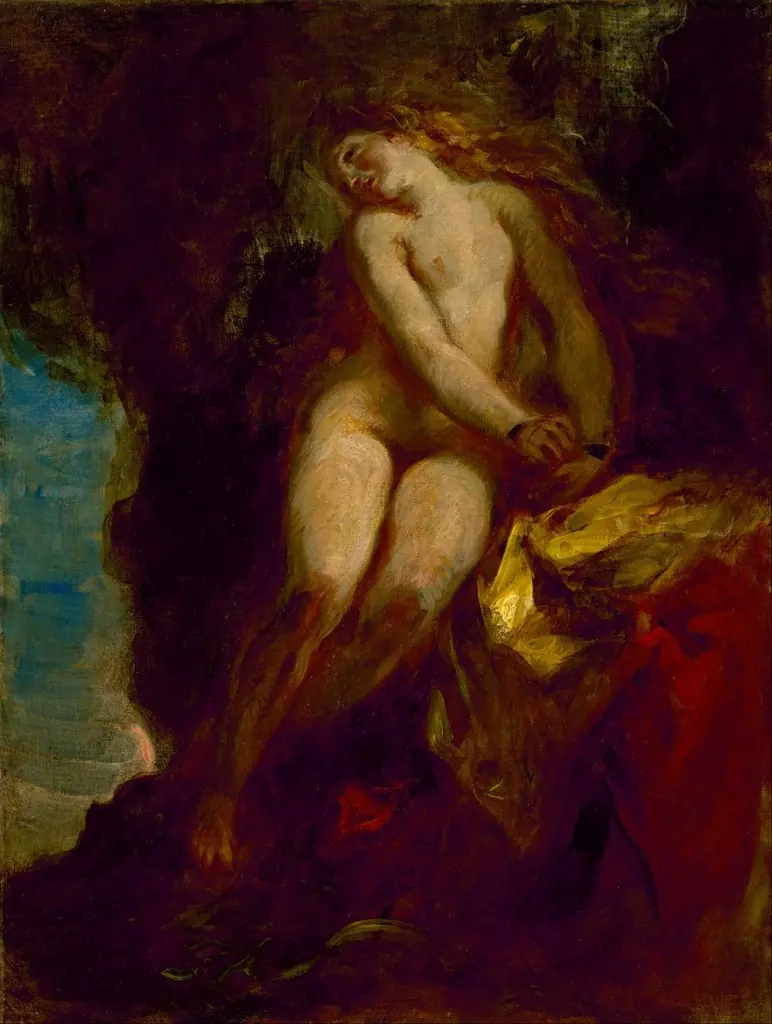
Temptation of Eve is an oil painting by the Early Baroque Italian artist Cecco Bravo. It dates from 1650 and is held in the collection of the Museu Nacional d'Art de Catalunya.
About this work
Overview
Cecco Bravo, born Francesco Montelatici, painted *Temptation of Eve* around 1650 in Florence during the early Baroque period. Executed in oil on canvas, the work presents a solitary figure in a confined, shadowed space. It is now part of the collection at the Museu Nacional d'Art de Catalunya, where it stands as a quiet example of Florentine religious painting from the mid-17th century.
Subject & Meaning
The painting illustrates the biblical moment when Eve, in the Garden of Eden, contemplates the forbidden fruit. Her posture and gaze suggest internal conflict rather than overt sin. The absence of Adam or the serpent shifts focus to her solitary decision, emphasizing psychological tension over narrative drama. The apple, held loosely in her hand, becomes a symbol of choice and consequence.
Technique & Style
The brushwork is restrained, prioritizing atmospheric cohesion over fine detail, aligning with regional Baroque tendencies that favored emotional restraint.
Bravo employs chiaroscuro to model Eve’s form with soft transitions between light and shadow, lending volume without harsh contrast. Her skin is rendered in muted earth tones, avoiding idealized perfection. The dark, indistinct background isolates her figure, enhancing intimacy and focus. The brushwork is restrained, prioritizing atmospheric cohesion over fine detail, aligning with regional Baroque tendencies that favored emotional restraint.
History & Provenance
The painting entered the Museu Nacional d'Art de Catalunya’s collection in the early 20th century, likely through acquisition from a Spanish or Catalan private collection. Its presence in Catalonia suggests it may have traveled through ecclesiastical or aristocratic networks in the Iberian Peninsula after its creation in Florence. No earlier documentation of its ownership is widely recorded.
Context
In mid-17th century Florence, religious subjects remained central to artistic production, though the dramatic intensity of Roman Baroque was often tempered by local sensibilities. Bravo’s work reflects this quieter approach, influenced by regional masters who favored introspection over spectacle. The painting aligns with a broader trend of intimate biblical scenes favored in private devotional settings.
Legacy
Though not widely known outside specialist circles, *Temptation of Eve* exemplifies the understated elegance of Florentine Baroque painting. It contributes to the understanding of how religious themes were interpreted with psychological nuance rather than theatricality. The work remains a reference for studies on regional variations within Italian Baroque art.
Artist & collection
Artist
Cecco Bravo (15 November 1601 – December 1661) was an Italian painter of the Florentine Baroque school. His true name was Francesco Montelatici.