Artwork
Roses in a Bottle [recto]
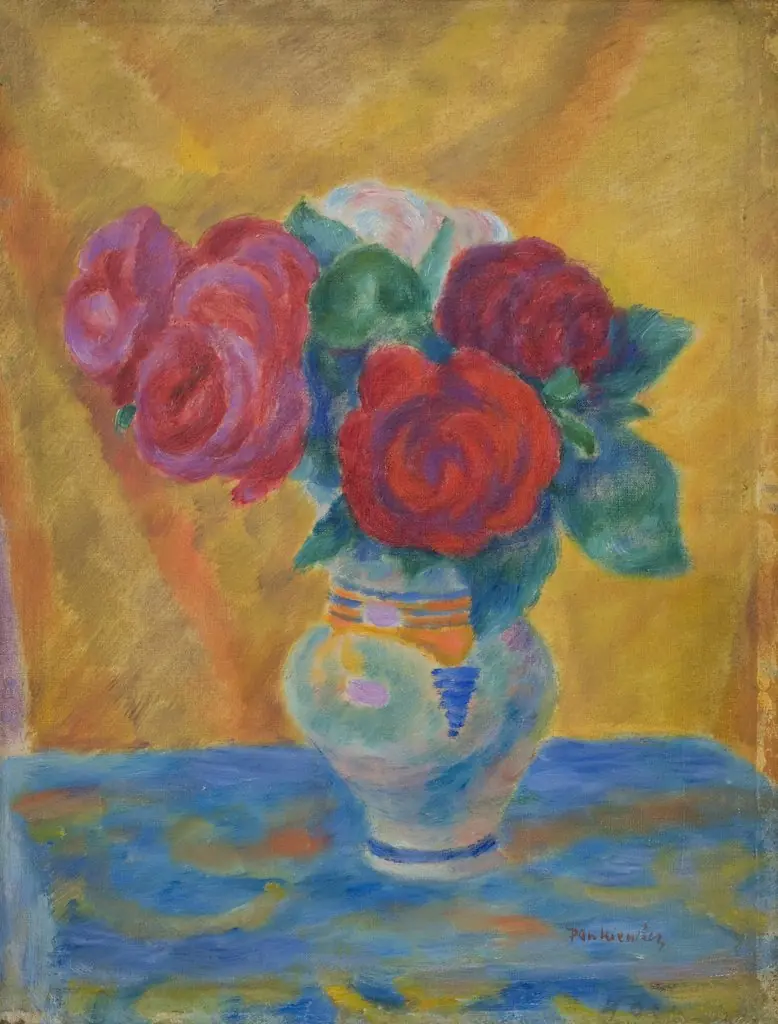
![Roses in a Bottle [recto], by Paul Cezanne, graphite, 1902](https://artifactworldgallery.com/img/paul-cezanne--roses-in-a-bottle-recto--7d8cab3439e09800-w1024.webp)
Roses in a Bottle [recto] is a graphite drawing by Paul Cezanne. It dates from 1902 and is held in the collection of the National Gallery of Art. Created in 1902, this watercolor drawing by Paul Cézanne depicts a simple arrangement of roses in a dark blue vase.
About this work
Overview
Created in 1902, this watercolor drawing by Paul Cézanne depicts a simple arrangement of roses in a dark blue vase.
Created in 1902, this watercolor drawing by Paul Cézanne depicts a simple arrangement of roses in a dark blue vase. Executed on wove paper with graphite underdrawing, the work captures a fleeting moment with minimal detail. The composition is uncluttered, emphasizing the flowers against a barely suggested background of table and window, rendered in loose, fluid strokes that prioritize atmosphere over precision.
Subject & Meaning
The subject—a modest bouquet of red, white, and pink roses with scattered green leaves—reflects Cézanne’s enduring interest in still life. There is no narrative or symbolism beyond the quiet presence of the flowers. The work conveys a sense of transience, as if the blooms are caught mid-bloom, their vitality rendered through color and movement rather than detailed form.
Technique & Style
Cézanne employed watercolor with a spontaneous approach, allowing pigments to bleed and layer organically. Brushstrokes vary in pressure and direction, creating a sense of immediacy. He built subtle color transitions through glazing, letting underlying washes show through to modulate tone. The graphite underdrawing guides the composition but remains visible, reinforcing the sketchlike quality of the piece.
History & Provenance
The work was produced during Cézanne’s final years in Aix-en-Provence, a period marked by intense focus on still lifes and landscapes. It remained in the artist’s possession until his death in 1906, after which it passed through private collections before entering a public museum. Its modest scale and medium suggest it was not intended for public display but as a personal study.
Context
In the early 1900s, Cézanne increasingly turned to intimate subjects, using watercolor for its immediacy and transparency. This piece aligns with his broader exploration of perception and structure, where even simple arrangements became vehicles for investigating form and color relationships. His approach diverged from traditional floral still lifes, favoring abstraction over ornamentation.
Legacy
Roses in a Bottle exemplifies Cézanne’s late-watercolor practice, influencing modern artists who valued expressive brushwork and structural economy. Its unpolished aesthetic challenged academic conventions, affirming the value of process over finish. Today, it stands as a quiet testament to his lifelong pursuit of visual truth through direct observation and material experimentation.
Artist & collection
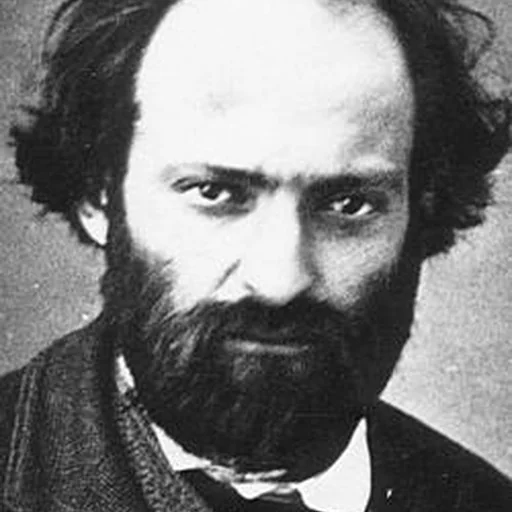
Artist
Paul Cézanne was born on January 19, 1839, in Aix-en-Provence, the son of a hatter turned wealthy banker.

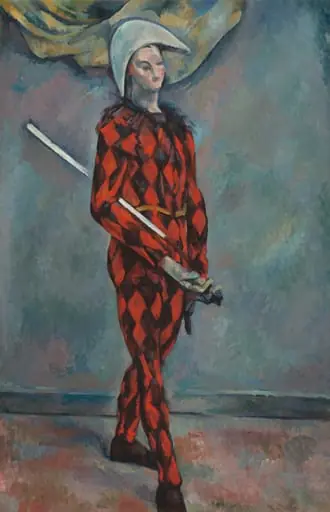 Harlequin
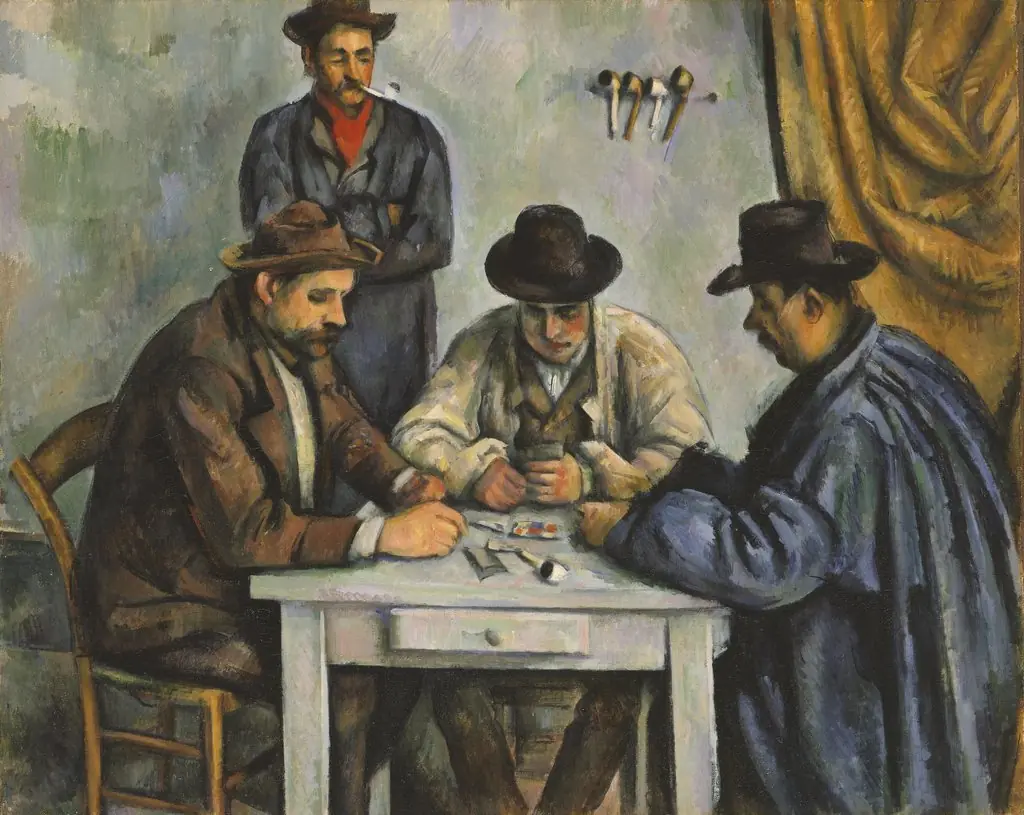 The Card Players
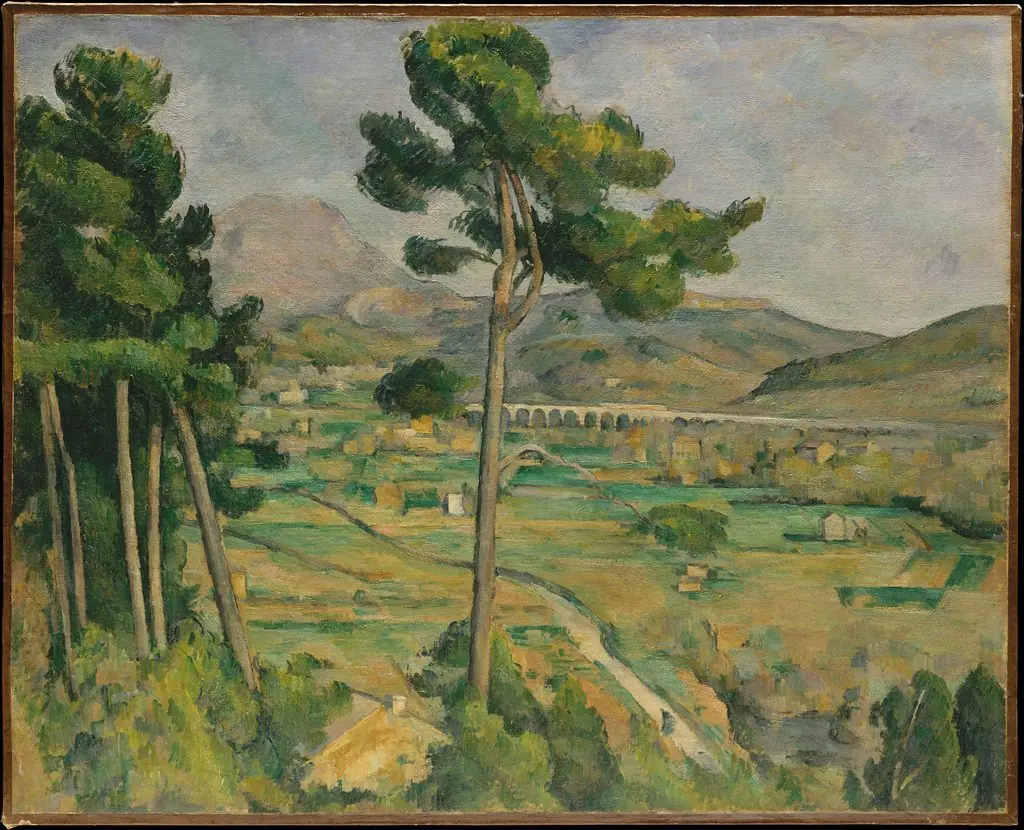 Mont Sainte-Victoire and the Viaduct of the Arc River Valley
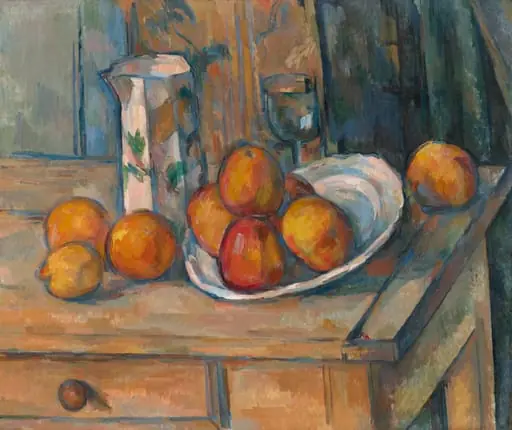 Still Life with Milk Jug and Fruit
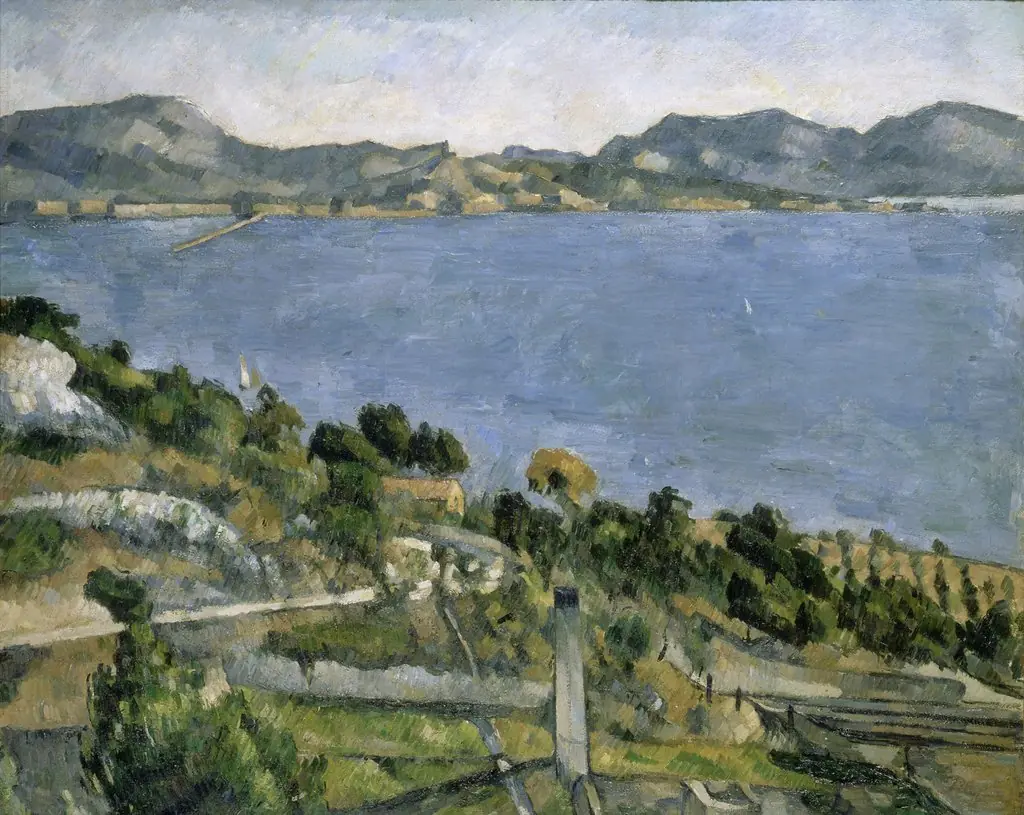 Le Golfe de Marseille vu de l'Estaque (The Gulf of Marseille Seen from L'Estaque)
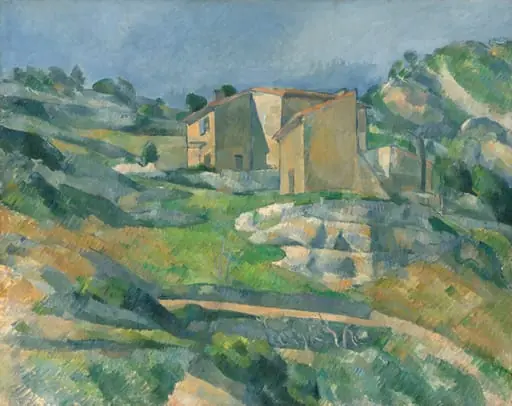 Houses in Provence: The Riaux Valley near L'Estaque
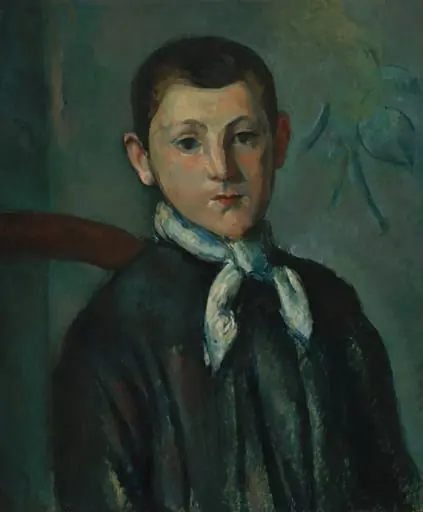 Louis Guillaume
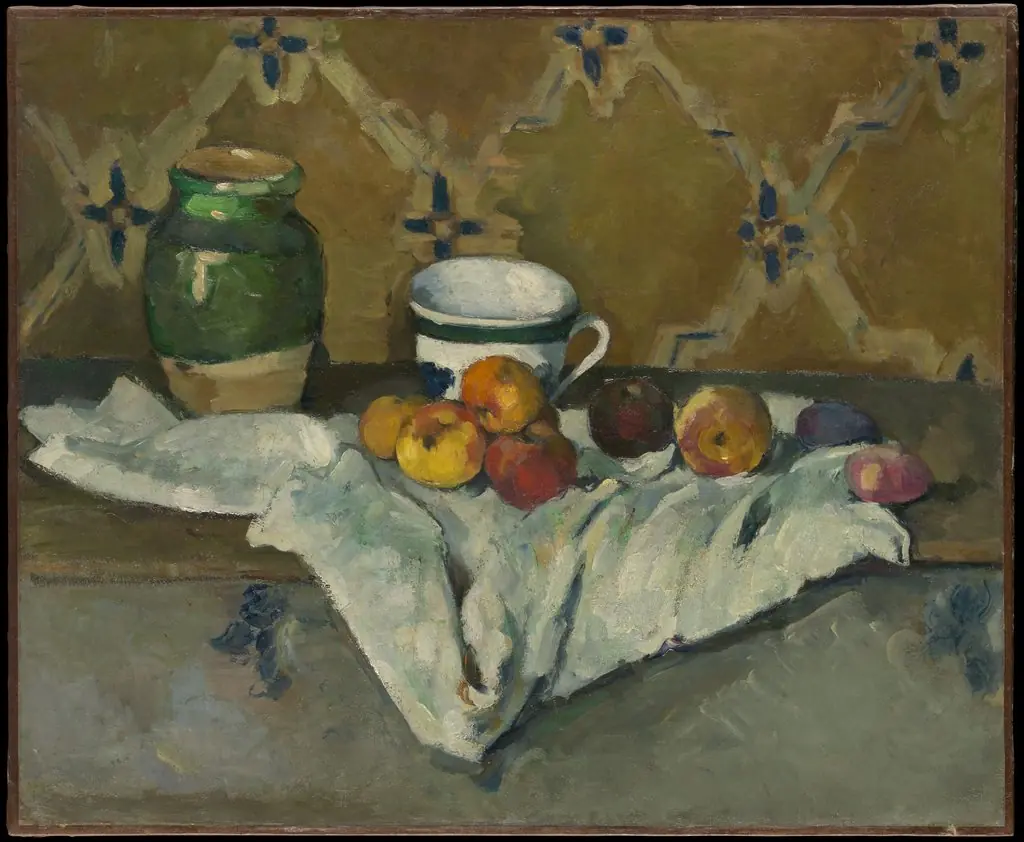 Still Life with Jar, Cup, and Apples
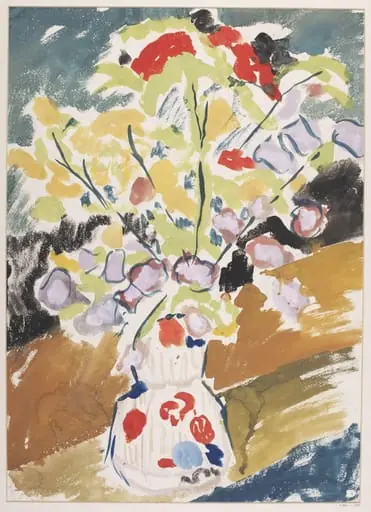 A Vase of Flowers
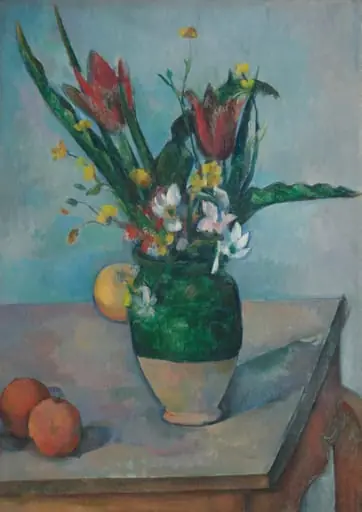 The Vase of Tulips
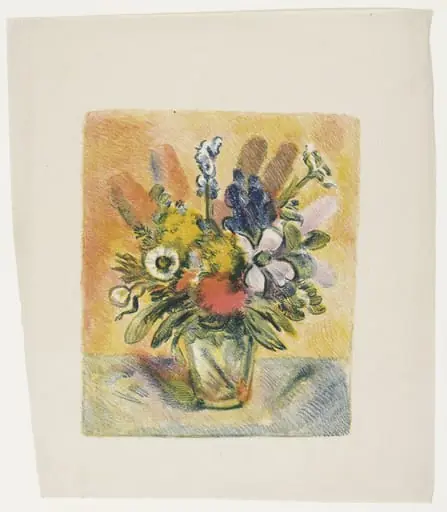 Untitled
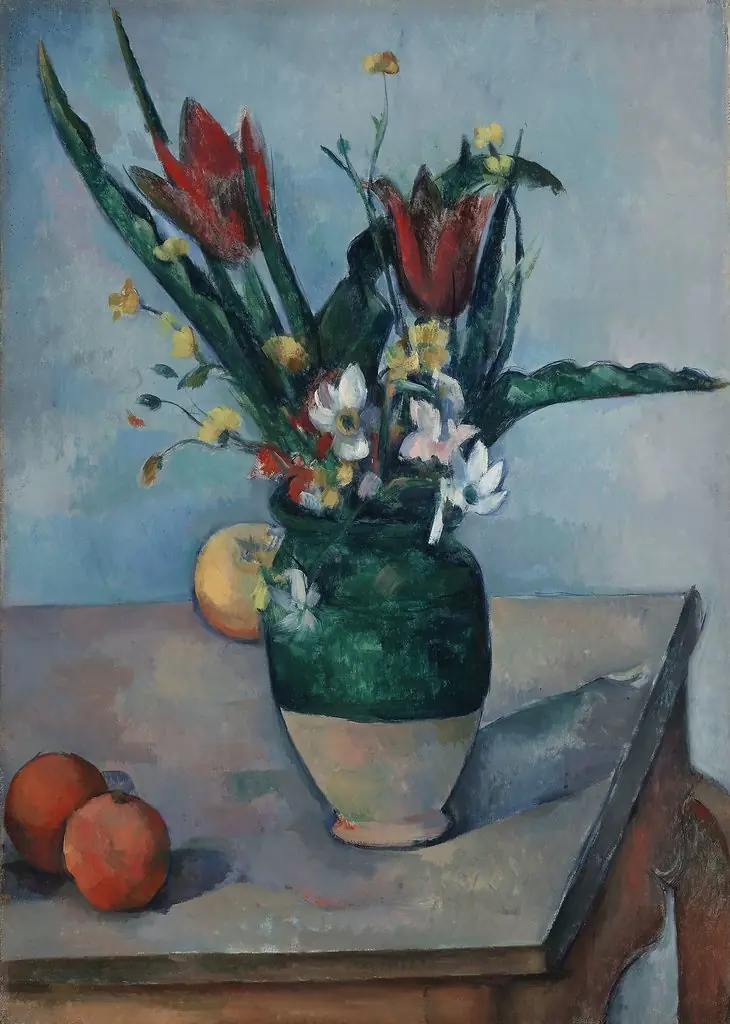 The Vase of Tulips
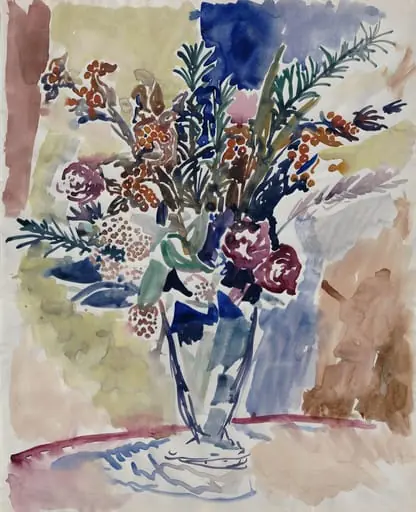 Flowers in a vase
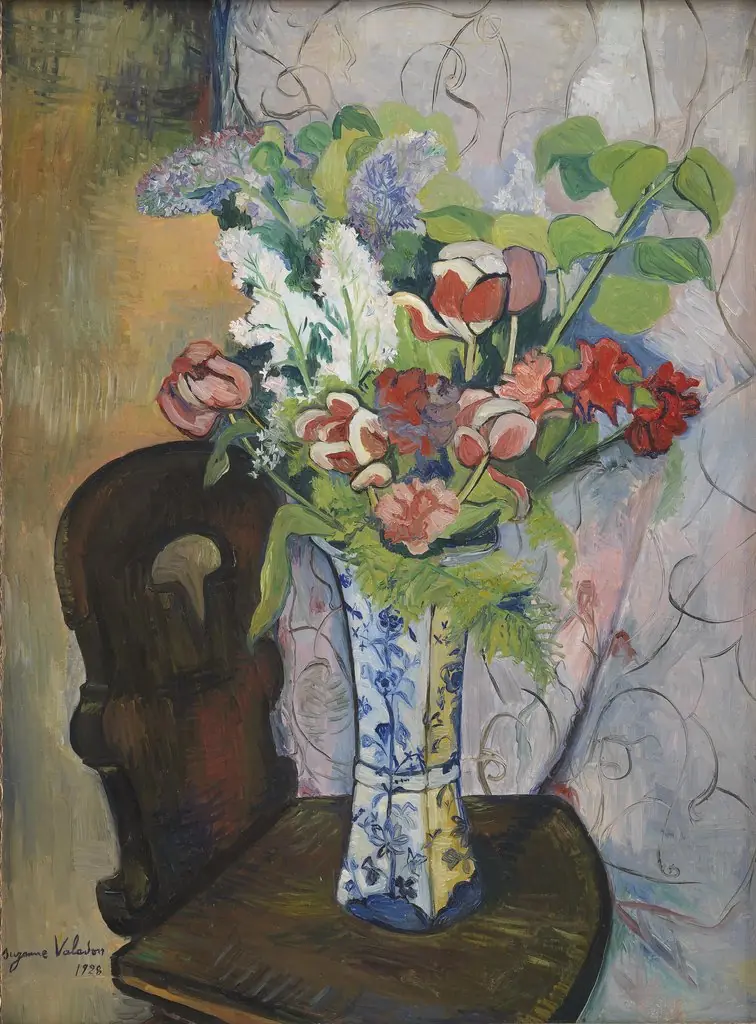 Spring Flowers
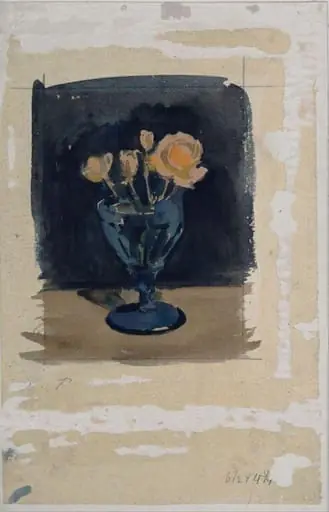 Rosa Sera
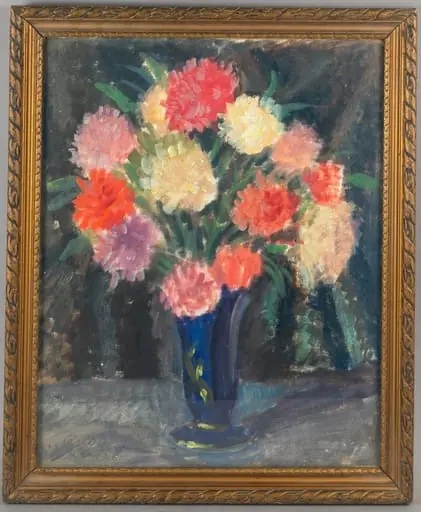 Pictură în ulei pe pânză, reprezentând un vas mare cu flori galbene, roșii, mov, semnat de pcitorul Gheorghe Ceglokoff (1904-1964, pictor și grafician, născut la Chișinău, închis pentru simpatii comunite) realizat în lagărul din Târgu Jiu, 1941, dăruită lui Liță Anghel
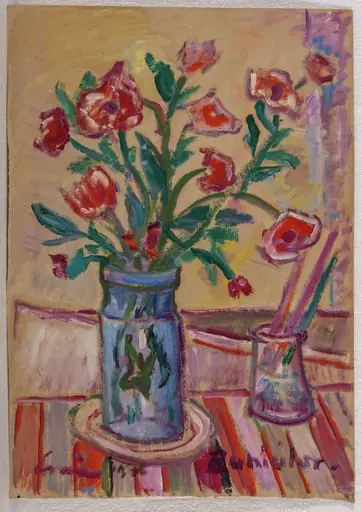 Eboșă cu un vas de sticlă cu flori roșii așezat pe un suport în jumătatea din stânga a lucrării. În jumătatea din dreapta, mult în spate față de vasul cu flori, un alt vas de sticlă, mic, cu trei pensule. Fundal ocru, colorat cu pastă violet și albastră în marginea din dreapta a lucrării. Flori vag schițate cu roșu și alb, iar suportul este acoperit cu un material în dungi colorate în portocaliu, alternând cu gri și violet. Semnat și datat cu violet și brun, stânga jos: Craiu (19)76.
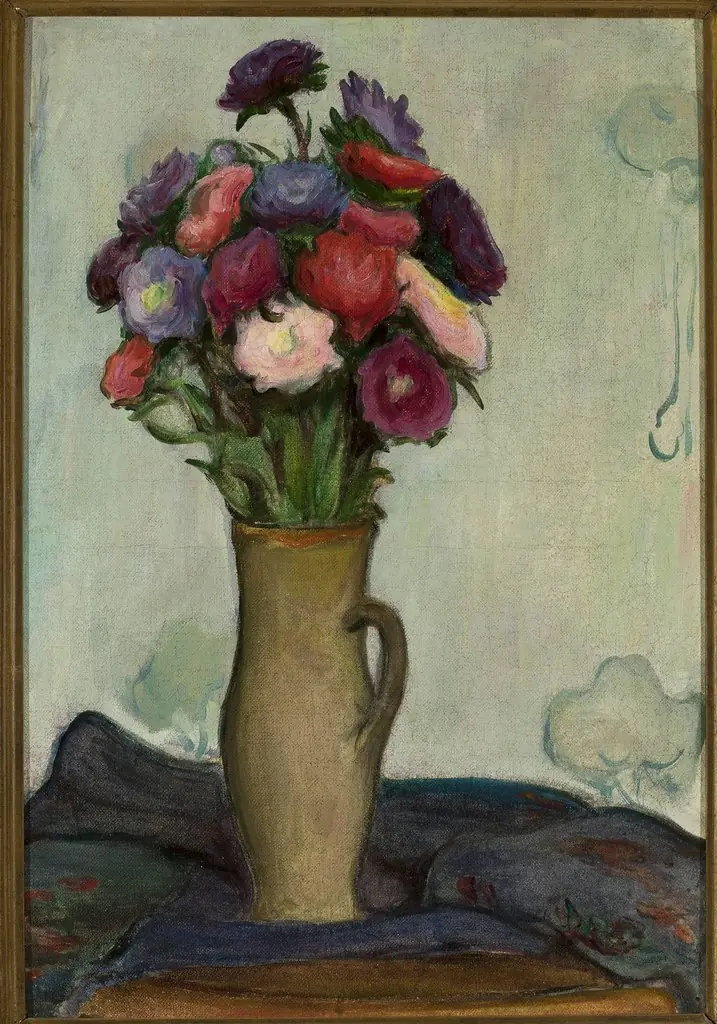 Flowers in a vase /Asters/
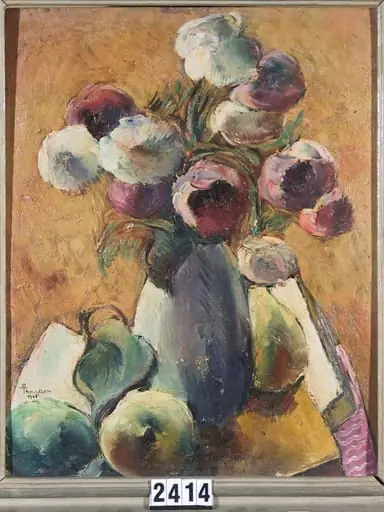 Vas cu flori
 Roses
Roses