Artwork
Two Bathers
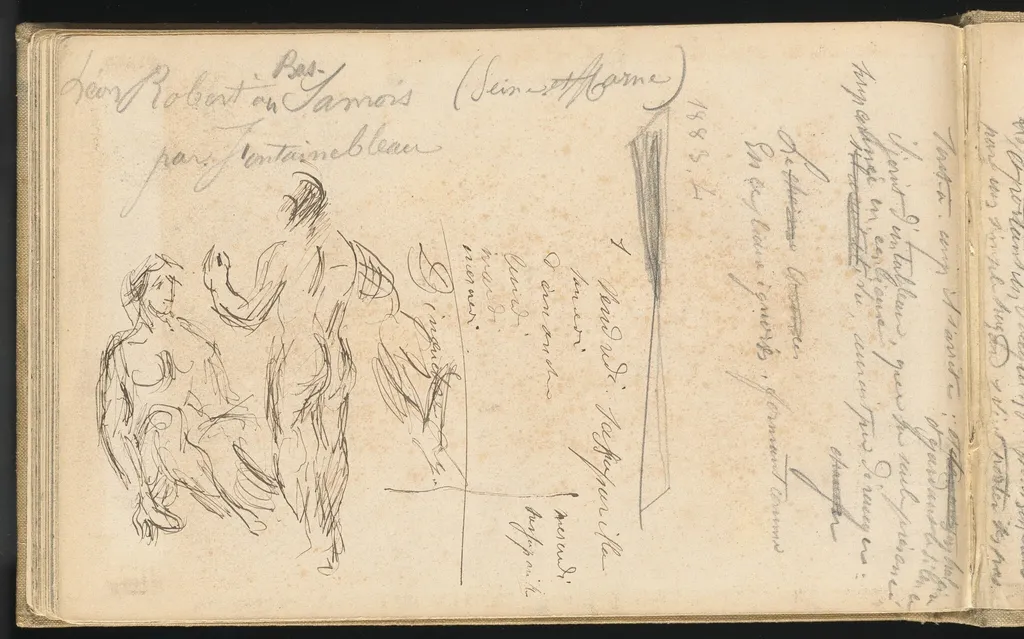
Two Bathers is an ink drawing by the Impressionist artist Paul Cezanne. It dates from 1886 and is held in the collection of the National Gallery of Art.
About this work
Overview
This drawing, titled Two Bathers, is a pen and brown ink work on end papers created by Paul Cezanne in 1886. It features two nude figures, one seated and the other standing with their back turned, amidst surrounding sketches and illegible writing.
Subject & Meaning
The subject of Two Bathers focuses on the depiction of two nude figures, emphasizing the capture of their essence through loose, expressive lines rather than detailed realism. The intimate setting suggested by the warm brown ink may imply a private or natural environment.
Technique & Style
Cezanne employed loose, expressive pen lines in brown ink to create a sense of warmth and immediacy. The informal, sketch-like quality reflects the artist's creative process, prioritizing the emotional and gestural over precise anatomical detail.
History & Provenance
Created in 1886, the drawing's early history and ownership before its current location are not detailed here. It is now part of a collection that can be explored further at the National Gallery of Art in Washington.
Context
Two Bathers sits within Cezanne's broader exploration of the human form during the late 19th century, a period when artists were reevaluating traditional approaches to nudity and figure drawing. The work's emphasis on expressive lines aligns with the transitional period towards modernist practices.
Legacy
While specific influence of Two Bathers on subsequent artists is not highlighted, it contributes to the broader legacy of Cezanne's innovative approaches to figure drawing, influencing the development of modern and early 20th-century art movements.
Artist & collection
Artist
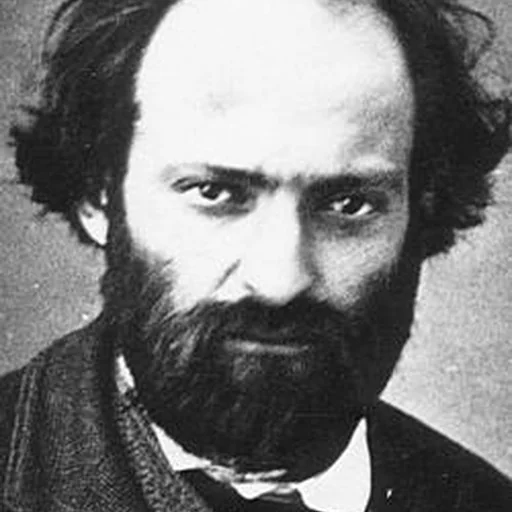
Paul Cézanne was born on January 19, 1839, in Aix-en-Provence, the son of a hatter turned wealthy banker.

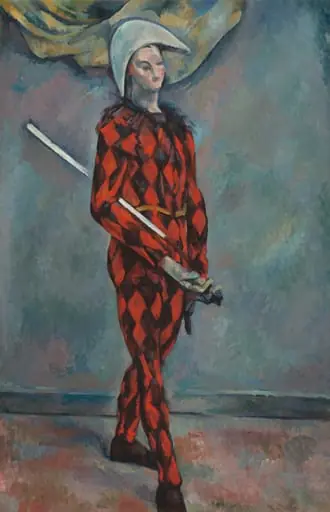 Harlequin
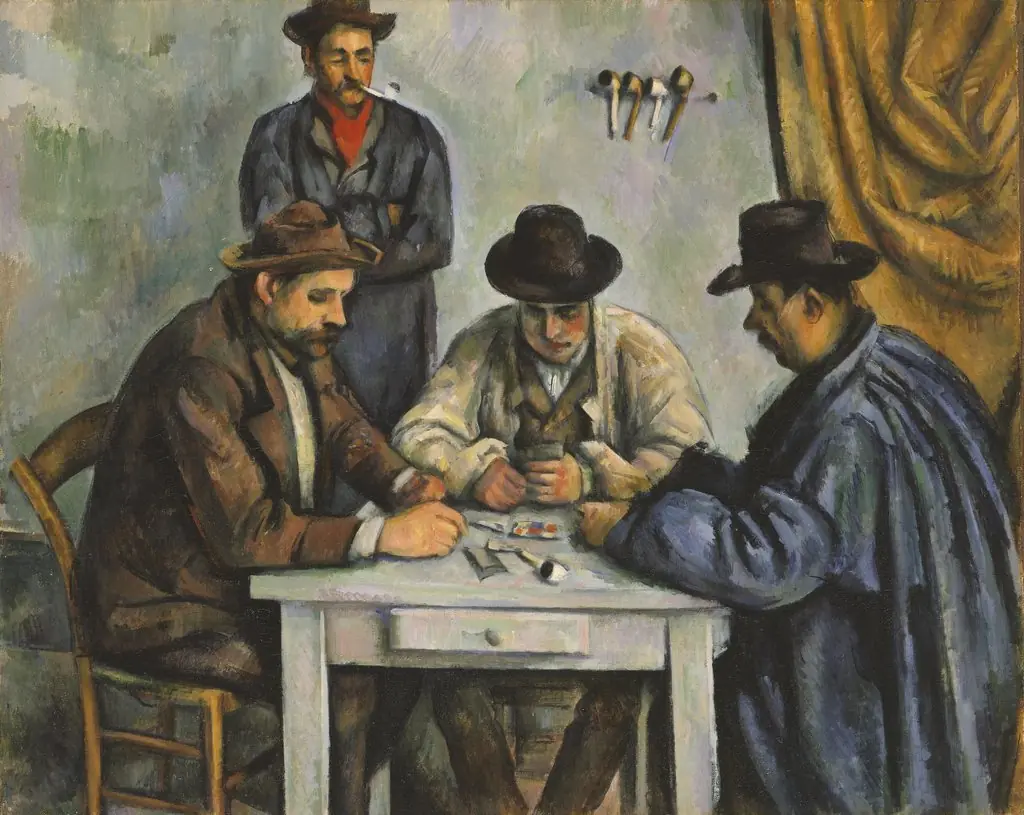 The Card Players
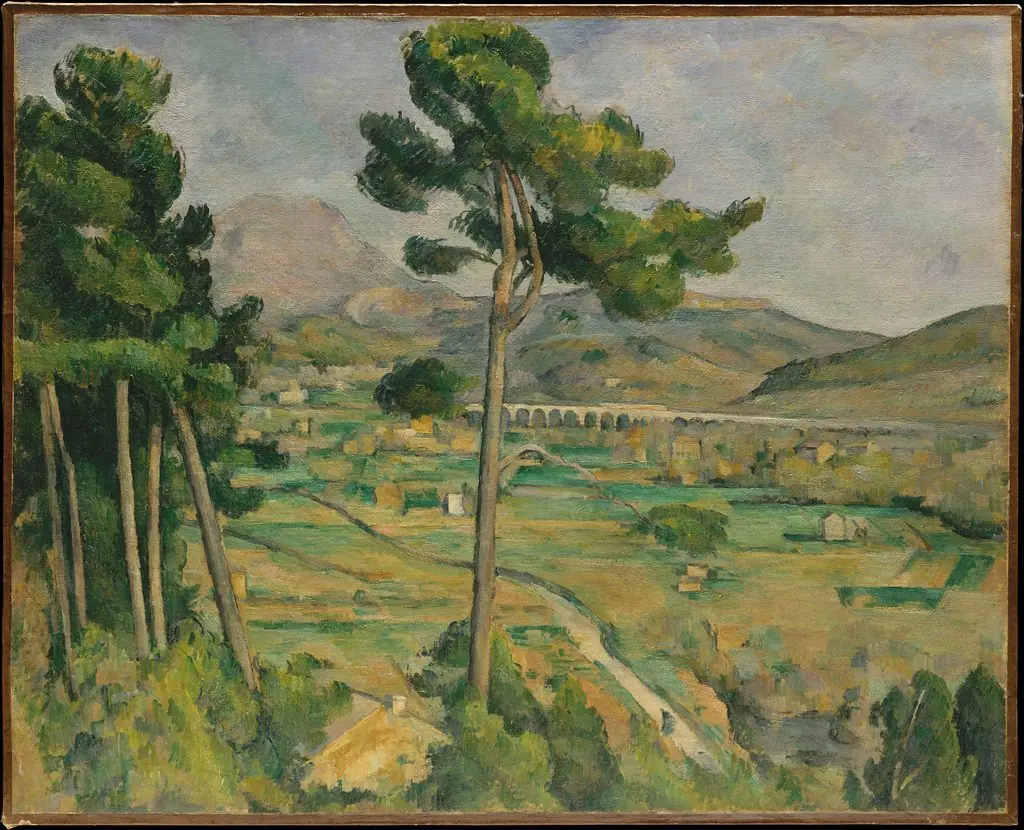 Mont Sainte-Victoire and the Viaduct of the Arc River Valley
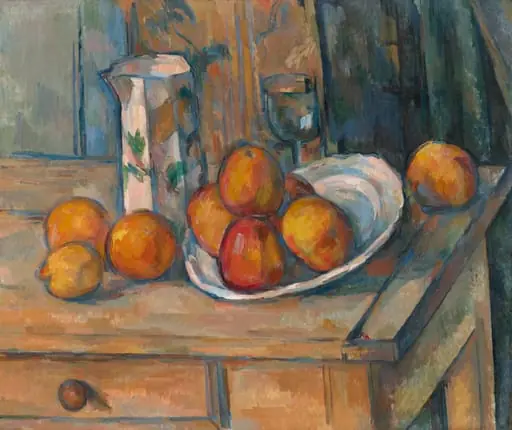 Still Life with Milk Jug and Fruit
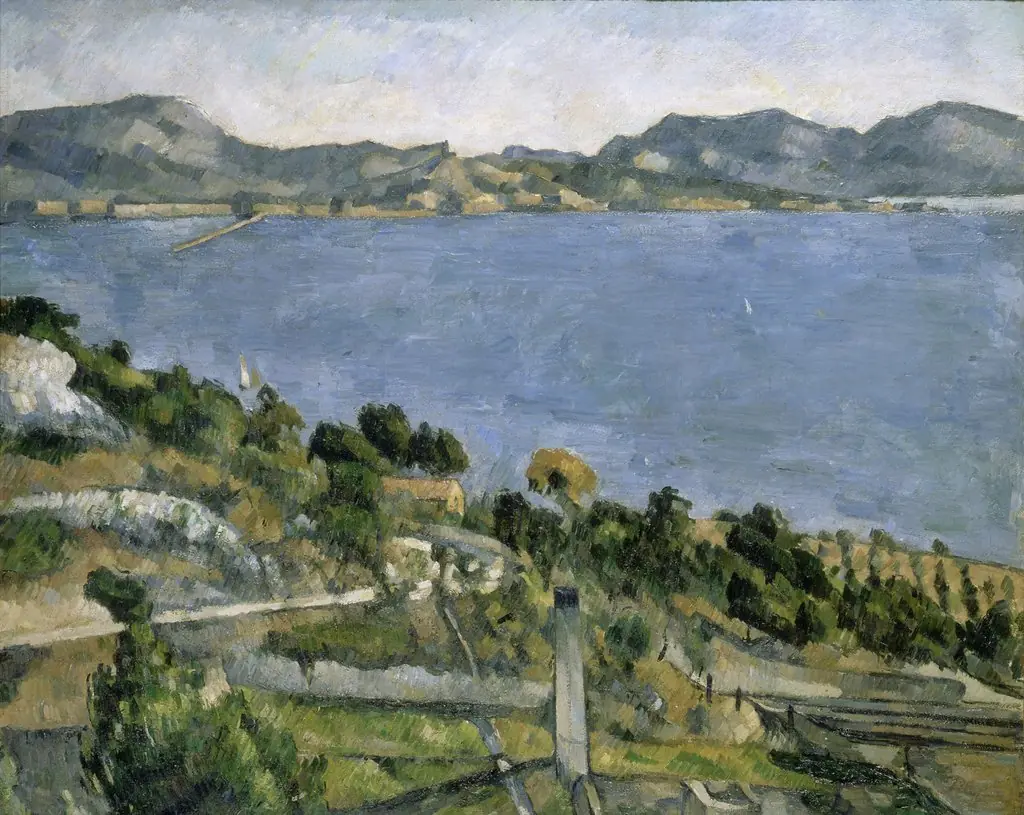 Le Golfe de Marseille vu de l'Estaque (The Gulf of Marseille Seen from L'Estaque)
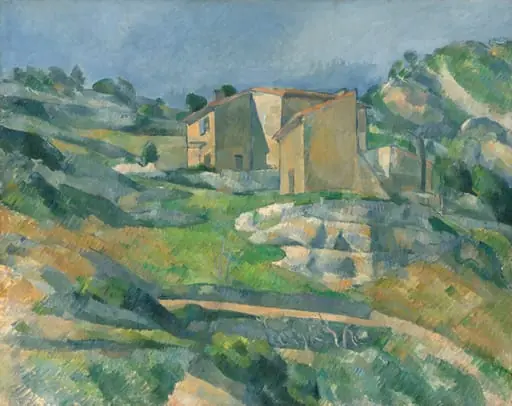 Houses in Provence: The Riaux Valley near L'Estaque
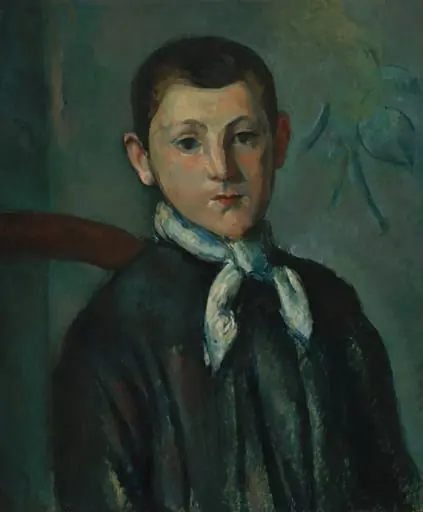 Louis Guillaume
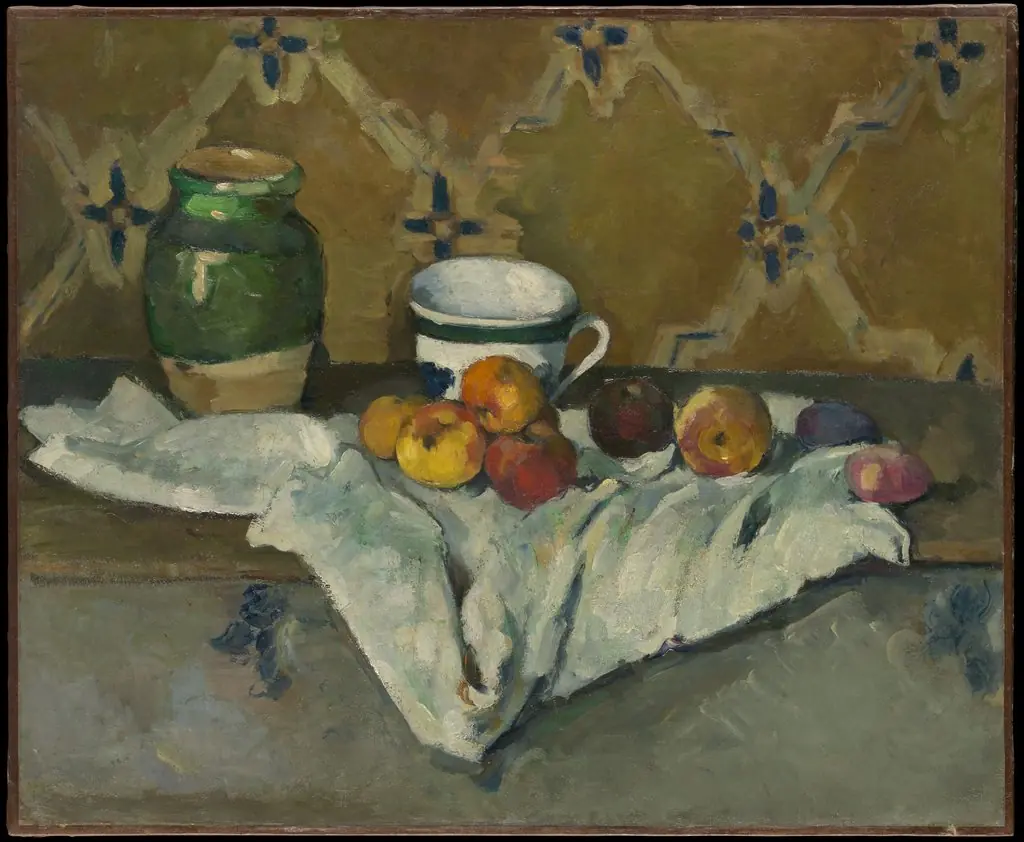 Still Life with Jar, Cup, and Apples
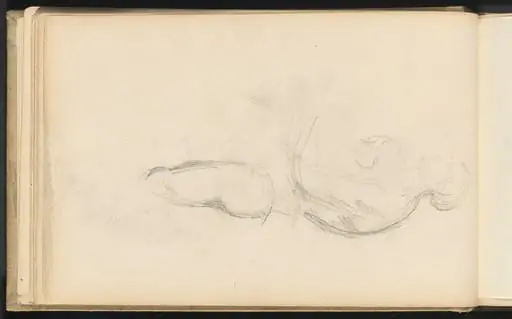 Study of the Allegorical Figure of Health in Rubens' "The Birth of Louis XIII"
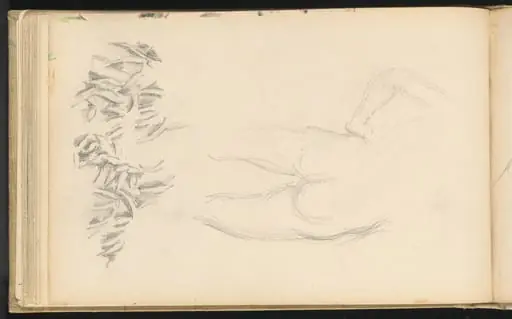 A Nude and Foliage
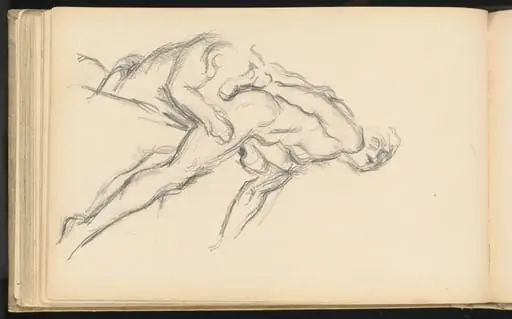 Study of Puget's "Milo of Crotona"
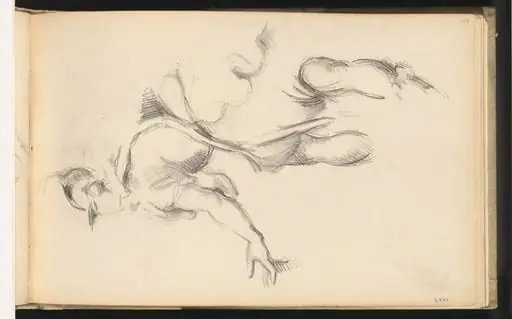 Study of the Allegorical Figure France in Rubens' "The Exchange of the Two Princesses"
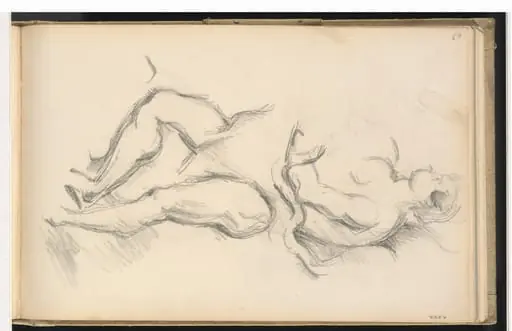 Study of the Allegorical Figure of the Genius of Health from Rubens' "The Birth of Louis XIII at Fontainbleau"
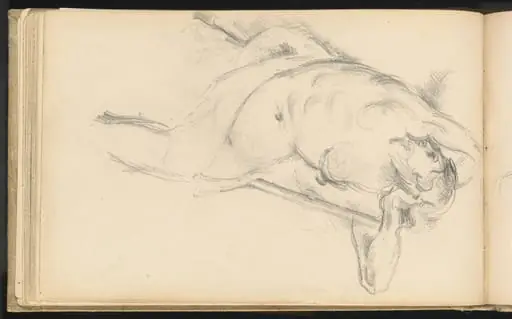 Study of the Allegorical Figure Bellona in Rubens' "The Apotheosis of Henri IV"