Artwork
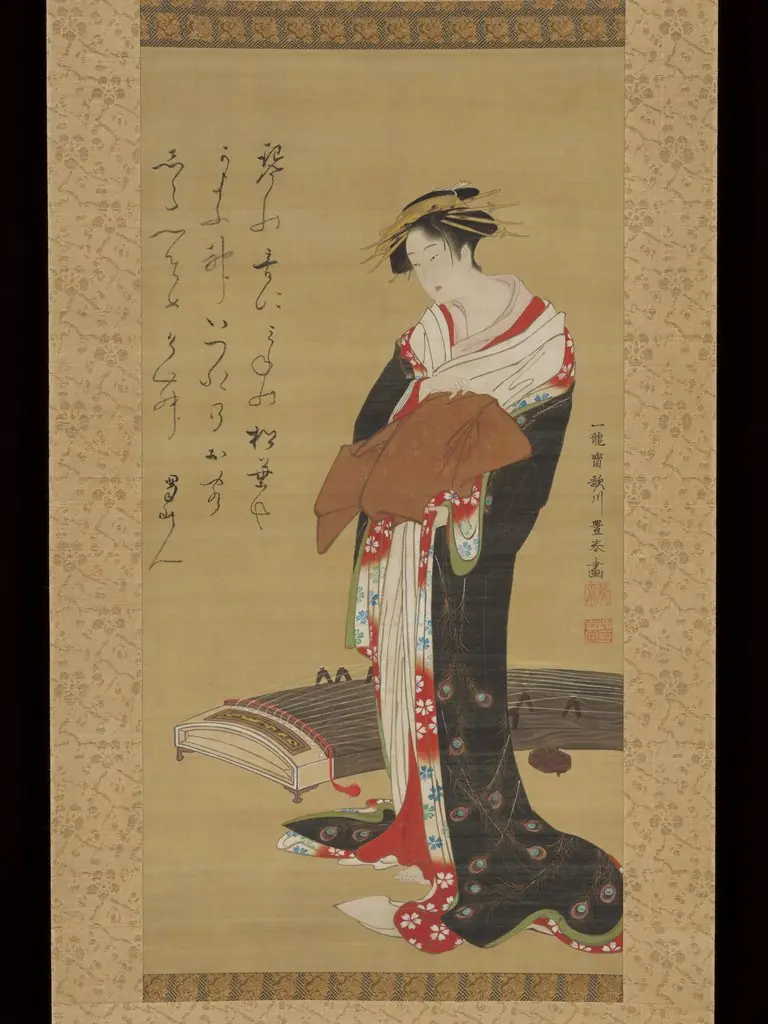
歌川豊春筆 蜀山人(大田 南畝)賛 琴に立美人図|Female Entertainer with a Koto
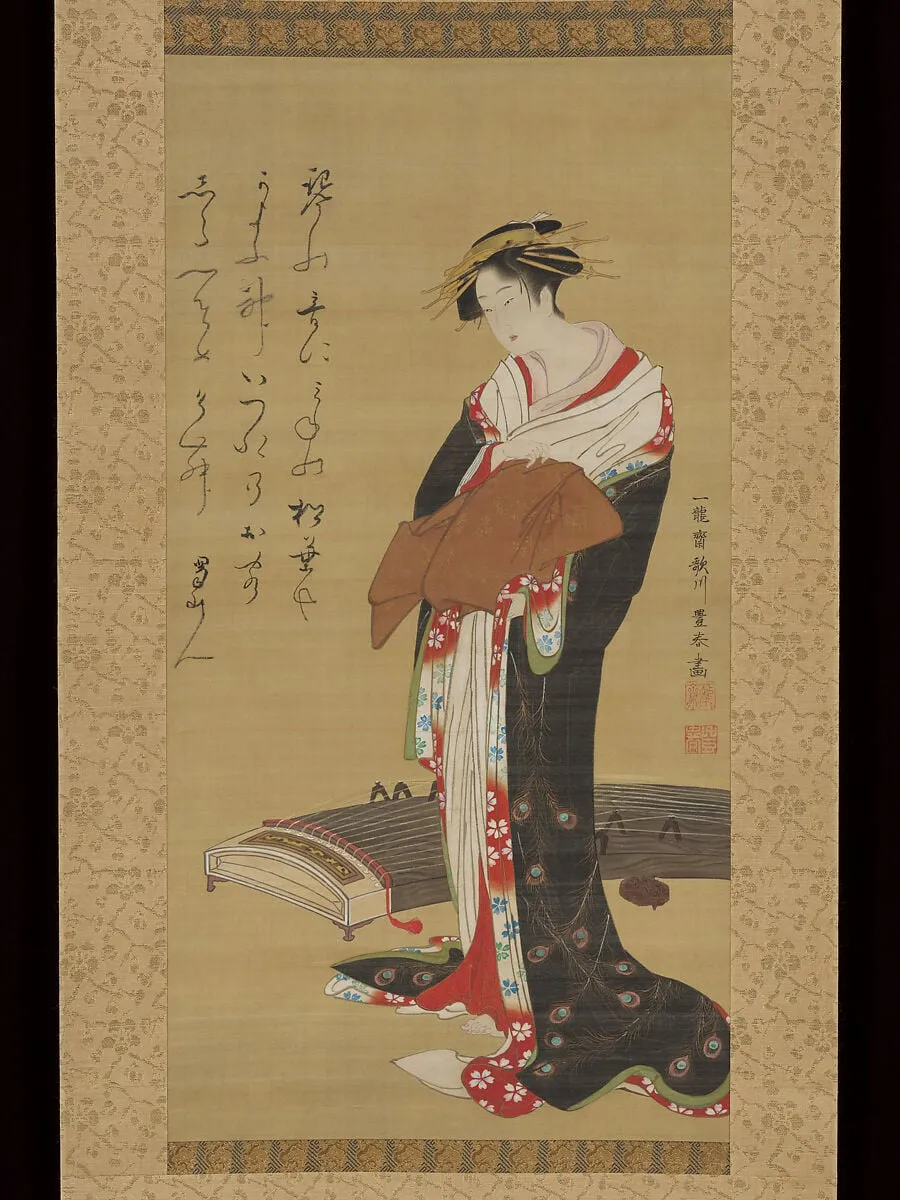
歌川豊春筆 蜀山人(大田 南畝)賛 琴に立美人図|Female Entertainer with a Koto is an ink painting by the Romanticist artist Utagawa Toyoharu. It dates from 1785 and is held in the collection of the Metropolitan Museum of Art.
About this work
This painting shows a woman in a traditional Japanese kimono, standing in front of a koto, a traditional Japanese stringed instrument.
This painting shows a woman in a traditional Japanese kimono, standing in front of a koto, a traditional Japanese stringed instrument. She is holding a brown cloth and looking down at the koto.
The woman's kimono is black with peacock feathers and red and white flowers. Her hair is styled in an updo, and she is wearing a brown obi around her waist. The koto is placed on a low table, and there are some shoes on the floor next to it.
The painting is done in ink and color on silk, and it has a romantic feel to it. It's a beautiful example of Japanese art from the 18th century. If you're interested in learning more about this style of art, you might want to check out the Romanticism movement.
Overview
Utagawa Toyoharu’s hanging scroll, dated 1785, depicts a solitary female figure positioned before a koto, a traditional Japanese lute. Executed in ink and color on silk, the work measures roughly the size of a standard handscroll and is part of the collection of the Metropolitan Museum of Art.
Subject & Meaning
The central figure is a woman dressed in a black kimono patterned with stylised peacock feathers and interlaced red and white blossoms. Her hair is arranged in an elevated updo, and a brown obi cinches her waist. She holds a brown cloth in one hand while her gaze is directed downward toward the instrument, suggesting a moment of quiet concentration or performance.
Technique & Style
Toyoharu employs delicate brushwork characteristic of Edo‑period ukiyo‑e painting, combining monochrome ink outlines with subtle washes of colour on silk. The rendering of the kimono’s intricate pattern and the soft shading of the koto’s strings demonstrate a refined balance between decorative detail and atmospheric restraint.
History & Provenance
Created in the late eighteenth century, the scroll entered the collection of the Metropolitan Museum of Art in the twentieth century through acquisition from a private dealer. Its attribution to Toyoharu is supported by stylistic analysis and a signature in the lower right corner.
Context
The image belongs to a genre of bijin-ga, or pictures of beautiful women, which flourished in Edo Japan. Such works often portrayed entertainers and courtesans in domestic or artistic settings, reflecting contemporary tastes for scenes of refined leisure.
Artist & collection


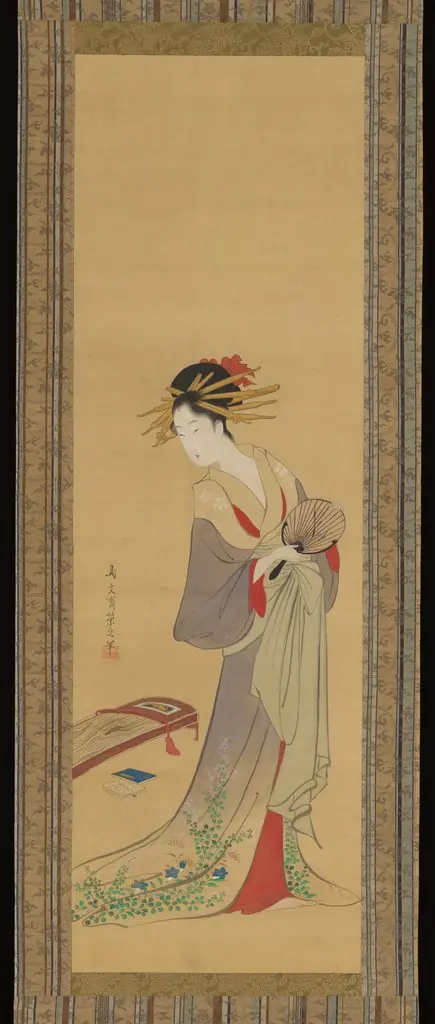 Courtesan with Fan and Koto
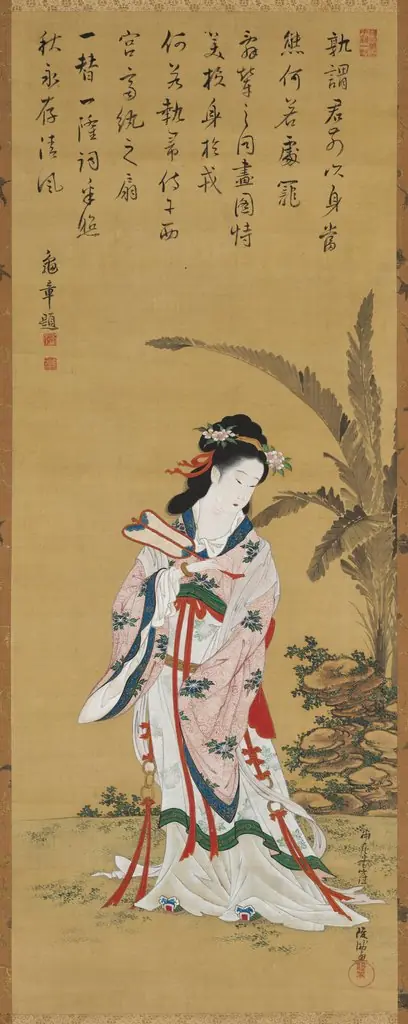 Chinese Beauty
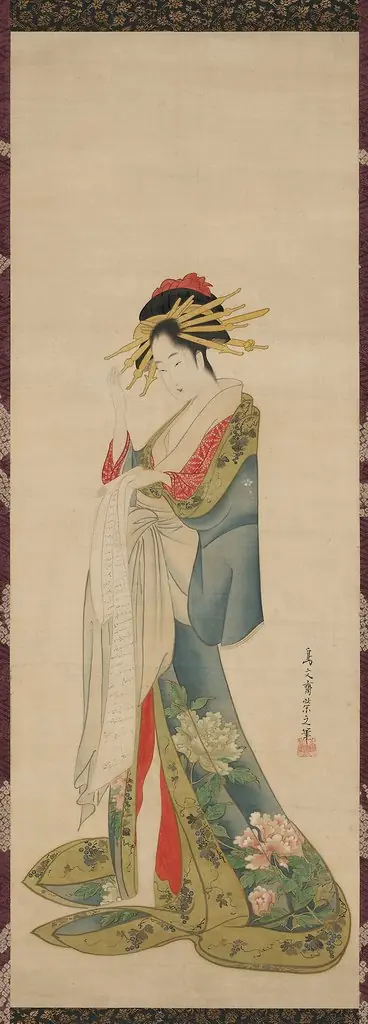 A Courtesan Reading a Letter
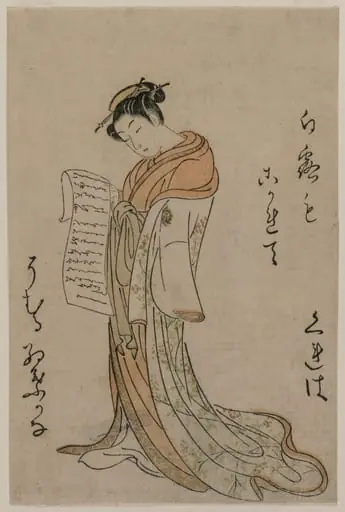 Kureha of Gakuiseya, from Selection of Beauties from the Pleasure Quarters
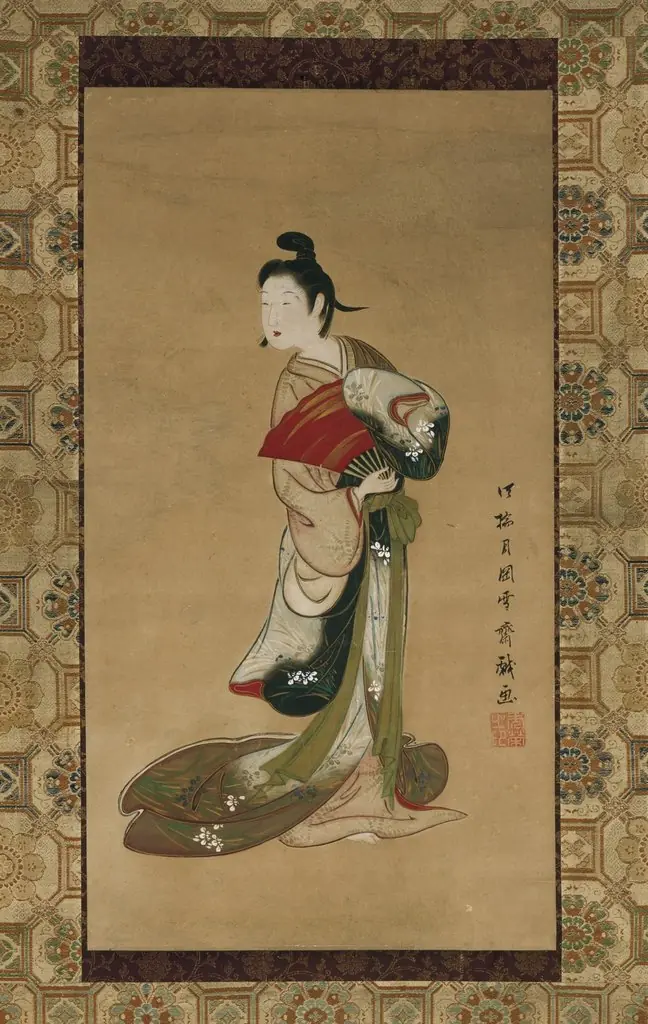 Courtesan
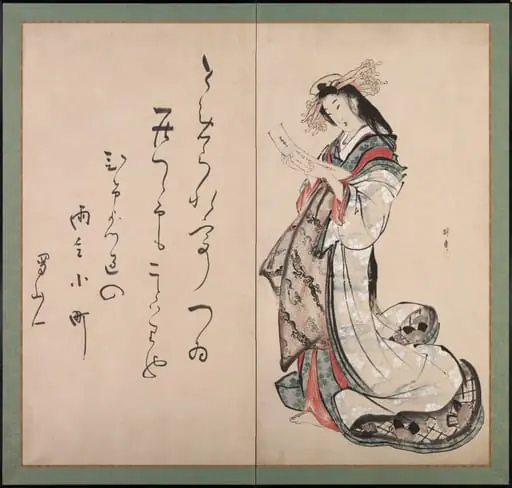 Courtesan Reading a Letter
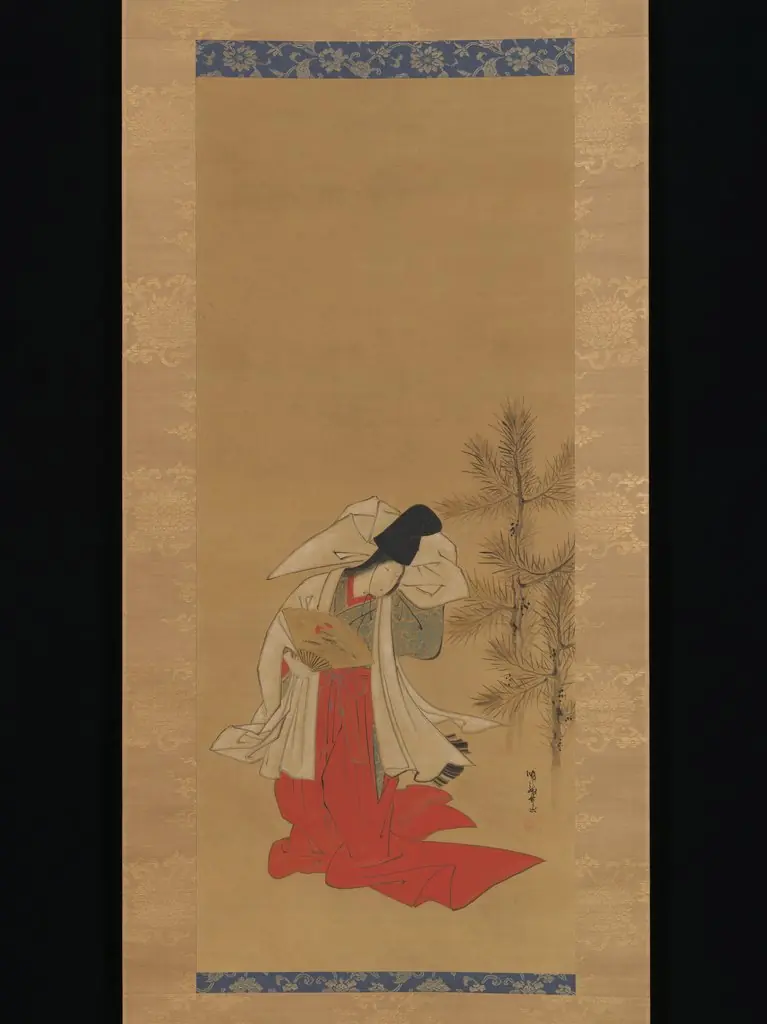 Courtesan-Dancer (Shirabyōshi) for the New Year
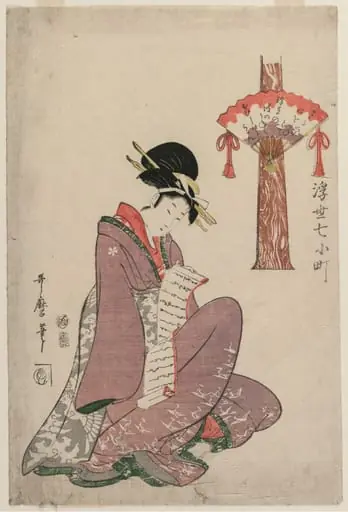 Woman Reading a Letter (from the series Seven Episodes in the Life of Komachi in the Floating World)
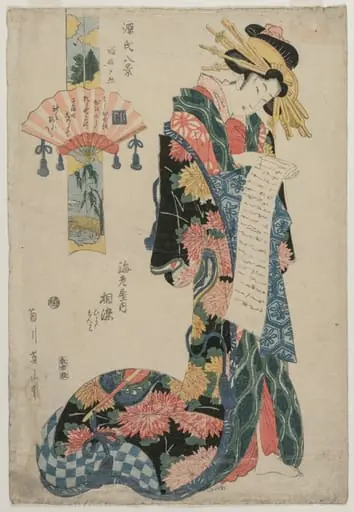 The Courtesan Aizome of the Ebiya (From the series Eight Views of the Tale of Genji)
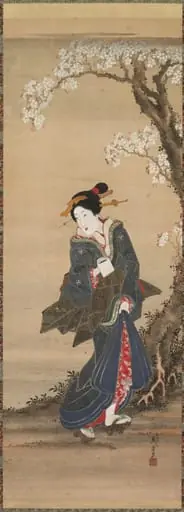 Courtesan