Artwork
Beauty in a Boat on Sumida River
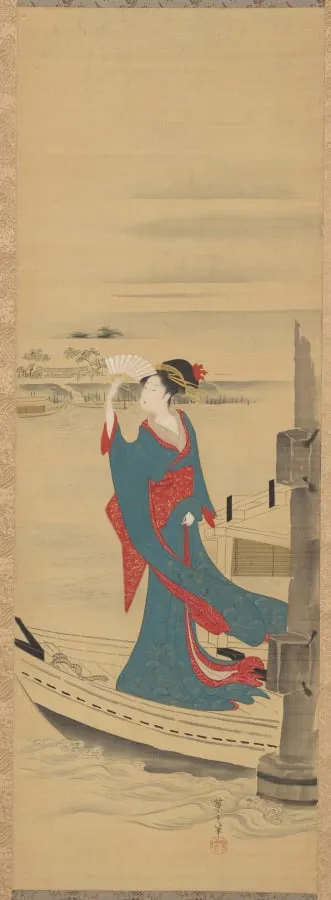
Beauty in a Boat on Sumida River is an unspecified painting by the Romanticist artist Chôbunsai Eishi. It dates from 1802 and is held in the collection of the Cleveland Museum of Art. This woodblock print captures a quiet summer moment on the Sumida River in Edo, where urban residents sought relief from the season’s heat.
About this work
Behind her, the Sumida River glows under a pale sky, with a red shrine gate peeking from the left edge.
A woman in a bright kimono leans over the side of a small boat, her fan shading her face. Behind her, the Sumida River glows under a pale sky, with a red shrine gate peeking from the left edge.
This print shows a quiet moment from Edo-period life—city folks escaping the summer heat on the river. The tiny shrine gate tucked beside her fan is a real spot: Mimeguri Shrine, still standing today.
If you like this scene, look up more works about japan, edo period (1615–1868).
Overview
This woodblock print captures a quiet summer moment on the Sumida River in Edo, where urban residents sought relief from the season’s heat. A woman in a vivid kimono leans from a small boat, her fan partially shielding her face. The calm water and soft sky frame her stillness, while a distant shrine gate anchors the scene in a recognizable local landmark.
Subject & Meaning
The figure embodies the Edo-period practice of river excursions as a form of seasonal respite. Her posture suggests introspection rather than spectacle, reflecting a cultural preference for understated leisure. The inclusion of Mimeguri Shrine’s torii gate subtly ties the scene to spiritual geography, grounding the personal moment within a broader landscape of daily ritual and place.
Technique & Style
The composition relies on restrained color and delicate line work, typical of ukiyo-e prints of the era. The woman’s kimono contrasts with the muted tones of water and sky, drawing focus without overt drama. The shrine gate is rendered with minimal detail, yet its placement is precise, demonstrating the artist’s attention to topographic accuracy within an intimate scene.
History & Provenance
The Sumida River was a well-documented site of summer recreation in Edo, frequently depicted in prints and literature. Mimeguri Shrine, still extant, was a known landmark along its banks, lending authenticity to such scenes. This print likely originated from a series documenting everyday life in the city, produced for a growing urban audience interested in local topography and customs.
Context
During the Edo period, river outings became a common pastime for townspeople, especially in summer. Unlike aristocratic pursuits, these excursions were accessible and informal, reflecting the rise of a merchant-class culture that valued quiet observation and local familiarity. The presence of a shrine in the background hints at the blending of secular leisure and sacred space in daily life.
Legacy
Works like this contributed to a visual archive of Edo’s urban rhythms, preserving moments that might otherwise have been overlooked. The continued existence of Mimeguri Shrine allows modern viewers to connect the image to a physical place, reinforcing the print’s role as both artistic record and cultural document of ordinary life in 18th- to 19th-century Japan.
Artist & collection

Artist
Chōbunsai Eishi (鳥文斎 栄之; 1756–1829) was a Japanese ukiyo-e artist. His last name was Hosoda (細田). His first name was Tokitomi (時富). His common name was Taminosuke (民之丞) and later Yasaburo (弥三郎). Pupil of Kano Eisen'in…

 Three Gods of Good Fortune Visit the Yoshiwara; or “Scenes of Pleasure at the Height of Spring”
 蜀山人(大田 南畝)賛 雪・月・花図 |Snow, Moon, and Cherry Blossoms (Yoshiwara in Three Seasons)
 Untitled
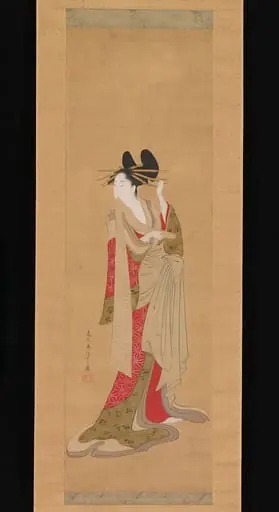 Untitled
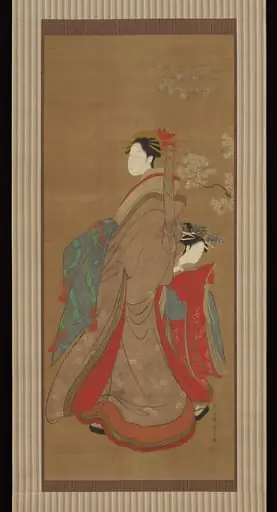 Untitled
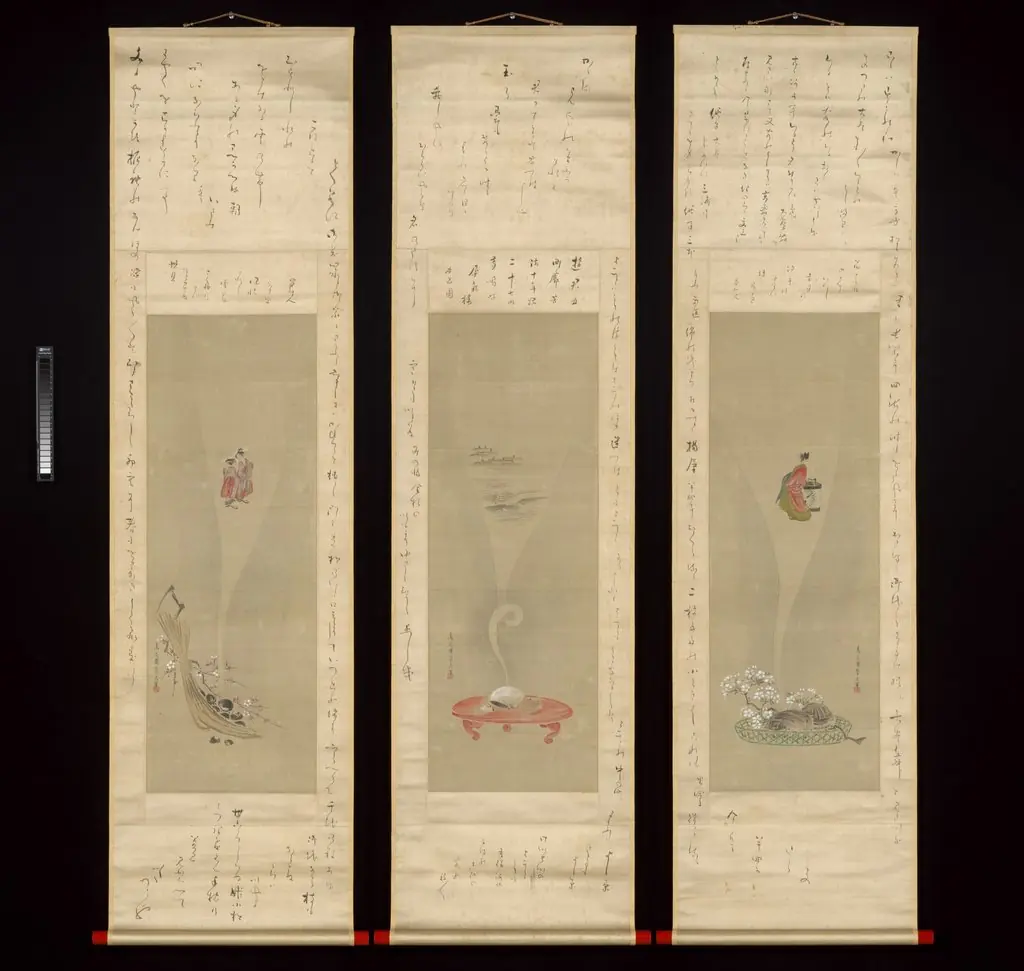 Shellfish and Apparitions of the Yoshiwara Pleasure Quarter
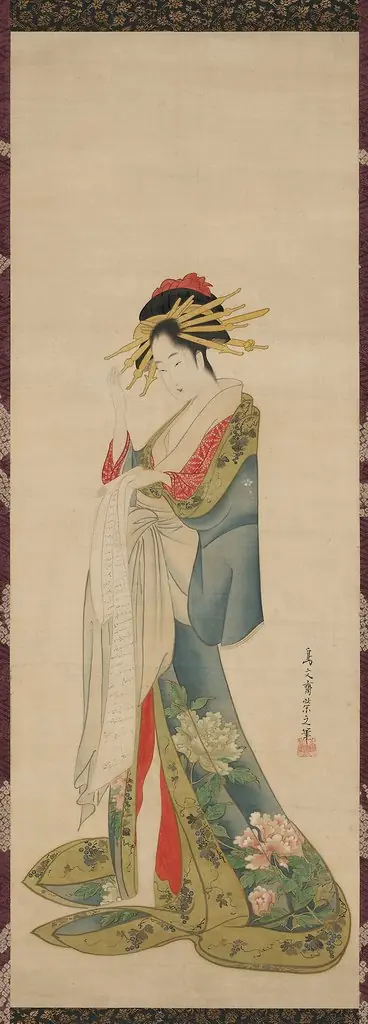 A Courtesan Reading a Letter
 Beauty Replacing Her Hairpin
 Young Woman Looking at a Pot of Pinks
 Courtesan
 Untitled
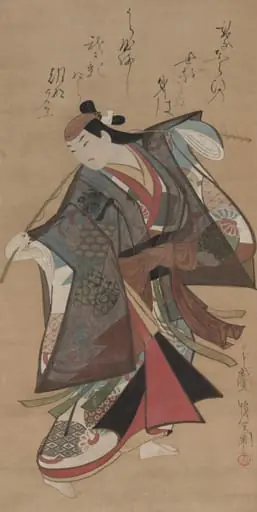 Sanjo Kantaro II in the Role of Urashima Taro
 Untitled
 Untitled
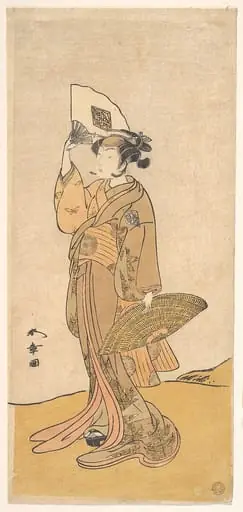 初代中村松江|Kabuki Actor Nakamura Matsue
 Young Man Playing Football
 蹄斎北馬筆 三味線持つ美人図|Female Entertainer with Shamisen
 Chinese Beauty
 鳥文斎栄之画 「風流略六哥仙 其の二」小野小町|Ono no Komachi: Number Two (Sono ni), from the series Stylish Parodies of the Six Poetic Immortals (Fūryū yatsushi rokkasen)
 三俳優隅田川船遊び|Sumida River Holiday