Artwork
Young Woman Looking at a Pot of Pinks
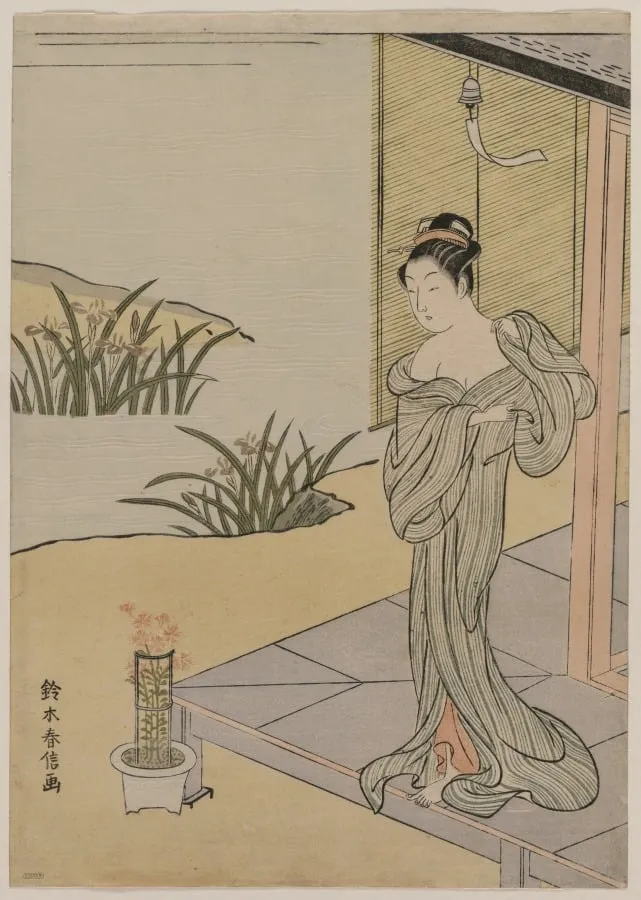
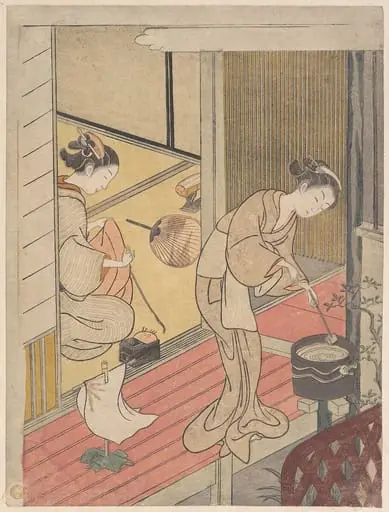
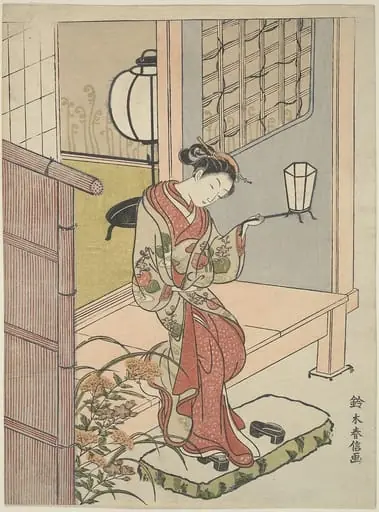
Young Woman Looking at a Pot of Pinks is a print by the Romanticist artist Suzuki Harunobu. It dates from 1767 and is held in the collection of the Cleveland Museum of Art. The print depicts a young woman stepping onto a veranda after bathing, pausing to admire a pot of pink blossoms.
About this work
A young woman steps onto a veranda after a bath to look at a pot of pinks.
The scene is peaceful, with a warm breeze stirring the poem-strip tied to the windbell above her. The print is part of a set of four flowers, each representing a season.
This painting is similar to works by other Japanese artists, and to learn more, look up the artist Suzuki Harunobu (Japanese, 1724–1770).
Overview
The print depicts a young woman stepping onto a veranda after bathing, pausing to admire a pot of pink blossoms. A gentle breeze lifts a poem‑strip attached to a windbell above her, while irises float in a pool behind her. The composition forms part of a quartet of seasonal flower images, this one representing summer.
Subject & Meaning
The figure’s quiet contemplation of the pinks conveys a moment of domestic leisure, a theme common in Edo‑period genre scenes. The inclusion of the poem‑strip and windbell suggests an appreciation of poetry and seasonal change, linking the visual motif of the flowers to the broader cultural practice of seasonal observation.
Technique & Style
Created by Suzuki Harunobu, the work employs the nishiki‑e method, in which each hue is applied from a separate carved woodblock. This multi‑block process yields a richly colored surface reminiscent of woven brocade. Textural effects, such as the raised impression on the stream’s ripples and flower petals, were achieved using unpigmented blocks to emboss the paper during printing.
History & Provenance
Harunobu (1724–1770) was a leading figure in the development of colour woodcut printing in Japan. The print belongs to a series of four seasonal flower designs, each illustrating a different time of year. The series was widely circulated in the mid‑18th century, reflecting the era’s taste for elegant, everyday subjects rendered in sophisticated colour.
Context
During the Edo period, the rise of the merchant class created a market for affordable yet refined artworks. Harunobu’s prints, with their delicate lines and subtle palette, catered to this audience, offering a glimpse into refined domestic life while showcasing technical innovations that elevated woodblock printing to a fine‑art medium.
Artist & collection