Artwork
Untitled
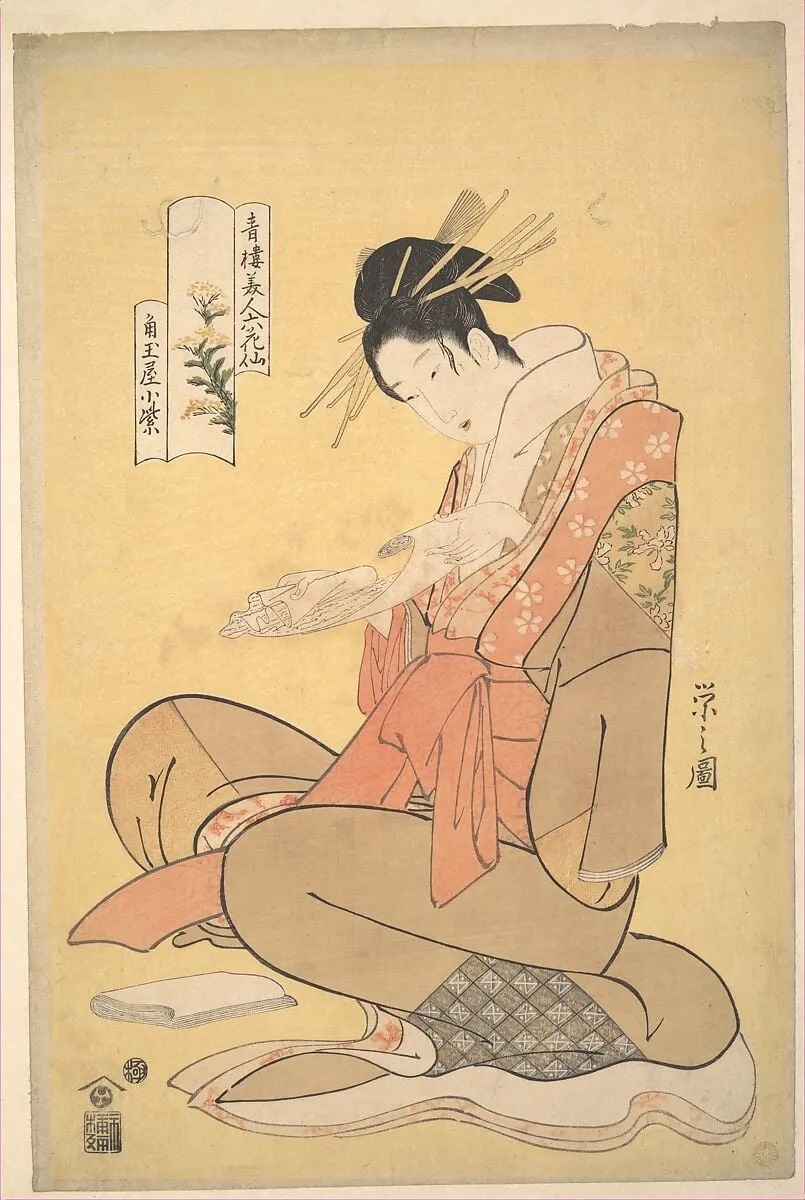
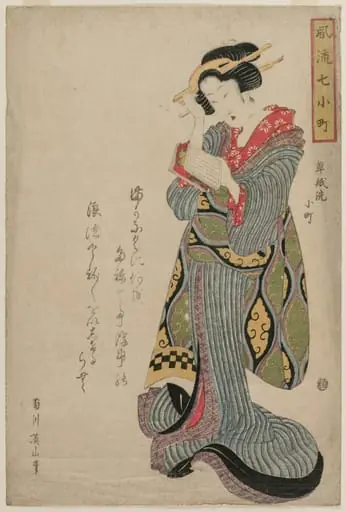
Untitled is an ink print by the Romanticist artist Chôbunsai Eishi. It dates from 1794 and is held in the collection of the Metropolitan Museum of Art.
About this work
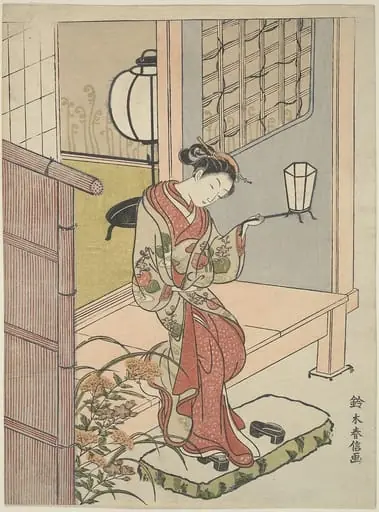
The woman's kimono has a floral pattern, and she is sitting on a mat with a patterned cloth underneath her.
This painting shows a woman sitting on the floor, wearing a kimono. She has a hairpin in her hair and is holding something in her hands. The background is a light yellow color.
The woman's kimono has a floral pattern, and she is sitting on a mat with a patterned cloth underneath her. There are some Japanese characters written on the painting, but they are not easy to read.
The painting is a woodblock print, ink, and color on paper, created by Chôbunsai Eishi around 1794. It is held at The Metropolitan Museum of Art. If you want to learn more about this style of painting, you might want to look up Romanticism.
Overview
This untitled woodblock print, executed in ink and color on paper, represents a key example of Chōbunsai Eishi’s early work in the ukiyo-e genre. Created around 1794, it depicts a seated woman in domestic attire, rendered with delicate linework and muted tonalities. The composition reflects the artist’s transition from a samurai background to a career focused on figural representation within Edo-period printmaking traditions.
Subject & Meaning
The print portrays a woman seated on a floor mat, her posture suggesting quiet engagement with an object held in her hands. Her elaborate kimono, adorned with floral motifs, and the ornamental hairpin indicate a subject drawn from the urban leisure class. The subdued background and intimate setting evoke themes of private refinement, characteristic of bijin-ga (pictures of beautiful women) in late 18th-century Japanese art.
Technique & Style
Eishi’s print employs the traditional woodblock technique, combining precise ink outlines with soft color washes to achieve a harmonious balance of detail and atmosphere. The layered patterns of the kimono and floor covering demonstrate mastery of textile representation, while the delicate gradations of the background enhance the figure’s presence. The work aligns with the graceful, understated aesthetic favored in early ukiyo-e portraiture.
History & Provenance
Produced around 1794, this print originates from Eishi’s early period, shortly after he abandoned his samurai status to pursue art. Once part of private collections, it entered the holdings of The Metropolitan Museum of Art, where it remains cataloged as an example of Edo-period woodblock printing. The inscription, though partially legible, offers limited insight into its original commission or circulation.
Context
The print emerges from a cultural moment when ukiyo-e artists increasingly depicted the elegance of urban life, particularly women of the merchant and samurai classes. Eishi’s background as a former shogunal retainer lent his work an air of sophistication, distinguishing it from the more flamboyant styles of contemporaries. This piece reflects the taste for restrained beauty that defined bijin-ga during the Kansei era.
Legacy
While not among Eishi’s most widely reproduced works, this print contributes to the broader understanding of his stylistic development and the evolution of bijin-ga. Its inclusion in a major museum collection underscores its role in preserving the technical and aesthetic conventions of late 18th-century Japanese printmaking. Scholars often reference such pieces to illustrate the interplay between samurai culture and the rise of urban art forms.
Artist & collection

Artist
Chōbunsai Eishi (鳥文斎 栄之; 1756–1829) was a Japanese ukiyo-e artist. His last name was Hosoda (細田). His first name was Tokitomi (時富). His common name was Taminosuke (民之丞) and later Yasaburo (弥三郎). Pupil of Kano Eisen'in…

 Three Gods of Good Fortune Visit the Yoshiwara; or “Scenes of Pleasure at the Height of Spring”
 蜀山人(大田 南畝)賛 雪・月・花図 |Snow, Moon, and Cherry Blossoms (Yoshiwara in Three Seasons)
 Untitled
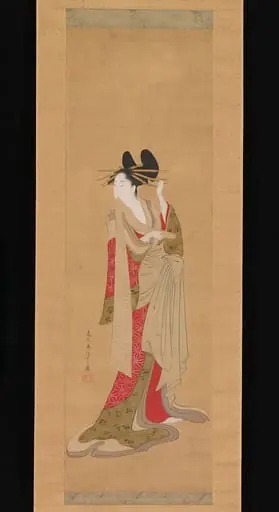 Untitled
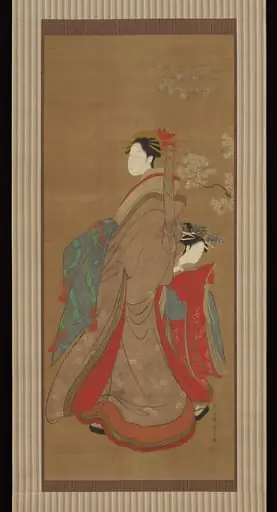 Untitled
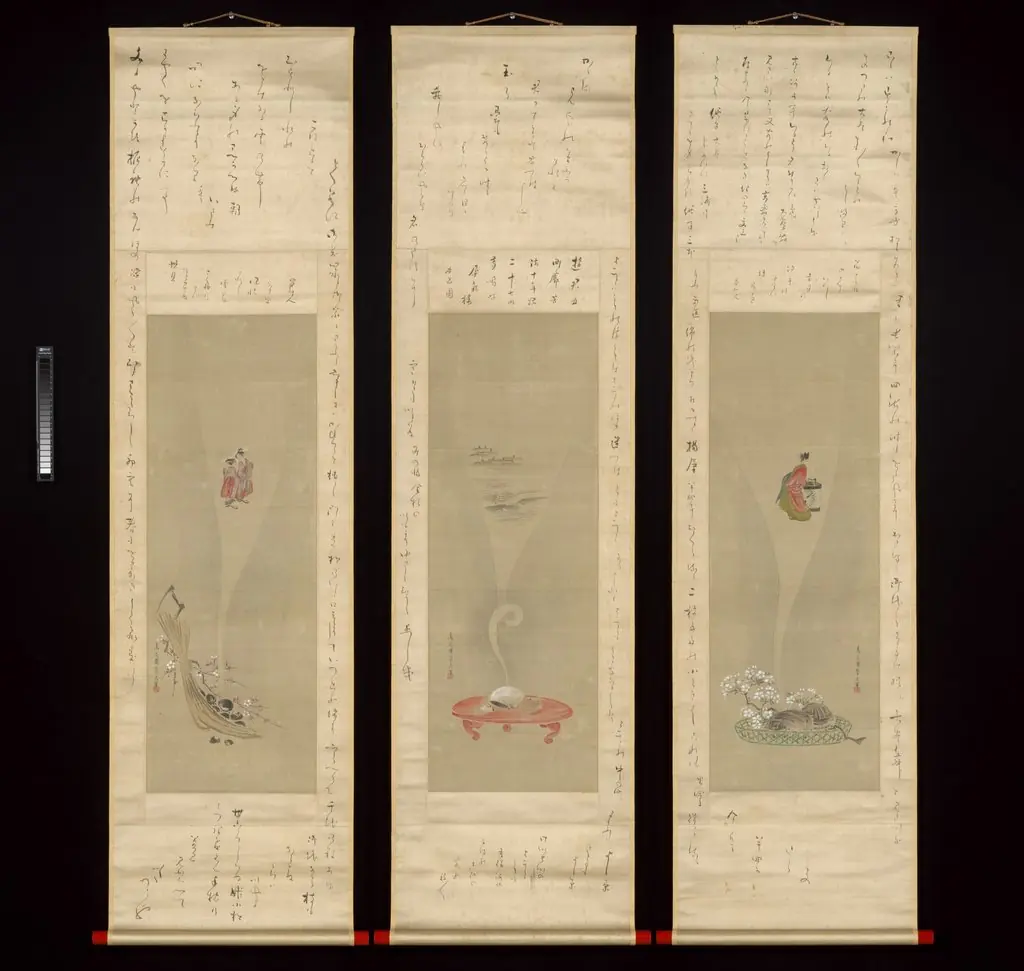 Shellfish and Apparitions of the Yoshiwara Pleasure Quarter
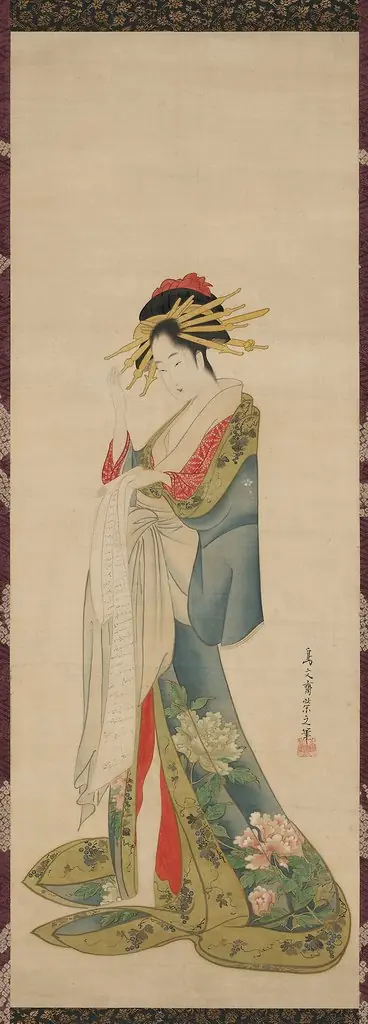 A Courtesan Reading a Letter
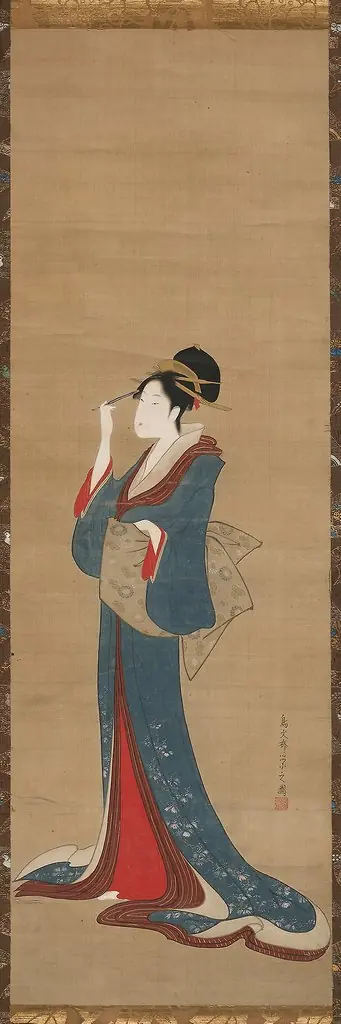 Beauty Replacing Her Hairpin
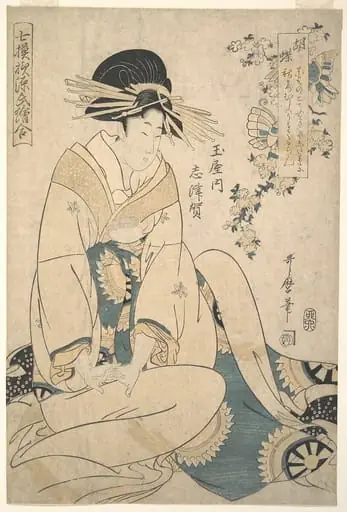 玉屋内 志津賀|A Courtesan
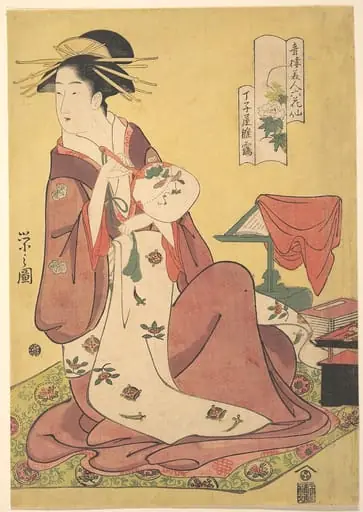 鳥文斎栄之画 「青楼美人六花仙 丁子屋雛鶴鸖」|The Courtesan Hinazuru of the Chōjiya Brothel (Chōjiya Hinazuru), from the series Beauties of the Pleasure Quarters as Six Floral Immortals (Seirō bijin rokkasen)
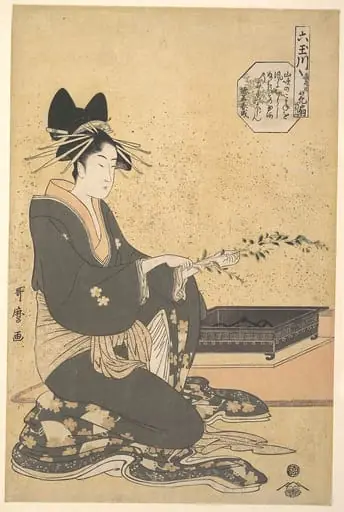 喜多川歌麿画 六玉川 扇屋内 花扇 扇屋内花扇|The Oiran Hanaogi of Ogiya, from the series “Six Jewel Rivers” (Mutamagawa)
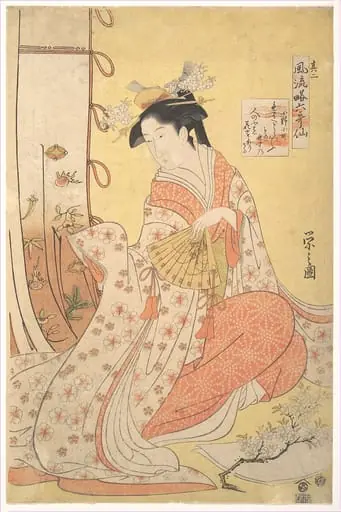 鳥文斎栄之画 「風流略六哥仙 其の二」小野小町|Ono no Komachi: Number Two (Sono ni), from the series Stylish Parodies of the Six Poetic Immortals (Fūryū yatsushi rokkasen)
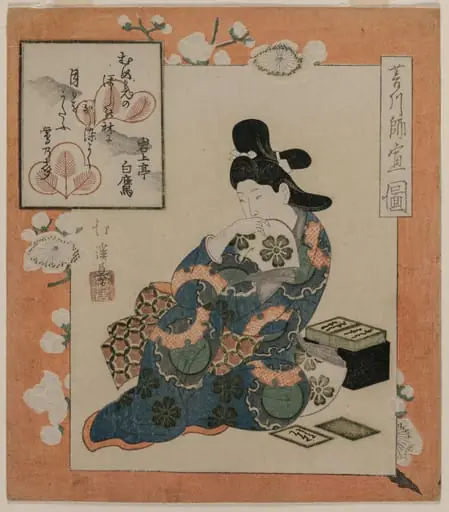 A Picture by Hishikawa Moronobu: Woman with a Set of Poem Cards
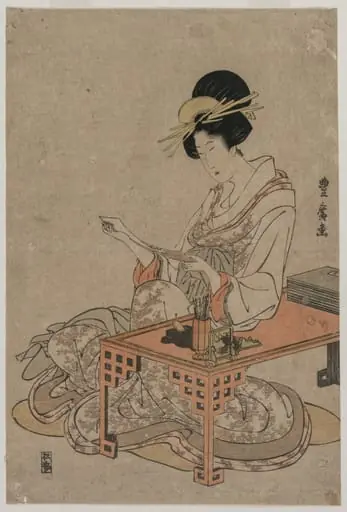 Courtesan Seated at a Writing Table
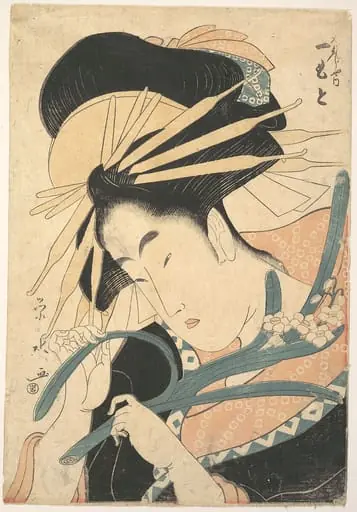 Untitled
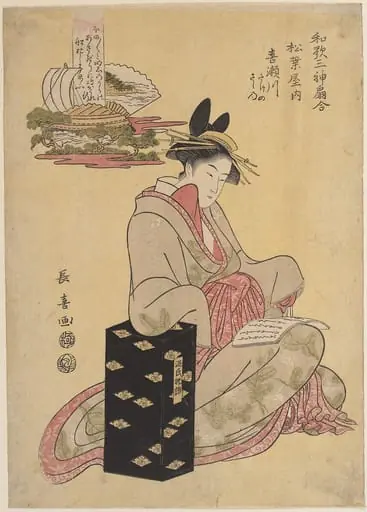
 Untitled
 Untitled
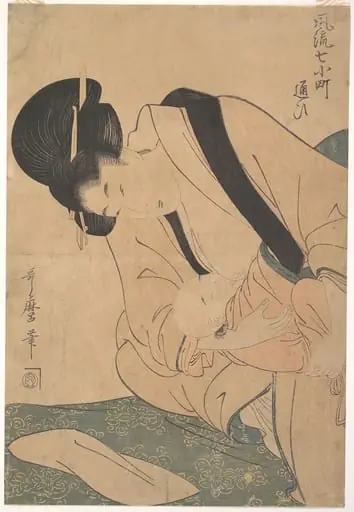 風流七小町 通ひ|Young MotHer Nursing Her Baby
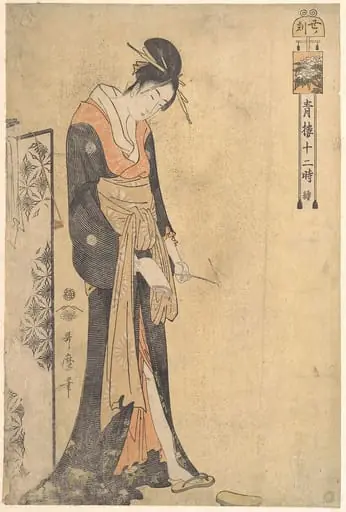 Ushi no Koku|青楼十二時 続 丑の刻|The Hour of the Ox (1 A.M.–3 A.M.)
 Komachi Washes the Book (from the series Seven Elegant Episodes from the Life of the Poetess Ono no Komachi)