Artwork
A Man with a Turban Leading a Woman Wearing Peacock Feathers
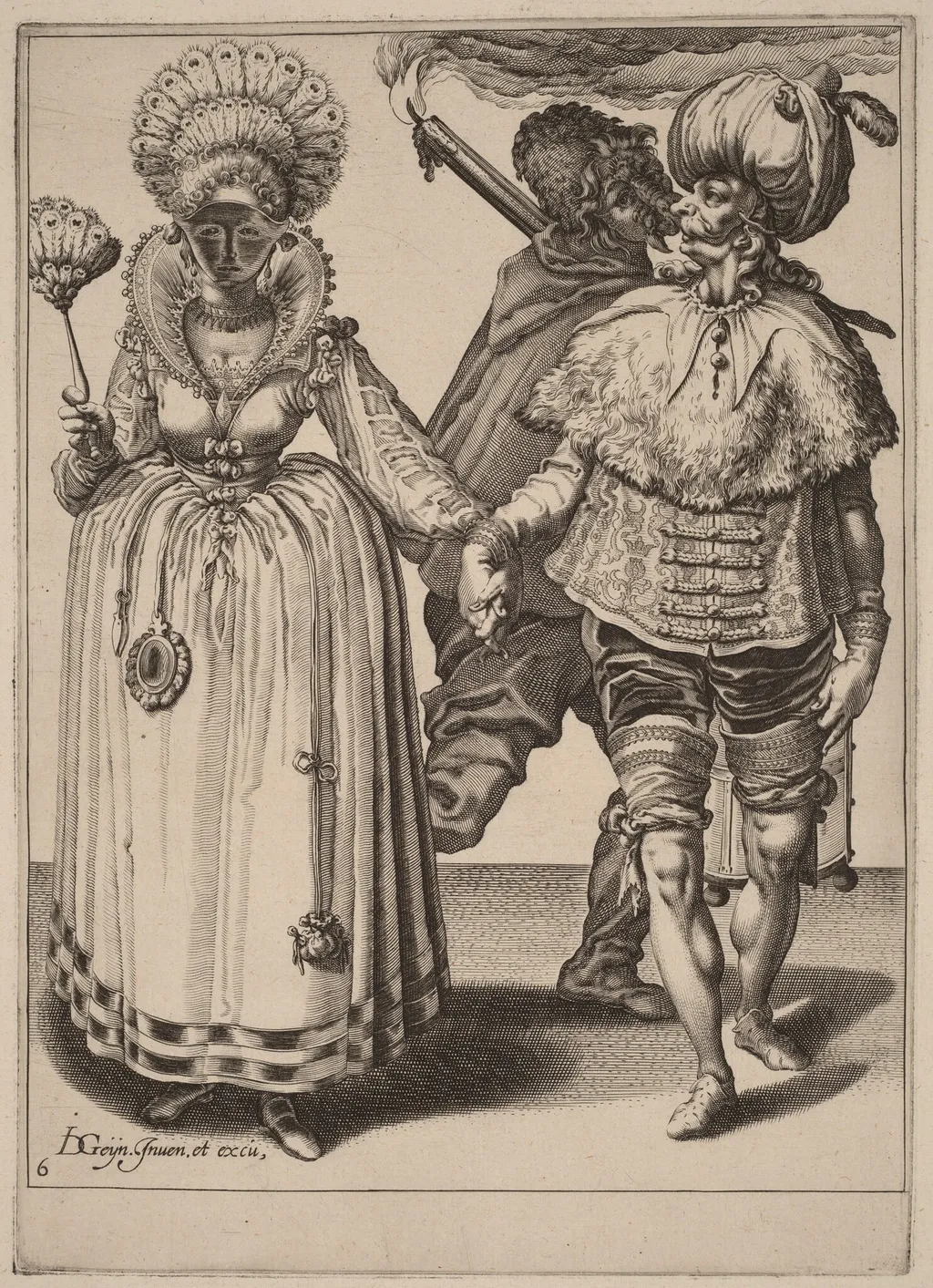
A Man with a Turban Leading a Woman Wearing Peacock Feathers is an ink print by the Renaissance artist Zacharias Dolendo. It dates from 1596 and is held in the collection of the National Gallery of Art.
About this work
Overview
A Man with a Turban Leading a Woman Wearing Peacock Feathers is a 1596 engraving on laid paper by Zacharias Dolendo, a Dutch engraver known for his precise technique.
Subject & Meaning
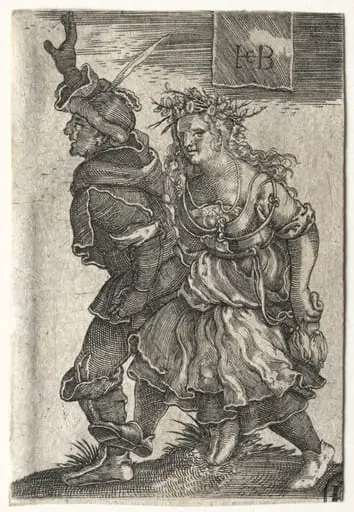
The engraving portrays a turbaned man, dressed in a luxurious, fur-trimmed outfit and armed with a sword, leading a woman. She wears a peacock feather headdress, a long dress, and holds a fan, suggesting a scene of courtly or ceremonial nature, though the specific narrative or subjects remain unidentified.
Technique & Style
Dolendo's work showcases intricate lines, textures, and cross-hatching, achieving depth and realism. The detailed rendering of fabrics, feathers, and accessories reflects the Renaissance emphasis on realism and the artist's skill in capturing three-dimensionality on a two-dimensional medium.
History & Provenance
Created in 1596 by Zacharias Dolendo, who trained under Jacob De Ghein. Dolendo's works, including this piece, are identifiable by his cipher. His career was marked by a reputation for skill surpassing that of his brother, Bartholomeus.
Context
This engraving is characteristic of late 16th-century Dutch Renaissance art, emphasizing detail and realism. It aligns with the period's interest in portraying luxury, status, and potentially, mythological or allegorical themes, though the specific context of this scene is not clearly defined.
Legacy
While specific lasting impacts or direct influences of *A Man with a Turban Leading a Woman Wearing Peacock Feathers* are not widely documented, it contributes to the broader appreciation of Zacharias Dolendo's contribution to Dutch Renaissance printmaking and the evolution of engraving techniques during this period.
Artist & collection
Artist
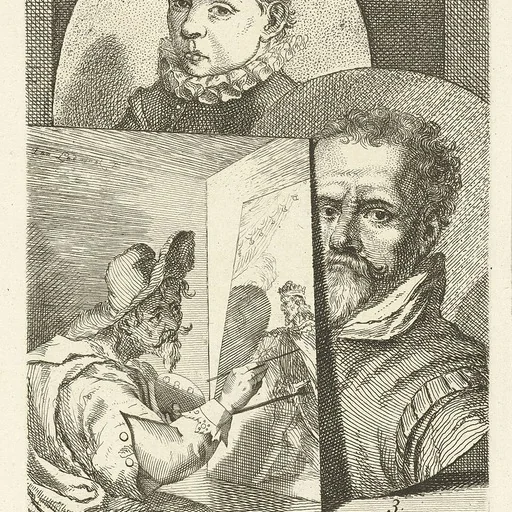
Zacharias Dolendo (1561–1601) was a Dutch engraver. He was the brother of Bartholomeus Dolendo, whom he surpassed both in style and in correctness. He was born at Leyden in 1561, and is said by Huber to have been a…

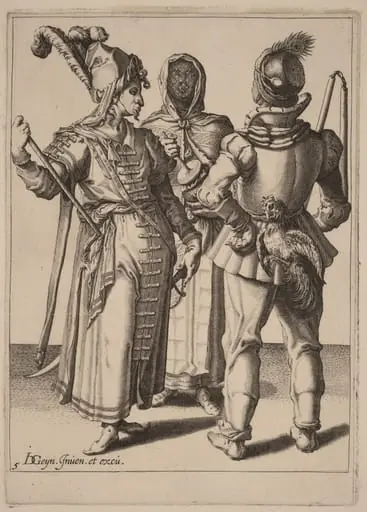 A Grandee, a Peasant, and a Veiled Woman
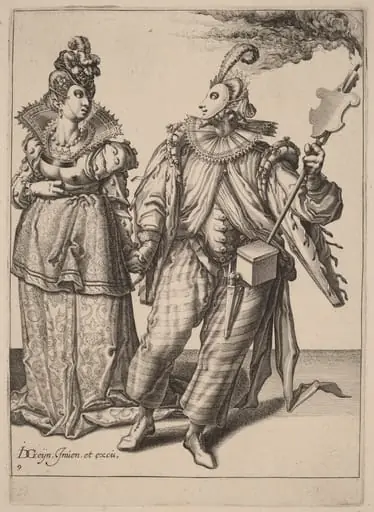 A Woman Led by a Player Holding a Torch
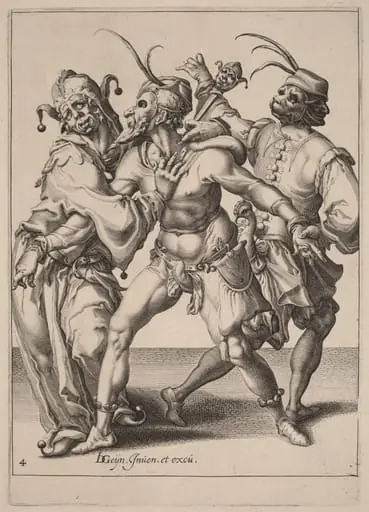 Three Dancing Mummers, Including a Jester
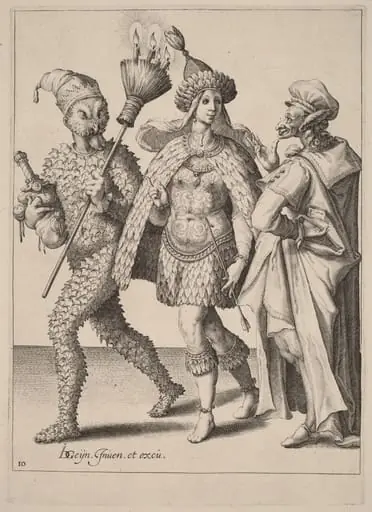 An Old Mummer Addressing a Couple Dressed in Feathers
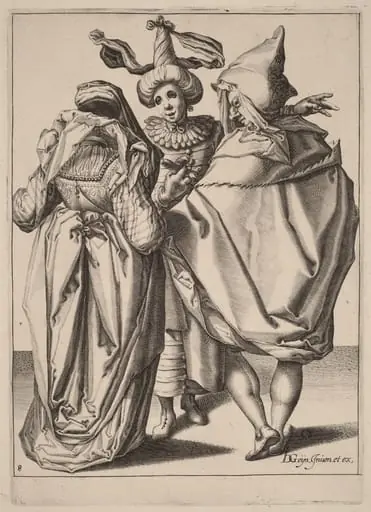 A Couple Addressing a Gesticulating Young Man
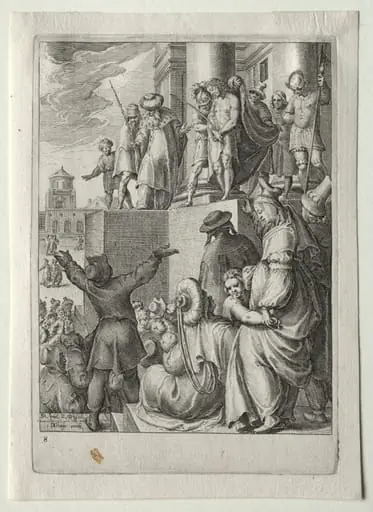 Passion Set: Ecce Homo
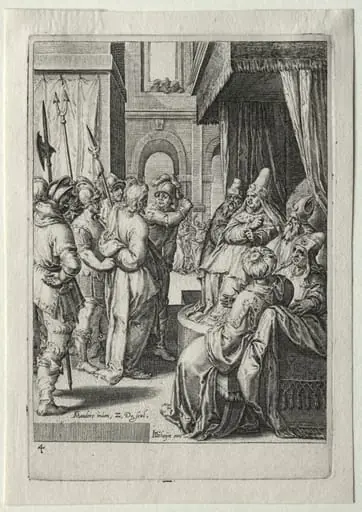 Passion Set: Christ before Herod
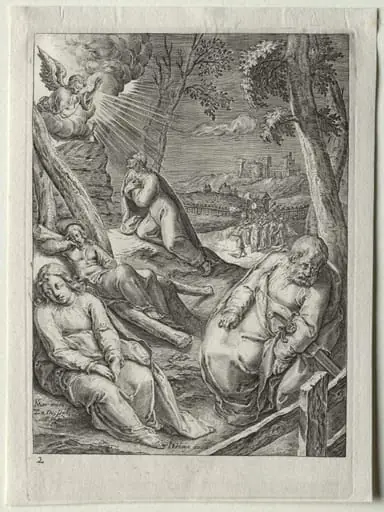 Passion Set: Christ on the Mount of Olives