Artwork
Ce qui est bon a prendre est bon a garder
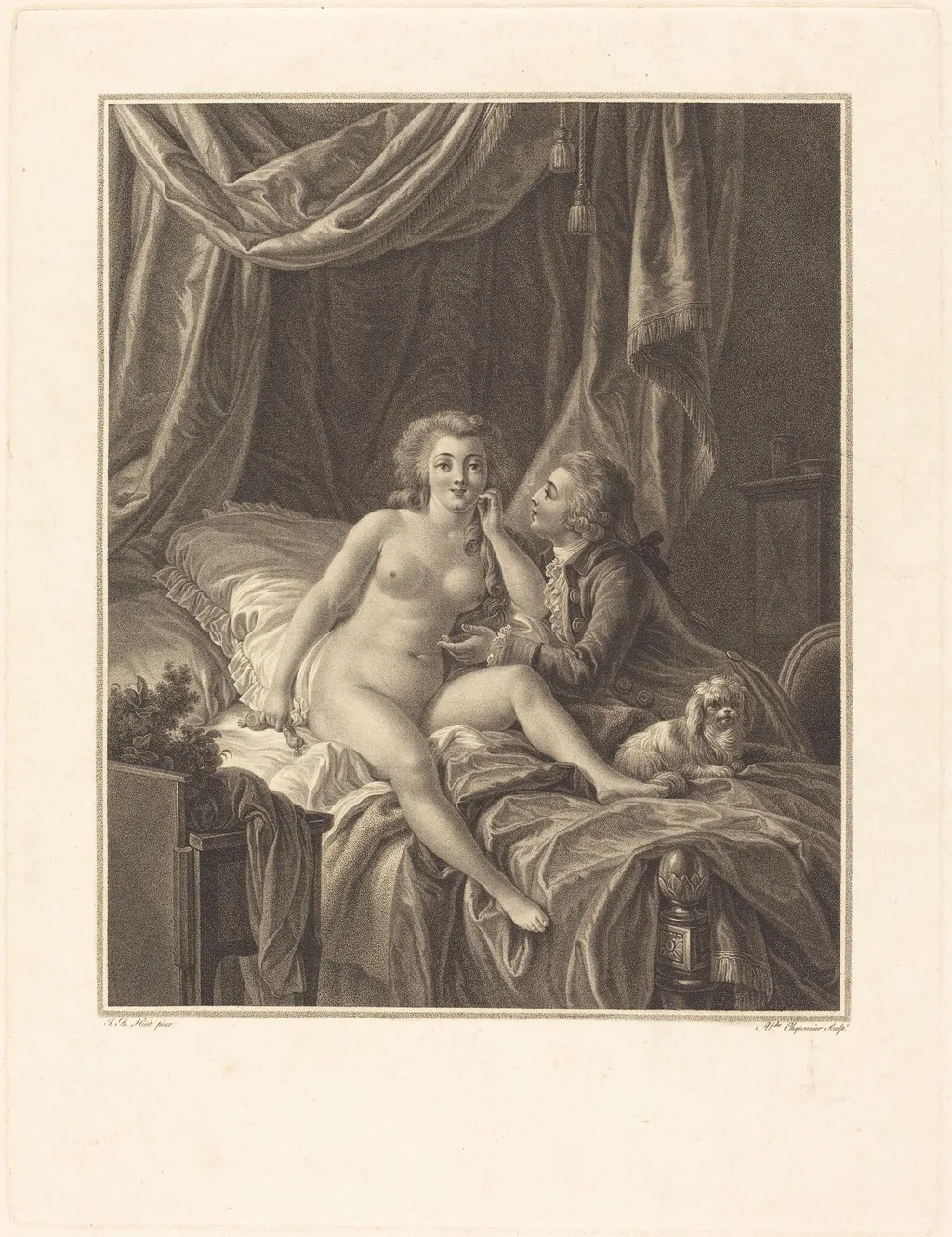
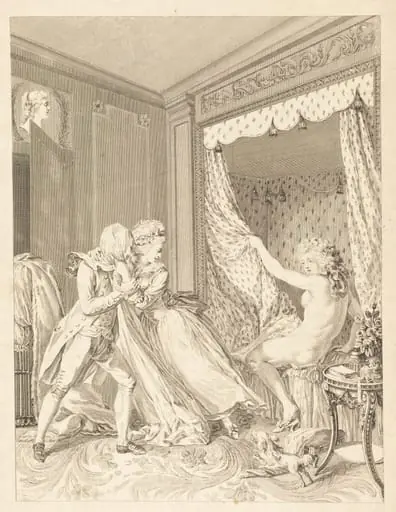
Ce qui est bon a prendre est bon a garder is an ink print by the Romanticist artist Alexandre Chaponnier. It dates from 1780 and is held in the collection of the National Gallery of Art.
About this work
Overview
The work’s quiet tension and subtle detail reflect the refined yet ambiguous tone characteristic of late 18th-century French graphic art.
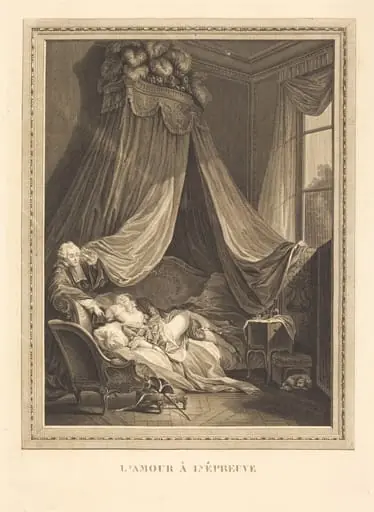
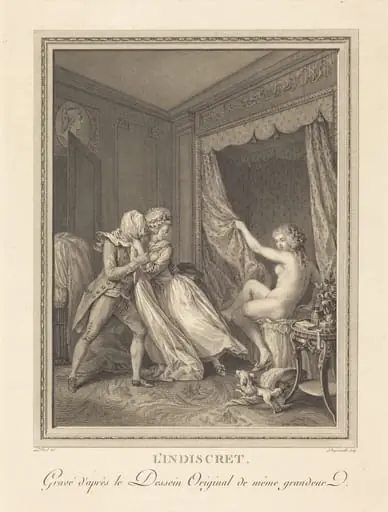
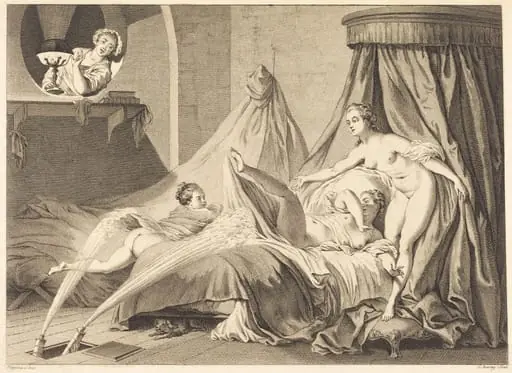
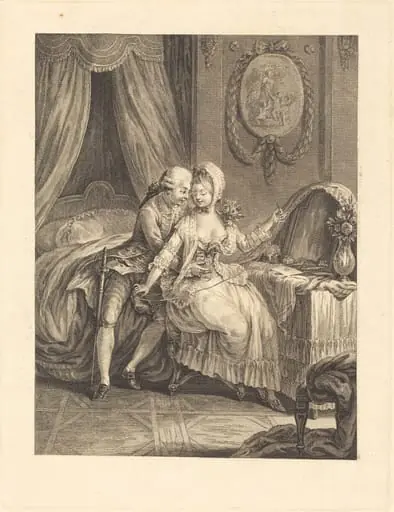
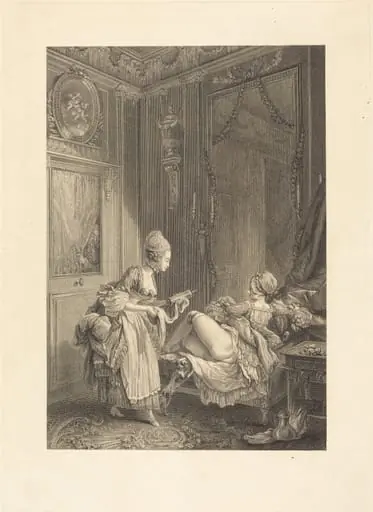
Created in 1780 by Alexandre Chaponnier, this stipple engraving is a black-and-white print that captures an intimate domestic moment. The composition centers on a reclining nude woman, partially draped, beside a formally dressed man holding a birdcage. A dog curls at her feet, while rich curtains enclose the space. The work’s quiet tension and subtle detail reflect the refined yet ambiguous tone characteristic of late 18th-century French graphic art.
Subject & Meaning
The title, translating to 'What is good to take is good to keep,' suggests a moral or satirical commentary on possession and desire. The woman’s relaxed posture and the man’s detached gaze imply a transactional dynamic, while the caged bird may symbolize captured freedom or fleeting pleasure. The scene avoids overt eroticism, instead inviting interpretation through ambiguity—offering no clear judgment, only observation.
Technique & Style
Chaponnier employed stipple engraving, using fine dots and delicate lines to model form and texture. This method produces a soft, atmospheric quality, contrasting with the sharper outlines typical of line engraving. The shadows are built gradually, lending the figures a tactile presence without harsh definition. The effect is intimate and sketchlike, enhancing the scene’s quiet, almost candid mood.
History & Provenance
The print was produced in Paris during a period when erotic and allegorical engravings circulated widely among private collectors. Though attributed to Chaponnier, little is documented about his life or the original commission. The work likely appeared in a series of moralizing or satirical prints, common in the decades before the French Revolution, when visual culture increasingly questioned social norms.
Context
In late 18th-century France, prints like this bridged elite and popular tastes, often blending classical allusion with contemporary social critique. The setting—luxurious yet confined—echoes themes in Rococo painting, while the subject’s passivity and the man’s aloofness reflect shifting gender dynamics. Such images were not public displays but private objects, meant for contemplation and coded conversation among educated viewers.
Legacy
Chaponnier’s print survives as an example of how stipple engraving could convey psychological nuance with minimal means. Though not widely exhibited today, it remains a reference point in studies of pre-revolutionary visual satire. Its quiet ambiguity distinguishes it from more overtly provocative works, offering insight into the subtleties of desire and ownership in Enlightenment-era France.
Artist & collection