Artwork
Temple of Segesta in Sicily
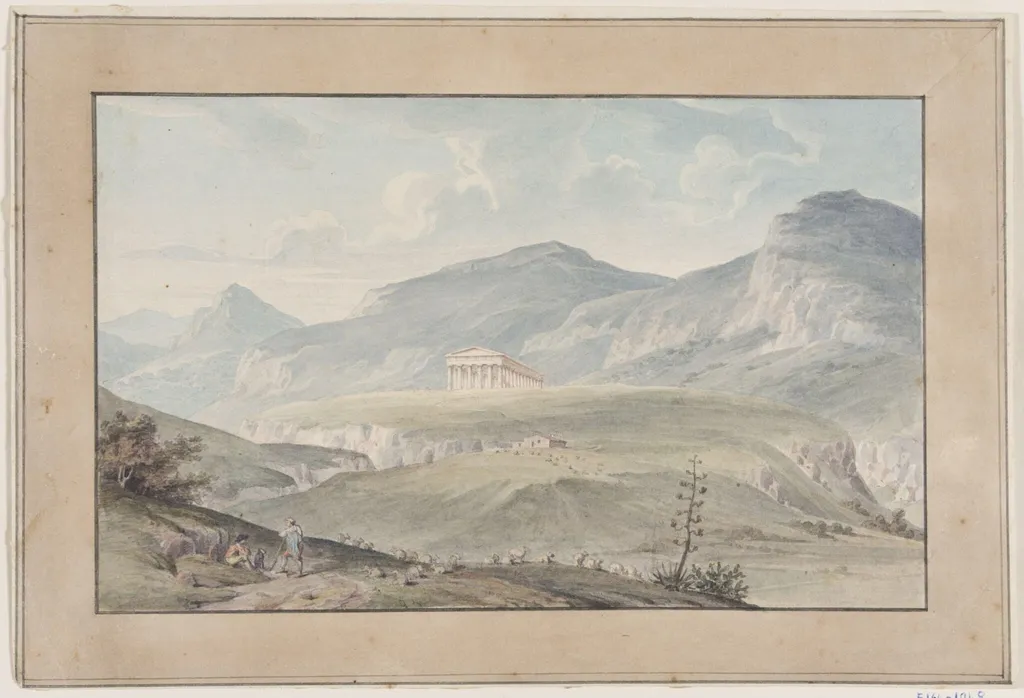
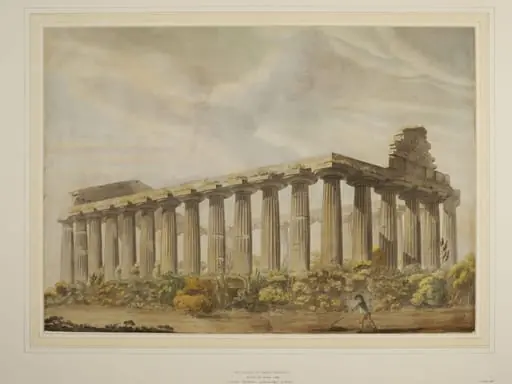
Temple of Segesta in Sicily is a drawing by the Romanticist artist Charles Cockerell. It dates from 1812 and is held in the collection of the Victoria and Albert Museum.
About this work
Overview
Charles Cockerell’s 1812 watercolour portrays the ancient Temple of Segesta set within a tranquil Sicilian landscape. The composition balances the distant ruin with a gently rolling valley, under a light sky dotted with soft clouds. A narrow path winds through the foreground, where a few figures and a solitary tree punctuate the scene, inviting the viewer into a quiet, observational moment.
Subject & Meaning
The drawing captures the Temple of Segesta as an emblem of classical antiquity, positioned within its natural surroundings to emphasize the dialogue between built heritage and the landscape. By including travelers on the path, Cockerell hints at the site’s continued relevance as a destination for contemplation and study, reflecting early‑19th‑century interest in archaeological tourism.
Technique & Style
Executed in watercolour with delicate pencil shading, the work employs light, transparent washes to render atmospheric sky and distant hills. Ink on the reverse records the title and a dedication, indicating a personal or patronal purpose. Subtle pencil strokes define shadow and depth, while the overall palette remains muted, reinforcing the serene mood of the scene.
History & Provenance
Created in 1812, the drawing bears an ink inscription on its back that names the subject and includes a dedication, suggesting it was intended for a specific recipient or collection. The piece now resides in the Victoria and Albert Museum, where it forms part of the institution’s holdings of early 19th‑century travel and architectural studies.
Own this work as a print
Artist & collection
Artist
This British architect liked to travel light—sketchbook in hand, not a committee of clients.

 Between Lyme and Charmouth
 Interior of the Theatre in the Region of Cacamo
 Snowdon and the Vale of Llanberis
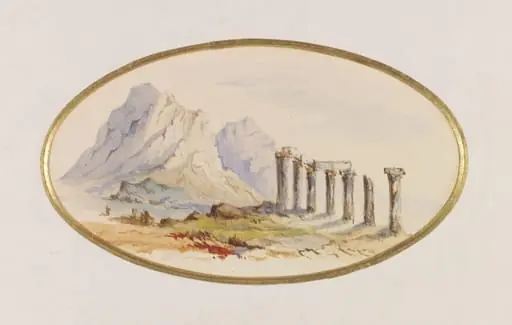 Corinth -
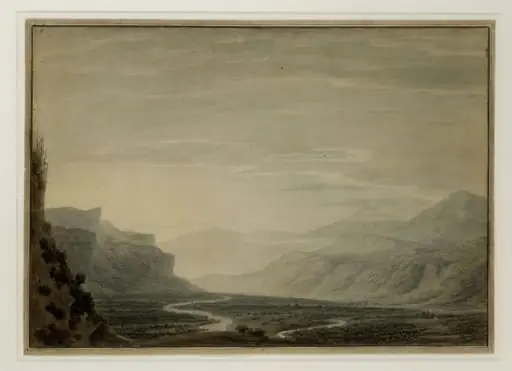 Valley with winding streams, a range of mountains in the background, and a village on the left
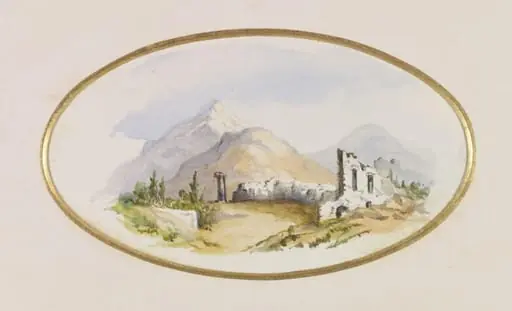 Philadelphia -
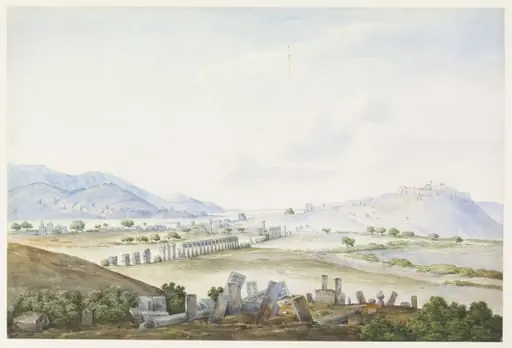 Ephesus
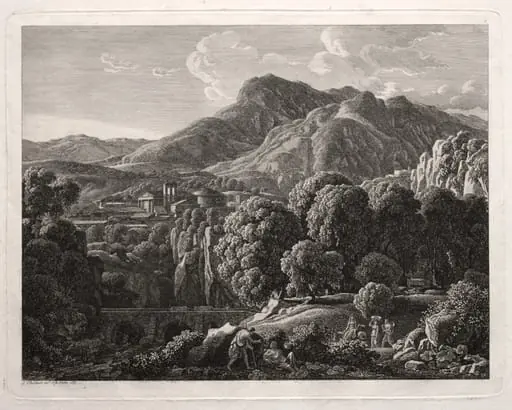 Heroic Landscape: Landscape with Town and River
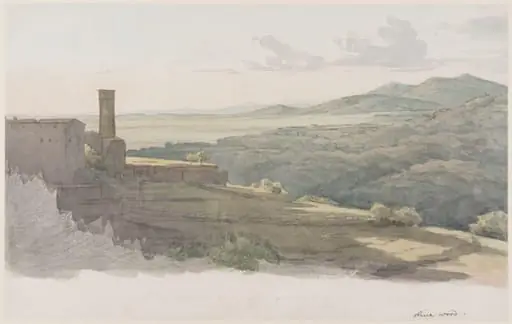 Villa of Maecenas at Tivoli
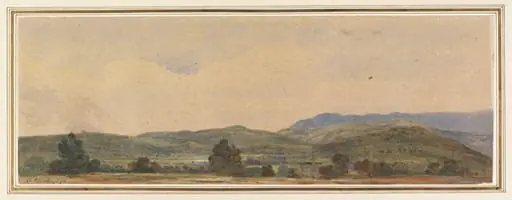 At Azizieh, Lydia
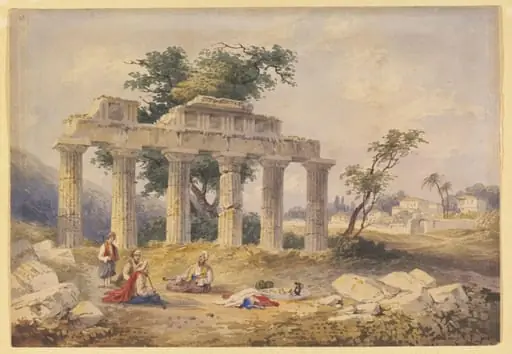 Temple at Boudroun, Halicarnassus
 The Temple of Neptune, Paestum