Artwork
Ephesus
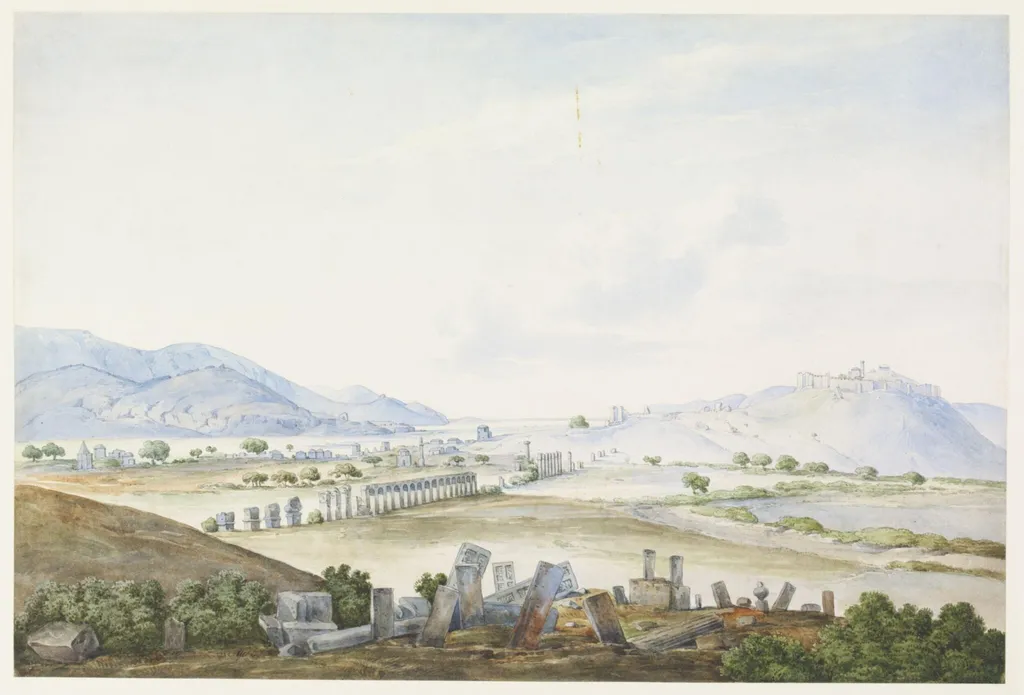
Ephesus is a watercolor work on paper by the Romanticist artist Antonio or Anton Schranz. It dates from 1836 and is held in the collection of the Victoria and Albert Museum. This watercolour, executed between late 1836 and late 1837, portrays a sunlit landscape of ancient ruins set against a gently rolling plain.
About this work
Overview
This watercolour, executed between late 1836 and late 1837, portrays a sunlit landscape of ancient ruins set against a gently rolling plain. The composition balances foreground fragments of broken columns with a distant row of arches that recede toward a hill crowned by a small building complex, all rendered in a muted palette that emphasizes calm over decay.
Subject & Meaning
The scene captures a tranquil moment among the remnants of a once‑grand architecture, suggesting a contemplative appreciation of history rather than a narrative of ruin. The softened tones and serene sky convey a sense of timelessness, inviting the viewer to consider the continuity of the landscape despite the passage of centuries.
Technique & Style
Executed in watercolour, the artist employs delicate washes of pale blues, greens, and earth tones to model light and atmosphere. Fine brushwork delineates the broken stone elements, while broader, translucent strokes suggest distant hills and sky, creating a layered depth that is characteristic of early‑19th‑century travel sketches.
History & Provenance
The work is attributed to Antonio (or Anton) Schranz Jr., who traveled from Malta to Turkey in 1836 and returned in 1839, as documented by customs records. It forms part of a series of similarly inscribed cards produced during that journey, with comparable pieces held by the Benaki Museum in Athens and a private collection in Malta. In June 1975, Albany Gally acquired the watercolour for £25.
Context
Created during a period when European artists frequently documented Mediterranean antiquities, the drawing reflects the era’s interest in classical heritage and the burgeoning practice of sketching on location. The inclusion of architectural fragments aligns with contemporary scholarly pursuits to record and study ancient sites before systematic archaeological excavation began.
Artist & collection
Artist
Antonio Schranz made watercolours of Egyptian and Levantine sites in the 1830s–40s.

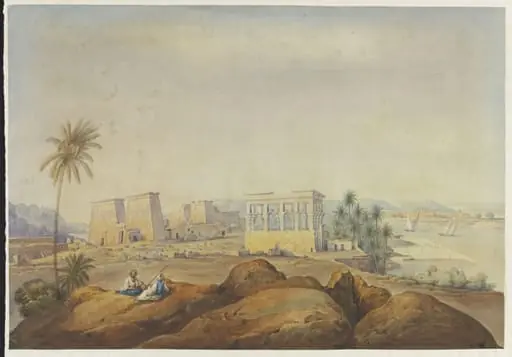 The Temple of Isis and Kiosk of Trajan on the Island of Philae
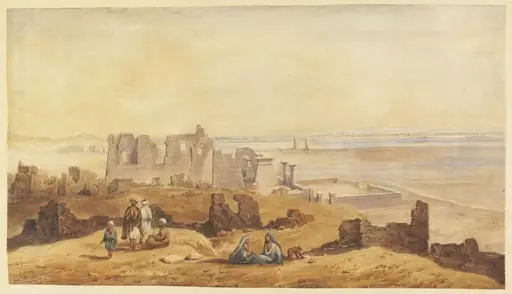 Luxor: the West Bank, with the Temple of Ramesses III at Madinat Habu; looking east towards the Nile
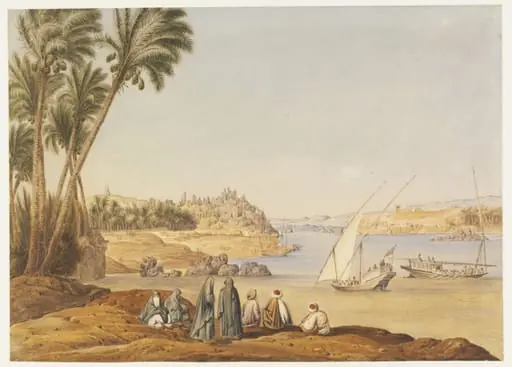 Aswan; looking south up the Nile
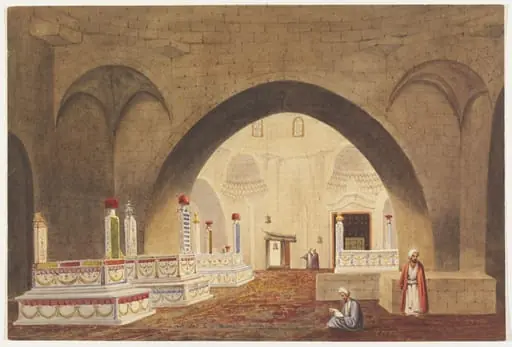 Mausoleum of Mehmet Ali and his family at Cairo
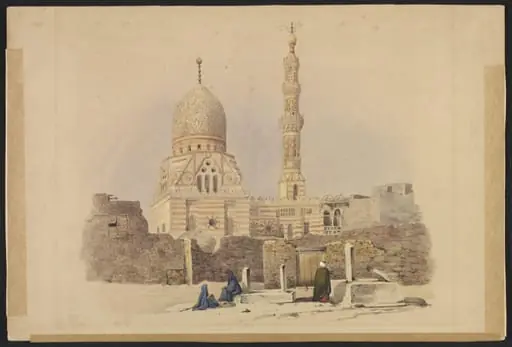 Mosk of Kaed Bey Cairo -
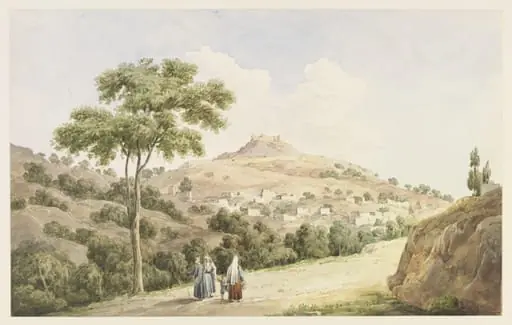 Saffed
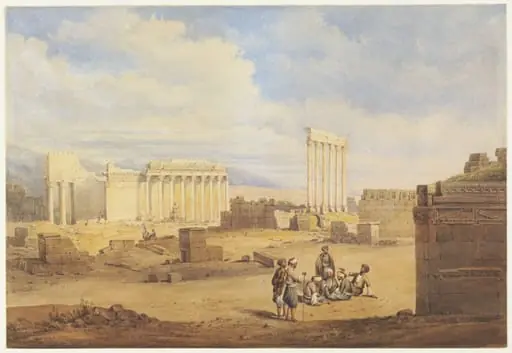 Baalbek
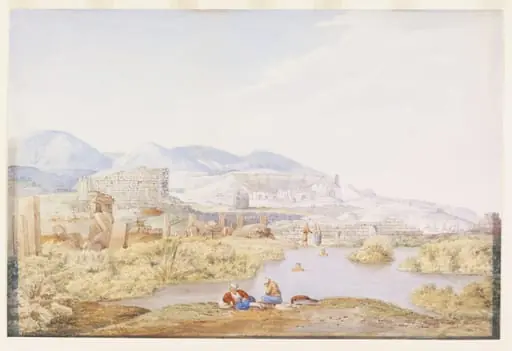 Hierapolis - Natural Hot Spring. Phrygia
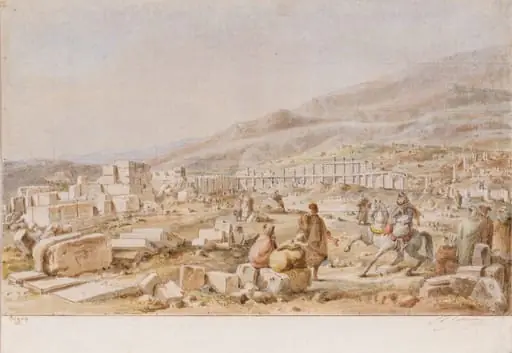 Ruine la Sigus
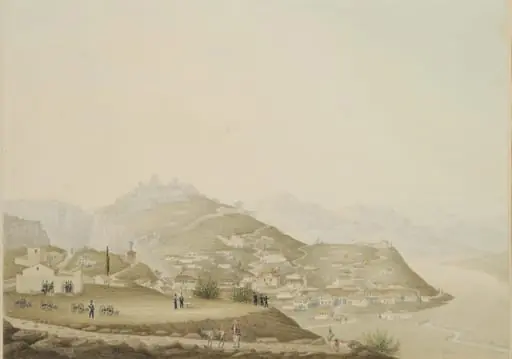 Η Λιβαδειά το 1833
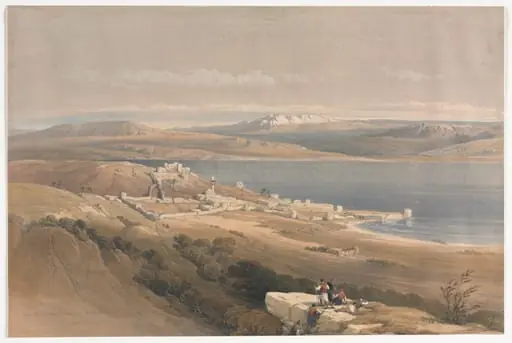 City of Tiberias on the Sea of Galilee, looking towards Hebron
![View of an Egyptian Temple. [Dendara]. 1807, by Dominique Vivant Denon](https://artifactworldgallery.com/img/dominique-vivant-denon--view-of-an-egyptian-temple-dendara-1807--69b7b6b17d97f4dc-w320.webp) View of an Egyptian Temple. [Dendara]. 1807
View of an Egyptian Temple. [Dendara]. 1807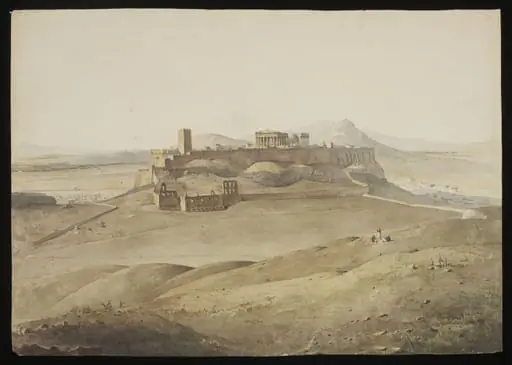 Untitled
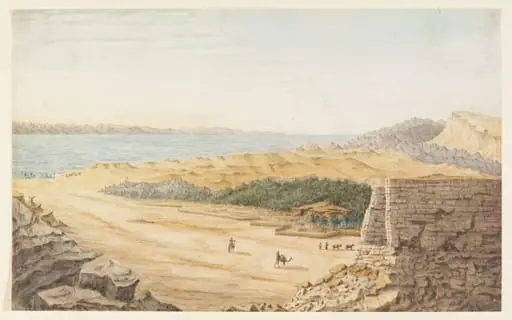 Ancient Ruins in the land of Edom above the bed of a valley and Arab Date gardens
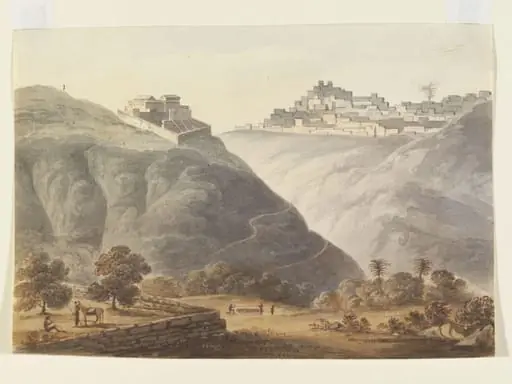 Bethlehem
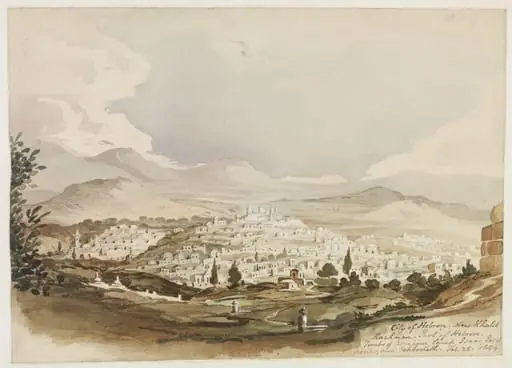 City of Hebron - Now Khalil Rachman - Pool of Hebron. Tombs of Abraham, Sarah, Isaac, Jacob, Abner, and Ishbosheth
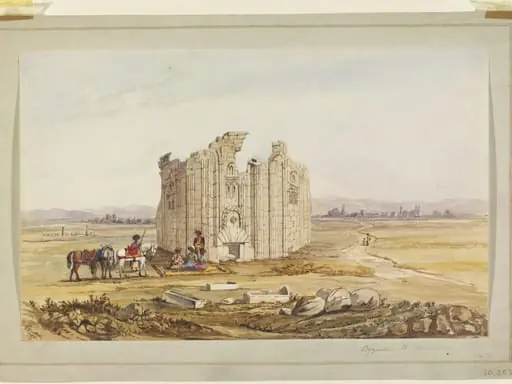 Ancient Armenian Church at Varzahan
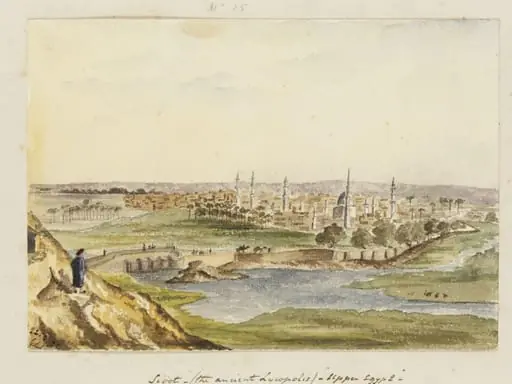 `Sioot - (the ancient Lycopolis.) - "Upper Egypt." from the Stabl-Antar Hill'
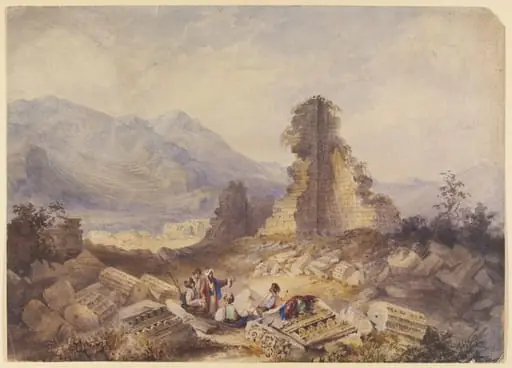 Ephesus (Ruins of the Temple of Diana)