Artwork
Interior of the Theatre in the Region of Cacamo
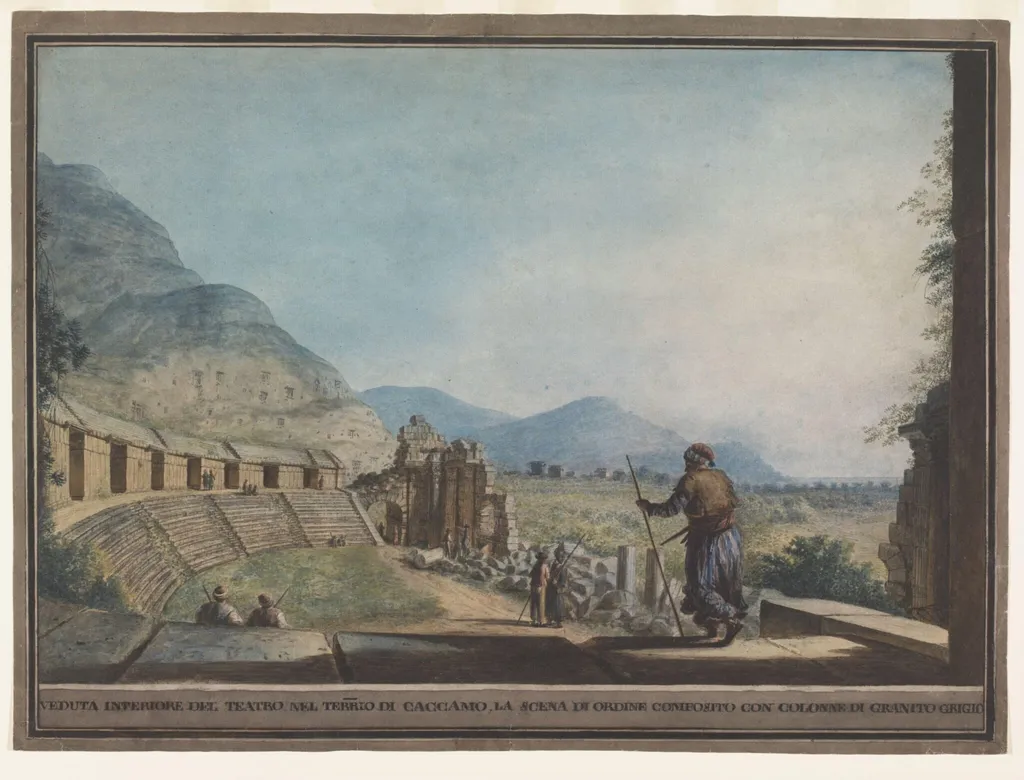
Interior of the Theatre in the Region of Cacamo is a watercolor work on paper by the Romanticist artist Luigi Mayer. It dates from 1797 and is held in the collection of the Victoria and Albert Museum.
About this work
You see a watercolor of a small, open-air theater carved into a rocky hillside, with rows of stone seats and a few people scattered around.
You see a watercolor of a small, open-air theater carved into a rocky hillside, with rows of stone seats and a few people scattered around.
Mayer painted this for an English traveler in 1797. The man standing in the front, seen from behind, isn’t really part of the scene—Mayer added him to pull you into the picture and remind you this is somewhere far from Europe. Another artist, Cassas, drew the same theater but made it look more dramatic, like a fantasy.
To see how Mayer’s version compares, look up the Victoria and Albert Museum.
Overview
The watercolor depicts an open‑air theatre hewn into a rocky slope in the Cacamo region of southwestern Turkey, showing stone seating and a few scattered figures. Executed in 1797 for an English patron, the work offers a modest, observational view of the ancient structure.
Subject & Meaning
A solitary figure is placed at the front of the composition, seen from behind. This addition is not a documentary detail but a compositional device intended to guide the viewer’s gaze inward and to underscore the exotic, non‑European setting of the scene.
Technique & Style
Rendered in watercolor, the image balances precise architectural lines with a light, atmospheric wash. The treatment is restrained compared with contemporary French‑styled depictions, favoring a straightforward, documentary approach over romantic embellishment.
History & Provenance
The picture was reproduced in the Society of Dilettanti’s *Antiquities of Ionia* (Part 2, 1797, plate LVII) and later included in Mayer’s *Views in the Ottoman Empire* (1803, plate 5). It was created for an English traveler and later entered collections that documented Ottoman antiquities.
Context
Cacamo, the Italian term for the coastal stretch between Myra and Patara, contains numerous ancient ruins. The theatre illustrated here is one of several classical sites recorded by European artists during late‑eighteenth‑century voyages in the Ottoman Empire.
Artist & collection

Artist
Luigi Mayer (1755–1803) was an Italian-German artist and one of the earliest and most important late 18th-century European painters of the Ottoman Empire.

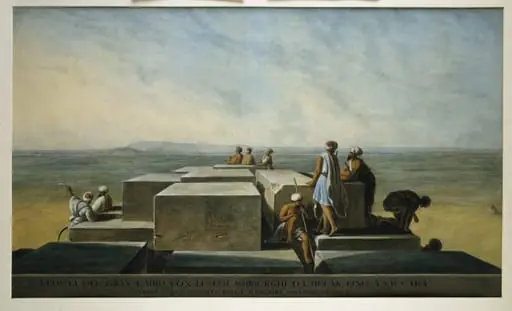 View of Grand Cairo from the Summit of the Great Pyramid of Giza
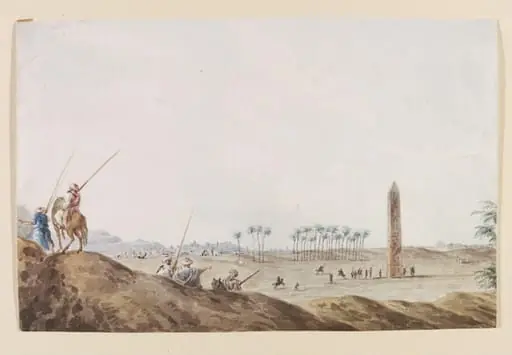 An Ancient Obelisk At Matarea, Formerly Heliopolis
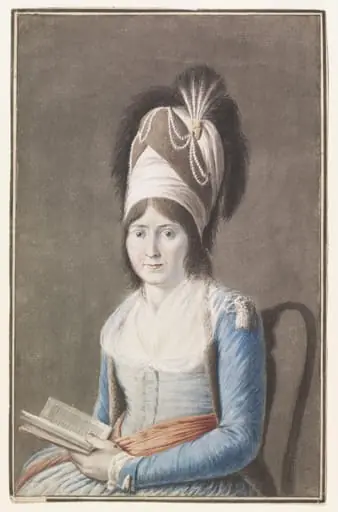 Portrait of Clara Mayer
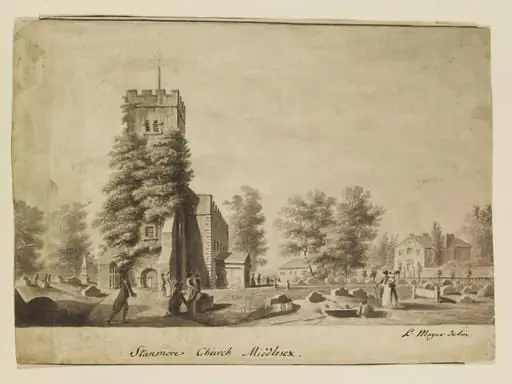 Stanmore Church Middlesex
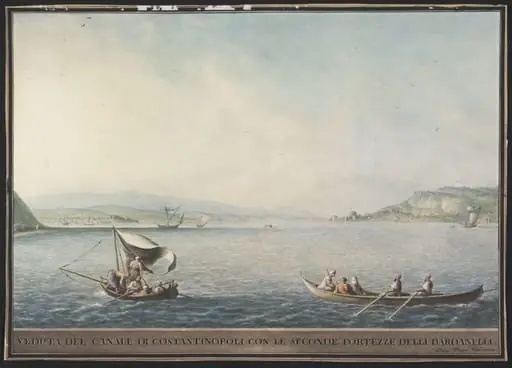 View of the Straits with the Second Fortress of the Dardanelles
![Dance of Peasants [possibly in Belgrade near Constantinople], by Luigi Mayer](https://artifactworldgallery.com/img/luigi-mayer--dance-of-peasants-possibly-in-belgrade-near-constantinople--e0530a0b87d5c4c1-w320.webp) Dance of Peasants [possibly in Belgrade near Constantinople]
Dance of Peasants [possibly in Belgrade near Constantinople]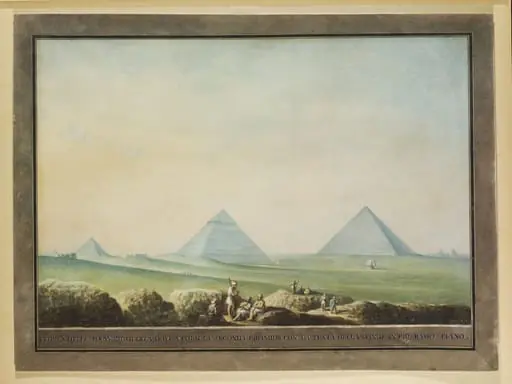 The Pyramids of Giza
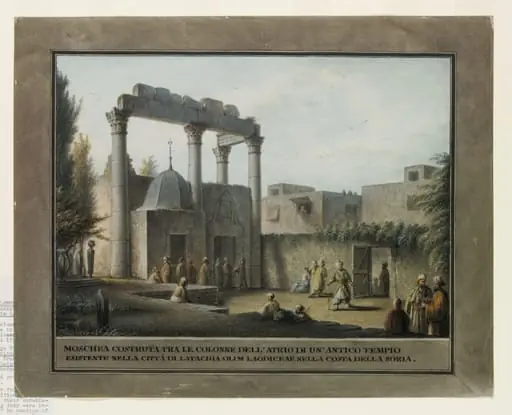 Mosque built between the columns of an ancient temple in Latakia on the coast of Syria, about 1800
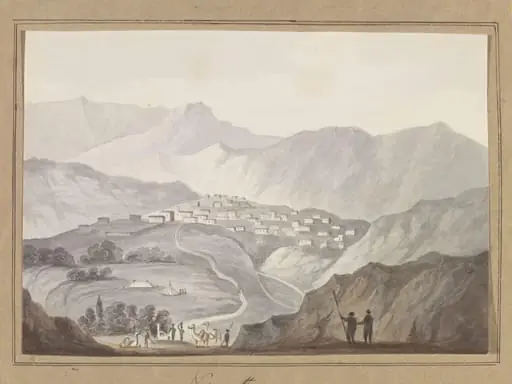 Nazareth
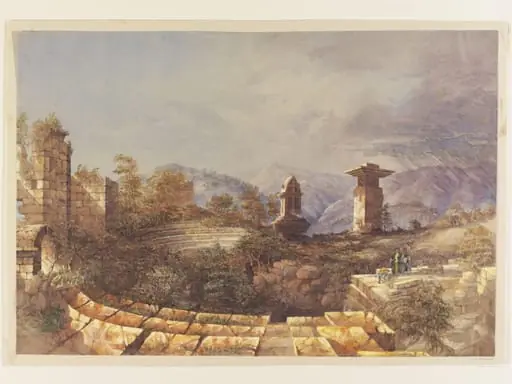 Theatre, with the Sarcophagus and Harpy Tombs, Xanthus
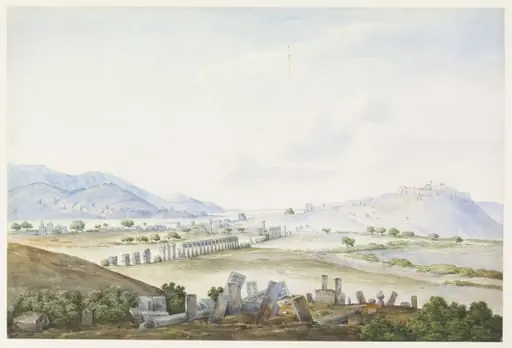 Ephesus
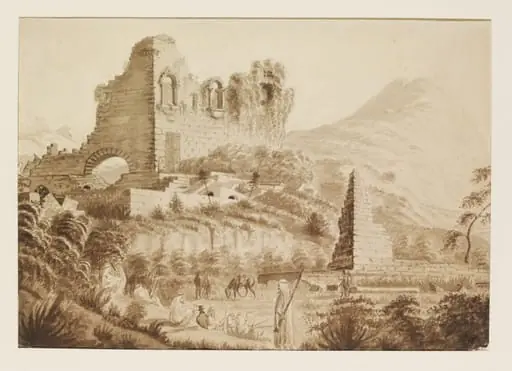 Villa Sevillana on the Road from Bona to Constantine
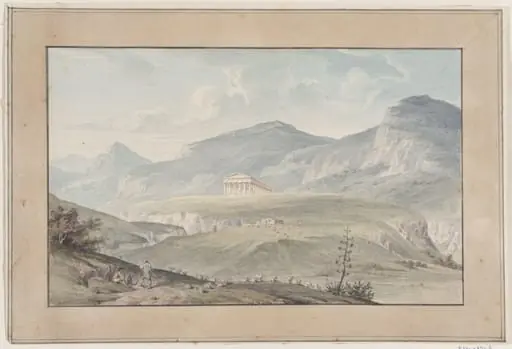 Temple of Segesta in Sicily
![View of an Egyptian Temple. [Dendara]. 1807, by Dominique Vivant Denon](https://artifactworldgallery.com/img/dominique-vivant-denon--view-of-an-egyptian-temple-dendara-1807--69b7b6b17d97f4dc-w320.webp) View of an Egyptian Temple. [Dendara]. 1807
View of an Egyptian Temple. [Dendara]. 1807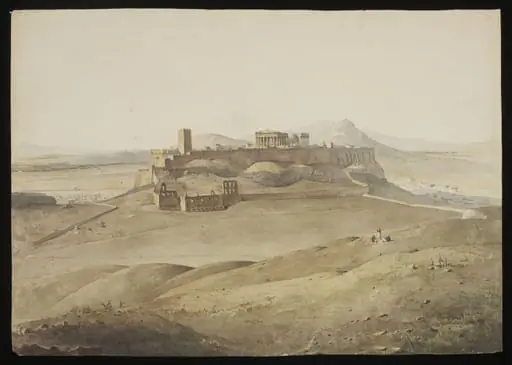 Untitled
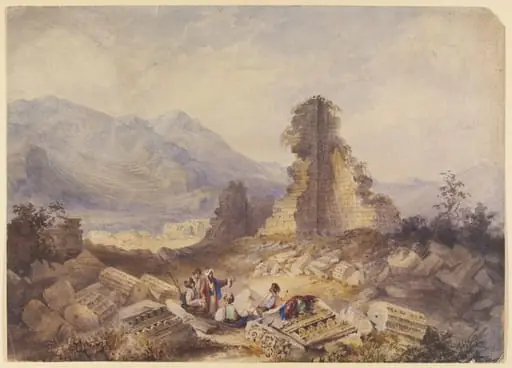 Ephesus (Ruins of the Temple of Diana)
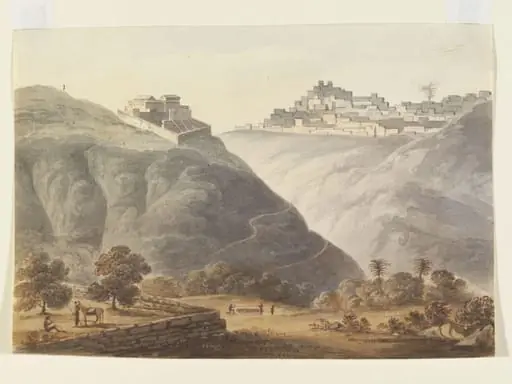 Bethlehem
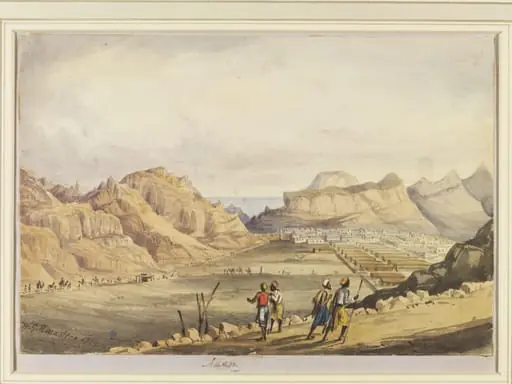 Aden
Aden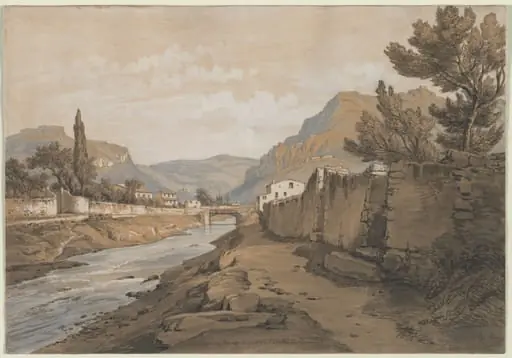 The Neuve River at the End of the Dardenne Valley
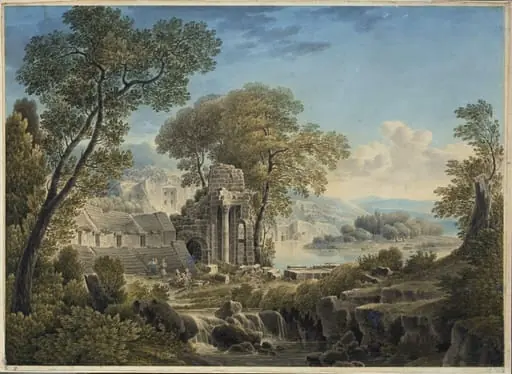 Theatre of Myra, now Demre, in Lycia