Artwork
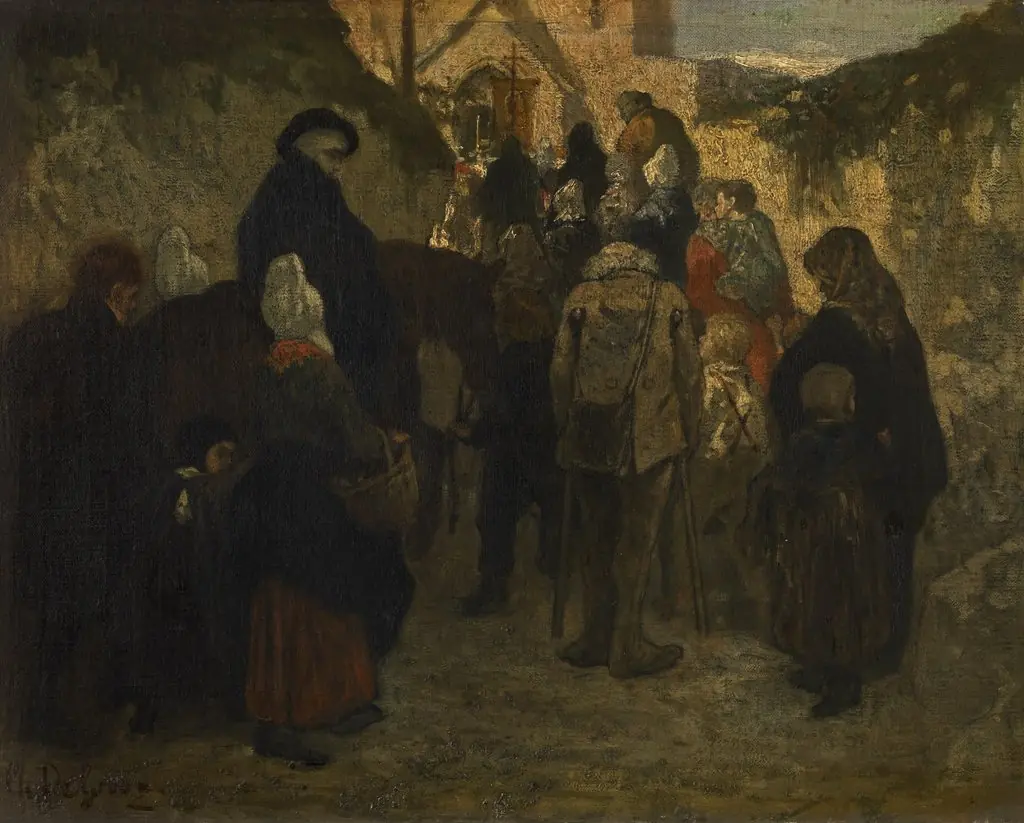
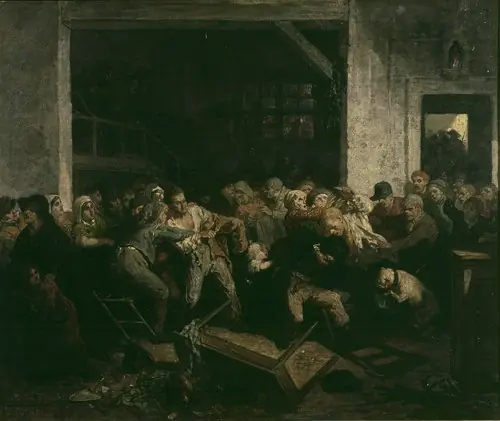
The pilgrimage of Saint Guido in Anderlecht
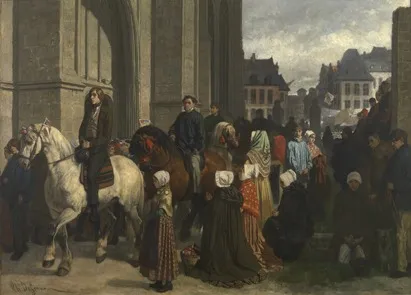
The pilgrimage of Saint Guido in Anderlecht is an oil painting by the Realist artist Charles de Groux. It dates from 1856 and is held in the collection of the Royal Museums of Fine Arts of Belgium.
About this work
Overview
Painted in 1856 by Charles de Groux, this oil-on-canvas work depicts a religious procession in Anderlecht, a suburb of Brussels.
Painted in 1856 by Charles de Groux, this oil-on-canvas work depicts a religious procession in Anderlecht, a suburb of Brussels. De Groux, a French-born artist who settled in Belgium, focused on everyday life with unidealized detail. The painting is part of the Royal Museums of Fine Arts of Belgium’s collection and represents an early example of social realism in Belgian art, blending religious tradition with observations of common people.
Subject & Meaning
The scene captures a local pilgrimage honoring Saint Guido, a medieval patron saint of Anderlecht. Participants, dressed in period attire, move through a narrow town square, some on horseback, others on foot. The procession is neither glorified nor diminished; its significance lies in its authenticity. De Groux presents faith as a communal, grounded practice, rooted in the rhythms of working-class life rather than ecclesiastical grandeur.
Technique & Style
De Groux employed oil paint to render textures with precision: the wool of cloaks, the leather of saddles, the weathered stone of buildings. His palette favors muted earth tones, punctuated by the subdued reds and blues of garments. Brushwork is loose yet controlled, suggesting motion without theatricality. The composition directs the viewer’s eye along the procession’s path, reinforcing a sense of unfolding time and collective movement.
History & Provenance
Completed in 1856, the painting was acquired by the Belgian state shortly after its creation and entered the collection of what is now the Royal Museums of Fine Arts of Belgium. De Groux’s focus on ordinary people drew attention during a period when academic art favored historical or mythological subjects. The work’s early acquisition signals its recognized importance in the development of Belgian realism.
Context
In mid-19th-century Belgium, industrialization reshaped urban life, and artists began turning from idealized scenes to the realities of labor and faith among the lower classes. De Groux aligned with this shift, influenced by French Realists like Courbet. His depiction of a local pilgrimage reflects a broader cultural interest in regional identity and the dignity of everyday rituals amid societal change.
Legacy
De Groux’s work laid groundwork for later Belgian realists and social commentators in art. Though less widely known internationally, his focus on unvarnished public life influenced a generation of artists seeking to portray society without romanticization. 'The Pilgrimage of Saint Guido' remains a touchstone for understanding how religious tradition and class identity intersected in 19th-century Belgian visual culture.
Artist & collection
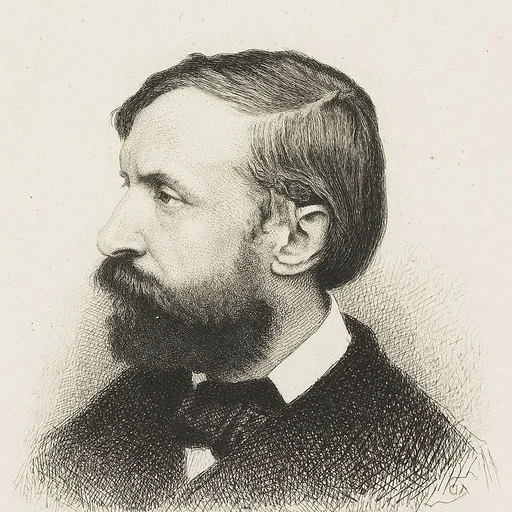
Artist
Charles de Groux (French pronunciation: ) or Charles Degroux (25 August 1825 – 30 March 1870) was a French painter, engraver, lithographer and illustrator.

Museum
Royal Museums of Fine Arts of Belgium
Continue through works from the same source collection.
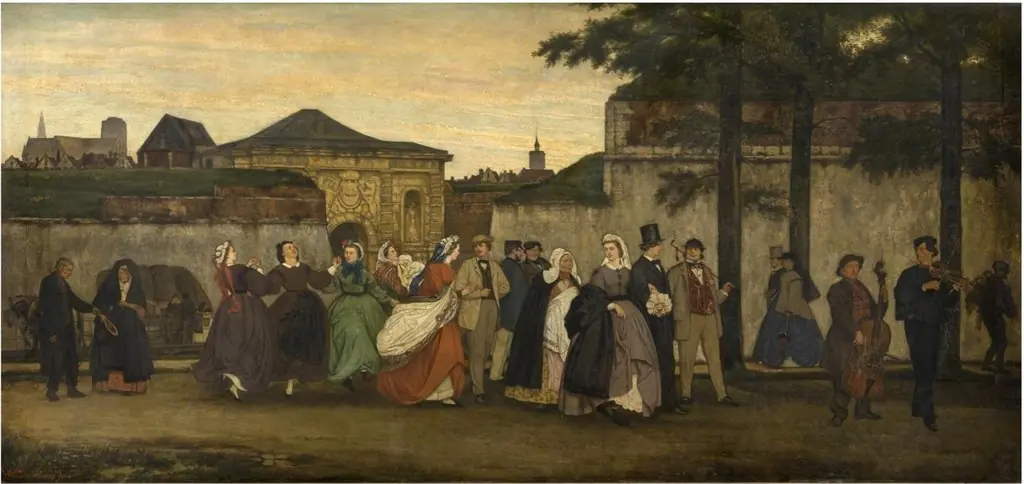 Antwerp wedding
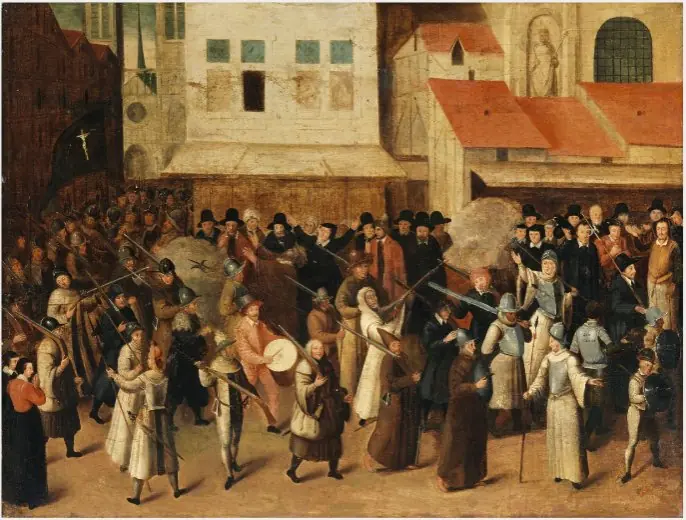 The Procession of the League
 St. Hansfest i Tisvilde
 Funeral of a Pauper in Germany
 Juhlakulkue Roomassa
 The Village Post Office
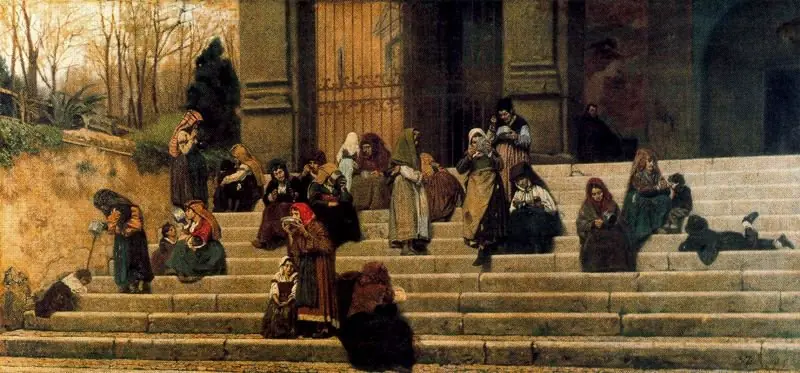 Impressions of Rome (The poor on the steps of the convent of l’Ara Caeli in Rome)
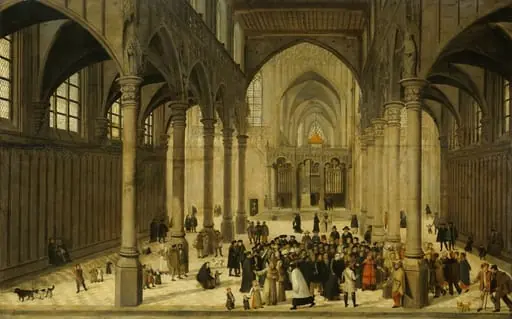 Church Interior with Christ Preaching to a Congregation
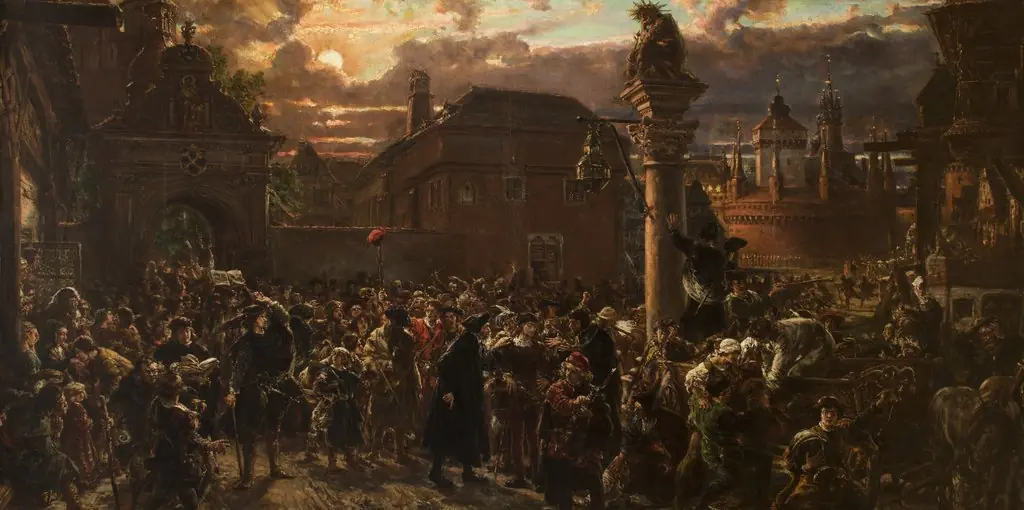 Students Leaving Krakow in 1549
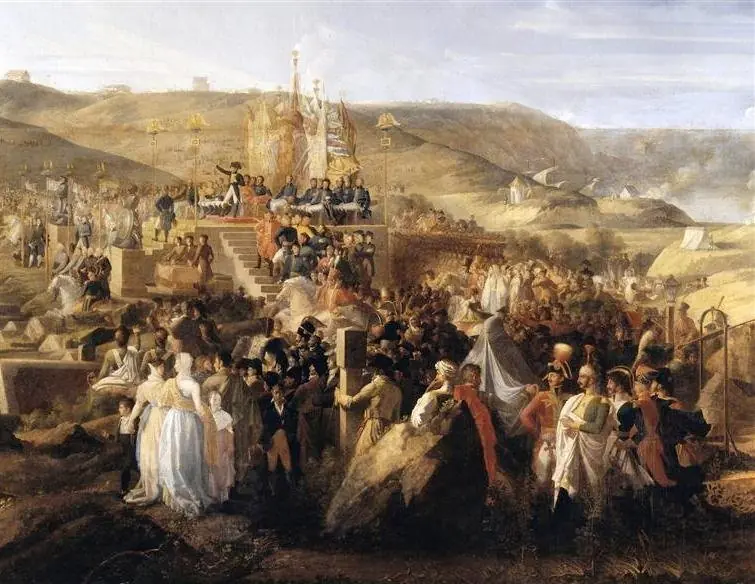 Napoleon I, at the Boulogne camp, distributes the crosses of the Legion of Honor, August 16, 1804