Artwork
Road Scene, Hethersett
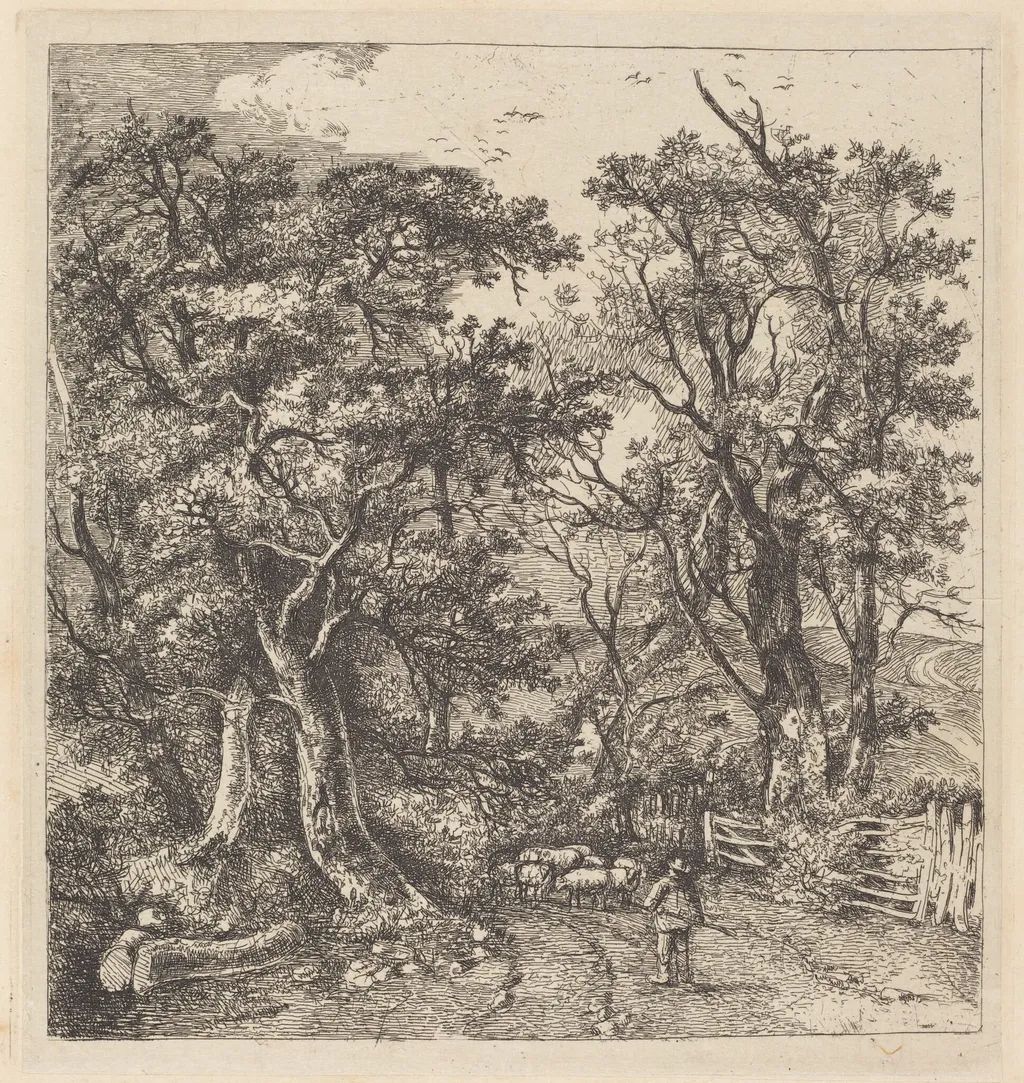
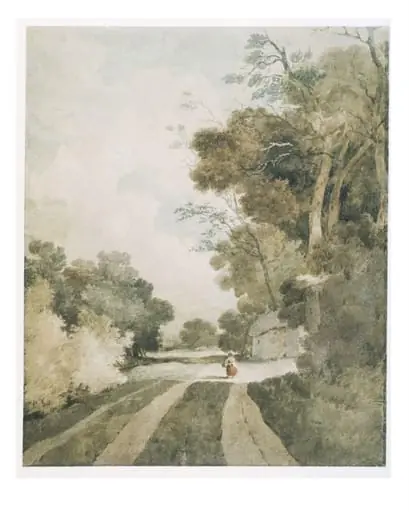
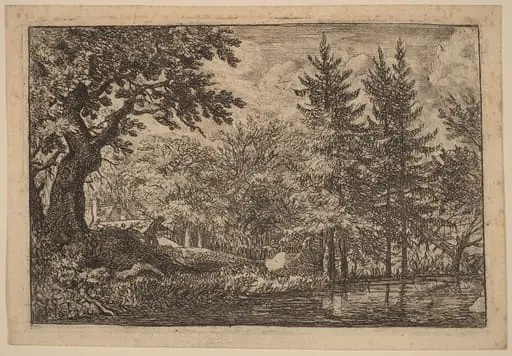
Road Scene, Hethersett is an ink print by the Romanticist artist John Crome. It dates from 1794 and is held in the collection of the National Gallery of Art.
About this work
Overview
The composition emphasizes the quiet solitude of the landscape, with minimal human presence—small figures barely discernible along the path.
Created in 1794, Road Scene, Hethersett is a black-and-white etching on chine appliqué by John Crome. It depicts a rural lane in Norfolk, England, flanked by dense, leafless trees whose gnarled branches form a canopy overhead. The composition emphasizes the quiet solitude of the landscape, with minimal human presence—small figures barely discernible along the path. The work reflects Crome’s interest in naturalistic observation over idealized scenery.
Subject & Meaning
The scene captures an ordinary country road, not a grand or picturesque vista, but a humble, everyday route through woodland. The towering trees dominate the frame, suggesting nature’s quiet authority over human passage. The faint figures walking the path convey transience and insignificance against the enduring landscape. This focus on the unremarkable reflects a shift toward intimate, truthful depictions of the natural world.
Technique & Style
Crome employed fine, controlled etching lines to render the intricate textures of bark, tangled branches, and uneven ground. The use of chine appliqué allowed for delicate paper layers to be bonded to a stronger backing, enhancing detail and tonal range. His meticulous line work captures subtle variations in light and shadow, avoiding romanticized effects in favor of precise, observational rendering—uncommon in English printmaking of the period.
History & Provenance
The print was made in 1794 during Crome’s early career, before he became a central figure in the Norwich School. It likely originated as a personal study or small-scale commission, reflecting his local surroundings in Norfolk. No documented early ownership is known, but its survival suggests it was valued within artistic circles for its technical precision and quiet realism.
Context
In late 18th-century England, landscape art often favored idealized or dramatic scenes. Crome’s focus on a modest, unadorned road in his native countryside stood apart. His approach aligned with emerging interest in direct observation of nature, influenced by Dutch landscape traditions and early Romantic sensibilities, though without overt emotionalism or symbolism.
Legacy
Road Scene, Hethersett exemplifies Crome’s role in shifting British printmaking toward naturalism. His attention to local detail and technical discipline influenced later members of the Norwich School. While not widely reproduced, the work remains a quiet benchmark for artists seeking to portray landscape not as spectacle, but as lived, unembellished reality.
Own this work as a print
Artist & collection


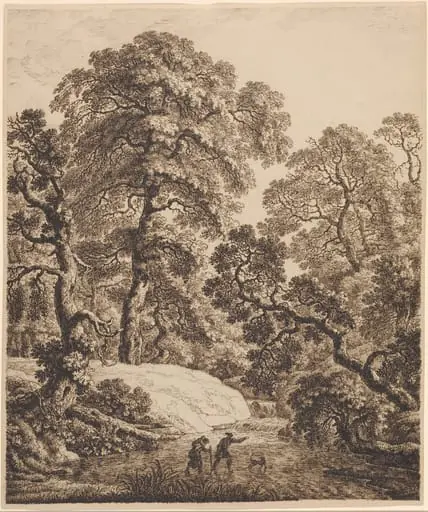 An Oak Forest with a Family of Travelers
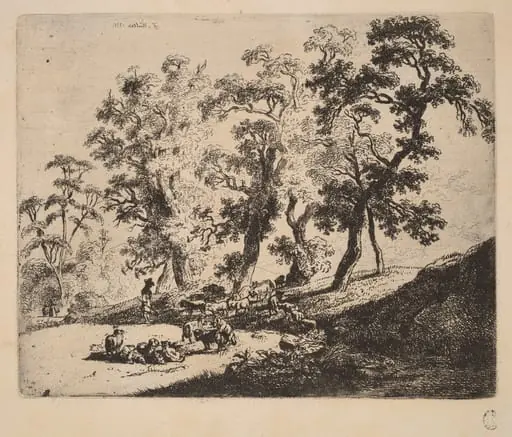 Landscape with Shepherds
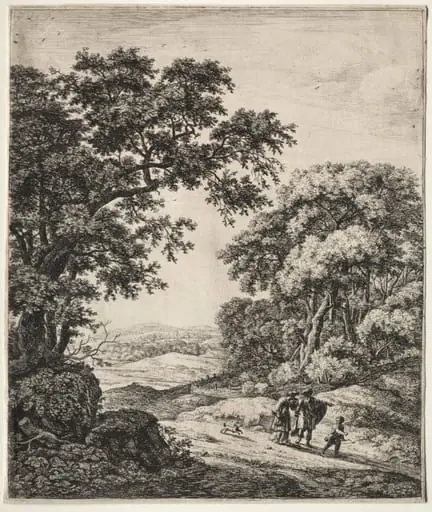 Six large upright landscapes with scenes from the Old Testament: Abraham Dismissing Hagar and Ishmael
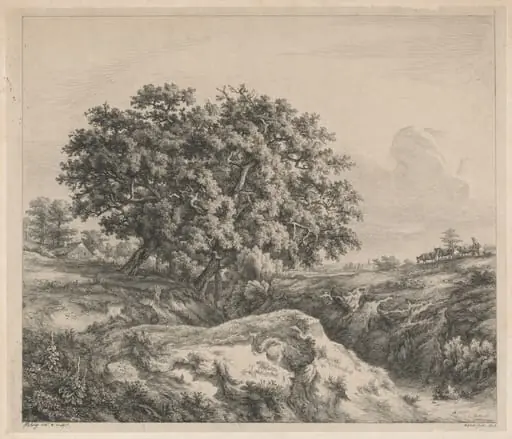 Le chêne au ravin (Oak Tree by a Ravine)
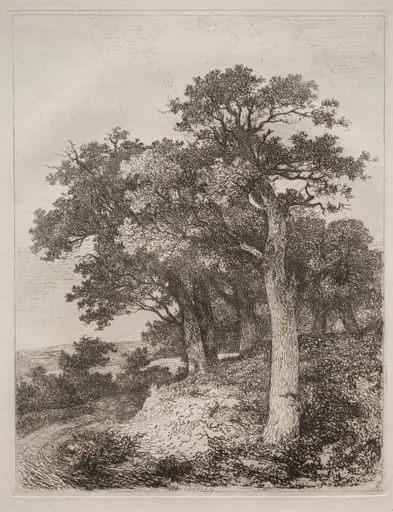 At Colney
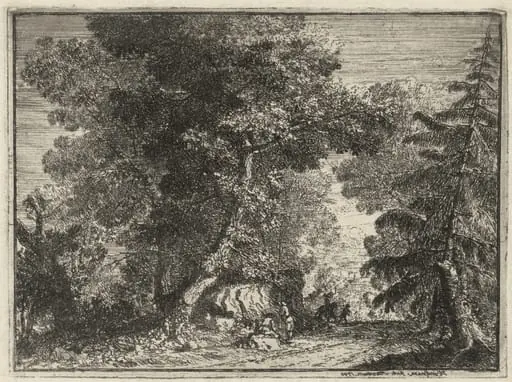 A Road through the Woods
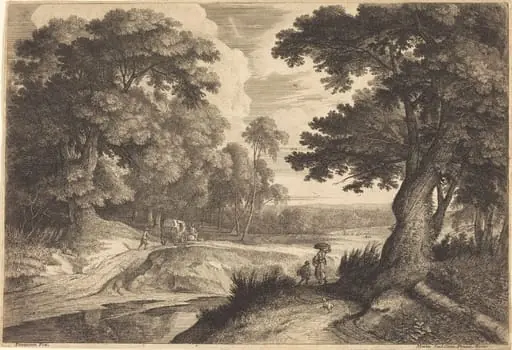 Edge of a Wood with Peasants Going to Market
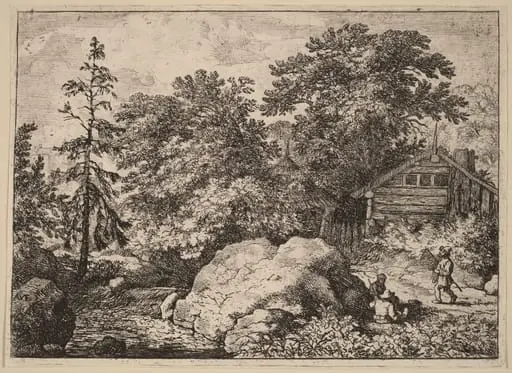 The Knoll
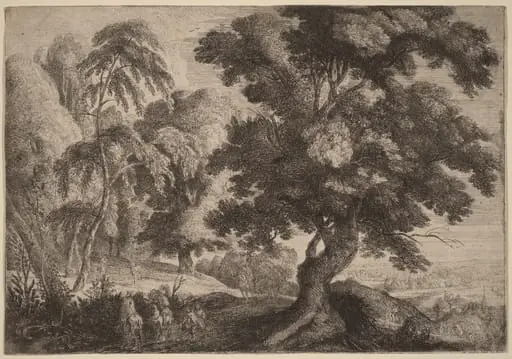 Landscape with Two Deer
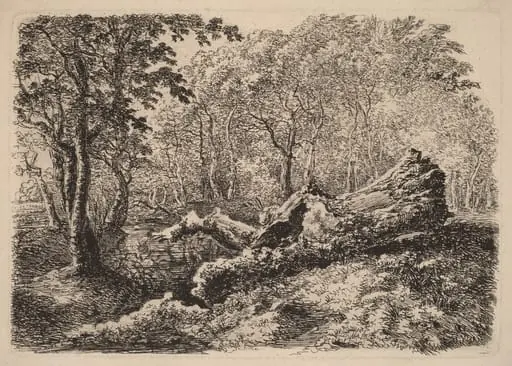 Mouldering Tree Trunk
 Fir Trees at the Water