Artwork
Mussel-gatherers at Villerville
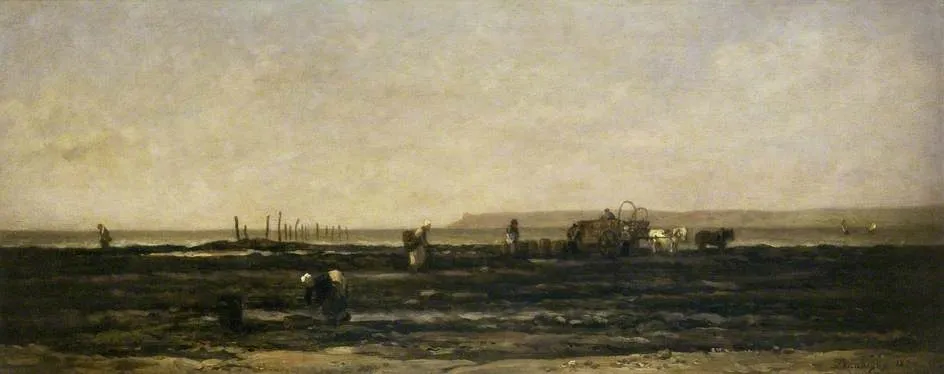
Mussel-gatherers at Villerville is an oil painting by the Realist artist Charles François Daubigny. It dates from 1870 and is held in the collection of the Ashmolean Museum. Painted in 1870 by Charles-François Daubigny, this oil-on-canvas work captures a moment of coastal labor in Villerville, Normandy.
About this work
Overview
A member of the Barbizon circle, Daubigny turned his attention to everyday rural and seaside activities, aligning with Realist principles.
Painted in 1870 by Charles-François Daubigny, this oil-on-canvas work captures a moment of coastal labor in Villerville, Normandy. A member of the Barbizon circle, Daubigny turned his attention to everyday rural and seaside activities, aligning with Realist principles. The painting’s quiet composition and subdued palette reflect his interest in natural light and unidealized human toil, distinguishing it from more dramatic or romanticized depictions of labor.
Subject & Meaning
The scene portrays a group of workers, likely women and children, gathering mussels along the shore. Their postures and focused movements suggest routine, not spectacle. The absence of narrative drama or emotional intensity emphasizes the dignity of mundane labor. The setting—rocky beach, overcast sky, and calm sea—frames their work as an unbroken rhythm with nature, reinforcing the Realist aim to depict life without embellishment.
Technique & Style
Daubigny employed loose, textured brushwork to render the damp sand and turbulent sky, avoiding polished finishes. He used tonal contrasts to define forms, with darker foreground rocks and figures emerging from a muted, grayish atmosphere. The chiaroscuro is subtle, not theatrical, serving to ground the figures in their environment rather than dramatize them. His approach anticipates Impressionist concerns with light and atmosphere, though without their brighter palette.
History & Provenance
Created during a period when Daubigny was increasingly focused on coastal subjects, the painting remained in private hands until entering the Ashmolean Museum’s collection. Its journey reflects broader 19th-century shifts in taste toward everyday realism. The museum acquired it as part of its growing emphasis on European landscape and genre painting, situating it within a context of socially aware art from the period.
Context
In 1870, France was on the brink of war, yet Daubigny’s focus remained on quiet, uneventful scenes of labor. This retreat from political spectacle aligned with the Barbizon artists’ broader commitment to observing nature and rural life. The painting resonates with contemporaneous works by Millet and Courbet, sharing their interest in the dignity of working-class existence, even as Daubigny’s tone remained more lyrical and less confrontational.
Legacy
Though less celebrated than his etchings or river scenes, this painting exemplifies Daubigny’s role in bridging Realism and Impressionism. His attention to atmospheric conditions and everyday subjects influenced younger painters who sought to capture transient effects of light and labor. The work remains a quiet testament to the value of observing ordinary life, a principle that continued to shape modern landscape painting.
Artist & collection
Artist
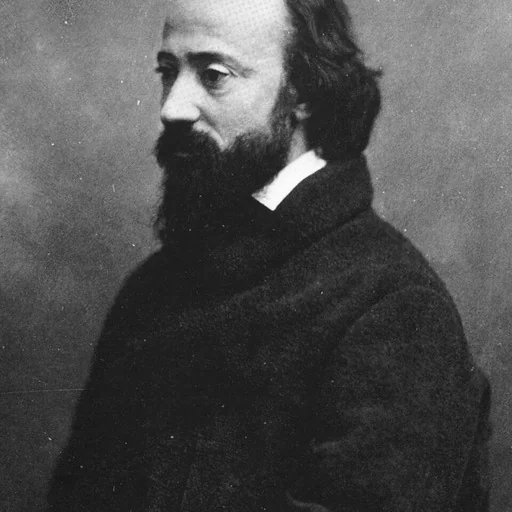
Charles-François Daubigny ( DOH-bin-yee, US: DOH-been-YEE, doh-BEEN-yee, French: ; 15 February 1817 – 19 February 1878) was a French painter, one of the members of the Barbizon school, and is considered an important precursor of…

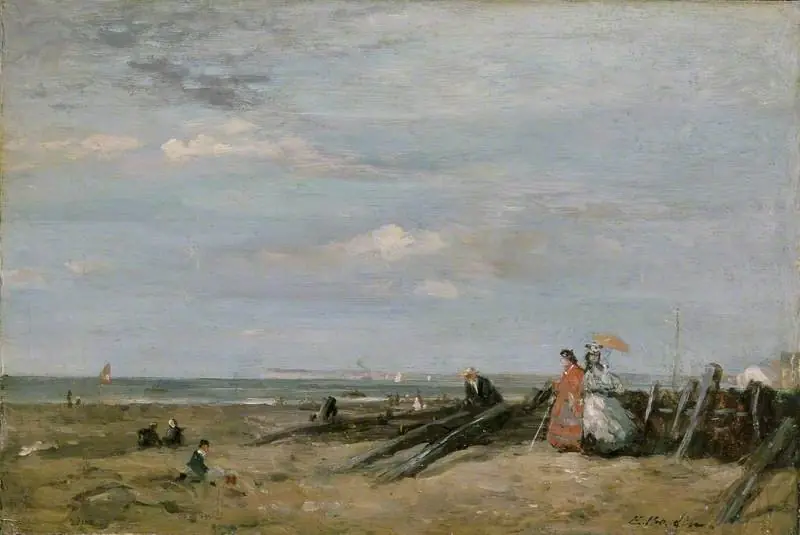 A Beach Scene at Trouville
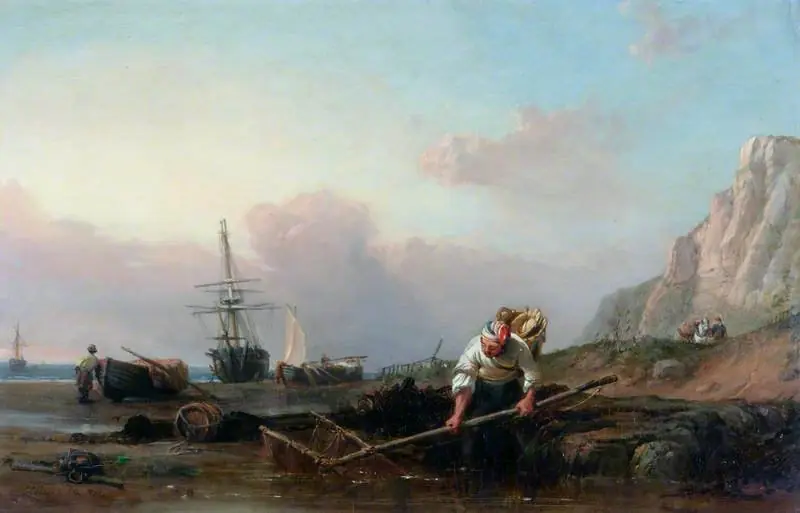 Shrimping
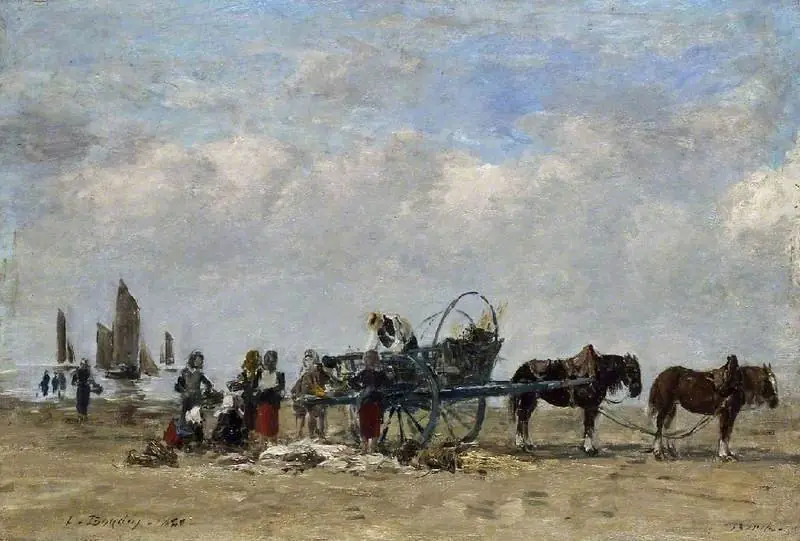 The fish-cart, Berck
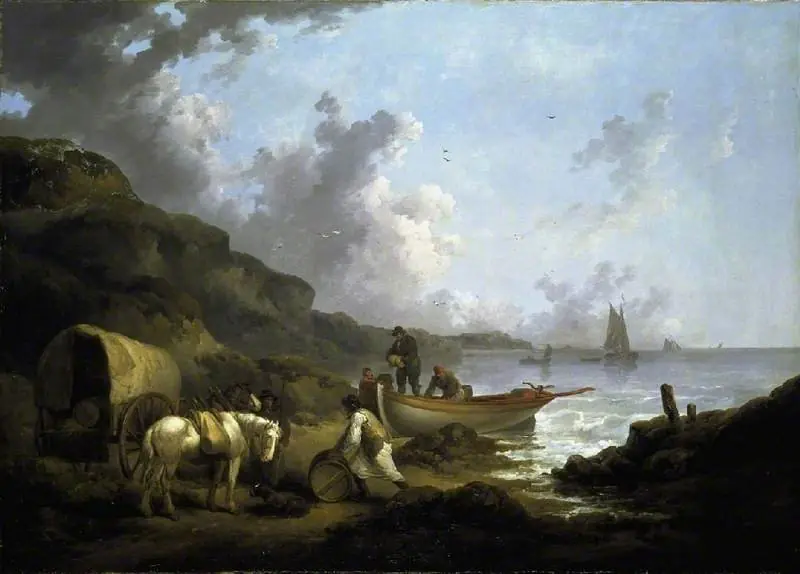 The Smugglers
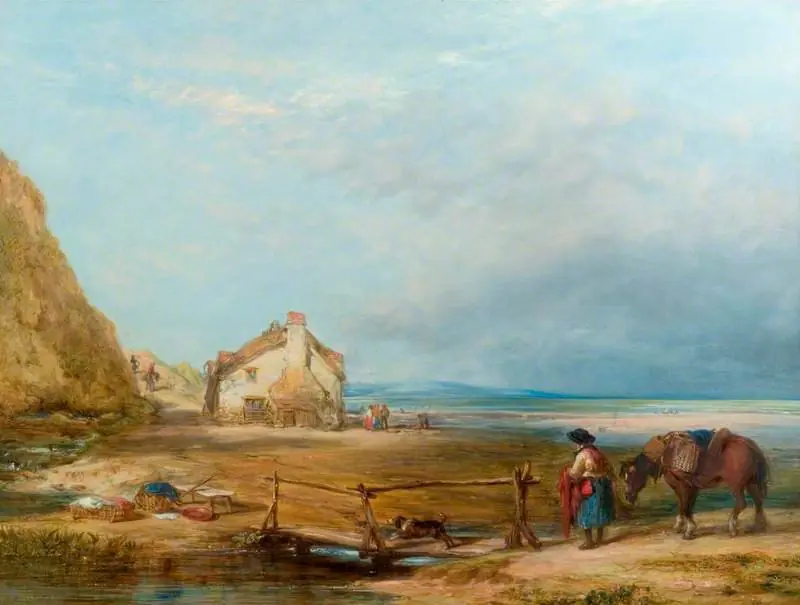 Hall Sands, Devonshire
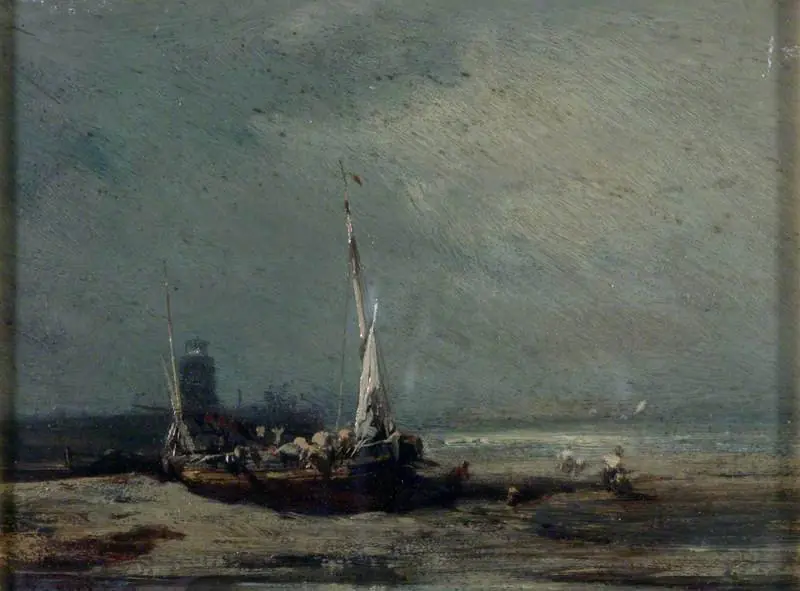 Boat on a Shore
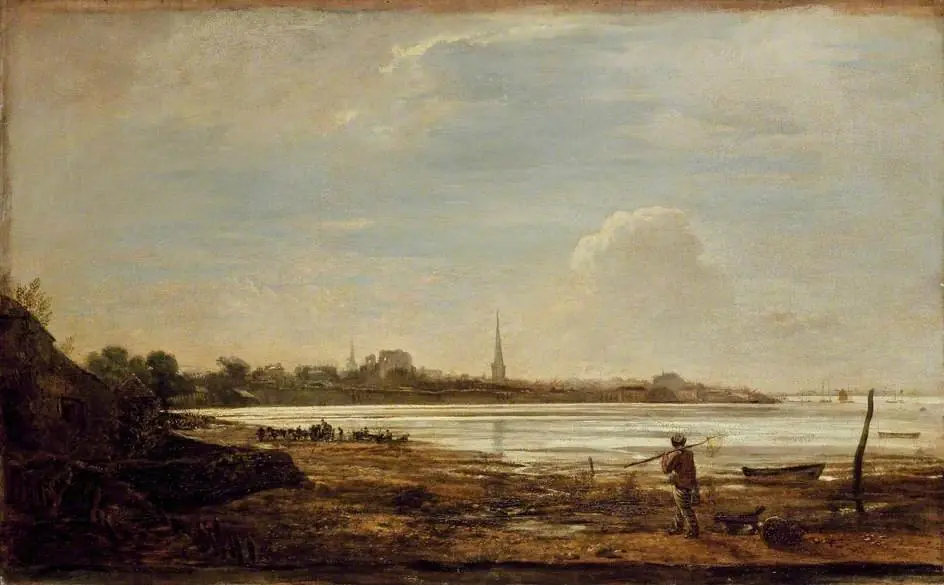 View of Southampton
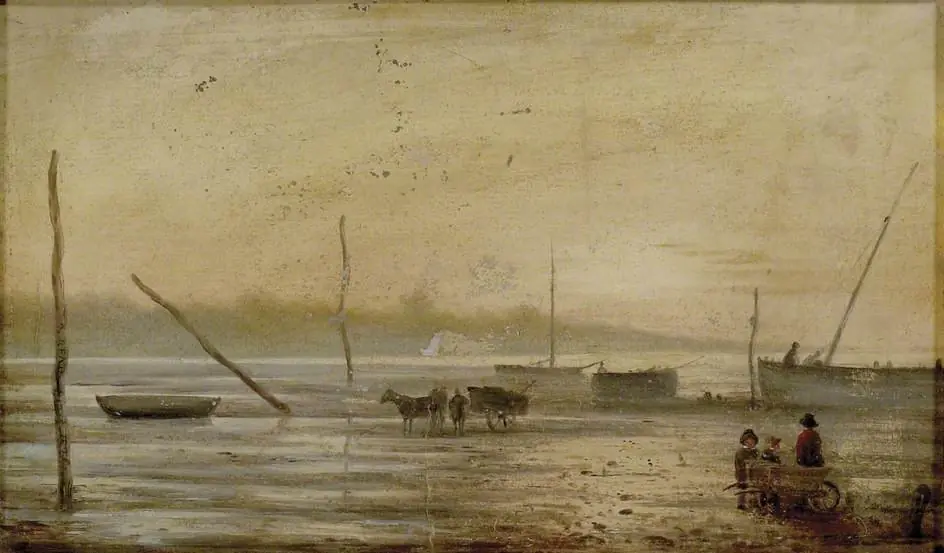 Southampton Estuary - Low Water showing the Effect of Mud, Evening
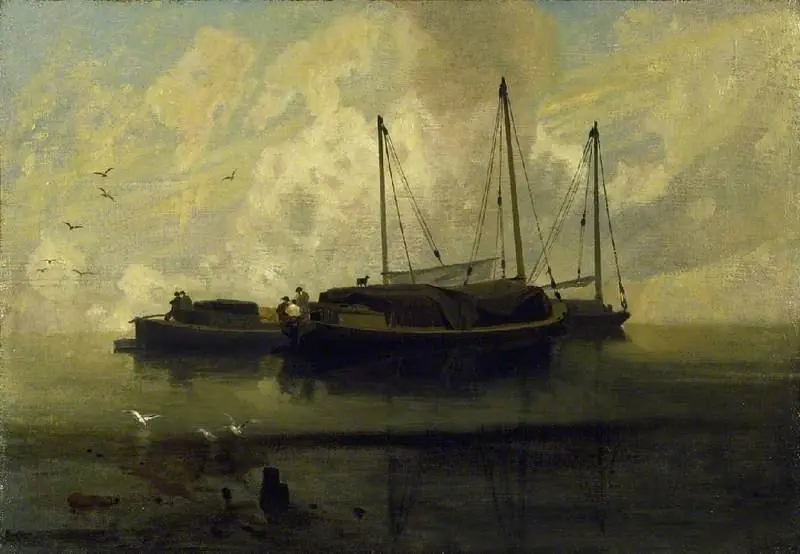 Wherries at Anchor on Breydon Water
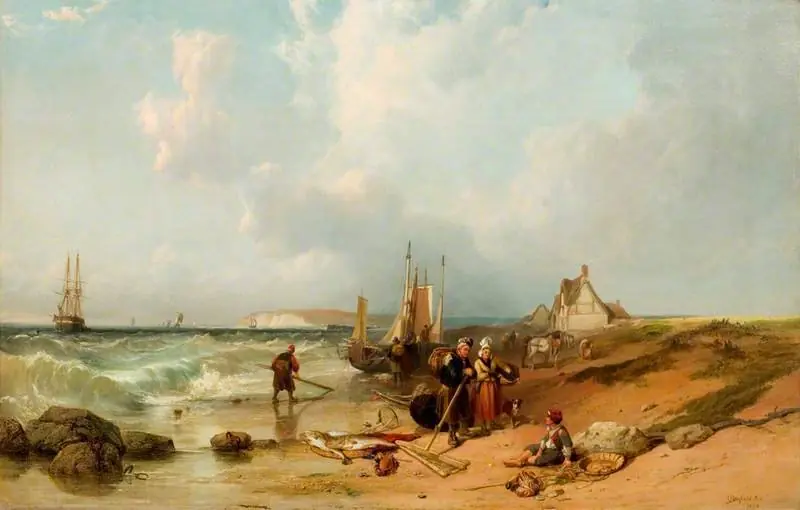 Sands near Boulogne
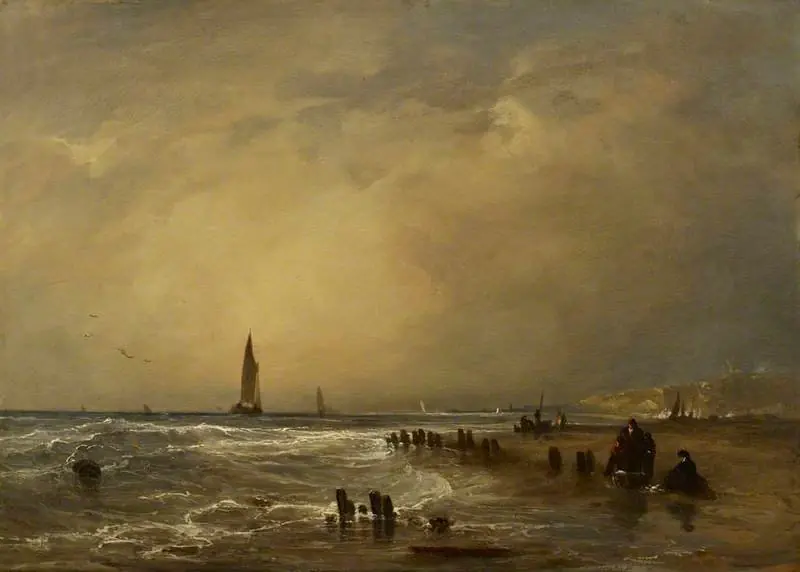 A Coastal Scene between Nieuport and Ostend
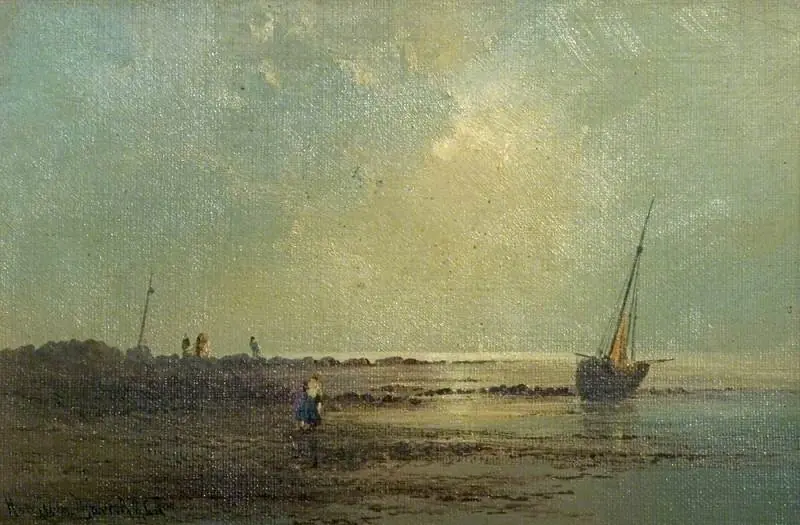 A Sunny Afternoon