Artwork
The Bathing Pool
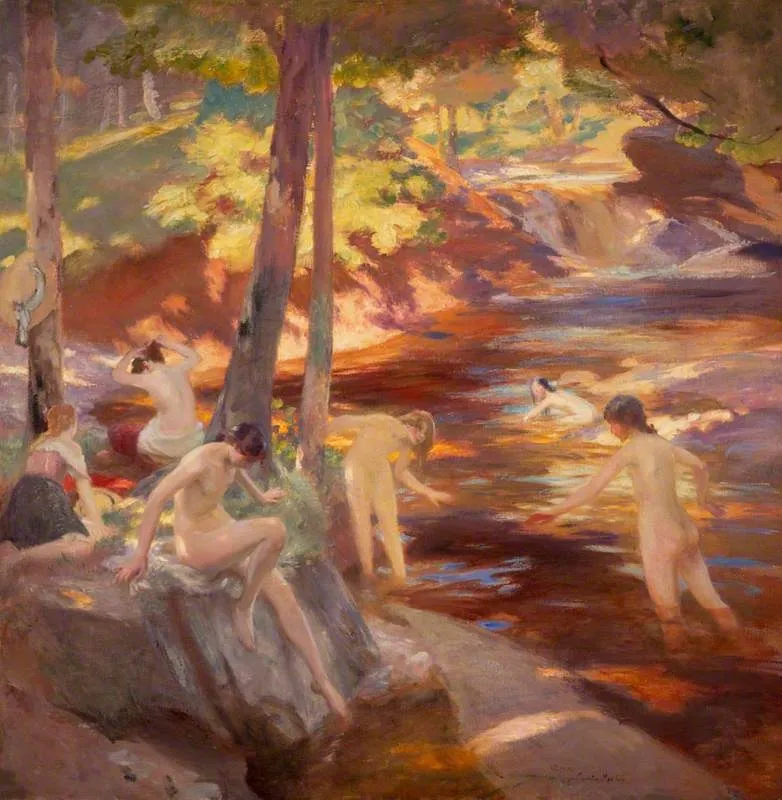
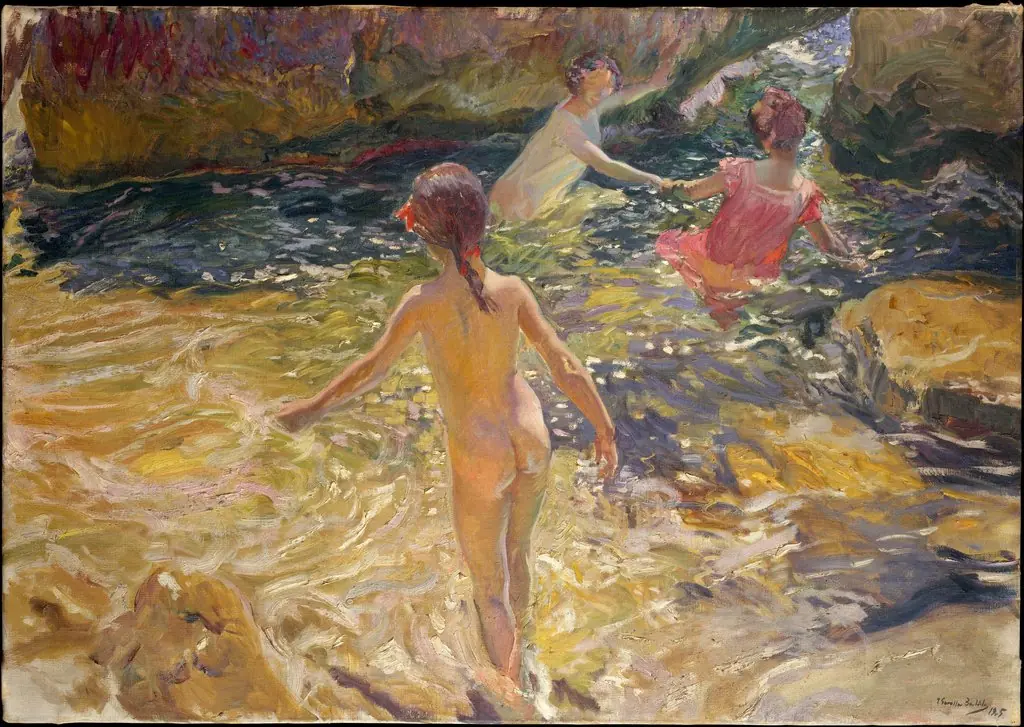
The Bathing Pool is an oil painting by the Post-Impressionist artist Charles Hodge Mackie. It is held in the collection of the National Galleries Scotland.
About this work
Overview
Charles Hodge Mackie, a Scottish painter and co-founder of the Society of Scottish Artists, completed *The Bathing Pool* in 1921 using oil on canvas.
Charles Hodge Mackie, a Scottish painter and co-founder of the Society of Scottish Artists, completed *The Bathing Pool* in 1921 using oil on canvas. The work belongs to the post-impressionist tradition, emphasizing emotional resonance over strict realism. It presents a quiet moment of human repose in nature, reflecting Mackie’s interest in everyday scenes imbued with subtle psychological depth. The painting resides in the Scottish National Gallery.
Subject & Meaning
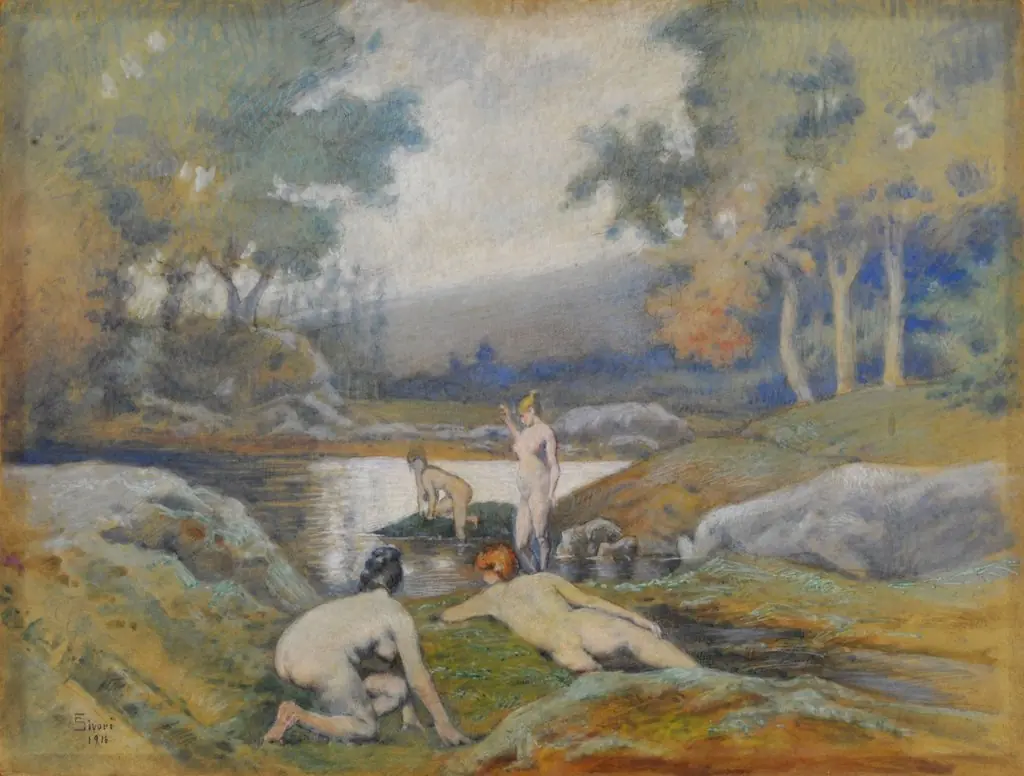
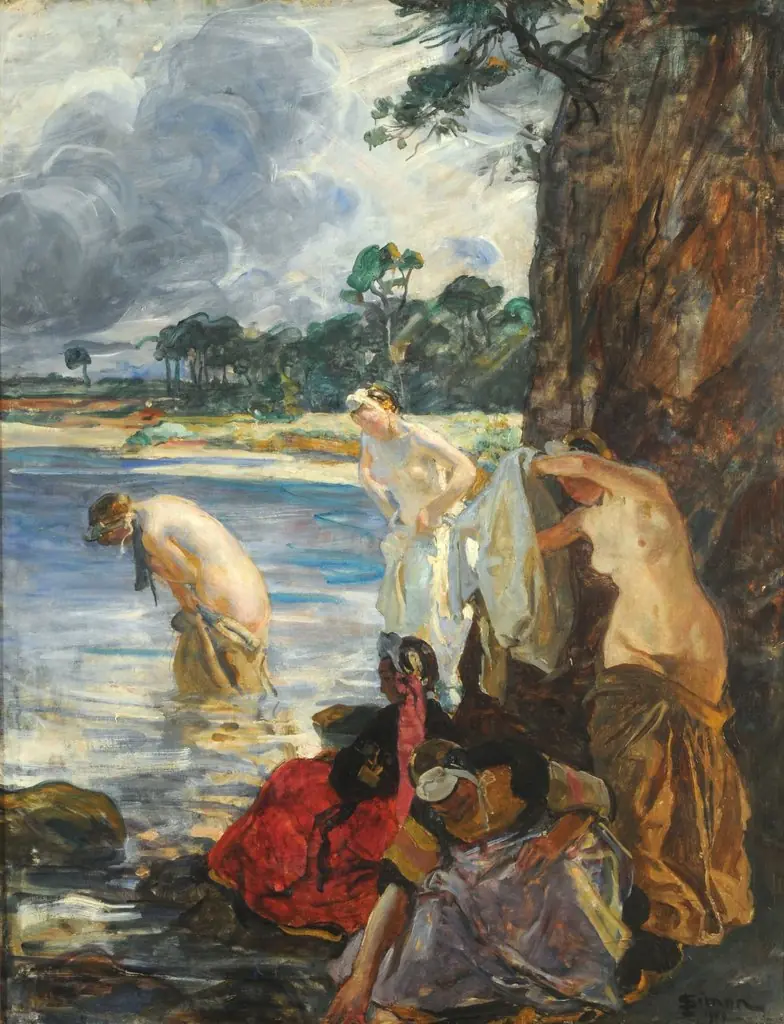
The painting shows a group of figures, primarily women, engaged in the quiet act of bathing in a woodland pool. Their postures suggest introspection rather than interaction, reinforcing a mood of solitude and calm. The absence of narrative drama or theatricality shifts focus to the intimacy of personal ritual. The natural setting, dense with foliage, frames the figures as part of a larger, undisturbed ecosystem, evoking harmony between body and environment.
Technique & Style
Mackie employed soft, blended brushwork to dissolve edges and create a hazy, atmospheric effect. Warm earth tones—ochres, olives, and muted browns—dominate the palette, avoiding sharp contrasts in favor of tonal harmony. Light filters diffusely through the trees, suggesting late afternoon without relying on dramatic chiaroscuro. The technique prioritizes mood over detail, aligning with post-impressionist concerns for emotional texture over optical accuracy.
History & Provenance
Painted in 1921, *The Bathing Pool* was acquired by the Scottish National Gallery shortly after its completion. Mackie, active in Edinburgh’s artistic circles, was known for promoting Scottish artists through institutional advocacy. The painting remained in public hands from its inception, with no documented private ownership. Its inclusion in the national collection reflects its recognition as a representative work of early 20th-century Scottish painting.
Context
In the early 1920s, Scottish art was navigating a shift from Victorian realism toward more personal, expressive modes. Mackie’s work emerged alongside broader European post-impressionist trends, yet retained a distinctly local sensibility—focusing on native landscapes and unidealized human figures. Unlike continental counterparts, his scenes avoid symbolism or myth, grounding beauty in ordinary, quiet moments of rural life.
Legacy
Though not widely exhibited beyond Scotland, *The Bathing Pool* endures as a quiet exemplar of Mackie’s contribution to Scottish modernism. It illustrates a regional adaptation of post-impressionism, one that values stillness and subtlety over bold innovation. The painting continues to be referenced in studies of early 20th-century Scottish art for its restrained emotional tone and integration of figure and landscape.
Artist & collection
Artist
Charles Hodge Mackie (1862–1920) was a Scottish artist. He was a co-founder, and the first president, of the Society of Scottish Artists in 1900.