Artwork
Nymphs in the Forest
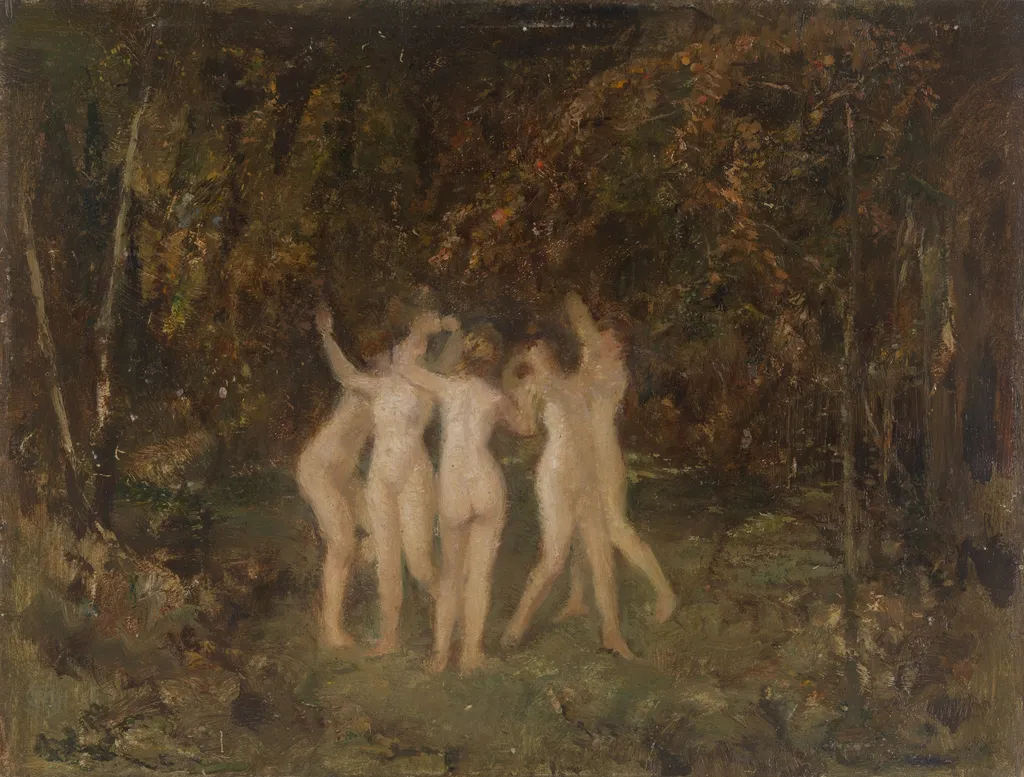
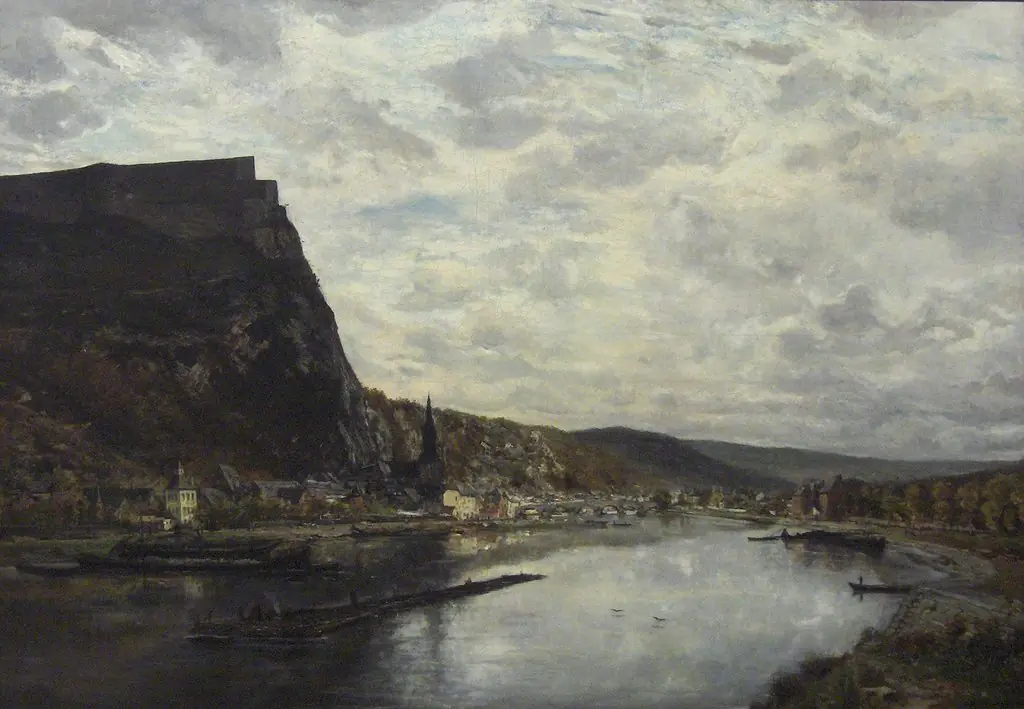
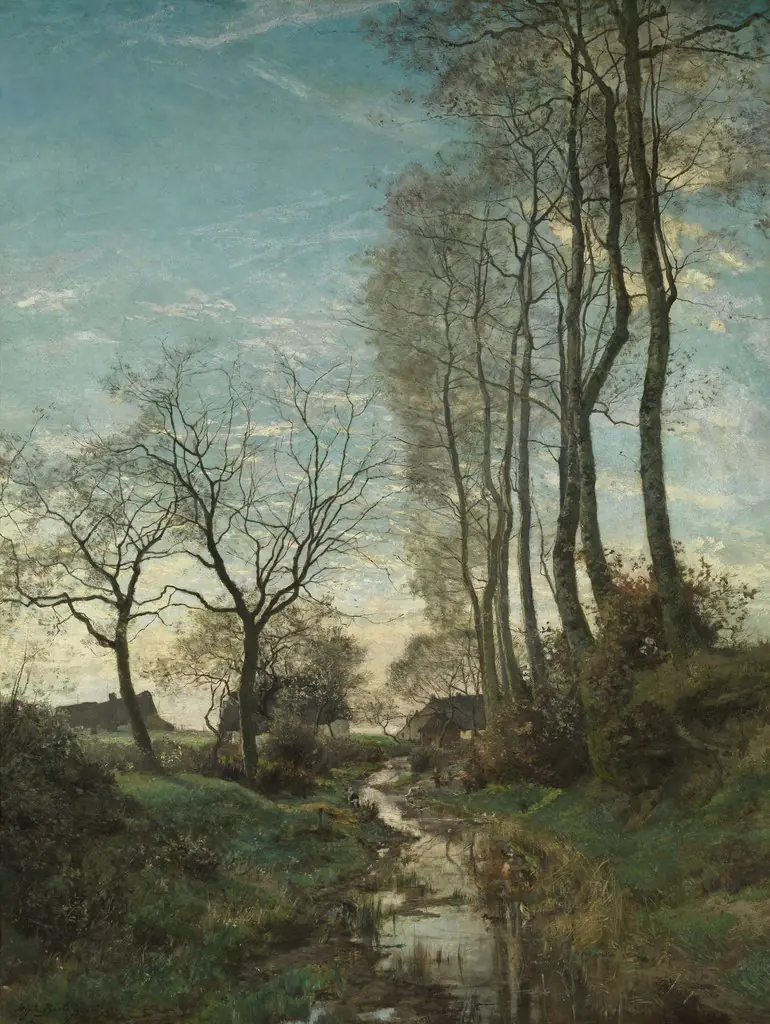
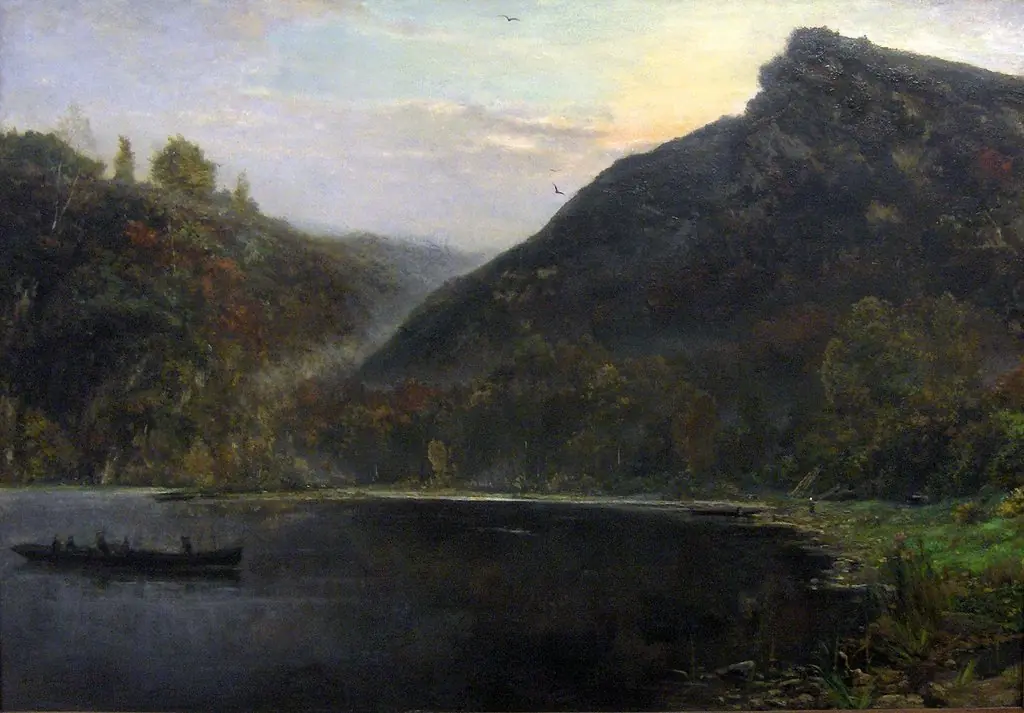
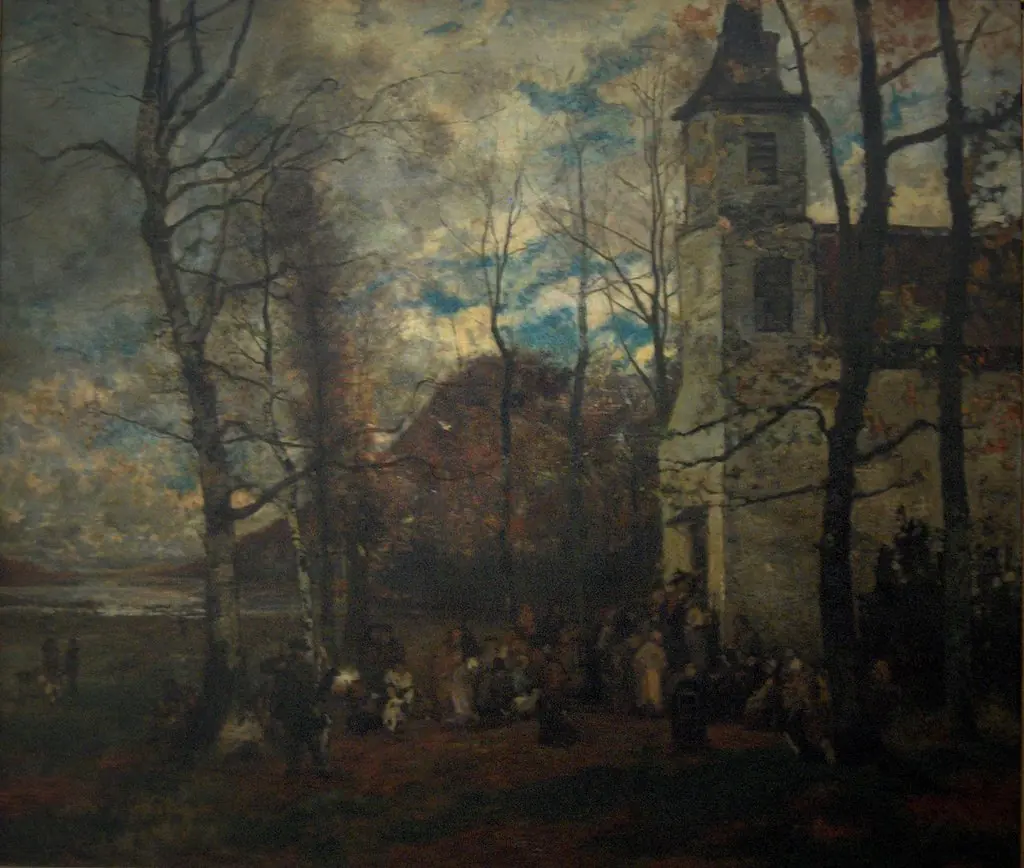
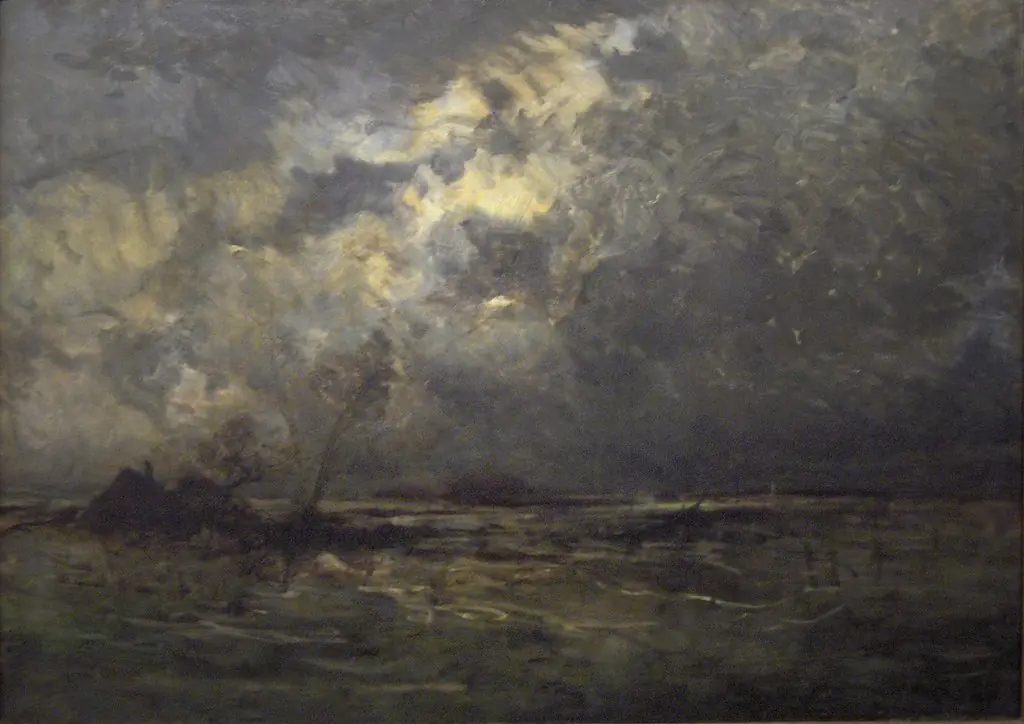
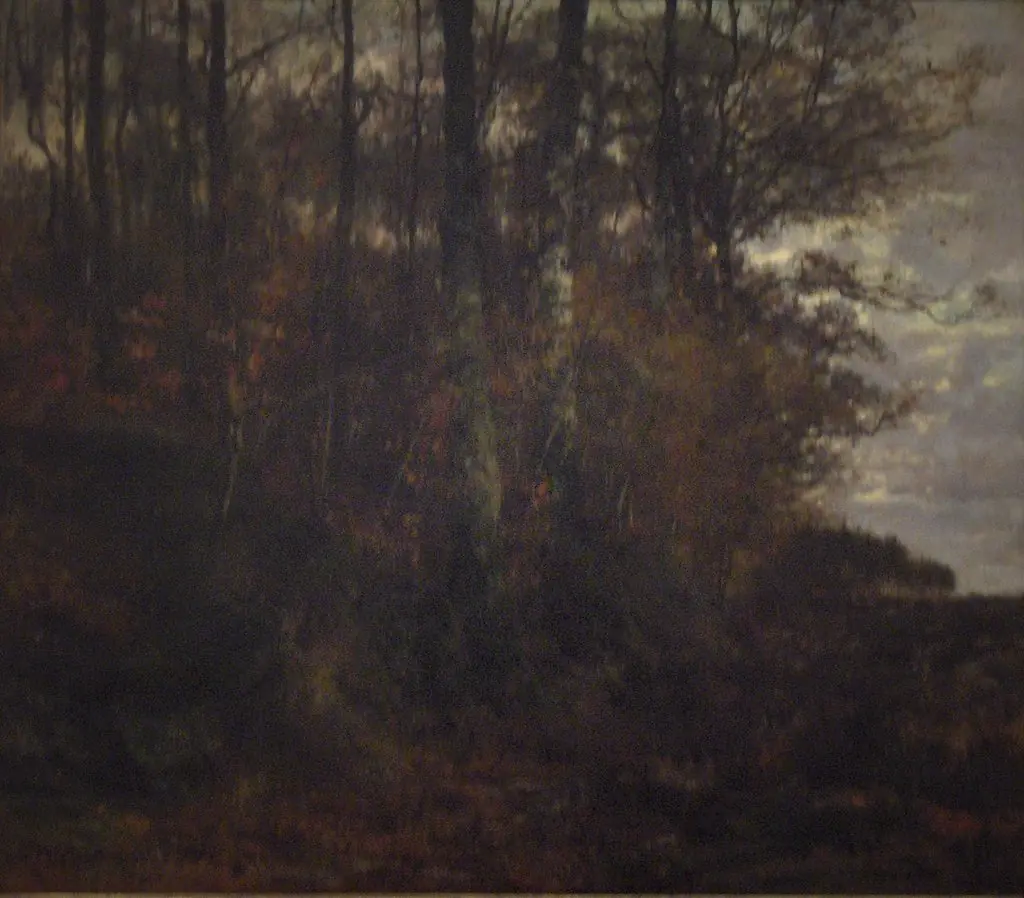
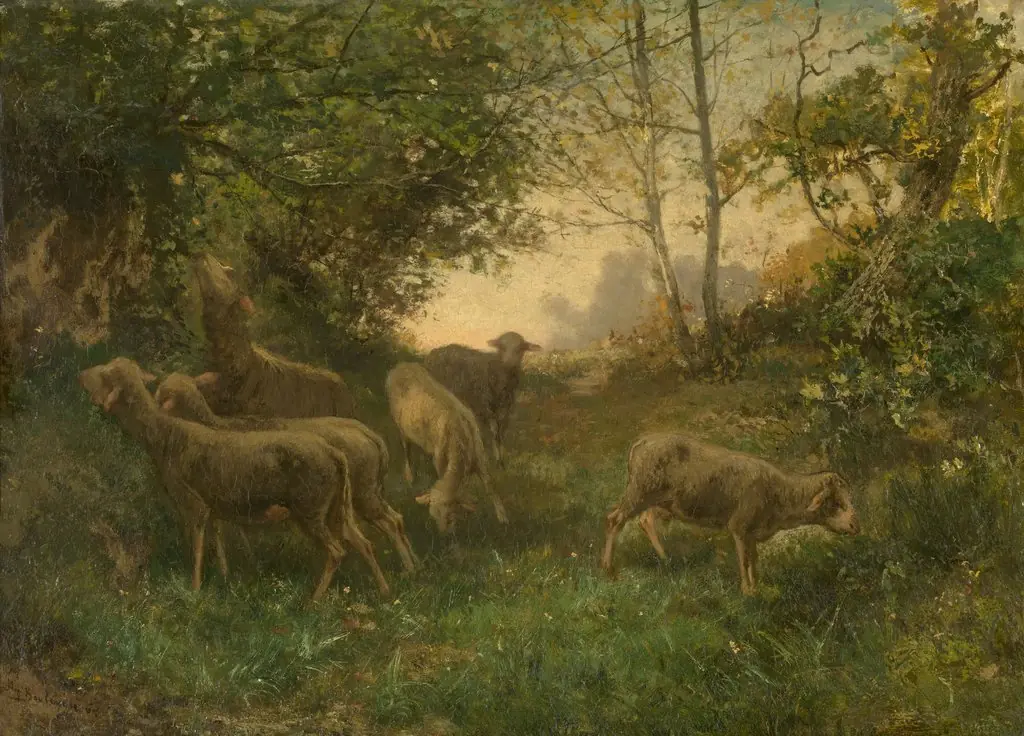
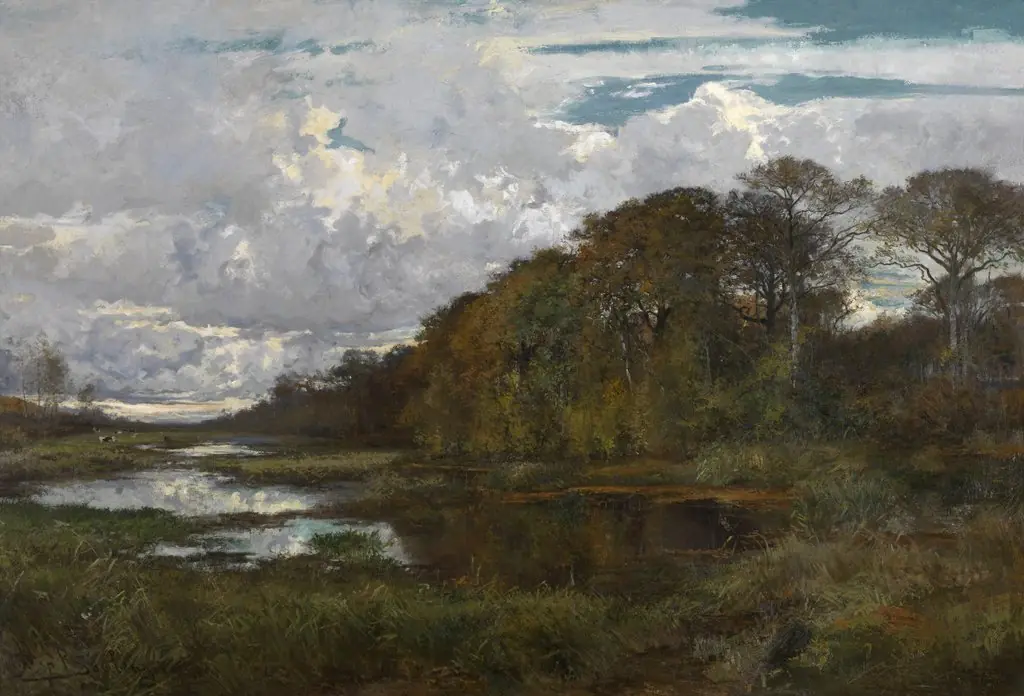
Nymphs in the Forest is an oil painting by the Barbizon school artist Hippolyte Boulenger. It dates from 1866 and is held in the collection of the Royal Museum of Fine Arts Antwerp.
About this work
Overview
This piece stands as a quiet fusion of mythological suggestion and landscape realism, characteristic of Boulenger’s approach to rural scenes.
Hippolyte Boulenger, a Belgian artist active in the mid-19th century, painted *Nymphs in the Forest* in 1866 using oil on canvas. His work reflects the influence of the French Barbizon school, which prioritized direct observation of nature over idealized composition. This piece stands as a quiet fusion of mythological suggestion and landscape realism, characteristic of Boulenger’s approach to rural scenes.
Subject & Meaning
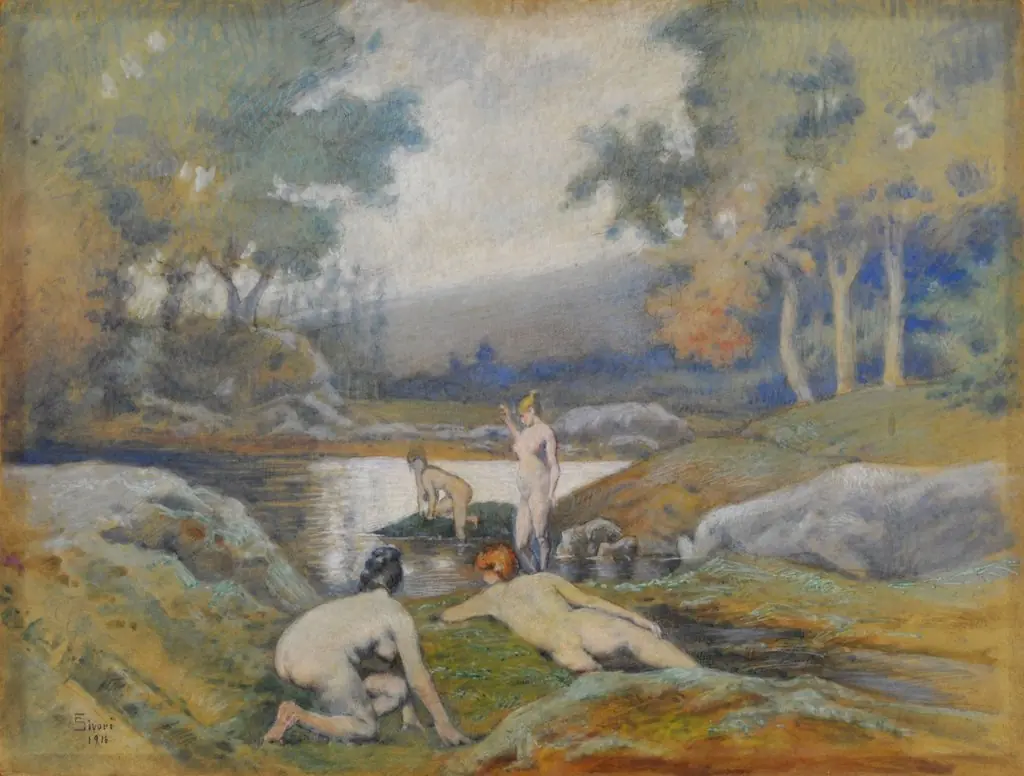
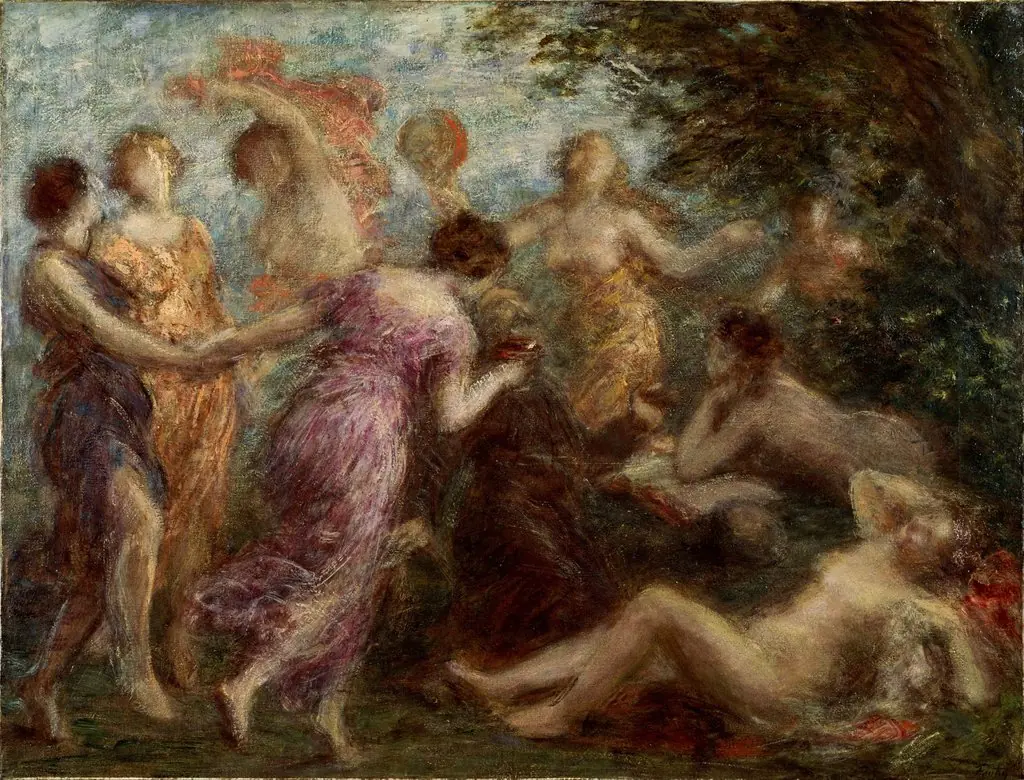
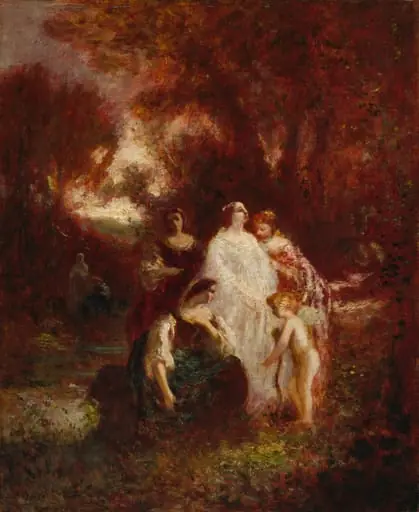
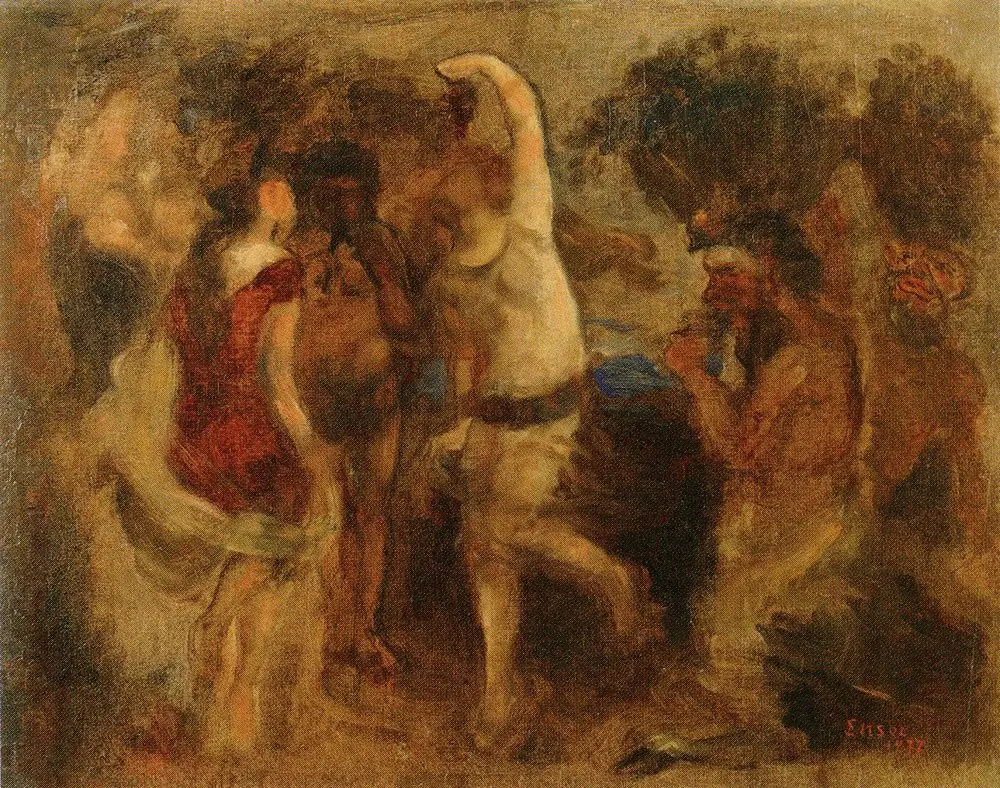
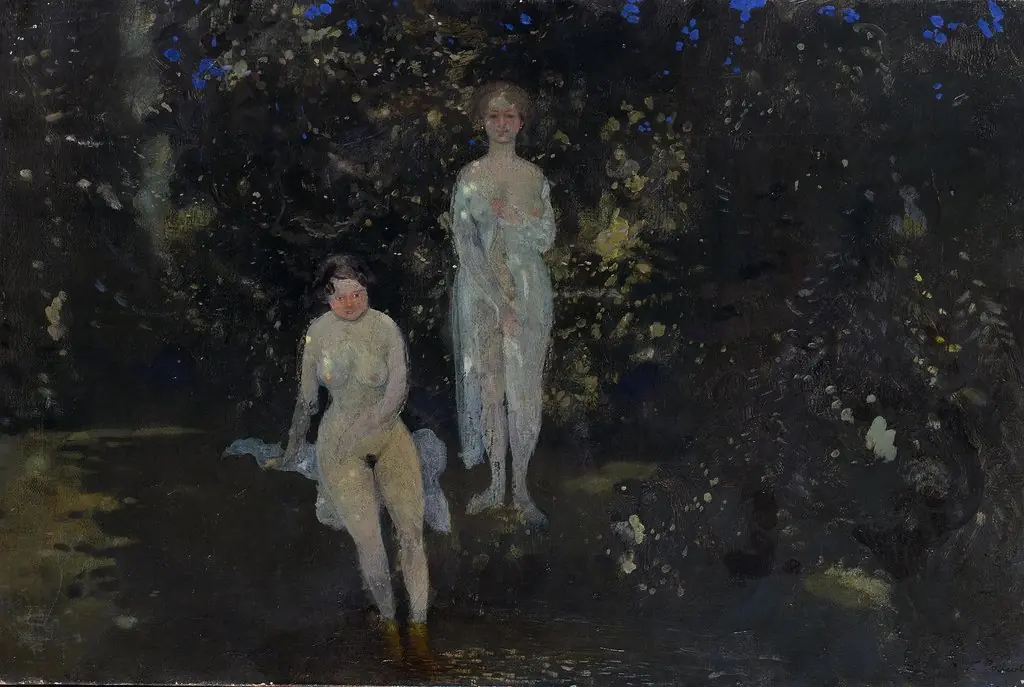
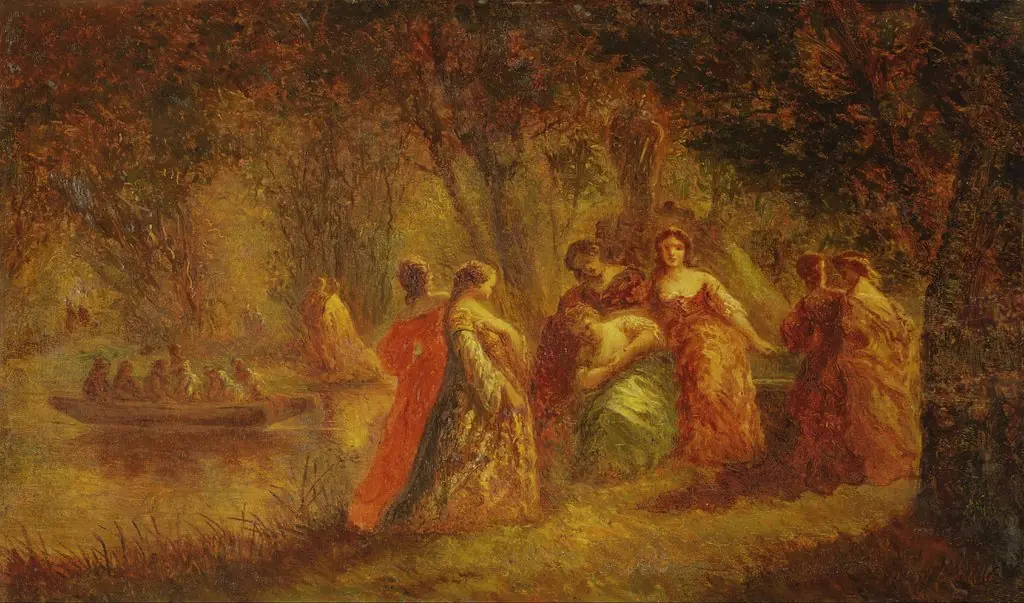
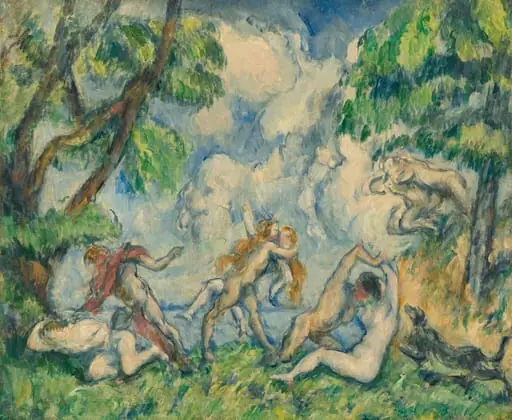
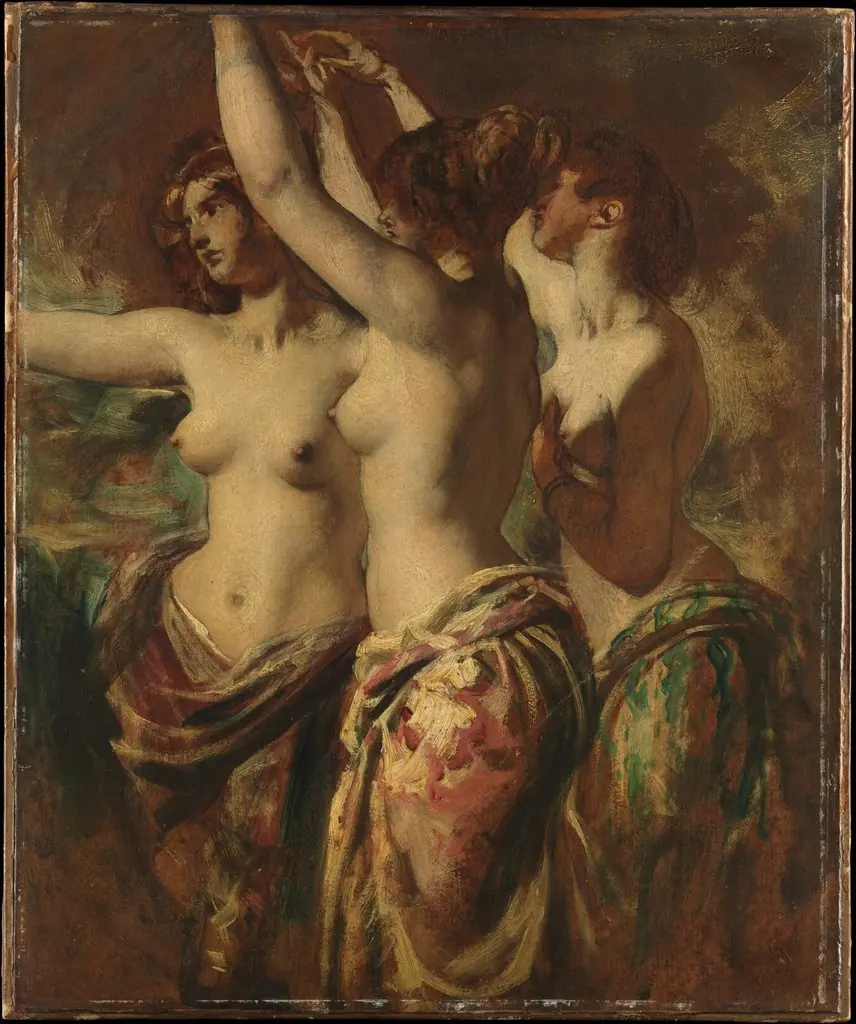
Four nude female figures stand together in a dense woodland, their limbs loosely entwined in a gesture of quiet communion. Though not tied to a specific myth, their presence evokes classical nymphs—spiritual beings of nature—blending pagan symbolism with the Barbizon emphasis on natural harmony. The scene suggests an intimate, transient moment rather than a narrative, inviting contemplation of human connection within the wild.
Technique & Style
Boulenger employed a refined realism, rendering both the human form and forest environment with careful attention to texture and detail. He used chiaroscuro to model the figures and trees, enhancing volume through subtle shifts in light and shadow. The palette is muted yet nuanced, with greens and browns softened by diffused daylight, creating a hushed, atmospheric depth that anchors the figures within their surroundings.
History & Provenance
Completed in 1866, the painting entered the collection of the Royal Museum of Fine Arts Antwerp, where it remains today. Boulenger, often called 'the Belgian Corot' for his lyrical landscapes, gained recognition in Belgium and France during his lifetime. The work’s preservation in a major public institution reflects its acceptance within 19th-century European artistic circles focused on naturalism.
Context
In the 1860s, Belgian artists increasingly engaged with French Barbizon ideals, rejecting academic grandeur for intimate, observed nature. Boulenger’s work aligned with this shift, emphasizing mood over drama. While mythological figures were uncommon in Barbizon painting, their inclusion here reflects a broader European trend of blending classical references with realist landscapes, offering a poetic alternative to industrializing modernity.
Legacy
Though not widely reproduced, *Nymphs in the Forest* exemplifies a quiet strand of 19th-century Belgian painting that sought to reconcile classical themes with naturalist practice. Boulenger’s restrained approach influenced later regional artists who valued atmosphere and subtlety. The painting endures as a testament to the period’s nuanced dialogue between myth, landscape, and perception.
Own this work as a print
Artist & collection
Artist
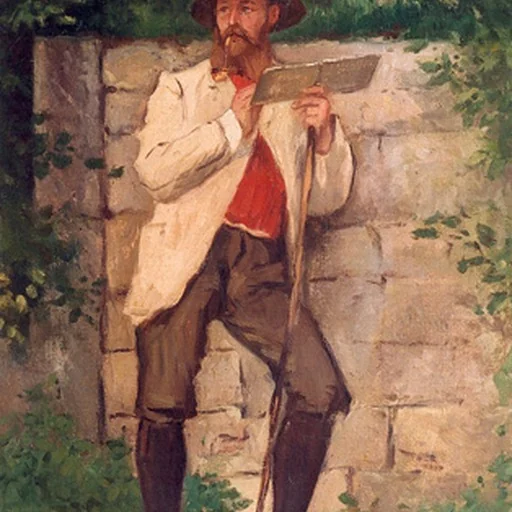
Hippolyte Emmanuel Boulenger (3 December 1837 – 4 July 1874) was a Belgian landscape painter influenced by the French Barbizon school, considered to be "the Belgian Corot".