Artwork
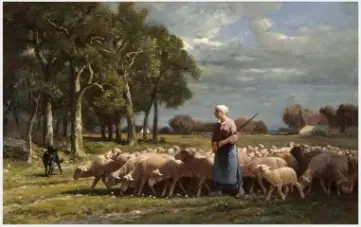
A Shepherd and Flock
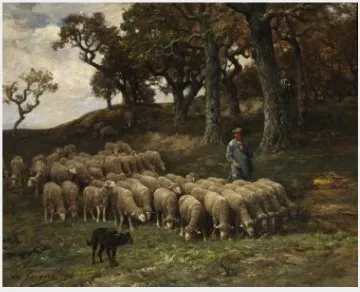
A Shepherd and Flock is an oil painting by the Barbizon school artist Charles Jacque. It dates from 1888 and is held in the collection of the National Gallery of Ireland.
About this work
Overview
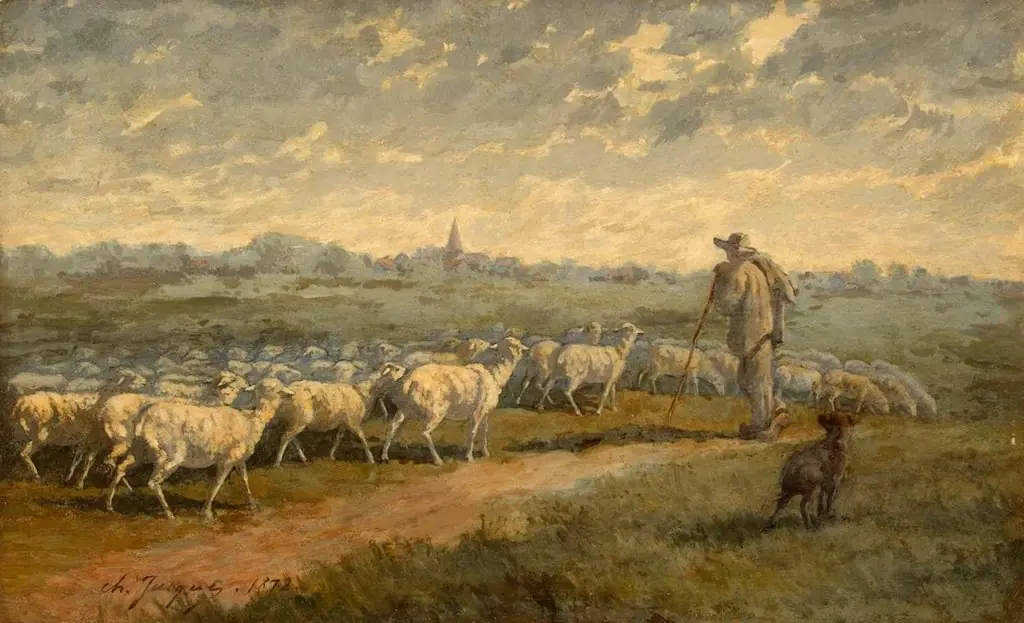
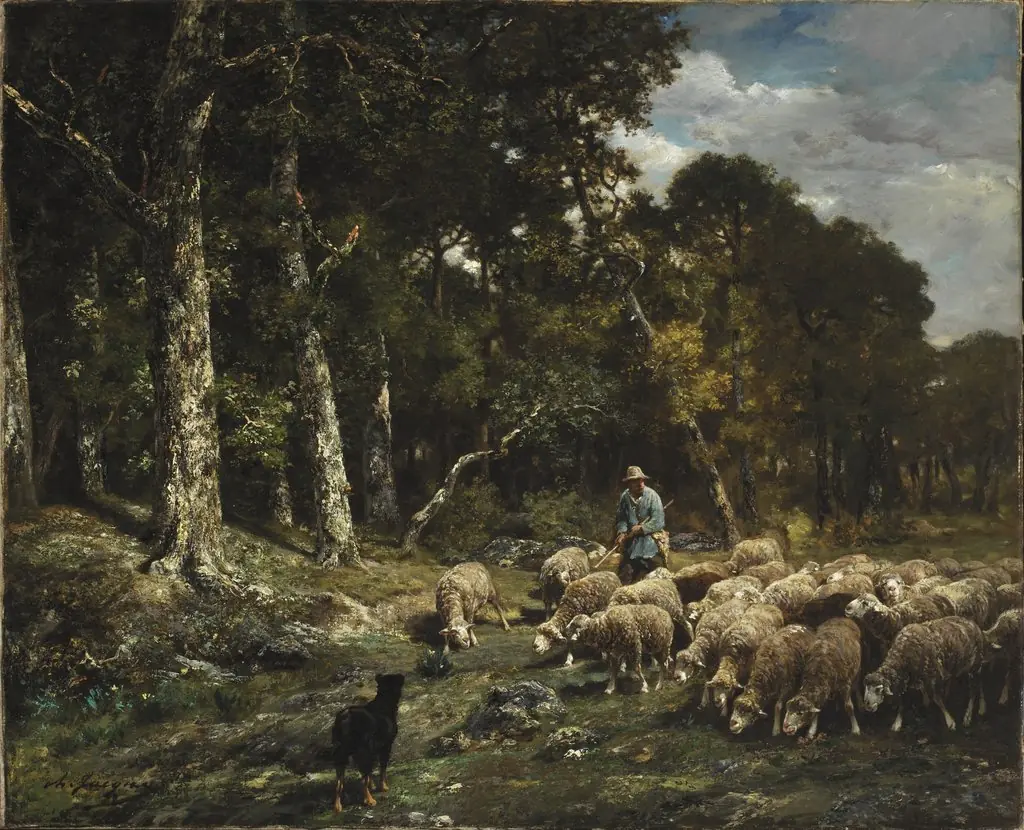
A Shepherd and Flock is an 1888 oil painting by French artist Charles Jacque, associated with the Barbizon School. The work typifies the school's emphasis on rural life, depicting a serene pastoral scene.
Subject & Meaning
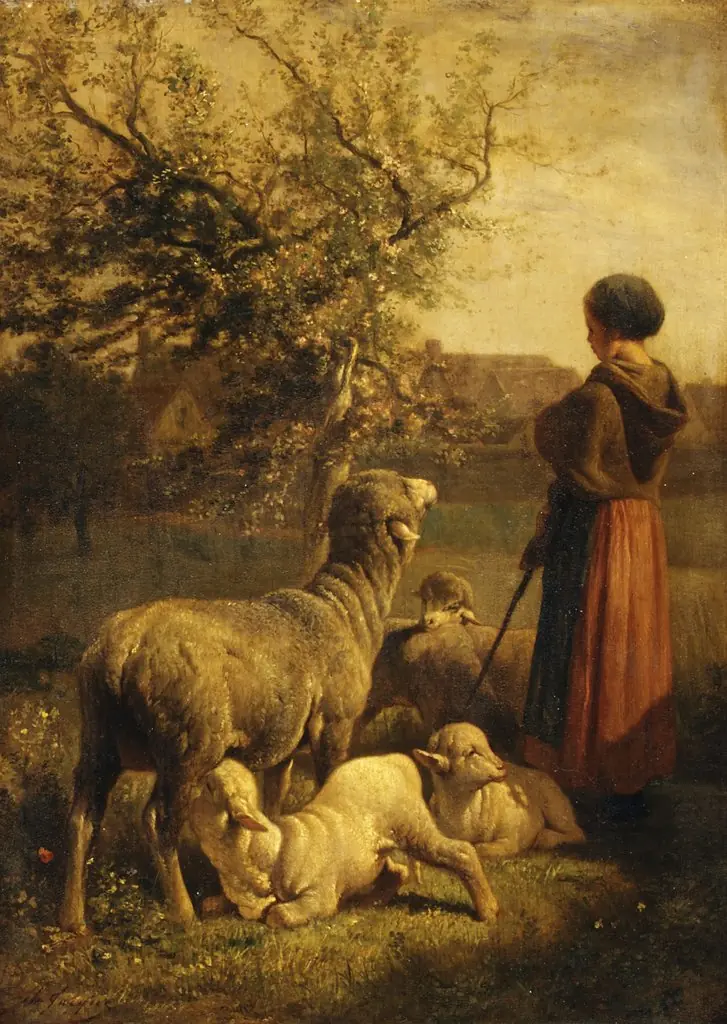
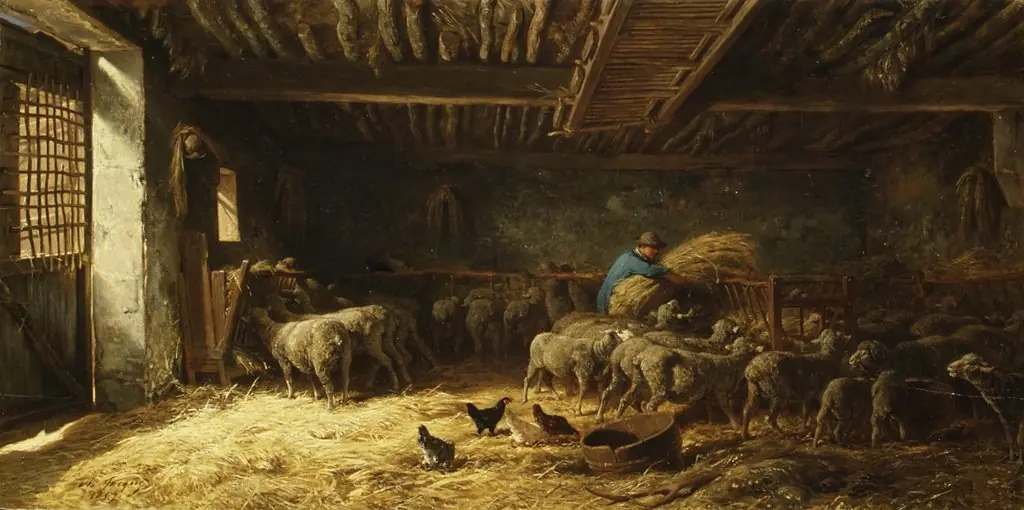
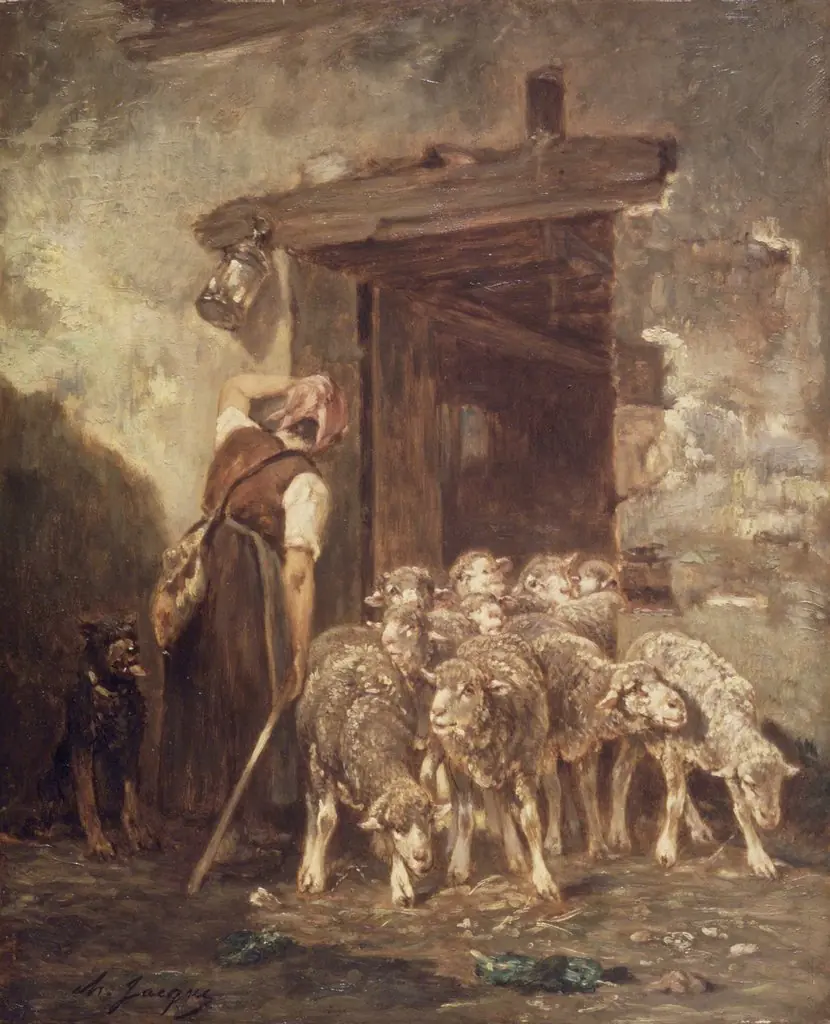
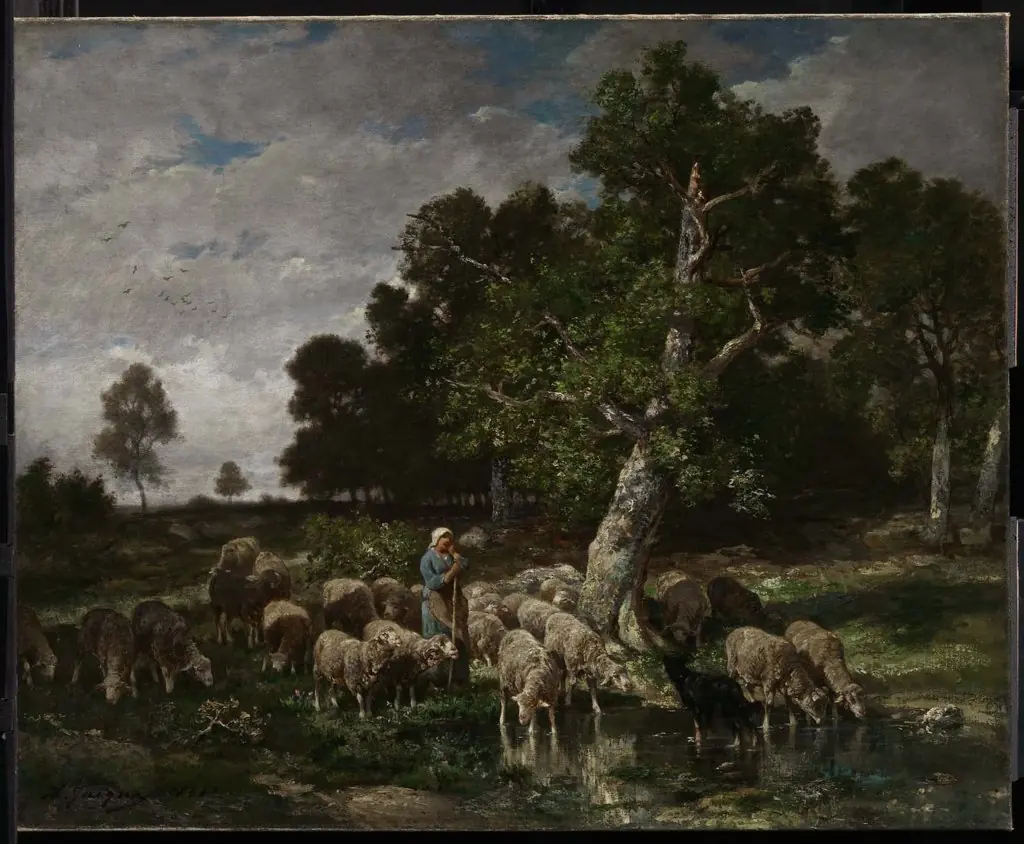
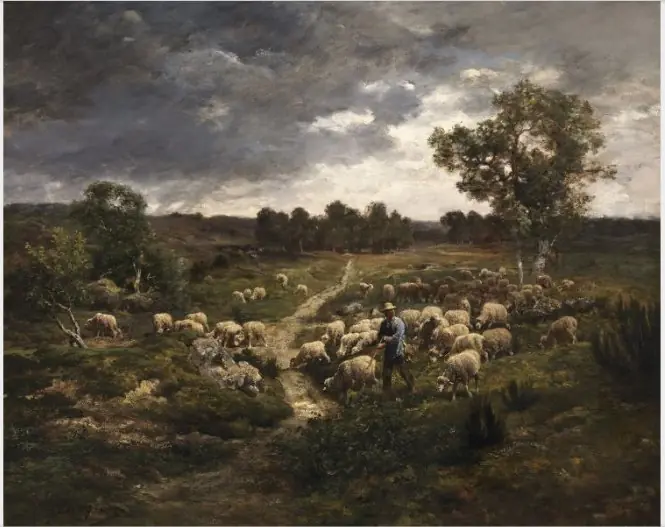
The painting shows a contemplative shepherd standing amidst a large flock of sheep in a wooded setting. The scene conveys a sense of quiet, rustic life, reflecting the Barbizon School's focus on naturalistic, everyday country subjects.
Technique & Style
Jacque employed oil paint to capture the somber mood of the scene, characterized by a gray, cloudy sky. The composition's central figure and unified direction of the sheep suggest a sense of gentle, guided movement.
History & Provenance
Created in 1888, the painting is a product of Jacque's later work. His artistic background was influenced by seven years in the French Army, where he learned engraving, later transitioning to painting pastoral scenes.
Context
As a Barbizon School artist, Jacque was contemporary to Jean-François Millet, sharing an interest in depicting humble, rural life. This painting exemplifies the school's departure from idealized landscapes towards more realistic, everyday portrayals.
Legacy
A Shepherd and Flock contributes to the Barbizon School's enduring influence on the representation of rural themes in art. Jacque's work, including this piece, remains notable for its contribution to the movement's emphasis on naturalism and simplicity.
Artist & collection
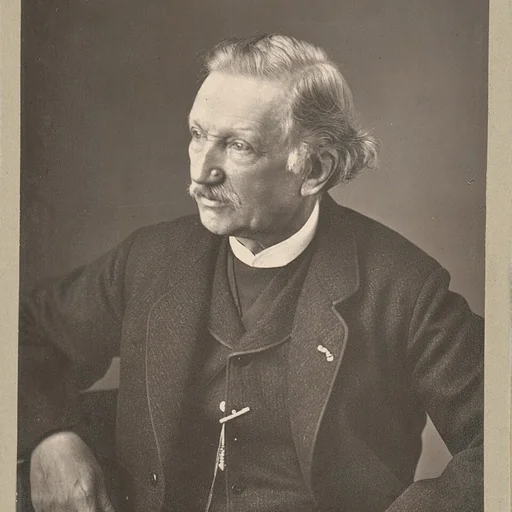
Artist
Charles-Émile Jacque (23 May 1813 – 7 May 1894) was a French painter of Pastoralism and engraver who was, with Jean-François Millet, part of the Barbizon School. He first learned to engrave maps when he spent seven years in the French Army.