Artwork
The Cross Roads, Ditchling
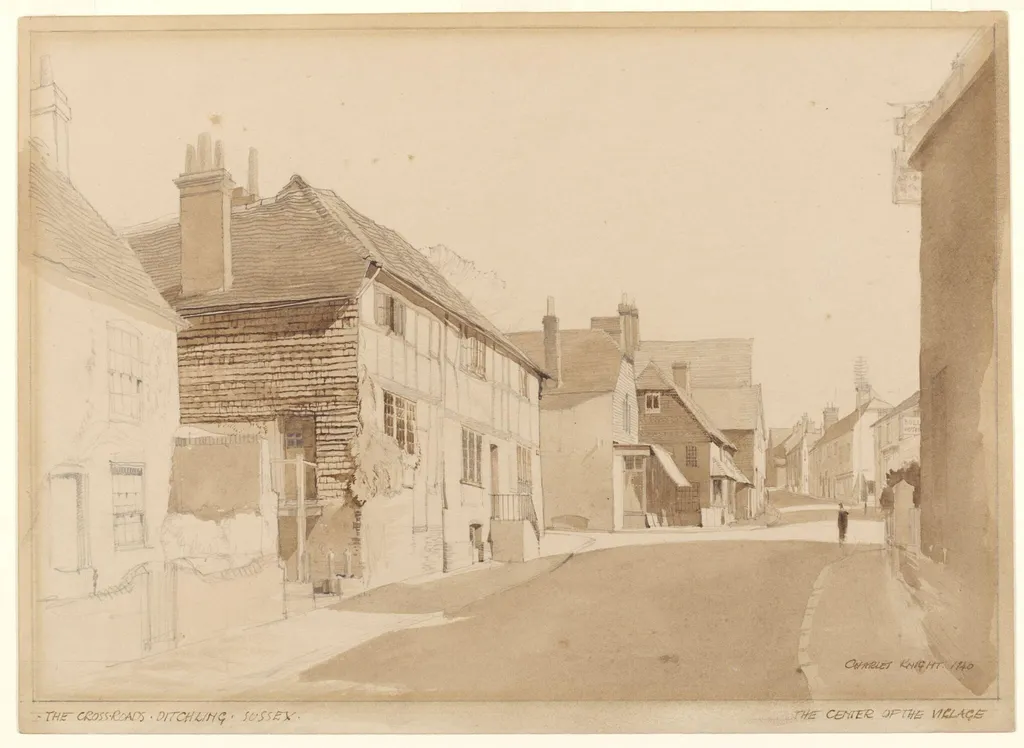
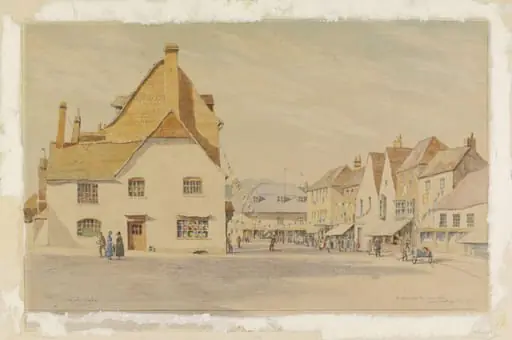
The Cross Roads, Ditchling is a watercolor work on paper by the British Romanticist artist Charles Knight. It dates from 1940 and is held in the collection of the Victoria and Albert Museum.
About this work
" The street is empty except for a few small figures and a horse-drawn cart in the distance.
This sketch shows a quiet village street with old buildings. The houses have dark wooden beams and steep roofs, some with chimneys. A sign on one building reads "Bull Hotel." The street is empty except for a few small figures and a horse-drawn cart in the distance.
The artist focused on everyday details like uneven cobblestones and weathered walls. This was drawn in 1940, capturing a moment in a small English village.
Next, check out the Victoria and Albert Museum to see more works like this.
Overview
The Cross Roads, Ditchling is a watercolour painted by Charles Knight in 1940, commissioned as part of the Recording Britain project. This initiative sought to visually archive rural and architectural scenes across England during the early years of the Second World War. Knight’s work contributes to a larger collection of over 1,500 drawings and watercolours produced by 97 artists, all aimed at preserving a sense of place amid wartime uncertainty and societal change.
Subject & Meaning
The scene depicts a quiet lane in the Sussex village of Ditchling, featuring traditional timber-framed buildings with steeply pitched roofs and visible chimneys. A sign reading 'Bull Hotel' anchors the composition, suggesting local continuity. The nearly empty street, with only a few figures and a distant horse-drawn cart, evokes stillness and isolation. The work captures ordinary life not as grand spectacle, but as fragile, everyday endurance.
Technique & Style
Knight employed watercolour with restrained brushwork to convey texture and atmosphere. The weathered surfaces of stone and timber are suggested through layered washes, while uneven cobblestones are rendered with subtle tonal shifts. Delicate linework defines architectural details without overstatement. The composition avoids dramatic lighting, favoring natural daylight and muted hues that reflect the quiet dignity of the subject.
History & Provenance
Commissioned by the Recording Britain project, funded by the Pilgrim Trust and administered by the Ministry of Labour and National Service, the work was created to document vulnerable landscapes during wartime. Knight’s watercolour entered the national collection through this initiative and is now held by the Victoria and Albert Museum, alongside hundreds of other works from the project, preserved as historical records rather than artistic statements.
Context
Created in 1940, the painting emerged during a period of national anxiety over cultural loss. As bombing threatened historic buildings and rural life transformed under industrial pressures, the project sought to capture places deemed at risk. Ditchling, a village with medieval roots, represented a vanishing England — not for its grandeur, but for its quiet, unremarkable continuity, which the project deemed worthy of preservation.
Legacy
The Recording Britain collection remains a vital archive of mid-20th-century English life. Knight’s watercolour, like others in the series, offers no heroism or spectacle — only a sober record of ordinary streets and structures. These works continue to inform historical and architectural studies, serving as visual evidence of a Britain in transition, valued for their honesty rather than their aesthetic ambition.
Artist & collection

Artist
Charles Knight was a British landscape painter and stained-glass artist, best remembered for his watercolour paintings of the landscapes of Sussex.

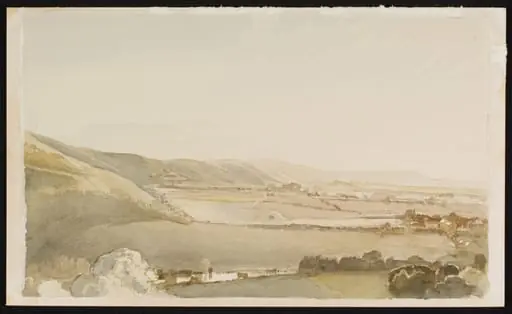 The Southdown, Underhill Road: Westwards from Poynings
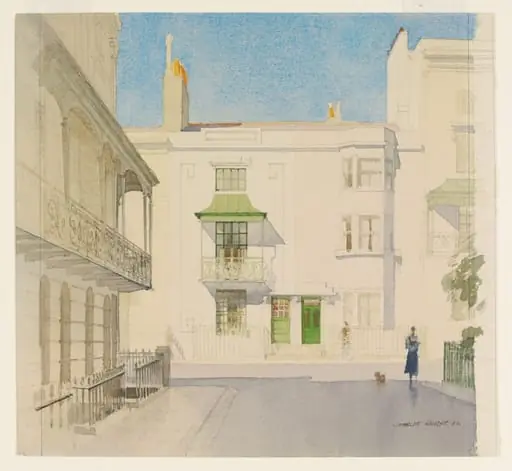 Regency Brighton: Houses in Russell Square, Sussex
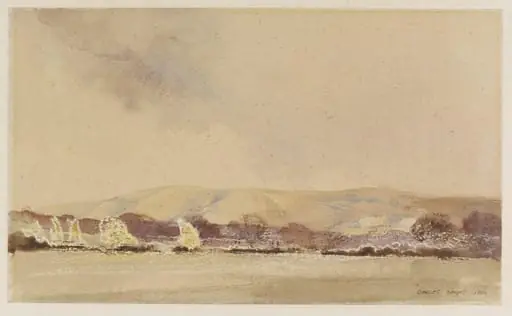 Fields and Woods South of Ditchling
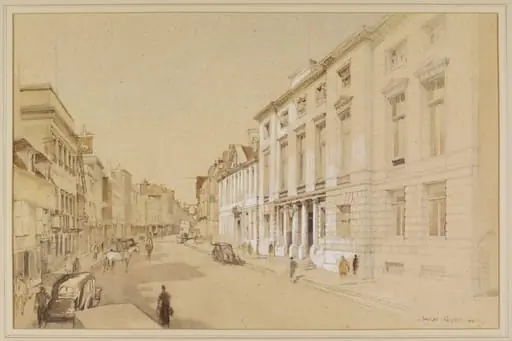 The County Hall and High Street, Lewes
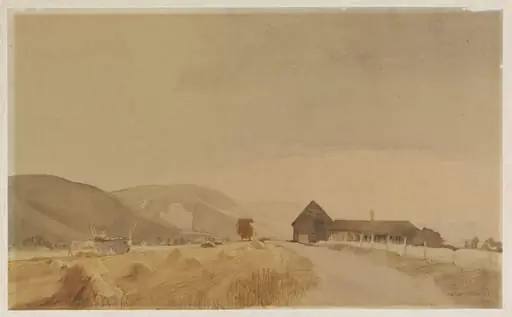 The Southdown, Underhill Road; Wickhurst Barn near Poynings looking Westwards
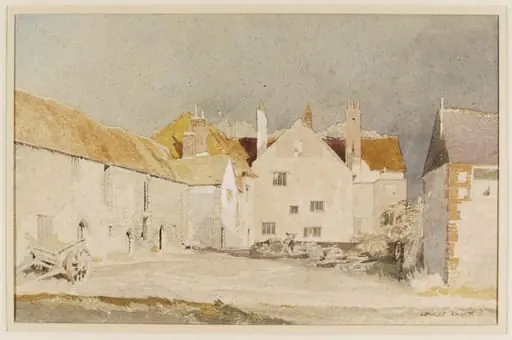 Hangleton Manor, near Brighton
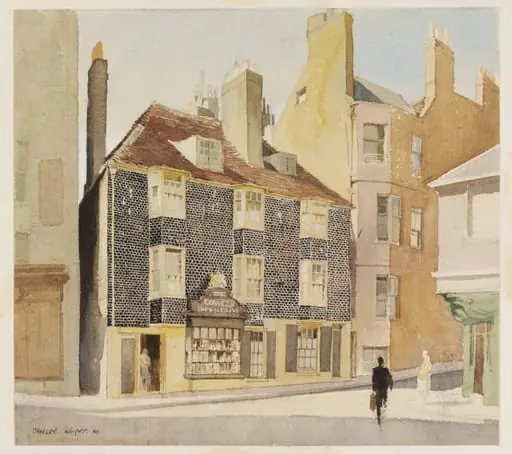 House and Shop in Pool Valley, Brighton
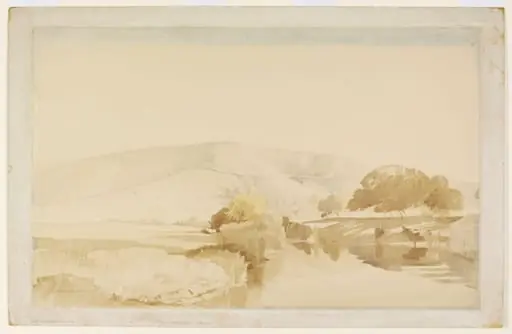 The Southdown, Underhill Road; Ditchling Beacon, from the Meadows near Westmeston
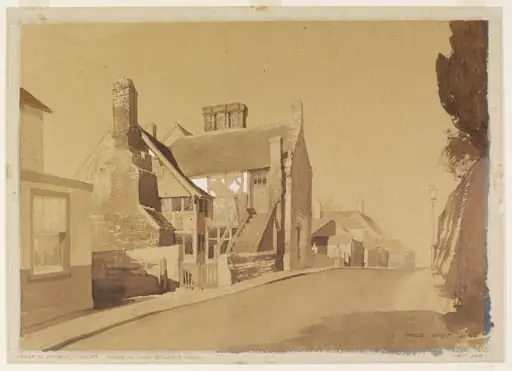 Anne of Cleves House, Ditchling
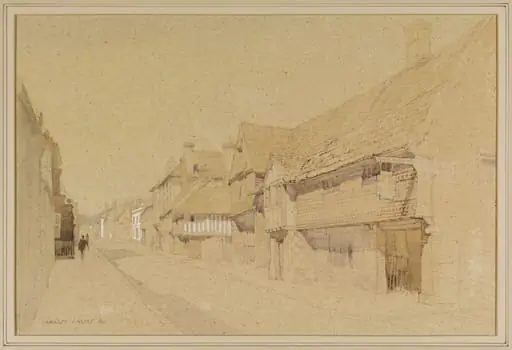 High Street, Southover, looking West
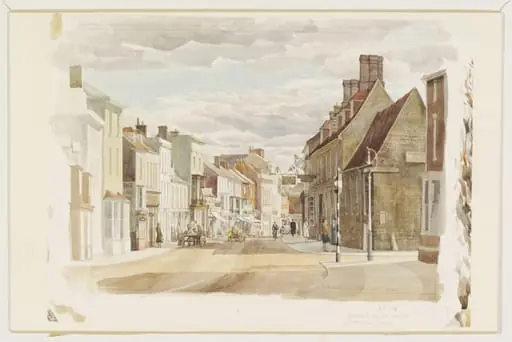 Towcester High Street from the Pomfret Arms Corner, Northamptonshire
 Cerne Abbas
 Beaconsfield
 Untitled
 The Old Manor, Childrey
 St. Anne's Church from Southover
 Georgian Houses, Market Hill, Buckingham
 Bury St Edmunds
 Fields and a Road
 Preparing for the Coronation, West Malling, May, 1937.