Artwork
The Southdown, Underhill Road; Clayton to Westmeston
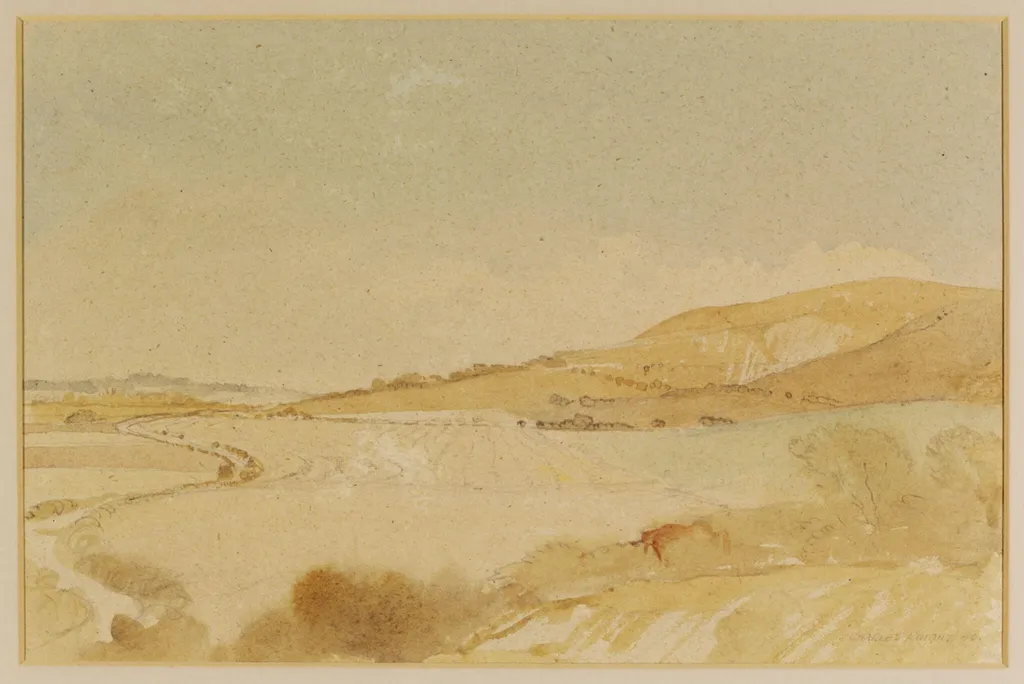
The Southdown, Underhill Road; Clayton to Westmeston is a watercolor work on paper by the British Romanticist artist Charles Knight. It dates from 1940 and is held in the collection of the Victoria and Albert Museum.
About this work
Overview
The Southdown, Underhill Road; Clayton to Westmeston is a 1940 watercolour by Charles Knight, created as part of the Recording Britain project.
Subject & Meaning
The painting depicts a rural English landscape, capturing rolling hills and fields with a winding road, likely to document the nation's topography during wartime.
Technique & Style
Executed in muted colours, the watercolour features soft, blended brushstrokes that create a dreamy quality and convey a sense of depth and atmosphere.
History & Provenance
The work was part of a collection of over 1,500 pieces produced by 97 artists for the Recording Britain project, funded by the Pilgrim Trust and overseen by the Committee for the Employment of Artists in Wartime.
Context
The project, directed by Sir Kenneth Clark, aimed to preserve traditional British art forms and document scenes of national identity amid concerns over wartime damage and cultural heritage loss.
Artist & collection

Artist
Charles Knight was a British landscape painter and stained-glass artist, best remembered for his watercolour paintings of the landscapes of Sussex.

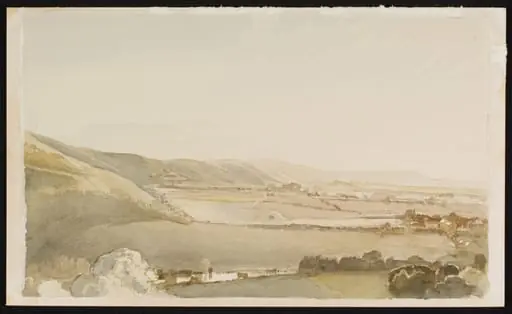 The Southdown, Underhill Road: Westwards from Poynings
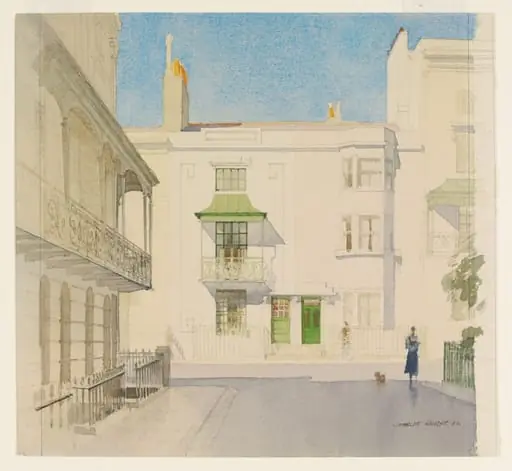 Regency Brighton: Houses in Russell Square, Sussex
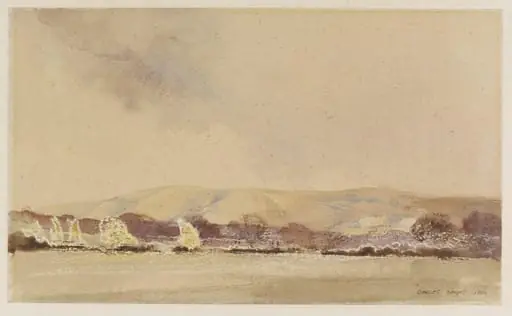 Fields and Woods South of Ditchling
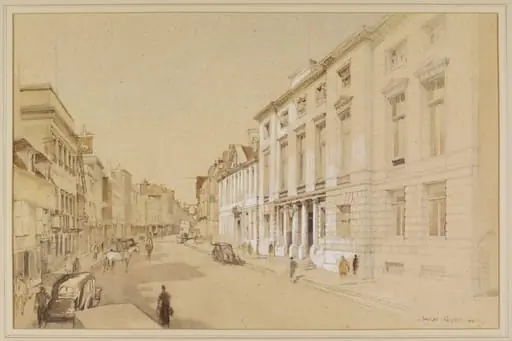 The County Hall and High Street, Lewes
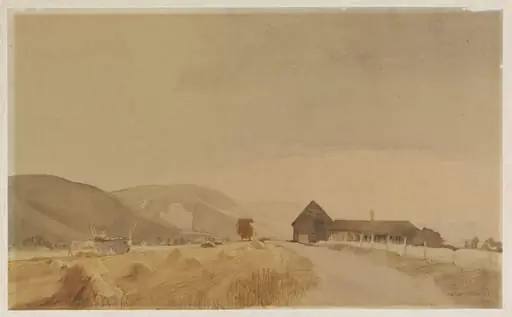 The Southdown, Underhill Road; Wickhurst Barn near Poynings looking Westwards
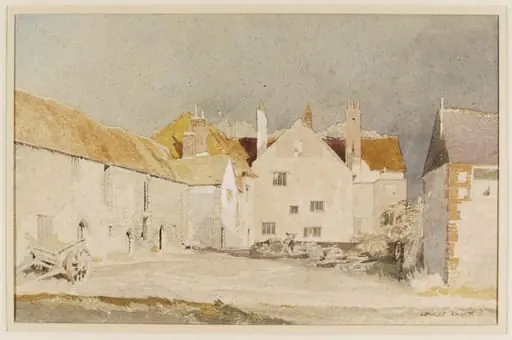 Hangleton Manor, near Brighton
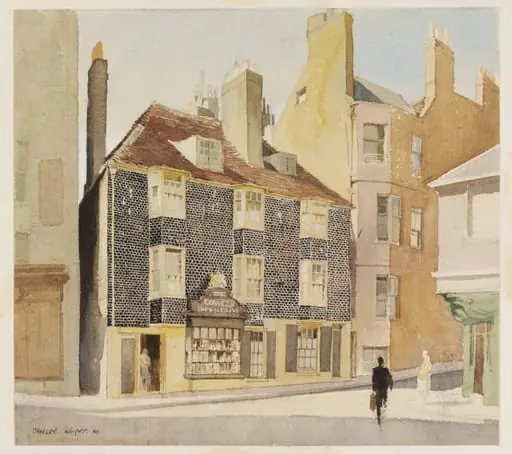 House and Shop in Pool Valley, Brighton
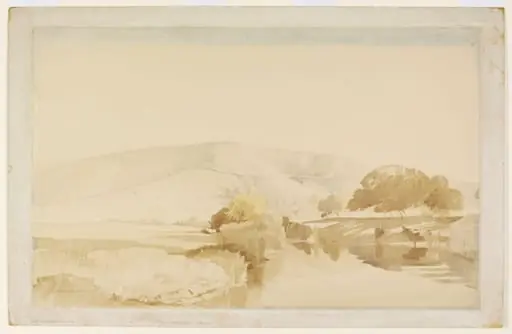 The Southdown, Underhill Road; Ditchling Beacon, from the Meadows near Westmeston
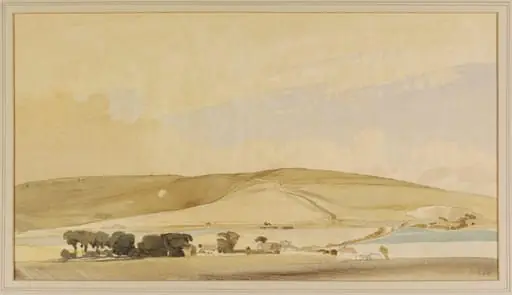 The Southdown, Underhill Road; In the Cuckmere Valley at Milton Street
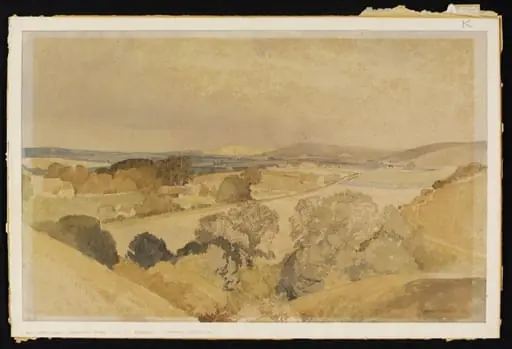 The Southdown, Underhill Road; Edburton, and the Road Eastwards
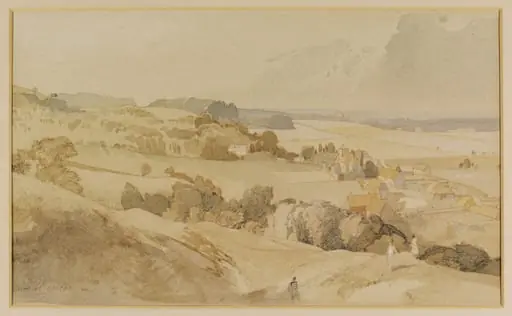 The Southdown, Underhill Road; Clayton Village
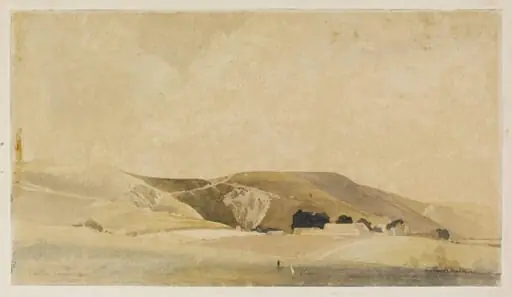 The Southdown, Underhill Road: Porching Farm from Fulking
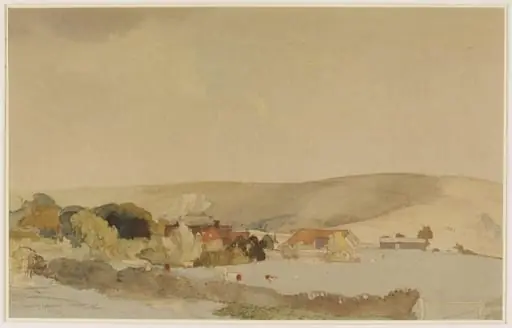 The Southdown, Underhill Road; Westmeston Place
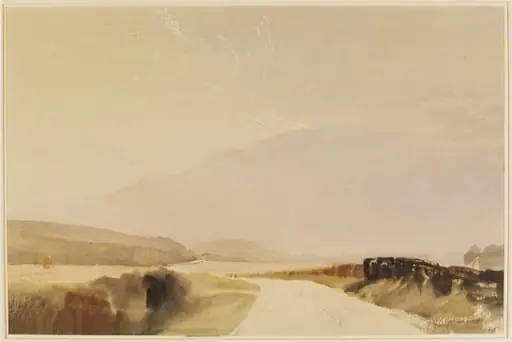 The Southdown, Underhill Road; Westwards towards Clayton
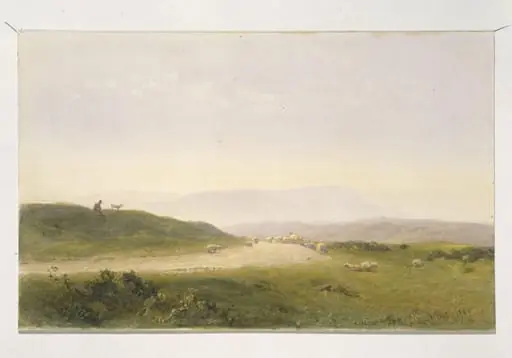 South Downs