Artwork
Wick Farm, near Ditchling
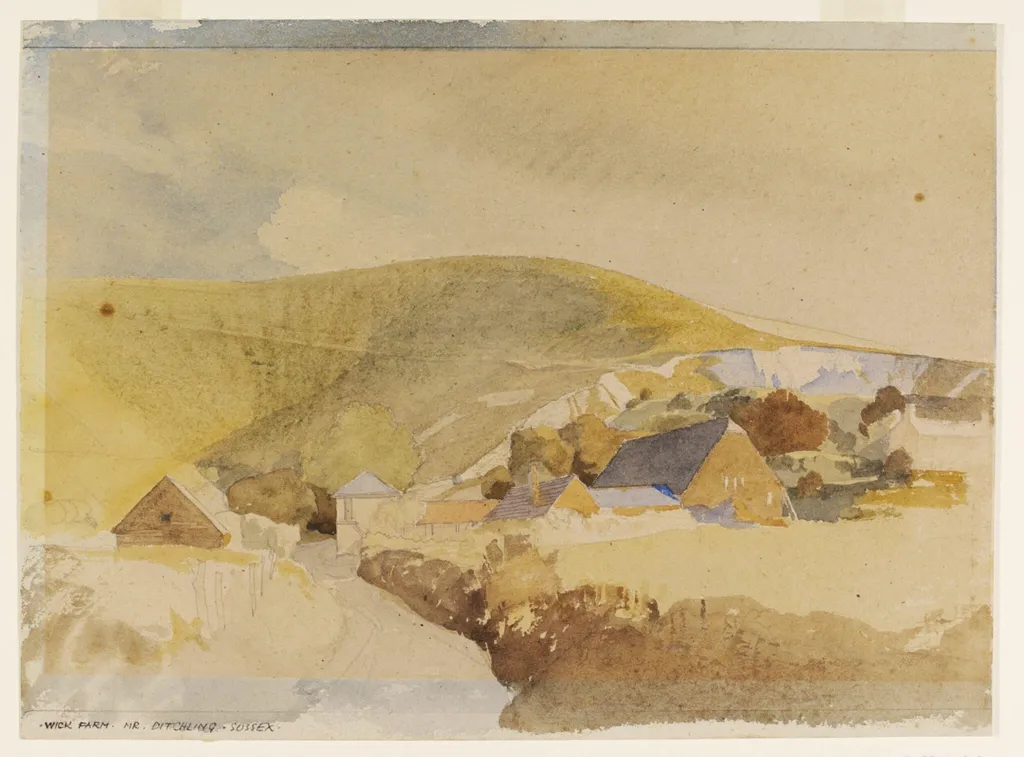
Wick Farm, near Ditchling is a watercolor work on paper by the British Romanticist artist Charles Knight. It dates from 1940 and is held in the collection of the Victoria and Albert Museum.
About this work
Overview
Wick Farm, near Ditchling is a watercolour painted by Charles Knight in 1940. It was produced as part of the Recording Britain initiative, a wartime effort to visually document the English countryside. The project, supported by the Pilgrim Trust and administered under government auspices, aimed to preserve images of rural scenes before they could be altered or lost due to conflict and change.
Subject & Meaning
Rather than emphasizing grandeur, Knight focuses on the ordinary—fields, trees, and distant structures—suggesting a quiet resilience in rural life.
The painting captures a quiet agricultural landscape in southern England, featuring modest farm buildings nestled among rolling hills. Rather than emphasizing grandeur, Knight focuses on the ordinary—fields, trees, and distant structures—suggesting a quiet resilience in rural life. The scene reflects a deliberate effort to record places deemed vulnerable to wartime disruption and the encroachment of modernity.
Technique & Style
Knight employed watercolour with restrained brushwork and a muted palette dominated by earthy greens and browns. Subtle tonal shifts and layered washes create depth and atmosphere without bold contrasts. The foreground trees are rendered with delicate texture, guiding the viewer’s eye into the distance. The technique conveys stillness and intimacy, aligning with the project’s aim to evoke quiet observation rather than dramatic impact.
History & Provenance
Commissioned in 1940 under the Recording Britain scheme, the work was one of over 1,500 pieces created by 97 artists between 1940 and 1943. Funded by the Pilgrim Trust and overseen by Sir Kenneth Clark, the project was administered through the Ministry of Labour and National Service. Wick Farm entered the Victoria and Albert Museum’s collection as part of this initiative, where it remains accessible for study and public viewing.
Context
During the Second World War, Britain faced widespread disruption, and many feared the loss of traditional landscapes and ways of life. Recording Britain emerged as a cultural preservation effort, responding to anxieties about destruction and change. Artists like Knight were sent to rural areas to capture scenes considered emblematic of national identity, offering a visual archive distinct from wartime propaganda.
Legacy
The Recording Britain collection endures as a significant historical record of the English countryside during a pivotal era. Knight’s contribution, though modest in scale, exemplifies the project’s quiet dedication to observation over spectacle. Today, these works serve as both artistic documents and cultural artifacts, preserving a vision of rural England at risk of vanishing.
Artist & collection

Artist
Charles Knight was a British landscape painter and stained-glass artist, best remembered for his watercolour paintings of the landscapes of Sussex.

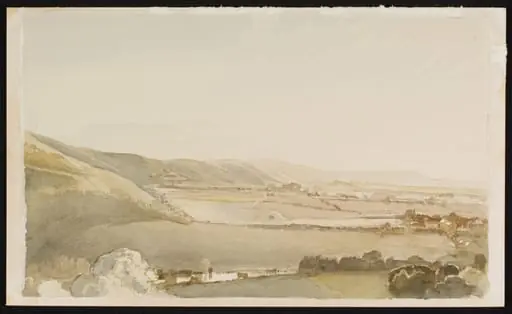 The Southdown, Underhill Road: Westwards from Poynings
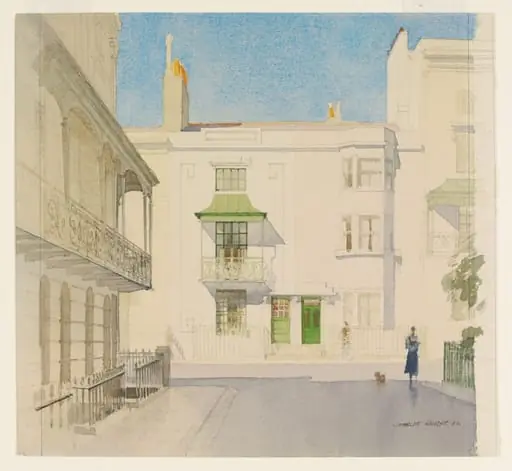 Regency Brighton: Houses in Russell Square, Sussex
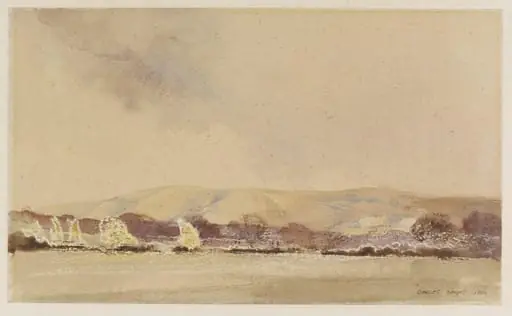 Fields and Woods South of Ditchling
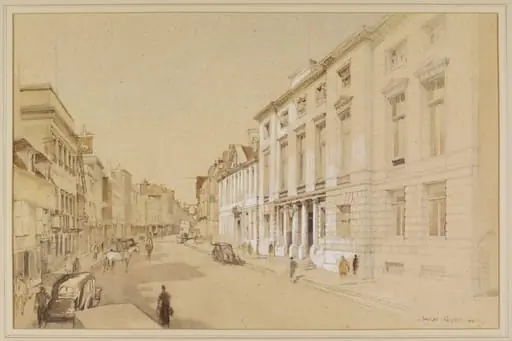 The County Hall and High Street, Lewes
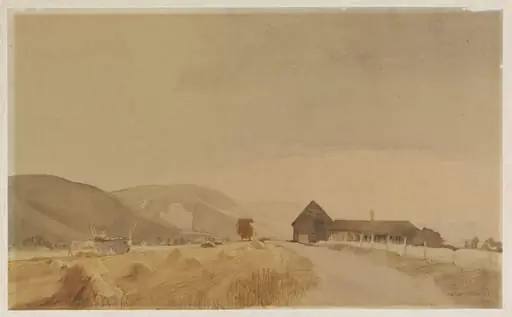 The Southdown, Underhill Road; Wickhurst Barn near Poynings looking Westwards
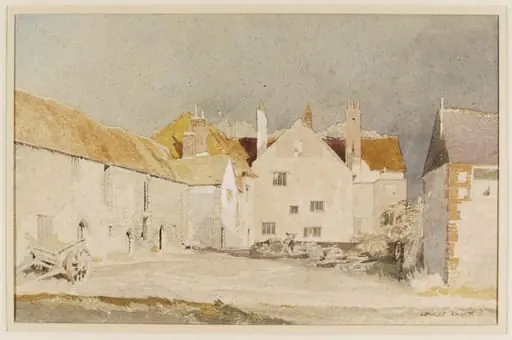 Hangleton Manor, near Brighton
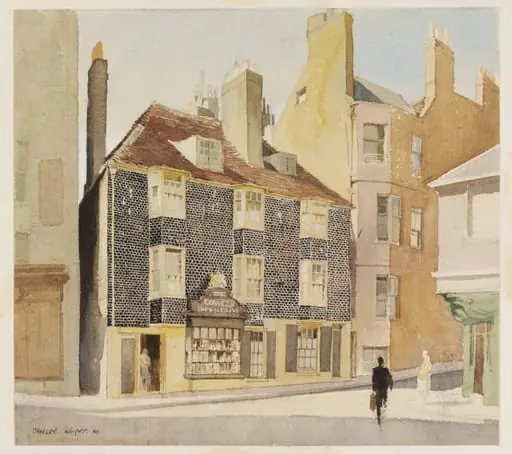 House and Shop in Pool Valley, Brighton
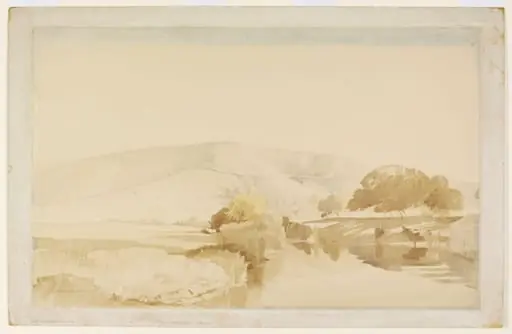 The Southdown, Underhill Road; Ditchling Beacon, from the Meadows near Westmeston
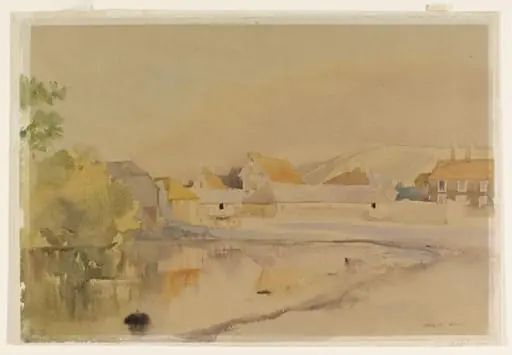 The Pond, Ditchling
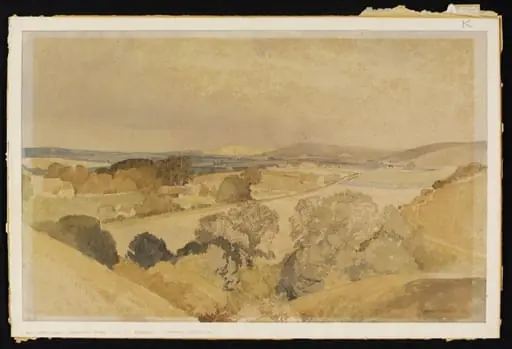 The Southdown, Underhill Road; Edburton, and the Road Eastwards
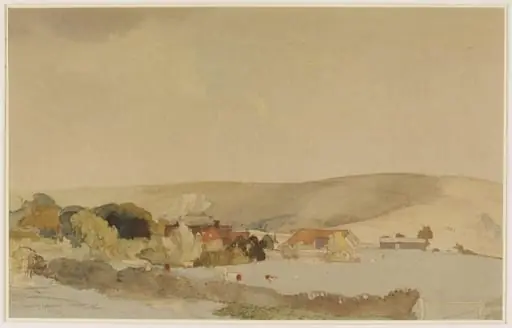 The Southdown, Underhill Road; Westmeston Place
 The Southdown, Underhill Road; Clayton Village
 Sketches made during the Campaign of 1854-55 in the Crimea, Circassia and Constantinople
 The Southdown, Underhill Road; Wolstonbury, showing Danny Farm
 Wishford, Wylye Valley