Artwork
Schild haltender Genius (Umkreis)
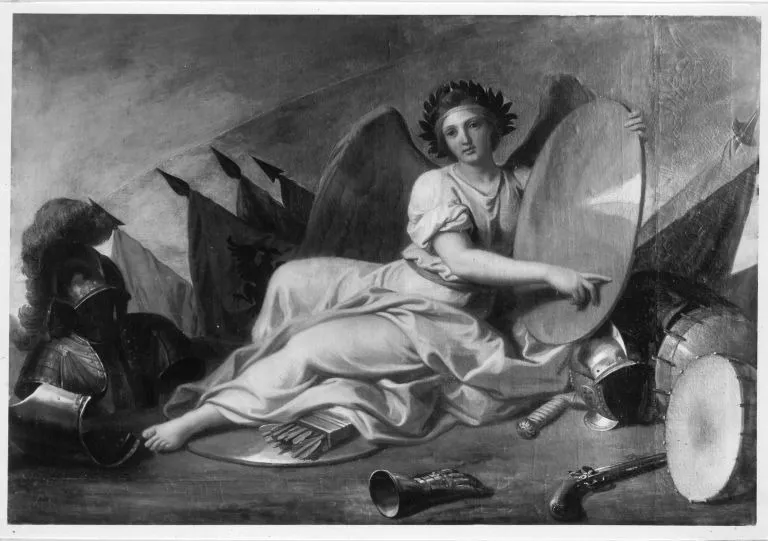
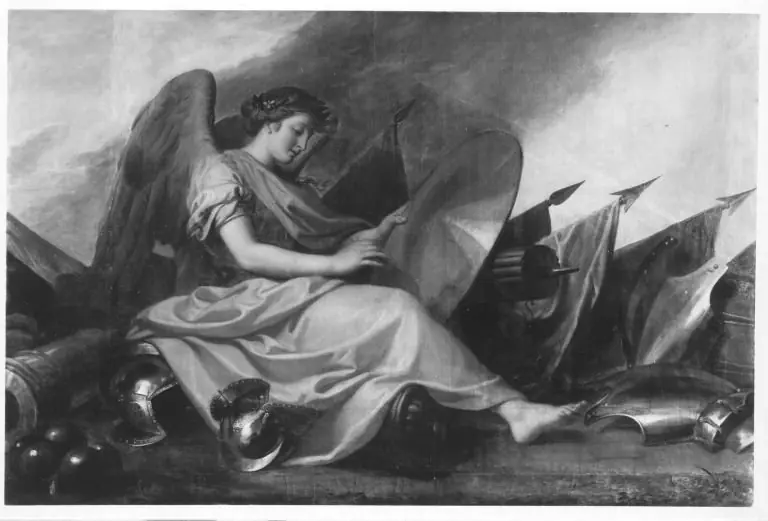
Schild haltender Genius (Umkreis) is an unspecified painting by the French Classical Baroque artist Charles Le Brun. It dates from 1654 and is held in the collection of the Bavarian State Painting Collections.
About this work
Overview
The work reflects the period’s interest in symbolic representation and was likely intended to convey ideals of victory or virtue.
This painting, attributed to the circle of Charles Le Brun and dated to 1654, belongs to the French Classical Baroque tradition. It features an allegorical female figure reclining with wings and a laurel wreath, holding a polished shield. The work reflects the period’s interest in symbolic representation and was likely intended to convey ideals of victory or virtue. It is now part of the Alte Pinakothek’s collection in Munich.
Subject & Meaning
The figure combines attributes of victory and peace: wings suggest divine or celestial presence, the laurel wreath denotes honor, and the shield implies protection or triumph. Her calm demeanor and relaxed posture contrast with the nearby armor and banners, suggesting that peace follows conflict rather than being threatened by it. The shield’s reflective surface may symbolize self-knowledge or the clarity of reason, common themes in Baroque allegory.
Technique & Style
The artist employs chiaroscuro to model the figure with soft, volumetric lighting, drawing attention to the smooth texture of skin and the gleam of the shield. The dark, undefined background isolates the figure, enhancing its symbolic weight. Brushwork is refined but not overly detailed, favoring atmospheric harmony over narrative clutter. The composition’s balance and restrained movement reflect classical influences, particularly those of Poussin.
History & Provenance
Created during Le Brun’s early career, the painting likely emerged from his studio or a close associate’s hand, as its style aligns with his theoretical ideals but lacks his definitive hand. It entered the Alte Pinakothek’s collection in the 19th century, possibly through royal or aristocratic acquisitions. While not signed or documented in contemporary inventories, its attribution to Le Brun’s circle is supported by stylistic parallels to his known works.
Context
In mid-17th century France, allegorical imagery was central to courtly art, used to legitimize power through classical references. Le Brun, as Louis XIV’s chief painter, promoted a visual language rooted in Roman and Renaissance models. This work fits within that framework, using mythic symbolism to elevate abstract virtues. The presence of armor and flags nods to military triumph, but the serene figure redirects focus toward enduring ideals rather than conquest.
Legacy
Though not among Le Brun’s most famous works, this painting exemplifies the dissemination of his aesthetic principles beyond his own brush. It illustrates how his theoretical emphasis on clarity, moral symbolism, and classical form influenced a broader network of artists. Its preservation in a major European collection underscores its role as a representative example of French Baroque allegory in the decades before the full establishment of the Royal Academy.
Artist & collection
Artist
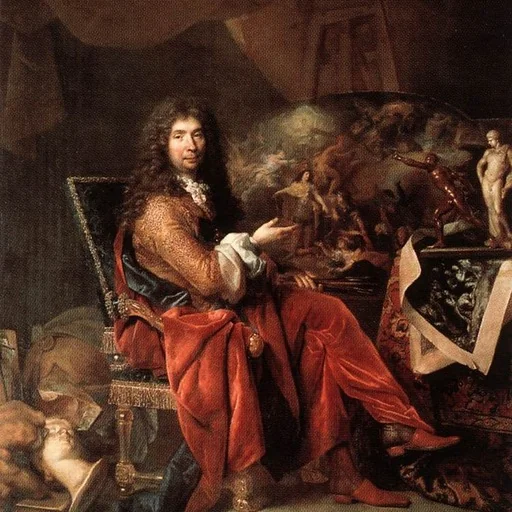
Charles Le Brun (French pronunciation: ; baptised 24 February 1619 – 12 February 1690) was a French painter, physiognomist, art theorist, and a director of several art schools of his time.

 Schild haltender Genius (Umkreis)
 Apotheose der Maria Anna Luisa de' Medici
 Der Erzengel Michael
 Sulmalla prøver forgæves at overtale sin elsker Cathmor til at slutte fred med Fingal
 Bellona Seated on Her Trophies
 Sulmalla prøver forgæves at overtale sin elsker Cathmor til at slutte fred med Fingal
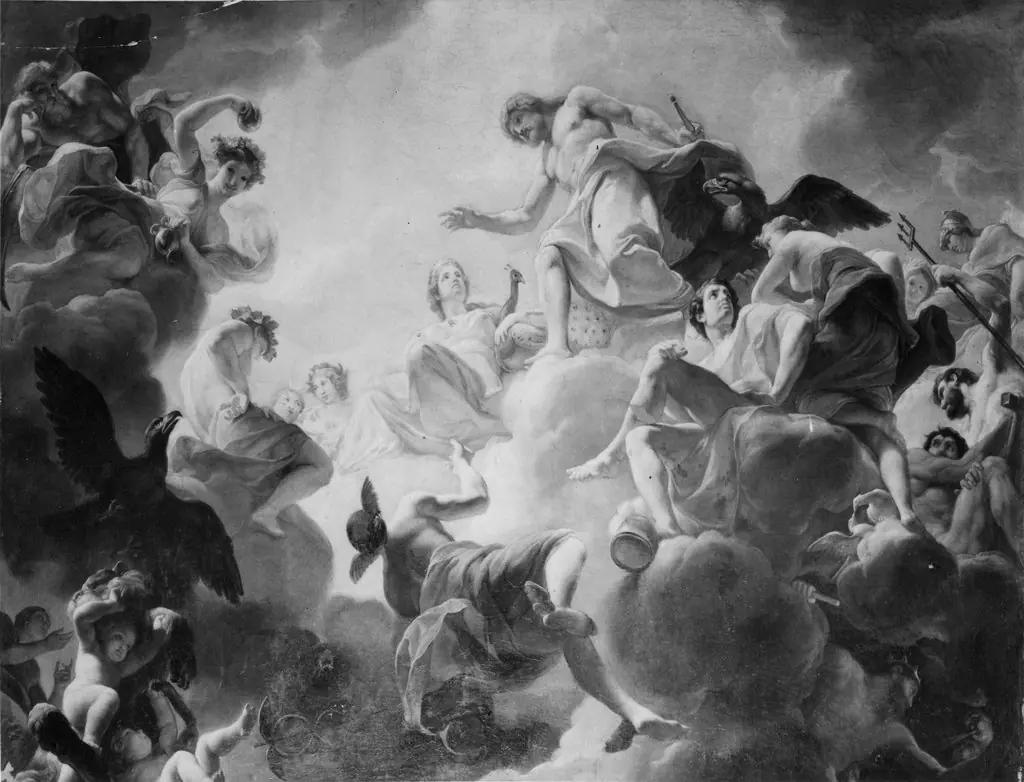 The Apotheosis of Hercules
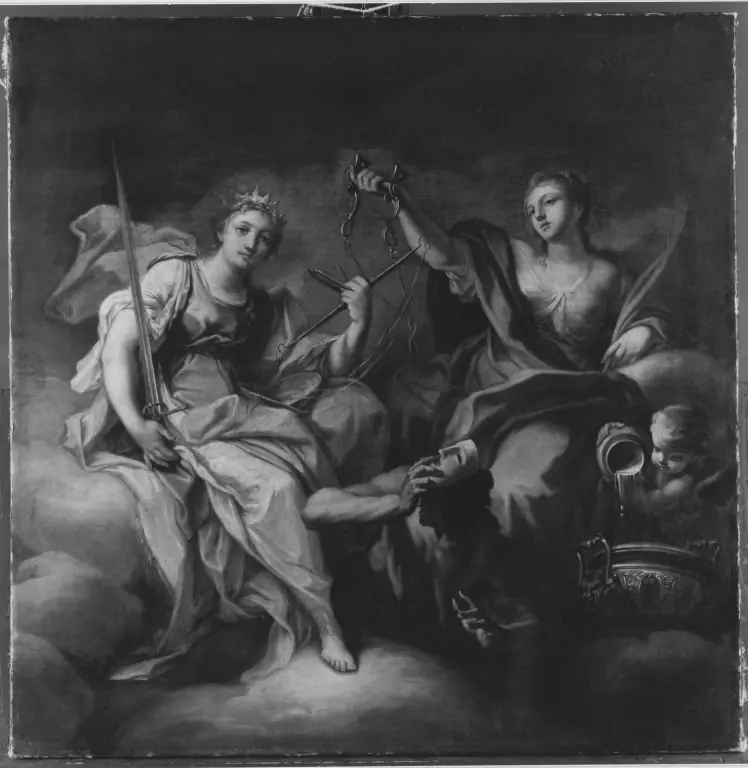 Justitia und Temperentia
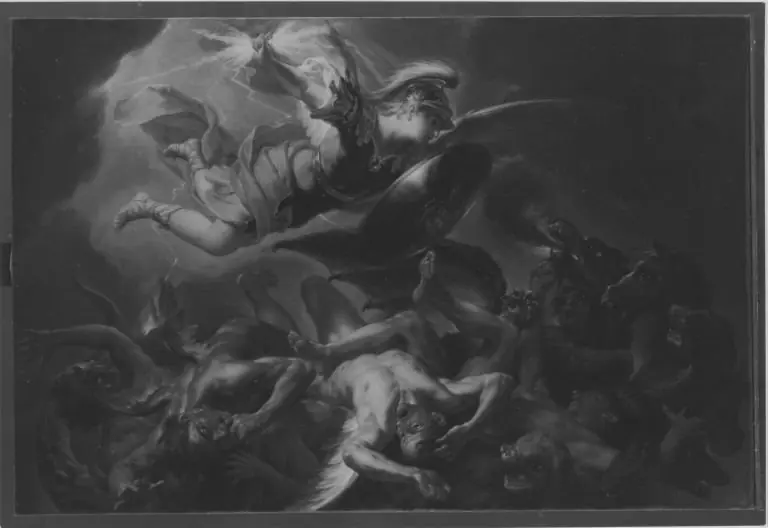 Erzengel Michael
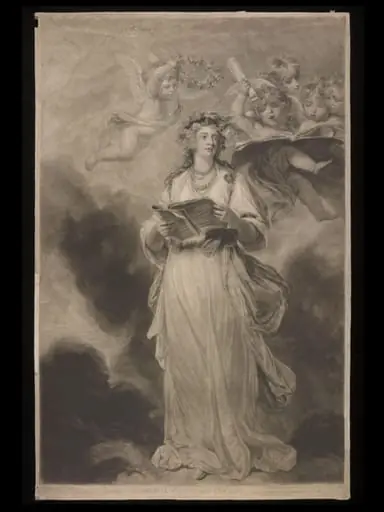 H Beard Print Collection
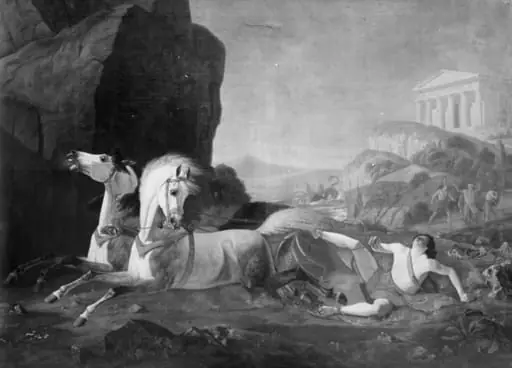 Hippolyts død
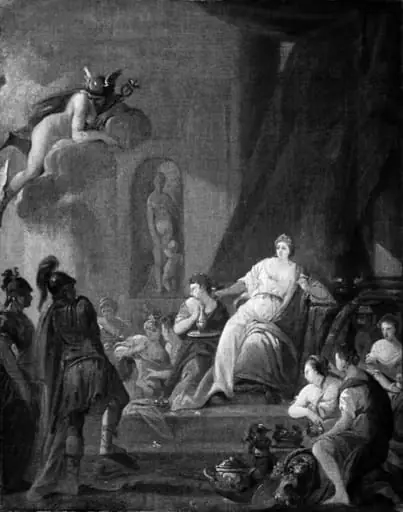 Hermes befaler Kalypso at frigive Odysseus