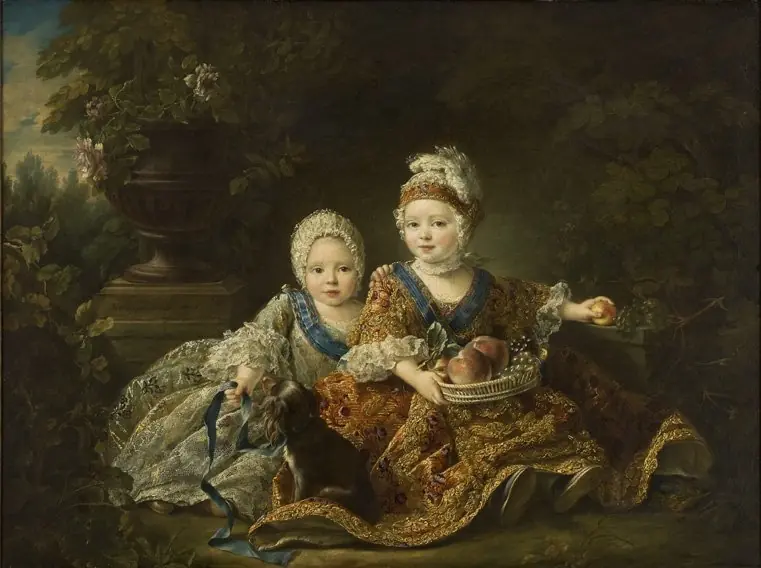
Artwork
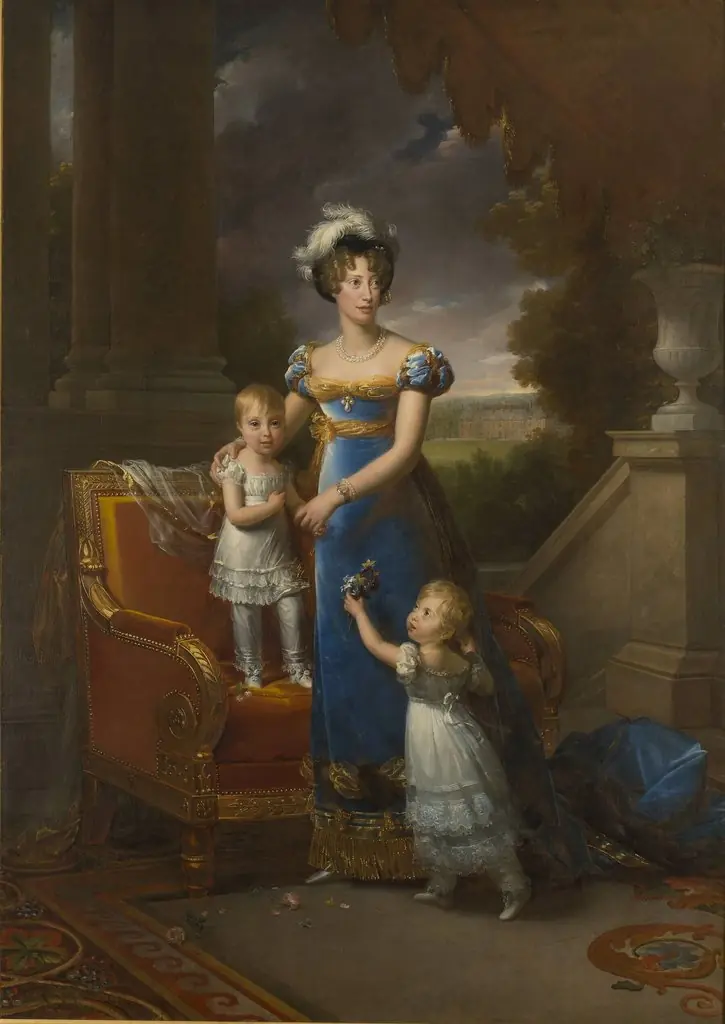
The Comtesse d'Artois and her children
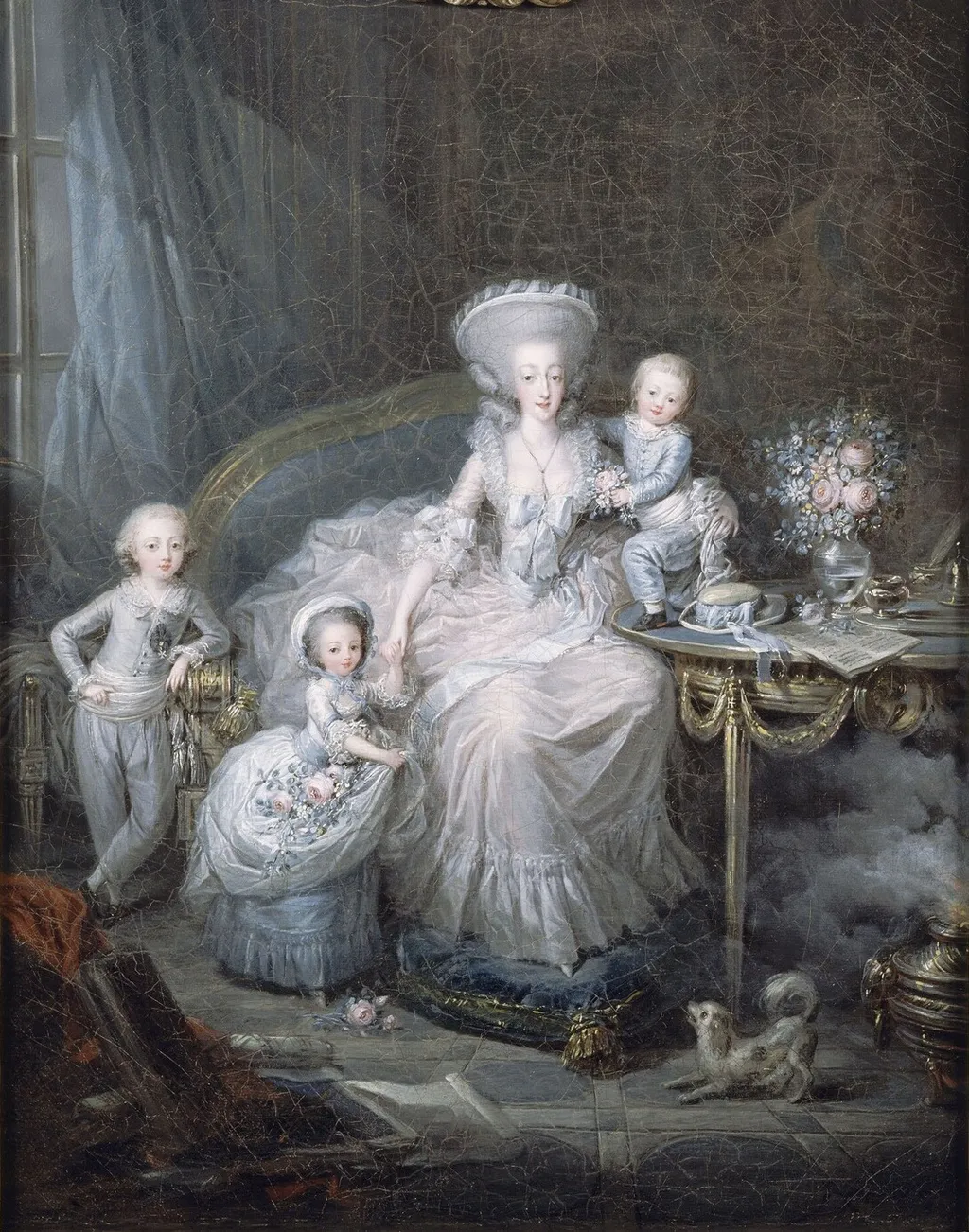
The Comtesse d'Artois and her children is an oil painting by the Rococo painting artist Charles Le Clercq. It dates from 1790 and is held in the collection of the Palace of Versailles.
About this work
Overview
The work is part of the collection at the Palace of Versailles, illustrating a domestic scene from the late eighteenth‑century French aristocracy.
Charles Le Clercq’s oil portrait, dated 1790, depicts the Comtesse d’Artois surrounded by three of her children. The family is arranged within an interior setting, the mother seated on a plush couch while the children occupy various positions around her. The work is part of the collection at the Palace of Versailles, illustrating a domestic scene from the late eighteenth‑century French aristocracy.
Subject & Meaning
The central figure, the Comtesse, is presented in an opulent gown and wide-brimmed hat, emphasizing her status and maternal role. Her gaze toward one child, who stands on a table, creates an intimate interaction, while the other two children—one seated on the floor, the other beside the couch—reinforce themes of familial affection and the continuity of lineage within the noble household.
Technique & Style
Executed in oil on canvas, Le Clercq employs fine brushwork to render the textures of silk, lace, and polished wood with considerable precision. The composition balances rich coloration in the dress and accessories with a more subdued palette for the surrounding furnishings, allowing the figures to stand out against the elaborately draped curtains and decorative objects that populate the scene.
History & Provenance
Created shortly after the French Revolution, the portrait entered the royal collection and is now displayed at the Palace of Versailles. Its survival through the turbulent post‑revolutionary period reflects the continued appreciation for aristocratic portraiture as a record of personal and social identity in pre‑Napoleonic France.
Context
Le Clercq, active in the late eighteenth century, specialized in portraiture that combined realism with the decorative sensibilities of the Rococo transition to Neoclassicism. This work exemplifies the period’s interest in depicting private family life within lavish interiors, a shift from earlier courtly representations toward more personal, domestic subjects.
Artist & collection

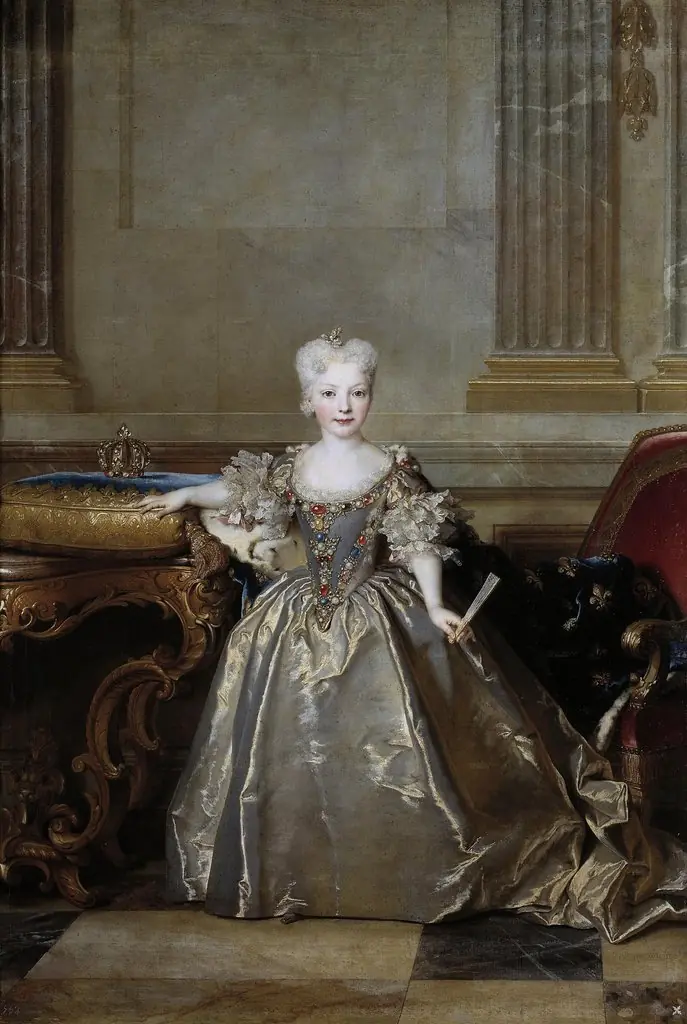 María Ana Victoria de Borbón y Farnesio
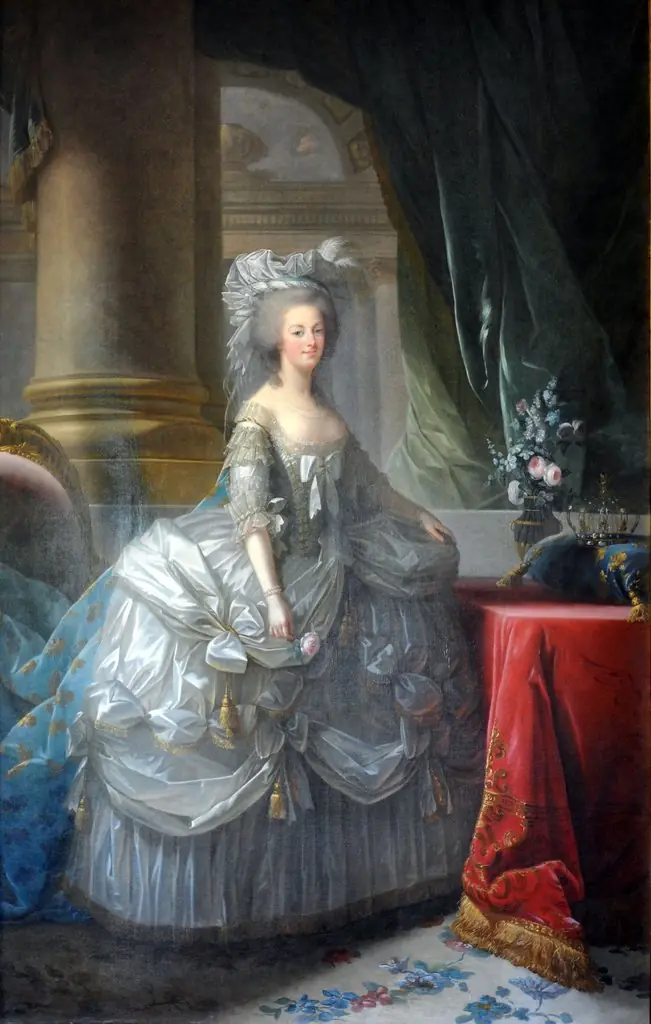 Marie Antoinette in Court Dress
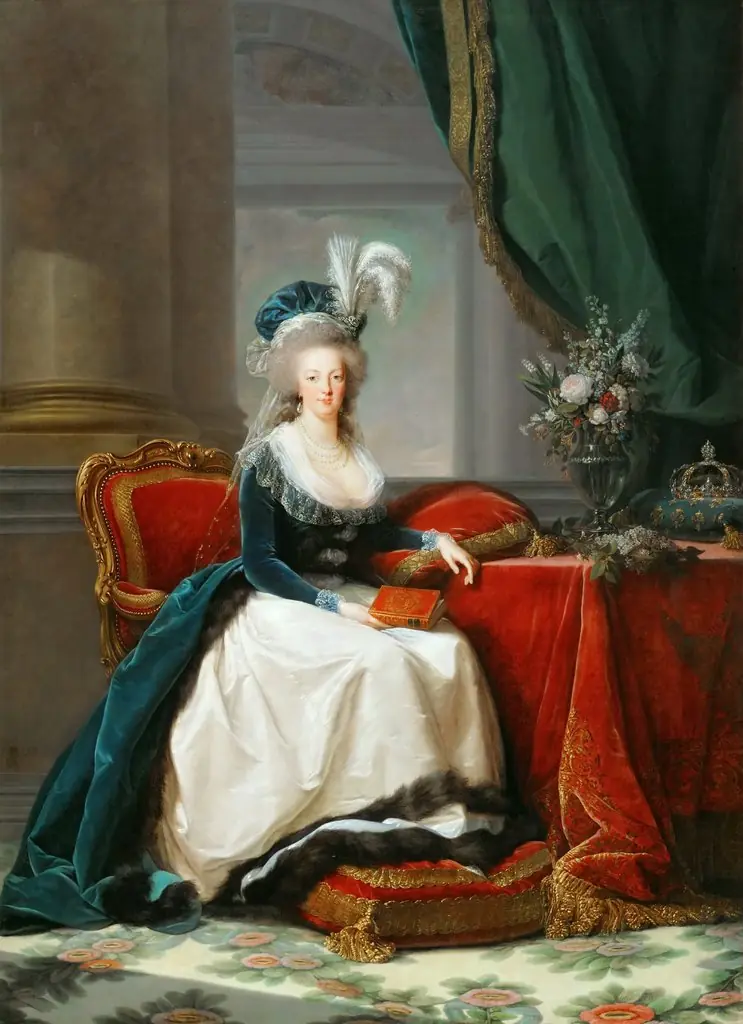 Marie-Antoinette seated, in blue coat and white dress, holding a book in her hand
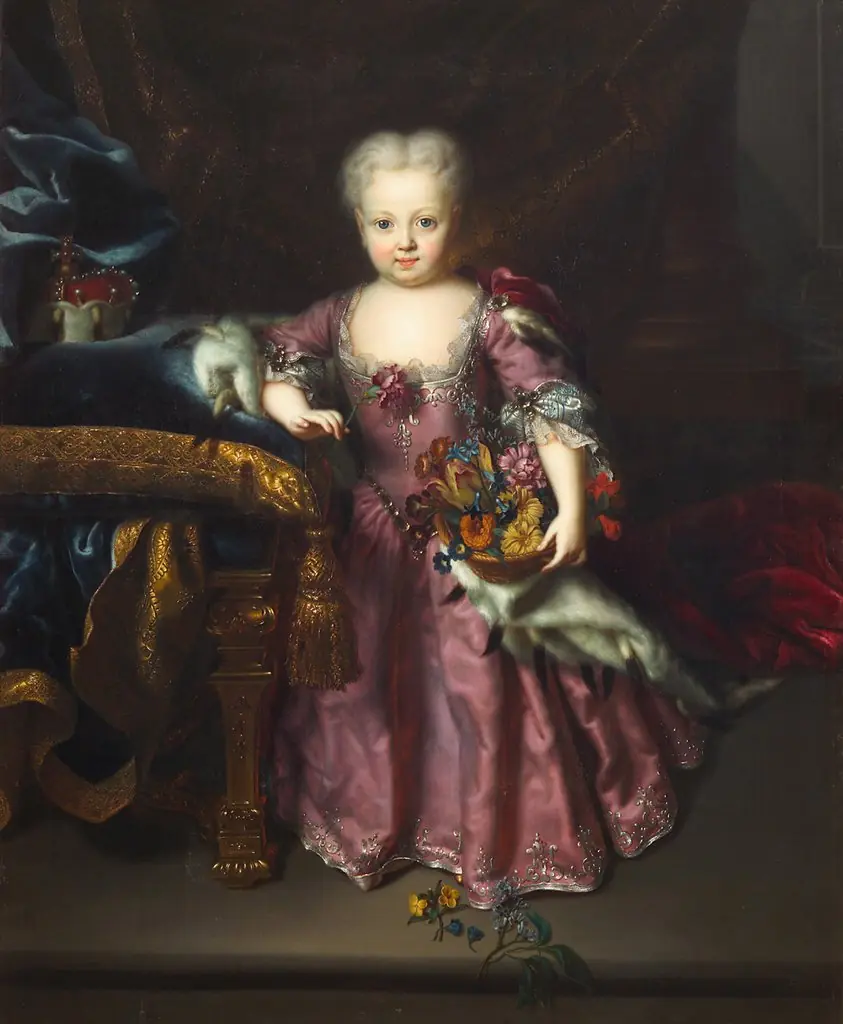 Erzherzogin Maria Amalie (1724-1730) im Alter von drei Jahren
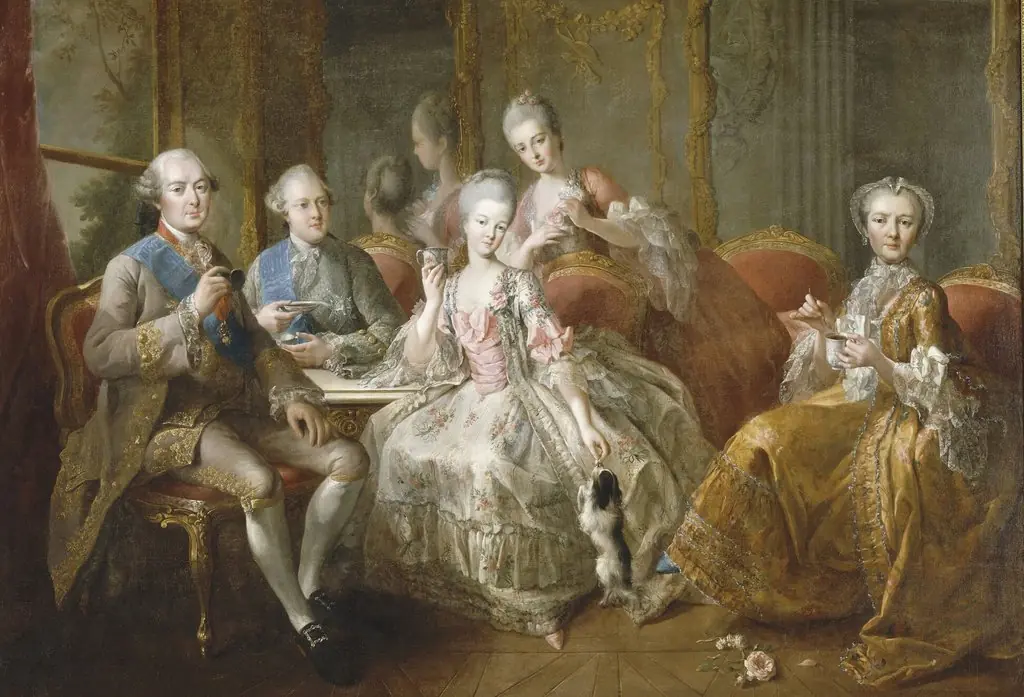 The family of the Duke of Penthièvre called la tasse de chocolat
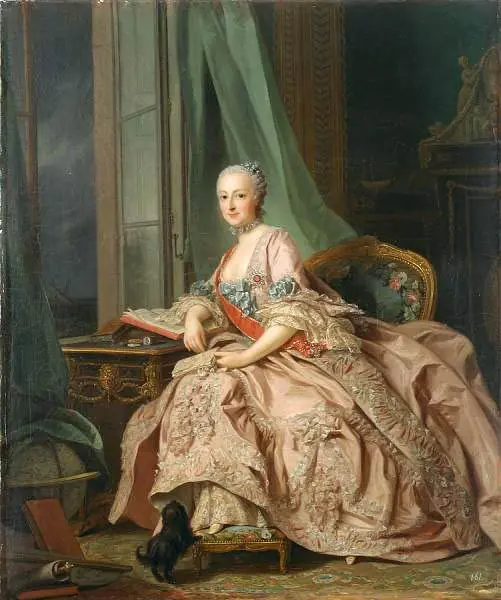 Anastasia Ivanovna, Countess of Hesse-Homburg, Princess Trubetskaya
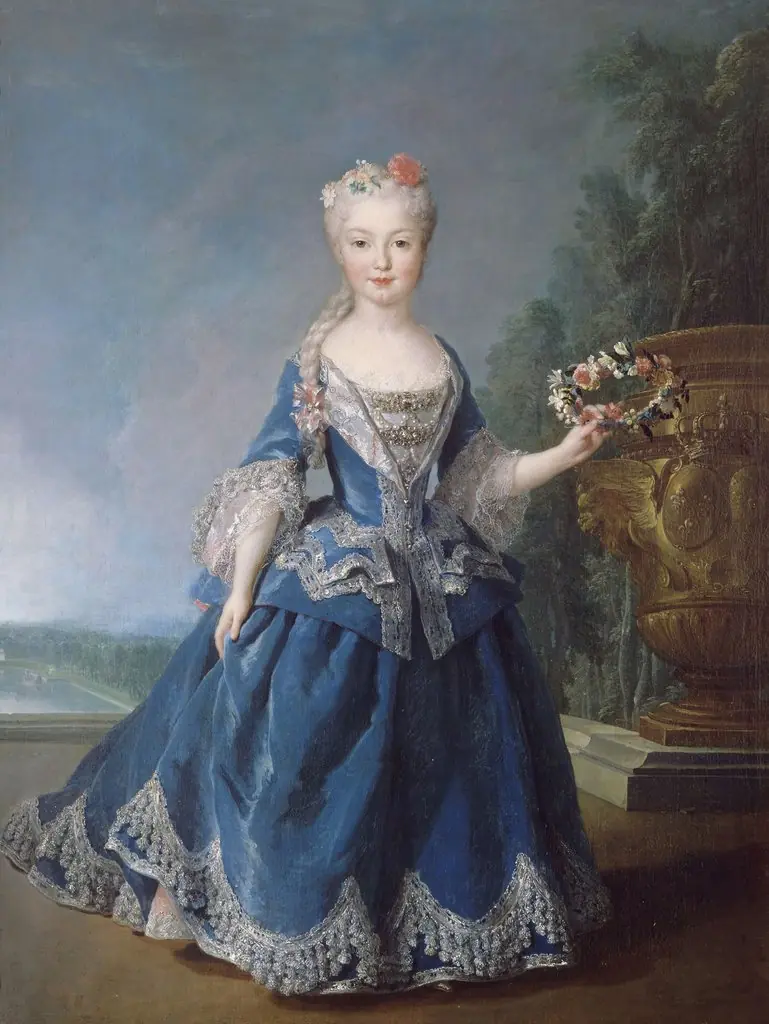 Portrait of Mariana Victoria of Spain (1718-1781)